
Costa Rica Is Now Set To Unlock More Sustainable Tourism And Better Local Opportunities Across The Region

Updated
Published
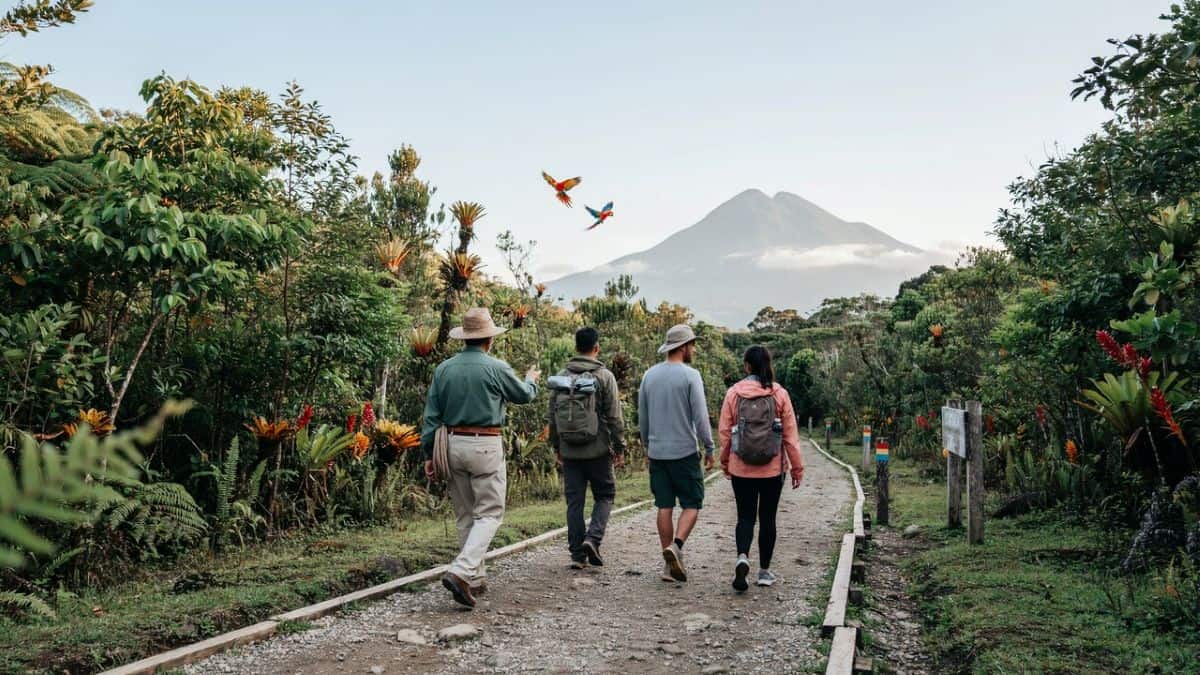
Image generated with Ai
While sustainability measures such as protected area management and rural development increase more international travellers with environmental certification, grow Costa Rica’s sustainable tourism. According to official numbers, international travellers reached 1,733,596 during the first half of 2026, and of those, 1,605,360 arrived by air. This shows 92.6% of travellers arrived using airways and reinforces the main air gateways of Costa Rica. The positive sides to this growth will reach accommodation, food and transportation services along with artisans and rural communities. However, growth will affect the rural natural resources with an increased demand on services and increased pressure on ecosystems andscarce natural elements. This, therefore, shows the need for responsible destination management especially since no changes in border visa or passport processes have been made. This will maintain sustainable tourism in Costa Rica.
Official Data Confirm Strong Tourism Growth in Costa Rica
Costa Rica received 1,733,596 international tourists between January and June 2026, compared with 1,619,976 during the same period in 2025. This was an increase of 113,620 visitors, or approximately 7%. March was the busiest month, with 379,818 arrivals, followed by February with 331,967 and January with 321,992. The figures count non-resident visitors who stayed overnight and exclude residents, transport crews, temporary workers and other movements that are not classified as tourism.
Air travel accounted for approximately 92.6% of all international arrivals during the period. The 1,605,360 air arrivals represented an increase of about 7.8% from the 1,489,008 recorded in the first half of 2025. This recovery is significant because air arrivals had decreased by 2.8% during the opening half of 2025 compared with the corresponding 2024 period. The new results suggest that tourism demand regained momentum, although full-year figures will be needed before Costa Rica’s complete 2026 performance can be determined.
| Tourism indicator | January–June 2026 result | Calculated share or change |
|---|---|---|
| Arrivals through all routes | 1,733,596 | Approximately 7% above 2025 |
| Arrivals by air | 1,605,360 | 92.6% of total arrivals |
| Arrivals through other routes | 128,236 | 7.4% of total arrivals |
| San José airport arrivals | 996,656 | 62.1% of air arrivals |
| Guanacaste airport arrivals | 608,132 | 37.9% of air arrivals |
| North American arrivals | 1,240,043 | 71.5% of all arrivals |
| United States arrivals | 984,939 | 56.8% of all arrivals |
| Canada arrivals | 207,110 | 11.9% of all arrivals |
Percentages are calculated from official arrival totals and rounded to one decimal place.
Advertisement
Advertisement
Air Access and Source Markets Shape Costa Rica Tourism
The airport serving San José received 996,656 international tourists during the first half of 2026, accounting for approximately 62.1% of all air arrivals. The principal airport in Guanacaste handled another 608,132, representing about 37.9%. This distribution gives Costa Rica two major entry points. San José supports access to the Central Valley, northern regions, the Caribbean side and parts of the Pacific, while Guanacaste provides direct access to northwestern beaches, national parks and resort areas.
North America supplied 1,240,043 visitors through all entry routes, representing approximately 71.5% of Costa Rica’s international arrivals. The United States generated 984,939 visitors and Canada contributed 207,110. This demand supports international connectivity and tourism revenue, but it also creates market concentration. Economic weakness, reduced flight capacity or changing travel behaviour in North America could affect Costa Rica more strongly than a destination with a more evenly distributed source-market structure. Future growth will therefore need to combine established demand with careful diversification.
Advertisement
Advertisement
Protected Nature Supports the Sustainable Tourism Model
Approximately 25% of Costa Rica’s territory is protected through 145 wild areas administered across 11 conservation regions. The network includes national parks, wildlife refuges, biological reserves, wetlands, protected zones and marine-management areas. These landscapes support hiking, wildlife observation, birdwatching, marine experiences, educational travel and nature photography. Costa Rica is also estimated to contain about 5% of the world’s known species, giving biodiversity an unusually important role in its tourism economy.
Protected status does not prevent tourism from creating environmental pressure. High visitor volumes can contribute to trail erosion, congestion, litter, excessive water consumption, wildlife disturbance and demand for construction near sensitive landscapes. Beaches, mangroves and nesting areas can also be affected by artificial lighting, noise and unmanaged activity. Sustainable Tourism therefore requires visitor limits, environmental assessments, controlled access, reliable waste services and enforcement of park regulations. Restrictions within protected areas should be understood as conservation measures rather than barriers to tourism.
Visitor Spending and Activities Expand the Economic Impact
Official survey results estimated that air travellers spent an average of US$1,848 per person during their stay in 2025 and remained in Costa Rica for an average of 10.3 nights. Across all entry routes, average spending was estimated at US$1,728.20 per visitor. These figures are weighted survey averages rather than fixed budgets or guaranteed economic contributions. Individual expenditure varies according to accommodation, trip duration, transportation, season and the number of paid activities included in an itinerary.
The available activity data show why environmental management is central to Costa Rica’s tourism development. During the 2023–2025 period, an estimated 72.1% of air visitors participated in sun-and-beach activities, 62.7% undertook ecotourism activities and 56.5% participated in adventure experiences. Cultural activities attracted an estimated 56.1%, while wellness activities reached 32.7%. These categories can overlap because travellers frequently participate in several activities during the same visit. The figures demonstrate that Costa Rica’s tourism economy depends on a combination of coastlines, biodiversity, outdoor recreation and cultural experiences rather than a single product.
| Activity group | Estimated share of air visitors, 2023–2025 |
|---|---|
| Sun and beach | 72.1% |
| Ecotourism | 62.7% |
| Adventure | 56.5% |
| Cultural experiences | 56.1% |
| Wellness | 32.7% |
| Sports | 23.1% |
Community and rural tourism can help distribute visitor spending outside heavily visited coastal and park areas. Local accommodation, food production, guided experiences, agricultural visits and traditional crafts give communities additional ways to participate in the visitor economy. However, local benefits are not automatic. Tourism development must include training, fair purchasing arrangements, access for smaller enterprises and safeguards against environmental or cultural damage.
What Travellers Need to Check Before Visiting
Costa Rica’s current tourism growth has not introduced a new visa, passport or general entry system. Requirements continue to depend on nationality, passport type and the immigration decision made at arrival. Visitors must hold a valid passport and show that they will leave the country before their authorised period expires. A return or onward ticket can be required, and travellers may be asked to demonstrate that they have sufficient funds for their stay.
Advertisement
Advertisement
Visitors should also remember that tourism promotion does not change immigration law. A new destination initiative, sustainability programme or transport connection does not provide automatic entry permission. The period granted at the border may differ from the maximum duration a traveller expects. Those intending to work, study, volunteer or remain for an extended period may need documentation beyond the requirements applied to an ordinary holiday.
Practical checks for travellers include:
- Confirm whether a visa is required for the passport being used.
- Check passport validity before purchasing tickets.
- Carry proof of return or onward travel.
- Review the authorised period given at entry.
- Keep accommodation and transport confirmations available.
- Reserve national-park admission in advance where required.
- Use official channels when purchasing protected-area tickets.
- Check seasonal weather and road conditions.
- Use authorised providers for wildlife and adventure activities.
- Follow conservation rules in forests, beaches and marine areas.
- Allow additional time for travel between distant regions.
- Monitor official immigration and tourism notices before departure.
Travellers should also avoid overloading their itineraries. Costa Rica may appear geographically compact, but mountainous roads, seasonal rainfall, congestion and road conditions can increase travel times. Spending longer in fewer locations can reduce repeated transfers, create a more relaxed experience and direct a greater proportion of expenditure into individual communities.
What Happens Next for Costa Rica Tourism
When designing its 2022–2027 tourism plan, Costa Rica needs to look past summit visitation. The plan should be evaluating regional spending, local job creation, and visitor stays to see the impact of tourism on each of these. The plan should also be looking at the impact of tourism on elements like water usage, waste, habitat health, and small business participation. These metrics will help determine if Sustainable Tourism is fairly distributing benefits while protectingelements that bring visitors to the country. Government agencies need to do more to develop their reservation systems and upgrade staffing and environmental monitoring in protected locations. They also need to create better coastal zone control systems for the construction and pollution of these areas. We will know more after 2026 what the limits to growth were and if growth endured seasonal, aviation, weather and economic pressures.
Advertisement
