
Colombia’s Medellín Draws Digital Nomads With Innovation, Metrocable and Nightlife

Published
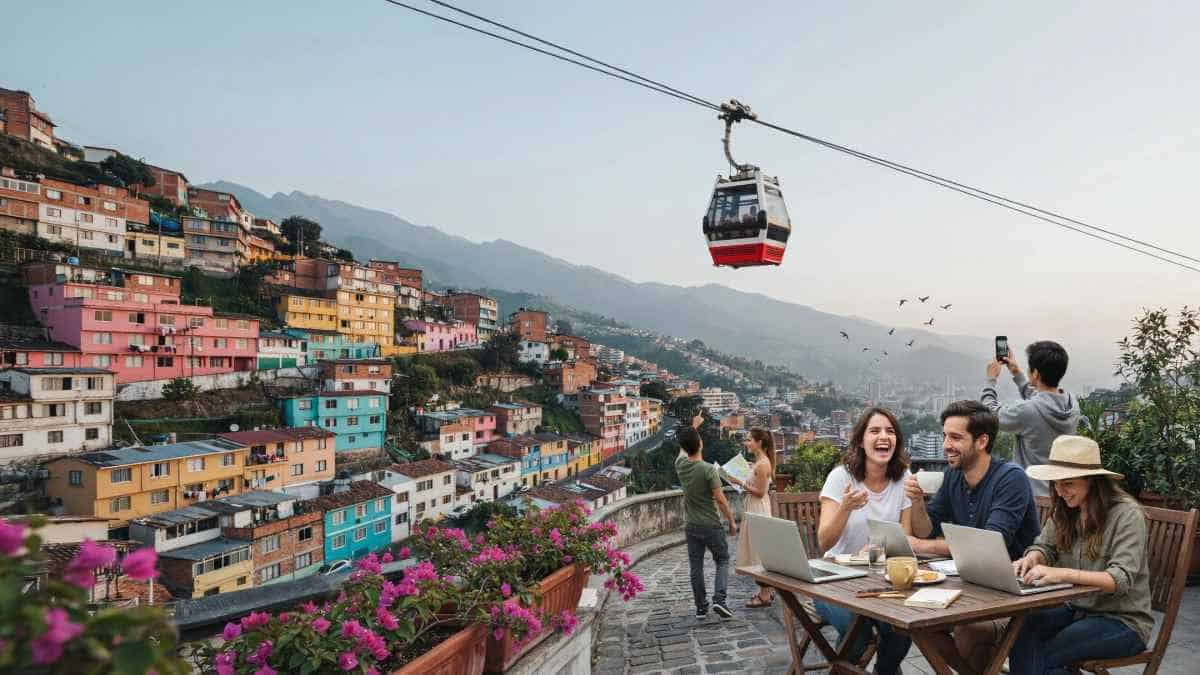
Image generated with Ai
Colombia, Medellín, Bogotá, Comuna 13, El Poblado, and Laureles present many opportunities to foreigners who want to travel beyond what the country offers. Medellin remains the top city to visit among all the cities in Colombia, next only to Bogota. Foreigners will always end up going for urban renewal projects, transportation innovations, food and nightlife. Urban renewal projects have even turned out to be some of the destinations worth visiting. The tourists will get the chance to travel in the Metrocable within the valley, see the vibrant streets of Comuna 13, work from cafes and co-working spaces, before heading over to El Poblado and Laureles for nightlife.
Medellín Turns Urban Transformation Into Tourism
Medellín’s tourism appeal is closely connected to its transformation over recent decades.
Areas once associated primarily with social and economic challenges are now being incorporated into visitor itineraries through guided tours, public transport and cultural experiences.
Comuna 13 is perhaps the most recognisable example.
Advertisement
Advertisement
Its steep streets, colourful murals, outdoor escalators, music and community-led tourism have made it one of the city’s most visited urban experiences.
Advertisement
Advertisement
For international travellers, the neighbourhood provides an opportunity to understand Medellín through local history, art and community activity rather than simply visiting conventional landmarks.
Comuna 13 Becomes A Cultural Tourism Circuit
Walking through Comuna 13 has become an important part of the Medellín visitor experience.
Murals cover walls and stairways, while local artists, performers, shops and food businesses contribute to the neighbourhood’s tourism economy.
Advertisement
Advertisement
Guided experiences commonly focus on the area’s history and transformation, connecting the physical landscape with stories about residents and community development.
The result is a tourism circuit where art and urban history overlap.
Advertisement
Advertisement
Visitors are not simply looking at attractions; they are moving through a living neighbourhood.
Metrocable Turns Public Transport Into An Attraction
The Medellín Metrocable is another defining feature of the city’s tourism landscape.
The cable-car system was developed as part of Medellín’s public transport network, connecting hillside communities with the wider metropolitan system.
For visitors, however, the journey itself has become an experience.
The cabins rise above the valley, offering elevated views across Medellín’s dense urban landscape and surrounding mountains.
Advertisement
Advertisement
That makes the Metrocable particularly appealing to travellers who want to see how the city is physically organised.
It also demonstrates how transport infrastructure can become part of a destination’s tourism identity.
Innovation Tourism Gives Medellín A New Identity
Medellín’s reputation has increasingly expanded from urban transformation towards innovation.
The city hosts technology, entrepreneurship and creative industries, creating opportunities for visitors interested in business and innovation tourism.
Innovation-focused itineraries can include technology districts, entrepreneurial spaces, universities and events.
Advertisement
Advertisement
For business travellers and digital nomads, this adds another reason to stay longer.
The city becomes more than somewhere to sightsee.
It can also function as a temporary base for work, networking and exploration.
Digital Nomads Change The Tourism Pattern
Digital nomads have become increasingly visible within Medellín’s tourism economy.
Unlike conventional tourists who may stay for a few nights, remote workers can remain for weeks or months.
Advertisement
Advertisement
That creates a different spending pattern.
Accommodation, cafés, coworking spaces, fitness facilities, restaurants and neighbourhood businesses can all benefit from longer stays.
The presence of remote workers also encourages tourism districts to develop services suited to visitors who need reliable connectivity and places to work during the day.
Medellín’s combination of urban infrastructure, hospitality and neighbourhood culture has helped make it attractive to this segment.
El Poblado Brings The Nightlife
El Poblado remains one of Medellín’s most internationally recognised visitor districts.
Advertisement
Advertisement
The neighbourhood combines hotels, restaurants, cafés, bars, clubs and shopping, creating a dense tourism environment.
For digital nomads and longer-stay visitors, its appeal comes from the ability to work during the day and access dining and entertainment without travelling far.
Food tourism has become particularly important.
Restaurants offer Colombian specialities alongside international cuisines, while cocktail bars and nightlife venues keep the district active after sunset.
Laureles Offers Another Urban Rhythm
Laureles provides a different atmosphere.
Advertisement
Advertisement
The neighbourhood is known for tree-lined streets, cafés, restaurants, bars and a more residential urban character.
For travellers staying longer, this can make Laureles attractive as an alternative to the busier tourism environment of El Poblado.
Its culinary scene has also strengthened its position within Medellín’s food tourism landscape.
Visitors can explore restaurants and cafés while experiencing a neighbourhood where tourism and everyday local life overlap.
Food Is Becoming A Major Travel Trigger
Medellín’s culinary tourism is expanding alongside its urban tourism offer.
Advertisement
Advertisement
Visitors can discover traditional Colombian dishes while also experiencing modern restaurants, specialty coffee, bakeries and international cuisine.
Coffee is particularly relevant because Colombia’s global reputation as a coffee producer creates opportunities for visitors to connect urban dining with the country’s agricultural culture.
Food-focused itineraries can also lead tourists into neighbourhoods beyond the traditional sightseeing circuit.
Medellín Works As A Longer-Stay Destination
The combination of culture, transport, food, nightlife and innovation makes Medellín well suited to longer visits.
A short-break traveller might focus on Comuna 13, the Metrocable and central attractions.
Advertisement
Advertisement
A digital nomad can build a much broader routine around neighbourhood cafés, coworking, restaurants, nightlife and weekend excursions into Antioquia.
That difference matters to tourism businesses because longer stays can generate more cumulative visitor spending.
Antioquia Extends The Journey Beyond The City
Medellín is also a gateway to the wider Antioquia region.
Visitors can travel beyond the metropolitan area to destinations offering mountains, reservoirs, villages and outdoor experiences.
Guatapé, with its colourful architecture and famous El Peñol rock, is one of the region’s best-known excursions.
Advertisement
Advertisement
This gives Medellín another advantage: visitors can use the city as a base while exploring destinations beyond the urban area.
Tourism And Transformation Move Together
Medellín’s tourism story is ultimately about how the city presents its transformation.
Public transport, neighbourhood regeneration, cultural activity and innovation are not separate attractions.
They are interconnected parts of the visitor experience.
A traveller can see that connection in one day — riding the Metrocable, exploring Comuna 13 and finishing the evening over dinner in El Poblado or Laureles.
Advertisement
Advertisement
That combination gives Medellín a distinctive identity within Colombia’s growing urban tourism market.
Key Stats
- 2: Colombia’s leading urban tourism markets highlighted — Bogotá and Medellín.
- 2: Major neighbourhood tourism hubs — El Poblado and Laureles.
- 1: Signature urban regeneration destination — Comuna 13.
- 1: Major transport attraction — Medellín Metrocable.
- 3: Core tourism pillars — innovation, culture and culinary nightlife.
- 1: Major regional gateway — Medellín for wider Antioquia.
Timeline and Events
2000s onwards: Medellín’s urban regeneration and integrated transport development increasingly shape the city’s identity.
Year-round: Comuna 13, Metrocable routes, El Poblado and Laureles attract visitors.
2026: Digital nomad and longer-stay tourism remain important components of Medellín’s urban visitor economy.
Year-round: Food, nightlife, innovation and cultural experiences support extended city stays.
Advertisement
Advertisement
FAQ
1. Why is Medellín attracting digital nomads?
The city combines urban infrastructure, neighbourhood culture, dining, nightlife, connectivity and innovation-focused experiences that can support longer stays.
2. What is Comuna 13 known for?
It is known for colourful murals, community-led tourism, outdoor escalators, music and its urban transformation story.
3. Why is the Metrocable popular with tourists?
It provides elevated views across Medellín while demonstrating how the city’s cable-car system connects hillside communities with the wider transport network.
Dates
2000s onwards: Medellín’s urban transformation and transport development become increasingly central to its identity.
2026: Urban, innovation and digital-nomad tourism continue shaping Medellín’s visitor economy.
Advertisement
Advertisement
Year-round: Comuna 13, Metrocable, El Poblado and Laureles remain key visitor areas.
Conclusion
Medellin is using its urban renewal to attract tourists, and tourists are starting to take notice. Comuna 13, Metrocable, El Poblado, and Laureles all provide a unique experience of the local culture that tourists could enjoy, from community-based art to transport innovation and dining out in addition to night life and staying overnight in the area. Throw in digital nomads and innovation-focused tourists, and Medellin starts looking more and more like a place for tourists not only to visit but also to stay and work.
Advertisement
