

Singapore Airlines Female Pilots Empowerment, Staff Milestone, and What Others Are Missing in Aviation Gender Strategy Shift

Published
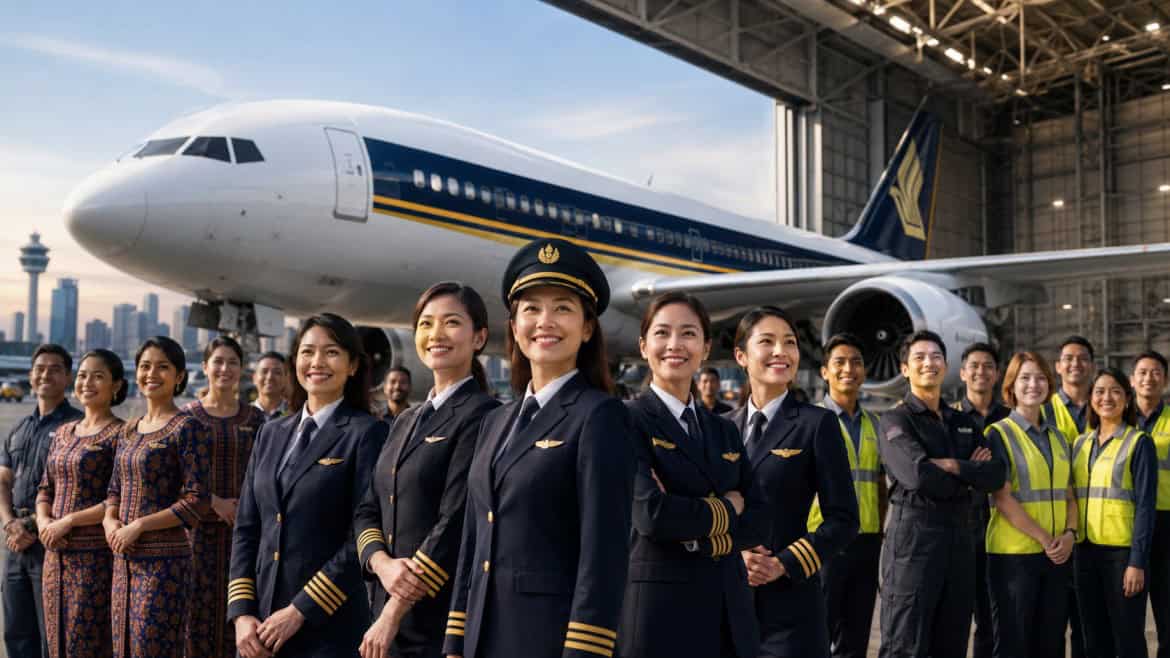
Singapore Airlines has reported a significant shift in its workforce structure, confirming that female pilots across the group have increased to 102 as of the latest sustainability disclosure. The update, released for the financial year ending March 31, highlights a 25 percent growth compared with 2020 levels. The development is critical right now as aviation faces renewed pressure to balance talent shortages, diversity expectations, and operational performance.
This milestone affects Singapore Airlines and Scoot across a combined workforce of 21,667 employees. It also exposes a wider industry debate: progress in representation is visible, yet leadership pipelines and recruitment systems continue to lag behind targets. The timing matters because airlines are expanding post-pandemic fleets while competing for highly specialised aviation talent.
Advertisement
Advertisement
Female Pilot Growth at Singapore Airlines Signals Measured Progress
Singapore Airlines has confirmed that its female pilot count has risen steadily, reaching 102 across the group. This includes pilots operating under both Singapore Airlines and Scoot. The total pilot workforce now stands at 3,676, placing female representation at a still-small but gradually improving proportion of cockpit roles.
The airline has achieved its internal target of a minimum 25 percent increase in female pilots compared with its 2020 baseline. The growth has been supported by recruitment campaigns, training pipelines, and internal aviation cadet development programmes.
Advertisement
Advertisement
Key developments include:
- Female pilots increased to 102 across the group
- 25 percent growth achieved over a five-year period
- Total pilot workforce stands at 3,676
- Recruitment based on skills and suitability rather than quotas
Despite the improvement, the proportion remains relatively low compared with broader workforce gender balance. However, aviation analysts note that cockpit roles historically remain among the most difficult entry points for women due to training costs, limited awareness, and long-haul scheduling constraints.
Advertisement
Advertisement
The achievement therefore represents incremental structural progress rather than rapid transformation.
Scoot and Singapore Airlines Diverge on Diversity Targets
While the flagship carrier has met its female pilot growth target, its low-cost subsidiary Scoot has not achieved the same benchmark. Scoot failed to meet its goal of increasing female pilot numbers by 25 percent from its 2021 baseline.
At the same time, performance across leadership diversity has been mixed within the group. Scoot successfully increased the number of women in senior leadership positions, defined as director level and above. However, Singapore Airlines itself narrowly missed its target of ensuring women occupy at least 25 percent of vice president-level and higher roles.
The gap highlights a structural inconsistency in execution across business units.
Important observations include:
- Scoot missed female pilot growth targets
- Scoot met senior leadership gender target
- Singapore Airlines missed vice president-level diversity benchmark
- Attrition and internal transfers affected leadership outcomes
The airline has attributed the leadership shortfall to staff movement and turnover rather than a lack of recruitment intent. However, the uneven performance across subsidiaries suggests that diversity execution is heavily dependent on operational model and workforce stability rather than unified policy enforcement.
Advertisement
Advertisement
Workforce Expansion and Gender Composition Shift Across Singapore Airlines Group
The Singapore Airlines Group continues to expand its overall workforce, reflecting post-pandemic recovery and rising travel demand. Total headcount has increased by 3.1 percent year-on-year, reaching 21,667 employees.
Women now represent slightly more than half of the total workforce, indicating strong representation in non-flight operational roles. Cabin crew remains one of the most gender-balanced segments of the organisation.
Key workforce indicators include:
- Total employees: 21,667
- Year-on-year growth: 3.1 percent
- Cabin crew workforce: 11,332
- Female cabin crew: 7,471
- Women represent just over half of total employees
Cabin operations remain the strongest driver of gender balance within the airline. However, technical roles such as pilots and engineering staff continue to show slower diversification.
The contrast between cabin crew representation and cockpit representation highlights a persistent structural divide in aviation employment pathways.
Skills-Based Hiring Versus Diversity Targets Reshaping Aviation Talent Strategy
A deeper tension is emerging within Singapore Airlines’ workforce strategy, and it reflects a broader aviation industry challenge. The airline continues to emphasise skills-based recruitment, stating that hiring decisions are made based on competency, training suitability, and operational requirements rather than fixed quotas.
Advertisement
Advertisement
This approach directly influences how diversity targets are achieved or missed.
The key strategic contradiction is clear:
- Diversity frameworks set numerical targets
- Operational hiring prioritises technical competency
- Workforce mobility affects leadership representation
- Pilot training pipelines remain limited globally
This raises a structural issue in aviation: the supply pipeline of qualified female pilots is still narrow, meaning even aggressive recruitment strategies have limited short-term impact. Industry regulators and aviation bodies globally have repeatedly highlighted that pilot training access, awareness at school level, and financial barriers remain the biggest constraints to gender diversification in flight decks.
In Singapore Airlines’ case, this creates a gap between aspiration and execution. While female participation is increasing, the speed of change is constrained by training throughput and global pilot availability.
This is the angle many industry observers are now focusing on: not just how airlines set targets, but whether the aviation ecosystem itself can supply enough qualified candidates to meet them.
Asia Aviation Diversity Outlook and Competitive Workforce Pressure
Across Asia, airlines are increasingly under pressure to modernise workforce structures while managing rapid fleet expansion and pilot shortages. Singapore Airlines’ results reflect a broader regional pattern where gender diversity progress is visible but uneven.
Advertisement
Advertisement
Three major trends are shaping the sector:
- Rising demand for pilots across Asia-Pacific carriers
- Increasing focus on sustainability and workforce reporting
- Competitive hiring environments for technical aviation roles
As airlines expand networks and restore long-haul capacity, talent acquisition is becoming as strategic as route planning. Female participation in aviation remains a key performance indicator for many carriers, but progress continues to depend on long-term educational pipelines rather than short-term recruitment campaigns.
Singapore Airlines’ latest data demonstrates that measurable progress is possible, but structural barriers remain firmly in place.
Measured Progress With Structural Limits Still in Place
Singapore Airlines’ achievement of 102 female pilots and a 25 percent increase since 2020 marks a clear milestone in its workforce evolution. However, the simultaneous failure to meet certain leadership targets highlights the complexity of translating diversity goals into consistent outcomes.
The key takeaway is not simply progress, but imbalance in execution across divisions and roles. Aviation continues to face a dual challenge: maintaining strict operational standards while expanding access to historically underrepresented groups.
The coming years will determine whether such milestones represent early transformation or incremental change within a much longer structural shift in global aviation.
Advertisement
Advertisement
For continued insights into airline workforce trends, diversity transformation, and Asia-Pacific aviation developments, stay connected for deeper analysis and updates.
Advertisement
