

Australia Follows US, UK and More to Update Saudi Arabia Travel Advisory Following Major Houthi Strike on Riyadh Airport

Updated
Published
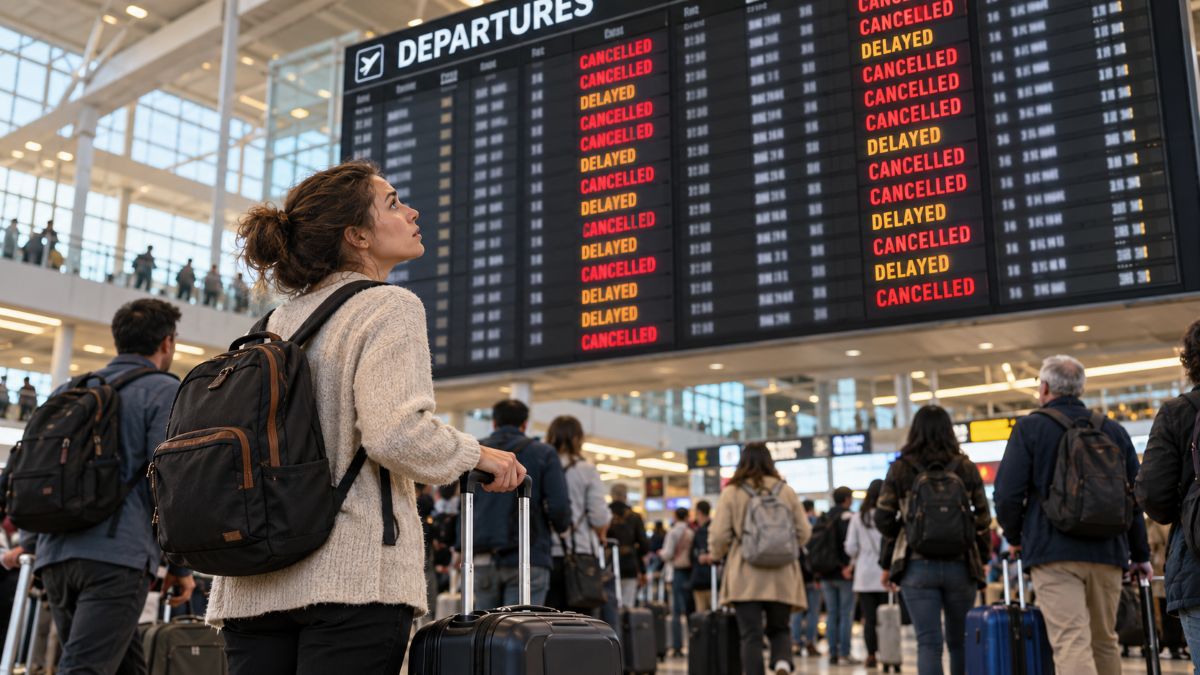
Australia follows the US, UK and more countries, including Canada, to update its Saudi Arabia travel advisory following the reported major Houthi strike on Riyadh airport, as disruption and the threat of further attacks affect travellers. Australia’s updated travel warning for Saudi Arabia to recommend against travel to King Khalid International Airport, but has not changed its main travel advice of “reconsider travel” to Saudi Arabia. With these warnings in mind, it is important for passengers to re-evaluate connections, review flight cancellations and plan alternate routes in advance of their journey.
Saudi Arabia Travel Advisories: What Changes Your Journey?
The official notices below were updated on 10–11 October. They use different systems, so their implications need to be read individually.
| Government | Update | What travellers need to know |
|---|---|---|
| Australia | 11 October | Do not travel to King Khalid airport. Reconsider travel to Saudi Arabia overall. Smartraveller |
| UK | 10 October | Avoid King Khalid until secure. Riyadh province remains covered by advice against all but essential travel. GOV.UK |
| US | 10 October | Level 3 remains unchanged. US government employees need special authorisation to use King Khalid; citizens should take similar precautions. travel.state.gov |
| Canada | 10 October | Avoid all travel to King Khalid and non-essential travel to Saudi Arabia overall. travel.gc.ca |
| Germany | 11 October | Strongly discourages using Riyadh airport and warns of disruption at other Saudi airports. www.auswaertiges-amt.de |
An updated advisory does not automatically mean a higher national warning level. The US explicitly records no change to its level or risk indicators. Its employee restrictions also require careful interpretation: they are rules for official personnel, accompanied by precautionary advice for American citizens.
Other US employee rules require authorisation for Qatif, Taif and Yanbu, and Jizan, Asir and Najran provinces. Employees cannot travel within 20 miles of Yemen.
Advertisement
Advertisement
Riyadh Transit: A Short Connection Still Carries the Warning
An itinerary can involve Riyadh without listing Saudi Arabia as the final destination. That makes the connection easy to overlook when reviewing travel advice.
Australia explicitly applies its warnings to transit. Remaining airside therefore does not remove King Khalid from an Australian traveller’s risk assessment.
Advertisement
Advertisement
Smartraveller also tells people who nevertheless choose to travel to reconfirm their flight before leaving for the airport and keep their time there brief. This is guidance for those proceeding despite the warning, rather than permission to disregard it.
The practical consequence is that changing only the final destination may leave the same airport exposure in place. When discussing alternatives, identify every connection by airport name and check whether the revised booking still passes through Riyadh.
Abu Dhabi–Riyadh Flights: Match Your Booking to the Cancellation List
Etihad’s disruption notice identifies these cancelled services between Abu Dhabi’s Zayed International Airport and King Khalid:
| Date | Abu Dhabi to Riyadh | Riyadh to Abu Dhabi |
|---|---|---|
| 10 October | EY555, EY559 | EY556, EY560 |
| 11 October | EY551, EY555, EY559 | EY552, EY556, EY560 |
| 12 October | EY551 | EY552 |
Together, these represent 12 individual flights across both directions. The notice concerns this route and these services; it does not establish a closure of Abu Dhabi’s airport or every Saudi air link. Further changes remain possible. Etihad Airways
For passengers connecting through Abu Dhabi, a cancelled Riyadh flight can affect a much longer journey. Check how the airline has handled the onward booking before accepting a replacement departure.
Etihad’s published assistance guidance distinguishes between connections:
Advertisement
Advertisement
- Both flights operated by Etihad: the airline says it will rebook a missed connection.
- Connection operated by another airline: contact that carrier for assistance.
- Cancelled itinerary: Etihad says its notification will explain available options, including arrangements for connecting flights.
Alternative Saudi Airports: Check the Whole Replacement Route
Moving a booking to another Saudi airport requires a fresh security assessment.
Germany’s 11 October guidance identifies Dammam airport as a recent target. It warns that operations at other airports are irregular and exposed to risk, and advises checking local security and available connections before setting out.
Regional warnings also affect alternatives. Canada advises against all travel to Asir, Jazan and Najran provinces and within 30 kilometres of Yemen. The UK discourages all but essential travel to Aseer, Najran and Jizan provinces, plus Taif city and Taif International Airport, and all travel within 10 kilometres of Yemen.
The planning implication is broader than finding an available seat. A replacement journey must work from your present location through to your destination. Check the departure airport, any road transfer and the onward connection before committing.
Saudi Airspace: Why an Operating Airport Is Only Part of the Picture
The European Union Aviation Safety Agency revised its Saudi conflict-zone bulletin on 9 October. It remains valid until 16 November unless reviewed earlier.
EASA identifies risks to aircraft on the ground, during take-off and landing, and from interception activity or falling debris. It also warns of possible misidentification of civilian aircraft.
Advertisement
Advertisement
For operators covered by the bulletin, it recommends avoiding two defined portions of Saudi airspace at all altitudes and exercising caution elsewhere in the Jeddah Flight Information Region. This guidance does not declare all Saudi airspace closed.
For travellers, that creates three separate checks: the airport’s operating status, the airline’s ability to operate the route and the government advice applying to the journey. A positive answer to one cannot settle the other two.
Already in Saudi Arabia? Organise Your Next Move
Canada’s current guidance asks travellers to prepare for disruption and avoid relying on government help to arrange departure. Its practical recommendations include:
- Follow local authorities’ instructions and be ready to shelter if directed.
- Keep your own travel documents and those of family members current.
- Contact the airline about necessary booking changes.
- Register with the appropriate national alert service; Canadians can use Registration of Canadians Abroad.
The US advisory says commercial flights remain operational from Saudi Arabia, although services have suffered significant disruption. That distinction matters when planning departure: countrywide flight availability cannot confirm that your particular airport, route or booking will operate.
Rebooking and Travel Insurance: Resolve the Gaps Before Paying
The FCDO warns that travelling against its advice could invalidate travel insurance. Before paying for replacement arrangements, ask the insurer how the current advisory affects the specific itinerary.
Use the same conversation with your airline or booking agent to resolve three questions:
Advertisement
Advertisement
- Which flights have been changed, including the return journey?
- Who will handle an onward connection operated by another carrier?
- What charges, refund options or booking conditions apply to the proposed change?
Request written confirmation so that the revised journey is clear. Keep cancellation messages and receipts together.
The strongest travel plan is one you can reassess quickly. Reopen the official advisory and airline status page before setting out, and check again after any itinerary change. A replacement ticket still needs a workable route.
In conclusion, Australia follows the US, UK and more governments to update its Saudi Arabia travel advisory, following the reported major Houthi strike on Riyadh airport, amid flight disruptions and the risk of further attacks affecting passenger safety. The official advice from major countries are recommending avoidance of King Khalid International Airport for transit, and reconsideration of travel plans to Saudi Arabia. The key for travellers will be to check all their connections, double check airline travel plans and evaluate official security information regarding alternative routes. These warnings do not address the risks that can be mitigated by a replacement ticket.
Advertisement
