
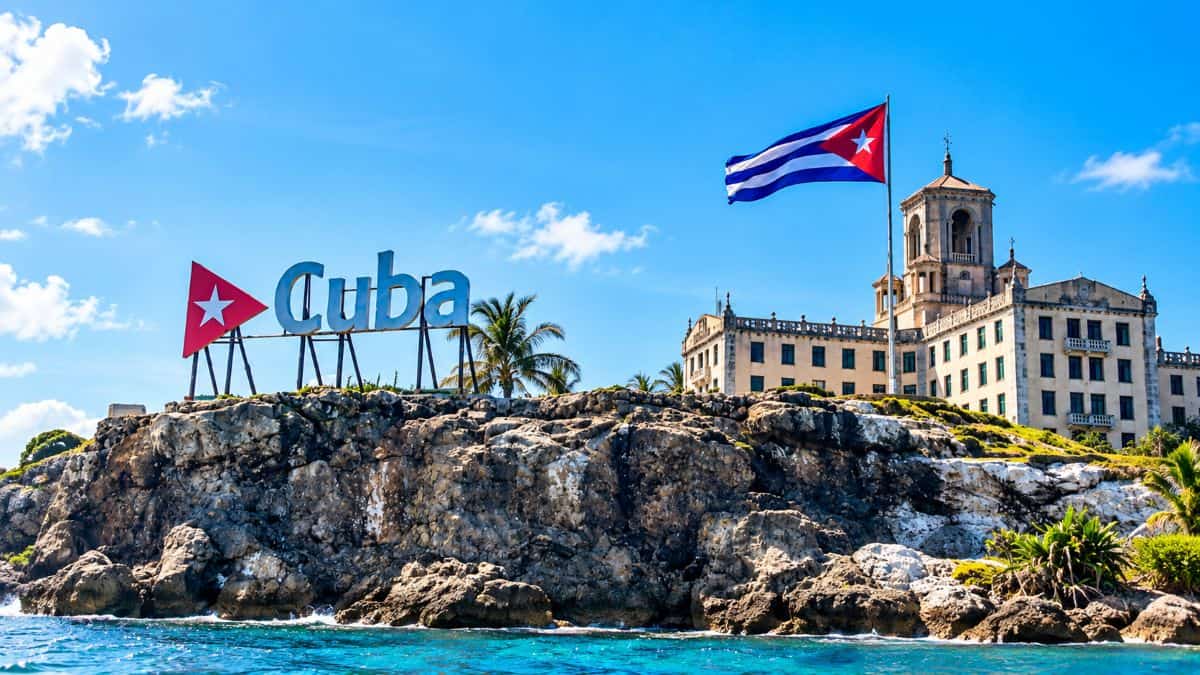
Cuba’s tourism sector is facing a severe downturn in 2026, with international arrivals falling sharply and traditional source markets contributing fewer visitors. The Caribbean destination recorded only 419,863 international visitors during the first seven months of 2026, according to statistics cited from Cuba’s National Office of Statistics and Information. The figure represents a dramatic contraction from the previous year and highlights the growing pressure on the country’s travel economy. Canada, historically Cuba’s largest tourism market, has recorded one of the steepest declines, while visitor numbers from the United States, Russia, Mexico, Argentina, Spain, China, Colombia and France have also weakened.
The tourism slowdown extends beyond declining arrivals. Cuba’s hospitality industry is experiencing hotel closures, reduced international hotel management, low occupancy and serious operational difficulties linked to electricity shortages, transport constraints and limited supplies. With a large proportion of hotel facilities reportedly closed and thousands of tourism workers placed in protective unemployment, the consequences are spreading across accommodation, aviation, restaurants, excursions and other travel-related businesses. The combination of weaker international demand and domestic infrastructure challenges is creating a difficult environment for Cuba as it attempts to restore its position within the competitive Caribbean tourism market.
Advertisement
The scale of Cuba’s tourism decline becomes particularly evident when comparing visitor numbers with the same period in 2025. During the first seven months of 2026, the country received 419,863 international visitors, compared with substantially higher arrivals during the corresponding period of the previous year.
The decline accelerated during several months of 2026. Only 30,883 international tourists arrived in May, while July recorded 32,272 visitors. By the end of June, first-half international arrivals had reached 387,591, compared with 985,606 in the first six months of 2025.
Advertisement
| Tourism Indicator | 2026 | Previous Period | Travel Industry Impact |
|---|---|---|---|
| International visitors, January–July | 419,863 | 1,810,619 | Major contraction in inbound tourism |
| International visitors, January–June | 387,591 | 985,606 | Sharp first-half decline |
| International visitors in May | 30,883 | Higher than 2026 | Weak spring demand |
| International visitors in July | 32,272 | Higher than 2026 | Limited summer recovery |
| First-quarter hotel occupancy | 21.5% | Higher previously | Significant unused accommodation capacity |
The figures indicate that Cuba’s tourism recovery is not keeping pace with previous years. Although July brought a modest increase compared with May, the improvement was insufficient to reverse the broader decline.
Canada remains central to Cuba’s inbound tourism performance because Canadian travellers have traditionally represented the largest share of visitors. However, the country experienced a reduction of 350,737 Canadian visitors during the first seven months of 2026.
The weakness is not isolated to one source market. The number of Cuban nationals travelling abroad and returning to the country also fell by 52,021 visitors. US visitor numbers declined by 39,944, while Russia, Mexico, Argentina, Spain, China, Colombia and France also recorded lower numbers.
This broad-based decline is particularly important for Cuba because dependence on a limited number of international markets can make the destination more vulnerable when demand changes. A reduction across several major source countries simultaneously creates greater pressure on airlines, hotels, tour operators and tourism businesses.
For travellers, destination choice is increasingly influenced by reliability, accommodation availability, transport connections, service standards and ease of booking. Weakness in several of these areas can make it harder for a destination to compete with alternative Caribbean markets.
Cuba’s accommodation sector is undergoing major changes at the same time as visitor arrivals are declining. Several international hotel groups have reduced or ended their presence in the country during 2026, adding another layer of uncertainty to the tourism market.
Blue Diamond Resorts reportedly sold 62 hotels representing more than 12,900 rooms in late May. Iberostar also sold 18 of its 28 Cuban hotels in June, while Meliá Hotels International ended management agreements covering 34 hotels in Cuba.
The withdrawal of international hotel operators has significant implications for destination competitiveness. International hotel companies can contribute global distribution, marketing, operational expertise, brand standards and access to established booking channels. Their reduced presence may therefore affect not only hotel management but also the international visibility of Cuban accommodation.
The restructuring has also reduced the number of rooms managed by foreign firms. According to the figures cited in the source material, almost 46% of rooms previously managed by international companies have been liquidated.
Cuba’s hotel occupancy figures underline the gap between available accommodation and actual tourism demand. The first-quarter occupancy rate stood at only 21.5%, meaning a substantial majority of available capacity remained unused.
Cuban Prime Minister Manuel Marrero Cruz reportedly said at the end of July that 73% of hotel facilities were closed. Around 25,000 hotel employees were also reported to be in protective unemployment.
For the travel industry, prolonged low occupancy can create a difficult cycle. Hotels need sufficient demand to maintain staffing, maintenance, food supplies and other guest services. At the same time, reduced services and limited operating capacity can make a destination less attractive to potential visitors.
The situation therefore extends beyond empty rooms. It affects the wider tourism ecosystem, including airport transfers, restaurants, tour companies, cultural attractions, retail businesses and local employment.
Infrastructure problems are another major obstacle for Cuba’s tourism recovery. Electricity shortages have reportedly affected transportation and hotel operations, including air conditioning.
Reliable electricity is particularly important for a Caribbean holiday destination where high temperatures make climate control a fundamental component of hotel comfort. Power disruptions can affect refrigeration, food preparation, communications, lifts, water systems and other services that travellers expect during their stay.
Transport difficulties add another challenge. International tourists depend on predictable connections between airports, hotels and attractions. When infrastructure becomes unreliable, travellers may increasingly consider alternative destinations with stronger operational stability.
These issues demonstrate why restoring visitor numbers requires more than increasing marketing activity. Destination infrastructure and service reliability are equally important to the travel experience.
Key Indicator 2026 Data Comparison / Change Why It Matters For Travel International visitors, Jan–July 419,863 Down sharply year-on-year Shows the depth of Cuba’s tourism downturn International arrivals, Jan–June 387,591 985,606 in 2025 First-half arrivals fell substantially International arrivals, Jan–April 328,608 Down 55.8% from 742,990 Confirms the decline began early in 2026 International arrivals, April 30,551 Down 82.0% from 169,627 One of the sharpest monthly declines Canadian visitors, Jan–April 125,444 Down 63.8% from 346,109 Canada remains the leading source market despite the decline Canadian visitors, April 650 Down 99.1% from 73,790 Flight suspensions severely affected arrivals Russian visitors, Jan–April 21,050 Down 54.5% from 46,285 Another important source market weakened Russian visitors, April 133 Down 99.0% from 12,822 Reflects the impact of flight cancellations Cuban nationals living abroad, Jan–April 46,173 Down 41.2% from 78,478 Reduced diaspora travel added to the decline First-quarter hotel occupancy 21.5% Very low utilisation Highlights weak demand and excess accommodation capacity Hotel facilities reportedly closed 73% — Indicates severe pressure on the accommodation sector Tourism employees in protective unemployment Around 25,000 — Shows the employment impact of the downturn July international visitors 32,272 Slight recovery from May Recovery remains too weak to reverse the annual trend May international visitors 30,883 — Illustrates exceptionally weak monthly demand
Source-Cuba’s Oficina Nacional de Estadística e Información (ONEI), international tourism and visitor-arrival statistics, 2026.
Cuba’s tourism distribution network is also facing constraints. The source material states that Cuban hotels have been excluded from major booking platforms including Booking, Expedia and Trivago, while they are also unavailable through several Global Distribution Systems.
This creates a major challenge for international travellers and travel advisers. Digital booking visibility has become an essential part of destination competitiveness, particularly for independent travellers who compare accommodation and prices online before making decisions.
Limited access to international distribution channels can make Cuban hotels harder to discover and book. It can also restrict the ability of travel professionals to package accommodation with flights and other tourism services.
Consequently, Cuba’s tourism decline is being influenced by both demand-side and supply-side pressures. Fewer travellers are arriving, while the systems needed to present and sell the destination internationally are also constrained.
Cuban authorities have identified US sanctions and the broader US embargo policy as major obstacles to tourism development. The designation of Cuba as a state sponsor of terrorism is also cited as part of the challenging operating environment.
However, Cuba’s tourism difficulties involve multiple interconnected factors. Infrastructure weaknesses, hotel closures, electricity shortages, transport challenges, staffing constraints, limited goods and service-quality concerns are also affecting the destination.
The structure of the hotel industry adds another layer of complexity, particularly because much of the sector is connected to enterprises associated with Cuba’s military-linked business system. International companies operating in Cuba therefore face a regulatory and commercial environment that can influence their decisions.
The first seven months of 2026 suggest that Cuba faces a challenging remainder of the year. With only 419,863 international visitors recorded by July, arrivals would need to increase dramatically during the remaining months to approach previous performance levels.
The challenge is not simply to attract more tourists. Cuba must also ensure that sufficient hotel capacity is available, improve operational reliability and restore confidence among international travel partners and consumers.
The decline in traditional source markets makes diversification increasingly important. At the same time, rebuilding international hotel partnerships and improving access to global booking and distribution systems could strengthen Cuba’s ability to compete for travellers.
For the Caribbean tourism market, Cuba’s experience demonstrates how visitor demand can be affected when geopolitical restrictions, infrastructure challenges, accommodation changes and distribution limitations occur simultaneously.
For travellers considering Cuba, the current situation may translate into a more uneven tourism experience. Hotel availability can vary considerably because a large proportion of facilities are reportedly closed, while transport and electricity reliability may remain concerns.
The destination continues to possess substantial cultural, historical and natural tourism assets, but travellers and tourism businesses must consider the operating conditions surrounding those attractions.
The immediate challenge for Cuba is therefore to reconnect international demand with a tourism system capable of serving visitors consistently. Without improvements across accommodation, infrastructure, distribution and market access, the decline in arrivals could continue to affect the country’s tourism economy through the remainder of 2026.
1. How many international tourists visited Cuba in the first seven months of 2026?
Cuba recorded 419,863 international visitors during the first seven months of 2026.
2. Which country traditionally provides the most tourists to Cuba?
Canada has traditionally been Cuba’s largest international tourism source market.
3. How much did Canadian tourism to Cuba decline in 2026?
The number of Canadian visitors declined by 350,737 during the first seven months of 2026.
4. Did US tourism to Cuba also decline?
Yes. The number of US visitors decreased by 39,944 during the first seven months of 2026.
5. What was Cuba’s hotel occupancy rate in the first quarter of 2026?
The reported hotel occupancy rate was 21.5%.
6. How many Cuban hotel facilities were reportedly closed?
Cuba’s prime minister said that approximately 73% of hotel facilities were closed at the end of July.
7. Why are international hotel companies reducing their presence in Cuba?
The source material links the withdrawals partly to tighter US sanctions involving hotels associated with Cuba’s military-linked GAESA business network.
8. Are electricity shortages affecting Cuba tourism?
Yes. Electricity shortages have reportedly disrupted transportation and hotel operations, including air conditioning.
9. Are Cuban hotels available through major international booking systems?
The source material states that Cuban hotels have been excluded from several major booking platforms and Global Distribution Systems, reducing their international visibility.
10. Can Cuba recover its tourism sector?
Recovery remains possible, but it would require stronger visitor demand alongside improvements in infrastructure, hotel operations, distribution, service quality and international market access.
Advertisement
Tags: Canadian tourists Cuba, caribbean tourism, Cuba hotel closures, Cuba Hotels, Cuba Tourism 2026
Advertisement
Advertisement













Monday, September 7, 2026

Monday, September 7, 2026

Monday, September 7, 2026

Monday, September 7, 2026

Monday, September 7, 2026

Monday, September 7, 2026