
Singapore Tourism Receipts Fall 6.2% to S$7.21 Billion in Q2 2026 Amid Global Uncertainty

Published
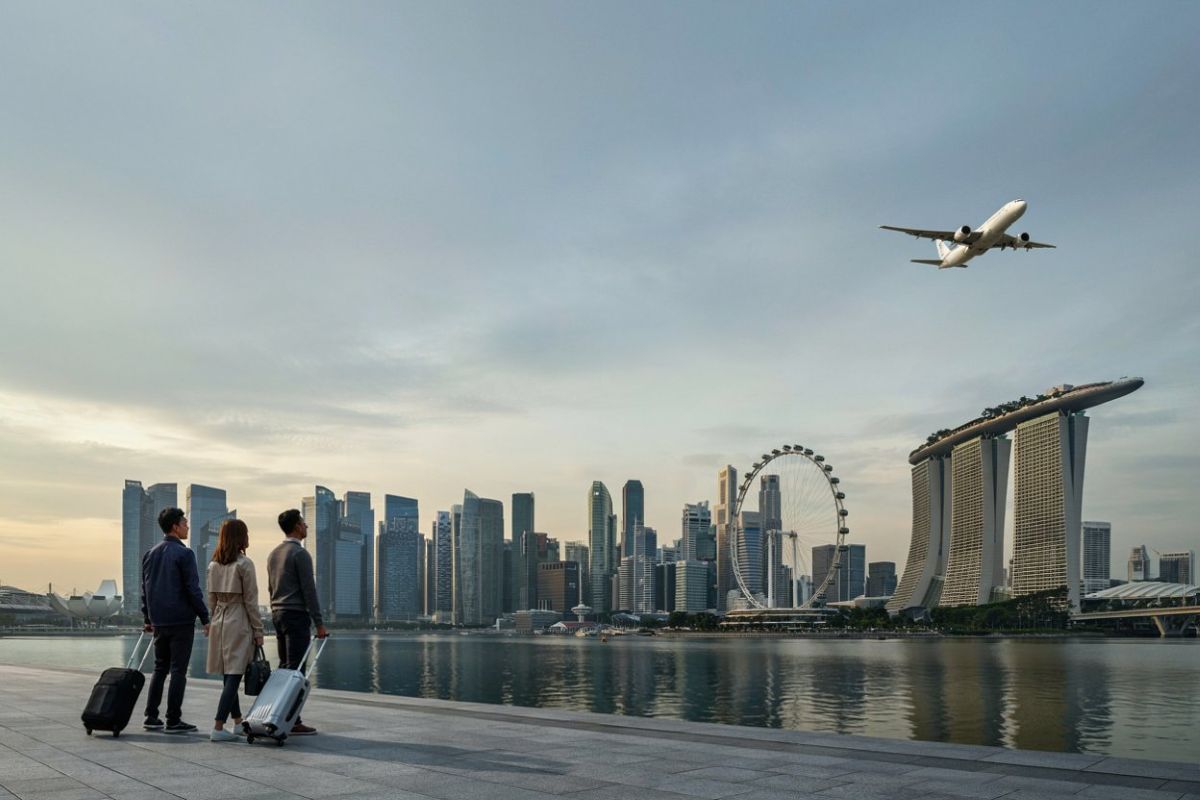
Singapore’s tourism industry faced a challenging second quarter in 2026, as international travel uncertainty and disruptions to air connectivity coincided with lower visitor spending. The city-state recorded S$7.21 billion in tourism receipts between April and June, a 6.2% decline compared with the same period last year. International visitor arrivals also weakened, highlighting the pressure facing one of Asia’s leading travel destinations.
According to figures attributed to the Singapore Tourism Board (STB), the latest results reflect a difficult international environment. However, the broader picture is less concerning: tourism receipts for the first six months remained close to their year-earlier level, suggesting that the quarterly decline has not yet translated into a comparable fall across the entire first half.
Advertisement
Advertisement
Singapore Records Lower Visitor Arrivals in Q2
Singapore welcomed approximately 3.76 million international visitors during the second quarter, down 6.6% year on year. Tourism receipts also declined from S$8.51 billion in the first quarter to S$7.21 billion in the second, representing a 15.4% quarter-on-quarter reduction.
The figures show that fewer visitors arrived while overall tourism spending also weakened. However, quarterly comparisons should be interpreted carefully because travel demand and spending can change with seasonal patterns, visitor mix and economic conditions.
Advertisement
Advertisement
For travellers considering Singapore, the results do not necessarily signal a decline in the destination’s appeal. Instead, they highlight the uncertainty affecting international tourism and the importance of monitoring travel costs, flight availability and visitor demand.
Middle East Conflict and Higher Travel Costs Add Pressure
The Singapore Tourism Board identified the escalation of the Middle East conflict during the first quarter as an important factor behind the challenging operating environment.
Advertisement
Advertisement
According to the board, the situation contributed to higher fuel costs, reduced air capacity and economic uncertainty affecting international travel, particularly from European source markets.
These pressures can influence the cost and convenience of international holidays. Airlines facing higher operating expenses may adjust schedules or capacity, while travellers dealing with economic uncertainty may reconsider long-haul trips or reduce discretionary spending.
Singapore’s position as a major international aviation hub makes air connectivity particularly important to its tourism performance. Nevertheless, the available figures do not establish how much of the decline was directly caused by higher fares, changes in flight schedules or individual travellers postponing their trips.
The wider international picture provides further context. UN Tourism reported that international tourist arrivals increased by just 0.4% during the first half of 2026. Its assessment also identified geopolitical instability, elevated oil prices and higher transport and accommodation costs as significant challenges for the global tourism sector.
Entertainment and Dining See Significant Spending Declines
The decline in Singapore’s tourism receipts extended across several spending categories, although the scale of the reductions varied.
Sightseeing, entertainment and gaming recorded the sharpest fall, with receipts decreasing 15.4% year on year to S$1.58 billion. Food and beverage spending declined 9.8%, while accommodation receipts fell 8.4%. Shopping recorded a comparatively smaller decrease of 1.5%.
Advertisement
Advertisement
These figures offer insight into how the slowdown affected different parts of the visitor economy. Attractions, entertainment venues, restaurants and hotels all depend on international visitors to varying degrees, making changes in arrivals and spending relevant to tourism businesses.
The figures should not, however, be interpreted as evidence that hotel rates, restaurant prices or attraction tickets have fallen by the same percentages. Tourism receipts measure spending generated by visitors, rather than the prices charged by individual businesses.
China Remains Singapore’s Largest Tourism Spending Market
China continued to be Singapore’s leading source market for tourism receipts during the second quarter. Visitors from China generated S$965.5 million, although this was 1.9% lower than a year earlier.
Indonesia ranked second, contributing S$589.7 million, a decline of 15.2%. Australia followed with S$526.7 million, representing growth of 5.6%. India contributed S$471.6 million, down 5.6%, while visitors from the United States generated S$427.2 million, an increase of 16.1%.
Visitor arrivals followed a slightly different ranking. China accounted for 619,624 arrivals, followed by Indonesia with 518,893. India ranked third with 357,152 visitors, ahead of Malaysia and Australia.
The differences between arrivals and receipts underline why tourism authorities monitor both indicators. Visitor numbers reveal the scale of inbound travel, while spending figures provide a separate measure of its economic contribution.
Advertisement
Advertisement
First-Half Tourism Performance Remains Relatively Stable
Despite the weaker second quarter, Singapore’s overall performance between January and June remained comparatively steady.
Tourism receipts reached S$15.71 billion during the first half, down just 0.3% from the corresponding period in 2025. International arrivals totalled 8.19 million, representing a 1.7% decline.
Shopping provided a brighter spot, with first-half receipts increasing 2.9% year on year. Sightseeing, entertainment and gaming rose 2.3%, while other tourism components recorded growth of 1.6%. Food and beverage receipts fell 6.2%, and accommodation receipts declined 5.3%.
The Singapore Tourism Board has also highlighted differentiated retail experiences and new luxury-store openings as factors supporting shopping expenditure. Developments at ION Orchard, Design Orchard and New Bahru illustrate how established retail districts and locally developed lifestyle destinations continue to contribute to Singapore’s visitor offering.
Singapore’s Tourism Outlook Depends on Global Travel Conditions
Singapore entered 2026 with ambitious tourism targets. In an address published by the Singapore Tourism Board, its chief executive outlined an outlook of 17 million to 18 million international visitor arrivals and S$31 billion to S$32.5 billion in tourism receipts for the year.
Those projections were announced before the second-quarter figures became available, and the latest results highlight the uncertainty surrounding the outlook.
Advertisement
Advertisement
For travellers, Singapore continues to offer a combination of urban attractions, shopping, dining and international connections. For the tourism industry, the immediate challenge is to sustain demand while international travel costs and geopolitical conditions remain unpredictable.
The second-quarter decline is a clear setback, but the first-half figures tell a more measured story. Singapore’s tourism receipts remain close to their 2025 level, leaving the performance of the coming months crucial to determining whether the slowdown proves temporary or develops into a more persistent challenge for the destination.
Advertisement
