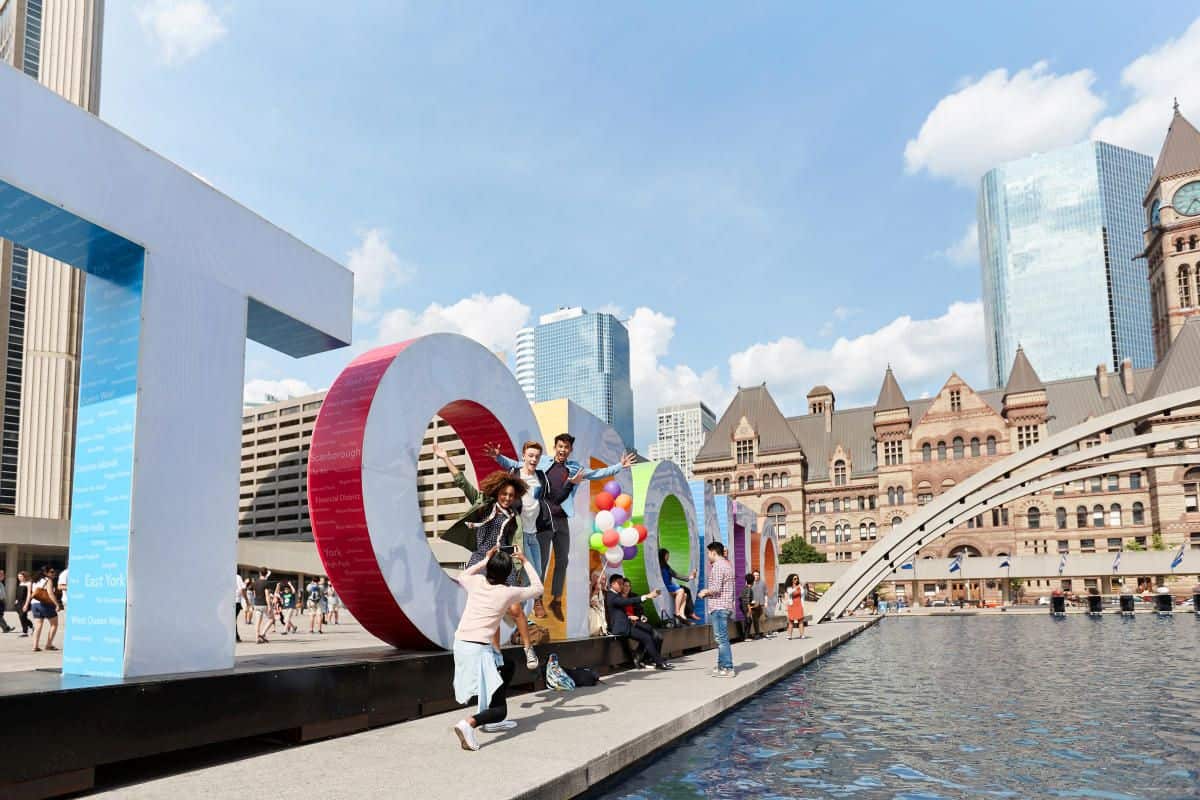
São Paulo, Mexico City and Toronto are pursuing a more valuable class of international traveller as urban tourism enters a new competitive phase. The focus is shifting from visitor volume towards visitor spending, premium accommodation, business travel and longer stays. São Paulo recorded 47.2 million tourist visits in 2025, including 2.5 million international visitors, while tourism revenue reached R$25.4 billion. Mexico City recorded 15.6 million tourists and MXN159 billion in tourism-related economic activity. Toronto welcomed 28.2 million visitors who spent US$9.1 billion. Their approaches differ, yet all three cities are building a broader urban proposition around business, leisure, luxury hotels, dining, culture, shopping, healthcare and global air access.
The three metropolitan destinations reveal how the economics of city tourism are changing. A traveller who arrives for a conference can now become a hotel guest, restaurant customer, shopper, museum visitor and weekend leisure traveller. That broader spending chain makes the visitor more valuable than a simple arrival statistic suggests.
Advertisement
This matters because the destinations are not competing on identical terms. São Paulo combines corporate travel with healthcare, gastronomy and luxury retail. Mexico City pairs cultural depth with food, hospitality and international business. Toronto brings together global connectivity, meetings, entertainment and affluent urban leisure.
The comparison therefore requires more than arrival figures. Spending intensity, hotel performance, connectivity and trip-extension potential provide a more revealing measure of destination competitiveness.
Advertisement
Advertisement
| Indicator | São Paulo | Mexico City | Toronto |
|---|---|---|---|
| 2025 total tourists/visitors | 47.2m | 15.6m tourists | 28.2m |
| International visitors | 2.5m reported | Major international gateway | 1.4m |
| 2025 tourism spending | R$25.4bn | MXN159bn economic activity | $9.1bn visitor spending |
| Hotel occupancy | Not directly comparable | 67.9% | Market-specific |
| Airport scale | Major Latin American gateway | Major national gateway | 47.3m passengers |
| Distinctive advantage | Business and healthcare | Culture and gastronomy | Connectivity and business |
The figures are not directly interchangeable because each authority uses different methodologies. That distinction matters for readers comparing cities across countries.
São Paulo’s latest tourism performance demonstrates the scale of its urban machine. The city received 47.2 million tourists in 2025, approximately 25% more than the 37.7 million recorded in 2024. International arrivals reached 2.5 million, while tourism-sector revenue climbed 11.5% to R$25.4 billion.
The city’s event calendar helped drive that expansion. The programme included The Town, Coala Festival, an NFL game, the São Paulo Open and the 36th Bienal. Such events matter because they create several spending opportunities beyond admission tickets. Visitors need hotels, restaurants, transport, shopping and entertainment before and after the headline event.
São Paulo is also maintaining momentum in 2026. The city recorded 25.4 million tourists during the first half of the year, up 13.3% year on year. Airport traffic across the city’s airports reached 41.5 million passengers during that period, increasing 3.2%.
That combination gives São Paulo an unusual advantage. Its tourism proposition does not depend on leisure demand alone. Corporate travel, major events, healthcare, dining and shopping can reinforce one another throughout the calendar.
Medical travel gives São Paulo an especially distinctive position within this three-city contest. The city hosts major private hospitals, specialist clinics and a sophisticated healthcare ecosystem that attracts patients from across Brazil and abroad.
The significance extends beyond treatment itself. International patients often travel with companions, require accommodation and spend on transport, restaurants and other services. Their journeys can therefore generate a wider economic footprint than conventional short leisure trips.
However, medical tourism requires careful measurement. A world-class hospital does not automatically create a medical-tourism destination. International accessibility, private-pay services, specialist reputation, pricing and patient support all influence the market.
That makes São Paulo’s healthcare strength particularly relevant to the wider urban tourism model. It can add another high-value reason for an international visitor to choose the city.
Mexico City approaches the same market from a different direction. Its greatest competitive asset is the sheer density of experiences available within one metropolitan destination.
Official figures show that Mexico City recorded 15.6 million tourists in 2025, alongside 62.3 million visitors. Tourism generated approximately MXN159 billion, equivalent to around 10% of the city’s GDP according to the city government.
The city’s hotel market also provides evidence of strong international demand. Average hotel occupancy reached 67.9% in 2025. Meanwhile, official tourism data showed international hotel-tourist spending rising strongly during 2025.
The attraction is not difficult to understand. Visitors can move from historic architecture and museums to contemporary galleries, fine dining, luxury shopping and neighbourhood experiences without leaving the metropolitan area.
For business travellers, this creates an important incentive. Mexico City can turn a corporate itinerary into a leisure itinerary without requiring another flight. A conference can be followed by museums, gastronomy, shopping or several additional nights.
Hotel development offers another way to identify where cities expect premium demand to grow.
Mexico City has continued attracting upscale and luxury investment in strategically positioned districts. In July 2026, Kimpton El Castelar opened in Polanco with 34 rooms, placing a luxury lifestyle product close to major cultural attractions and premium retail.
Another development, InterContinental Presidente Mexico City Miyana, is scheduled to open in the second half of 2026. The 184-room property sits in Nuevo Polanco, close to corporate offices, museums and shopping centres.
That location strategy is significant. Luxury hotels increasingly function as connectors between business, culture and consumption. Their value lies not only in rooms but also restaurants, meeting facilities, wellness services and proximity to high-spending districts.
São Paulo and Toronto offer similar urban logic, although their hotel markets operate within different economic environments. The more important trend is the convergence of business and leisure demand around premium neighbourhoods.
Toronto’s advantage is its international reach. The city welcomed a record 28.2 million visitors in 2025, generating $9.1 billion in direct visitor spending and approximately $13.5 billion in total economic impact.
International arrivals grew 8% to 1.4 million. The United Kingdom and Germany recorded particularly strong growth, while the United States remained a major source market despite a decline.
The airport reinforces that position. Toronto Pearson handled 47.3 million passengers in 2025, including 30.1 million international passengers. The airport had 53 passenger airlines and reached 201 direct destinations during the year.
For premium travellers, that breadth has practical significance. A city becomes easier to sell to global companies when employees and clients can reach it directly from multiple international markets.
Toronto therefore has a powerful connectivity-to-consumption pathway. A traveller can arrive for a meeting, stay in a premium hotel, dine across several international cuisines, shop in Yorkville or Bloor-Yorkville, attend a sporting event and extend the trip into a leisure weekend.
Airport infrastructure is often treated as background tourism data. It should instead be viewed as part of the destination product.
São Paulo’s GRU Airport recorded more than 1.5 million international passengers in several peak months during 2025. Mexico City’s Benito Juárez International Airport processed a vast domestic and international network across its two passenger terminals. Toronto Pearson handled 30.1 million international passengers in 2025.
Airport gateway Key 2025 indicator Competitive significance São Paulo GRU More than 1.5m international passengers in peak months Latin American business gateway Mexico City MEX More than 27m combined international arrivals/departures Major national and regional gateway Toronto Pearson 47.3m total passengers Deep global connectivity
The crucial point is not simply airport size. Route breadth determines which premium markets a city can realistically cultivate.
Toronto Pearson currently lists more than 50 airlines and more than 160 destinations. Its 2025 network reached 201 direct destinations when its operating definition included certain same-flight-number connections.
For travellers, that means fewer connection penalties. For tourism authorities, it means access to a broader pool of affluent markets.
Culinary tourism adds another layer to the competition. São Paulo’s restaurant scene reflects Brazil’s enormous cultural diversity and its position as a global business capital. Mexico City has developed one of the world’s most recognisable gastronomic identities, combining traditional cuisine with sophisticated contemporary dining.
Toronto’s strength comes from its extraordinary multicultural range. Its dining ecosystem reflects the city’s international population and provides travellers with cuisine from across the world.
The commercial significance is substantial. A premium restaurant can increase destination spending without increasing visitor numbers. Dining also encourages evening activity, longer stays and neighbourhood exploration.
That makes gastronomy an unusually efficient tourism asset. Cities can monetise culinary reputation through restaurants, markets, food festivals, hotel dining and premium experiences.
Luxury retail provides another important distinction between visitor volume and visitor value.
São Paulo’s Jardins, Oscar Freire and major luxury shopping centres provide a premium Brazilian retail ecosystem. Mexico City’s Polanco and Avenida Presidente Masaryk combine international luxury labels with Mexican design, art and premium hospitality.
Toronto offers Yorkville and Bloor Street alongside major department stores, international brands and Canadian designers.
The three cities therefore offer different versions of urban retail. São Paulo emphasises Brazilian luxury and regional purchasing power. Mexico City blends international labels with design and cultural identity. Toronto benefits from North American retail depth and a large affluent metropolitan market.
For the traveller, shopping also changes the economics of a trip. A destination becomes more commercially valuable when visitors can spend beyond hotels and restaurants.
Cultural attractions may ultimately provide the strongest reason to stay longer.
Mexico City has exceptional depth, spanning the historic centre, Templo Mayor, Chapultepec, major museums, Coyoacán and internationally recognised artistic institutions. São Paulo offers museums, contemporary art, architecture, music, football and major cultural events.
Toronto combines the Royal Ontario Museum, Art Gallery of Ontario, theatre, film, music, sport and waterfront experiences.
This matters because the most lucrative urban traveller may not be a pure leisure tourist. The strongest customer can be the person who already has a reason to visit.
The commercial opportunity begins when a two-night business trip becomes a five-night stay.
The comparison reveals three distinct models rather than one universal winner.
City Strongest high-value proposition Traveller opportunity São Paulo Business, healthcare, dining and luxury retail Add premium services around corporate trips Mexico City Culture, gastronomy, luxury and business Extend business stays into immersive leisure Toronto Connectivity, meetings, culture and entertainment Convert global access into longer urban stays
São Paulo arguably has the most distinctive healthcare advantage. Mexico City has perhaps the richest combination of culture and gastronomy. Toronto has the clearest global-connectivity advantage.
That makes the competitive field more balanced than a conventional tourism ranking suggests.
For travellers, this shift creates practical benefits. Cities competing for high-value visitors have stronger incentives to improve hotels, airport links, restaurants, cultural programming and premium experiences.
Business travellers should therefore look beyond the conference venue. A well-planned extension can turn a corporate journey into a richer cultural trip without adding another destination to the itinerary.
Leisure travellers can make the same calculation in reverse. Travelling during major business or cultural events may produce stronger hotel demand, while shoulder periods can offer better value.
Medical travellers need a different approach. They should assess hospital accreditation, specialist credentials, international-patient services and post-treatment arrangements before considering destination appeal.
The competition between São Paulo, Mexico City and Toronto signals a broader change across international tourism. Cities increasingly want fewer low-value journeys and more complete visitor economies.
That does not necessarily mean fewer tourists. Instead, it means designing destinations where one visitor can generate value across several sectors.
The strongest metropolitan tourism model may therefore be the city that makes it easiest to combine business, leisure, dining, culture, shopping and premium hospitality in one seamless journey.
São Paulo brings corporate scale and healthcare. Mexico City brings cultural intensity and culinary distinction. Toronto brings connectivity and international business strength. As global travel becomes more competitive, the cities that convert arrivals into longer, richer and more valuable stays could emerge as the real urban tourism winners.
Advertisement
Advertisement
Advertisement














Monday, September 14, 2026
Monday, September 14, 2026
Monday, September 14, 2026
Monday, September 14, 2026
Monday, September 14, 2026
Sunday, September 13, 2026
Monday, September 14, 2026

Monday, September 14, 2026