
Myeong-dong and More See Tourists Spend Big as Asia’s Shopping Capitals Draw Global Visitors

Published
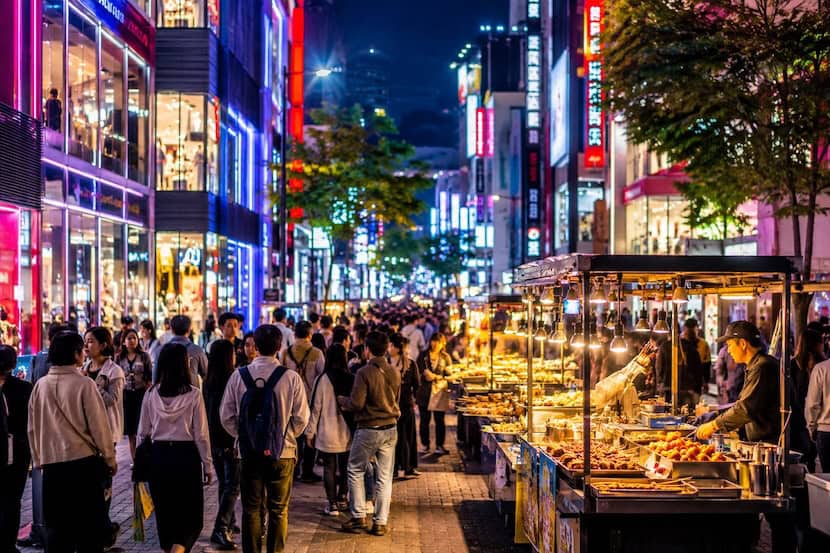
Myeong-dong and more Asian shopping capitals are giving tourists new reasons to spend big while travelling across Asia. As global visitors explore Seoul, Myeong-dong continues to attract shoppers seeking beauty, fashion, food and Korean experiences. Meanwhile, more shopping capitals across Asia are drawing global visitors with luxury malls, lively markets and distinctive local products. From Myeong-dong to Tokyo, Bangkok, Singapore, Hong Kong, Taipei and Kuala Lumpur, tourists can discover very different shopping experiences. Travel And Tour World explores how these destinations are attracting global visitors, where tourists can shop, what they can experience and how to plan an unforgettable Asia shopping journey.
Asia’s Shopping Capitals Give Travellers More Choices Beyond Myeong-dong
Myeong-dong is only one part of Asia’s enormous shopping landscape. Tokyo, Bangkok, Singapore, Hong Kong, Taipei and Kuala Lumpur offer different combinations of retail, food, culture and entertainment. Their tourism statistics also show how dramatically international travel has recovered since the pandemic. For travellers planning a shopping holiday, the best destination depends on whether the priority is luxury, electronics, beauty, street markets, designer fashion, local food or cultural experiences.
Asia Shopping Destinations: Five-Year Visitor Comparison
| Shopping destination | 2021 | 2022 | 2023 | 2024 | 2025 | Measurement |
|---|---|---|---|---|---|---|
| Tokyo | Annual comparable estimate unavailable* | 3.31m | 19.54m | 24.79m | 28.65m | Foreign visitors to Tokyo |
| Singapore | 0.33m | 6.31m | 13.60m | 16.50m | 16.90m | International visitor arrivals |
| Hong Kong | 91,398 | 604,564 | 33.999m | 44.503m | 49.895m | Visitor arrivals |
| Taipei | 23.84m | 30.84m | 58.89m | 100.23m | 101.69m | Visits to major tourism/recreation areas** |
| Kuala Lumpur/Malaysia | 134,728 | 10.071m | 20.10m | 25.017m international tourists / 38m visitors | 6.7m Jan–Feb | Malaysia-level tourism series*** |
| Bangkok/Thailand | Pandemic restrictions | 11.8m | 28.15m | 35.54m | 30.3m Bangkok international arrivals**** | Thailand total / Bangkok 2025 |
1. Tokyo, Japan: Ginza Luxury Meets Harajuku Street Fashion
Tokyo is the strongest alternative for travellers who want shopping to become part of a wider Japanese cultural journey. The city recorded approximately 28.65 million foreign visitors in 2025, up 15.6% from 2024. Foreign visitor spending reached approximately ¥4.5534 trillion, also a record. In 2024, Tokyo recorded around 24.79 million foreign visitors, following approximately 19.54 million in 2023 and 3.31 million in 2022. Tokyo’s official tourism research also shows that shopping works alongside sightseeing, anime, food and entertainment rather than operating as a separate activity. Travellers should divide a shopping day between districts. Ginza is suitable for luxury department stores, premium Japanese brands and sophisticated dining. Shibuya offers youth fashion, cosmetics, character goods and contemporary retail. Harajuku is useful for street fashion, accessories and youth-oriented Japanese culture, while Akihabara remains an important stop for electronics, anime, games and collectibles. The Tokyo Metropolitan Government’s 2025 foreign-traveller survey found that 86.9% of foreign visitors travelled for sightseeing and leisure, while Shibuya was visited by 60.3%, Ginza by 54.1%, and the Tokyo Station, Marunouchi and Nihombashi area by 51.8%. Travellers should therefore avoid spending the entire day inside malls. A practical three-day plan could begin with Ginza and Nihombashi, move to Shibuya and Harajuku on day two, and combine Akihabara with Asakusa on day three. Food should include sushi, ramen, tempura, yakitori and Japanese sweets. Visitors wanting accommodation near shopping can consider Ginza, Shinjuku, Shibuya or Tokyo Station. Tokyo’s official statistics show that foreign visitor spending per person in 2025 reached ¥199,874, including ¥65,199 on accommodation, highlighting the value of planning shopping and lodging together.
2. Bangkok, Thailand: Markets, Malls and Thai Street Food
Bangkok offers a completely different shopping experience because luxury malls, traditional markets, street food and neighbourhood retail operate side by side. The Tourism Authority of Thailand reported that Bangkok was the world’s most visited city by international travellers in 2025, with 30.3 million international arrivals according to Euromonitor’s city ranking. Thailand itself welcomed 11.8 million international tourists in 2022, more than 28 million in 2023 and over 35 million in 2024, when tourism revenue exceeded 1.8 trillion baht. These figures show the scale of the market supporting Bangkok’s retail ecosystem. Travellers can start around Siam, where major shopping centres provide fashion, electronics, beauty products and international brands. Ratchaprasong works well for luxury shopping and connected malls. Pratunam is better suited to wholesale fashion and affordable clothing, while Chatuchak provides a huge market-style experience when operating days align with the traveller’s itinerary. A Bangkok shopping trip should not be limited to air-conditioned malls. Visitors can combine retail with the Grand Palace, Wat Pho, Wat Arun and the Chao Phraya riverfront. Food is another major attraction. Travellers should try pad Thai, mango sticky rice, tom yum, som tam, grilled seafood and Thai desserts. A three-day plan can place Siam and Ratchaprasong on day one, Pratunam and central Bangkok on day two, and Chatuchak or riverside markets with cultural attractions on day three. Travellers can stay around Siam, Sukhumvit, Silom or riverside districts depending on whether shopping, nightlife or sightseeing is the priority. Bangkok’s advantage is variety. A visitor can purchase premium fashion in the morning, eat inexpensive street food at lunch and explore temples before sunset. TAT’s tourism data also shows the enormous national recovery, making Bangkok a particularly useful option for travellers wanting shopping combined with a wider Thailand itinerary.
Advertisement
Advertisement
3. Singapore: Orchard Road, Marina Bay and Luxury Retail
Singapore suits travellers who want an organised shopping holiday with excellent public transport, modern malls, international brands and food experiences. The Singapore Tourism Board recorded 330,000 international visitor arrivals in 2021, followed by 6.31 million in 2022, 13.6 million in 2023, 16.5 million in 2024 and 16.9 million in 2025. Tourism receipts reached a record S$32.8 billion in 2025, demonstrating the commercial importance of international tourism. Singapore’s shopping experience centres on Orchard Road, where department stores, fashion retailers, beauty brands and luxury shopping dominate. Marina Bay adds premium retail, architecture and entertainment, while Bugis provides a more youthful and accessible shopping environment. Travellers can also explore Chinatown, Little India and Kampong Gelam, where shopping becomes closely connected with food, culture and heritage. A practical four-day itinerary could dedicate day one to Orchard Road, day two to Marina Bay and the Civic District, day three to Chinatown and Little India, and day four to Kampong Gelam and additional shopping. Food should be central to the experience. Travellers can try chicken rice, laksa, chilli crab, satay, roti prata and local hawker-centre favourites. Singapore’s compact geography means visitors can move between major retail and food districts efficiently. Accommodation around Orchard, Marina Bay, Bugis or City Hall provides convenient access to shopping and transport. The destination also offers a strong luxury angle. Singapore’s 2025 tourism receipts included substantial spending from Mainland China, Indonesia, Malaysia, Australia and India, which were its five largest visitor markets. The Singapore Tourism Board also reported S$2.3 billion in MICE tourism receipts in 2025, illustrating how business travellers contribute to the city’s wider visitor economy. For global tourists, Singapore works particularly well as a shopping stop combined with a Southeast Asian multi-destination itinerary.
4. Hong Kong: Harbour Views, Designer Brands and Traditional Markets
Hong Kong remains one of Asia’s most distinctive shopping destinations because luxury retail, traditional markets and high-density urban sightseeing are concentrated across a highly connected city. Visitor arrivals collapsed to only 91,398 in 2021, reflecting pandemic restrictions, before reaching 604,564 in 2022. The reopening brought a dramatic recovery, with 33.999 million arrivals in 2023, approximately 44.503 million in 2024, and 49.895 million in 2025. In 2025, Mainland China accounted for about 37.8 million visitors, while non-Mainland markets supplied around 12.1 million. Travellers can structure a shopping itinerary around Tsim Sha Tsui, Causeway Bay, Central and Mong Kok. Tsim Sha Tsui combines luxury retail, harbour views, museums and hotels. Causeway Bay is useful for major malls and fashion. Central works well for premium brands and dining, while Mong Kok provides street markets, local shopping and a more energetic neighbourhood atmosphere. Travellers should include Victoria Harbour, the Peak, traditional markets and cultural attractions rather than spending the entire trip indoors. Food can include dim sum, roast goose, wonton noodles, pineapple buns and milk tea. A three-day itinerary could cover Tsim Sha Tsui on day one, Central and Victoria Peak on day two, and Causeway Bay and Mong Kok on day three. The Hong Kong Tourism Board reported that overnight visitors stayed an average 3.1 nights in 2025, while visitor satisfaction reached 8.9 out of 10. In 2024, inbound tourism generated about HK$195 billion in associated expenditure, while overnight visitors spent approximately HK$5,490 per person. Travellers seeking accommodation can choose Tsim Sha Tsui for shopping and harbour access, Causeway Bay for retail convenience, or Central for luxury and business-oriented stays. Hong Kong is especially attractive for tourists who want shopping integrated with an intense city experience rather than a conventional resort holiday.
Advertisement
Advertisement
5. Taipei, Taiwan: Ximending, Taipei 101 and Night-Market Shopping
Taipei combines modern retail, independent stores, traditional markets and food culture in a way that suits travellers seeking a less formal shopping experience. Taipei’s official tourism statistics show 23.84 million visits to major tourism and recreation areas in 2021, increasing to 30.84 million in 2022, 58.89 million in 2023, 100.23 million in 2024 and 101.69 million in 2025. These are attraction visits rather than unique international travellers, so they should not be directly compared with Singapore’s international-arrival figures. Taipei nevertheless offers compelling evidence of strong visitor activity. In 2025, official city data showed 5.14 million international visitors had visited Taipei through September, the highest among Taiwan’s six major municipalities. Shopping should begin at Ximending, where youth fashion, entertainment and street culture overlap. Taipei 101 provides premium shopping and one of the city’s signature skyline experiences. Travellers can then move towards traditional markets and neighbourhood food streets. Night markets are essential because Taipei’s shopping experience is inseparable from eating. Visitors should try beef noodle soup, xiaolongbao, scallion pancakes, oyster omelettes, pepper buns, bubble tea and Taiwanese fried chicken. A three-day itinerary can place Ximending and Taipei 101 on day one, traditional markets and cultural attractions on day two, and Beitou or Yangmingshan alongside another shopping district on day three. Taipei’s official 2024 visitor survey found that food was the most frequently cited reason for visiting, while Taipei 101 and Ximending were among the most visited attractions, each exceeding 70% visitation in the survey. Travellers can stay around Ximending, Taipei Main Station, Zhongshan or Taipei 101 depending on whether they prioritise nightlife, transport or premium shopping. Taipei is particularly suitable for travellers who want retail to feel connected with everyday Taiwanese life rather than dominated by international luxury brands.
6. Kuala Lumpur, Malaysia: Bukit Bintang, Suria KLCC and Malaysian Flavours
Kuala Lumpur is one of Asia’s strongest choices for travellers who want shopping, food and affordable urban experiences in one trip. Because Malaysia does not publish a directly comparable annual foreign-visitor series for Kuala Lumpur alone, national tourism statistics provide the clearest official indicator of the market supporting the capital. Malaysia recorded just 134,728 international tourist arrivals in 2021, reflecting severe pandemic restrictions. Arrivals reached 10.07 million in 2022, 20.1 million in 2023, and 25.02 million international tourist arrivals in 2024. Tourism Malaysia separately reported 38 million total visitor arrivals in 2024, a broader measurement that includes visitor categories beyond international tourists. January and February 2025 recorded 6.7 million visitor arrivals, up 31.3% year on year. For travellers, Kuala Lumpur’s shopping centre is Bukit Bintang, where malls, fashion, restaurants and entertainment cluster around a highly accessible urban district. KLCC adds premium retail beneath the Petronas Twin Towers, while Central Market and nearby heritage areas provide a more cultural shopping experience. Travellers should combine malls with Batu Caves, Merdeka Square, Chinatown and Kampung Baru. Food is a major reason to choose Kuala Lumpur. Visitors can explore nasi lemak, char kway teow, roti canai, laksa, satay and Malaysian desserts. A three-day plan can focus on Bukit Bintang and KLCC on day one, Chinatown and Central Market on day two, and Batu Caves with another shopping session on day three. Accommodation around Bukit Bintang or KLCC makes the most sense for first-time visitors because both areas provide convenient access to retail, dining and public transport. Kuala Lumpur is especially attractive for families and value-conscious travellers because shopping can range from premium international labels to local fashion, crafts, food products and affordable everyday goods.
Myeong-dong’s Position in Asia’s Shopping Race
Myeong-dong has an important advantage that distinguishes it from several competing Asian shopping districts. It combines K-beauty, Korean fashion, food, department stores, duty-free shopping and compact sightseeing opportunities in a relatively concentrated area. The official Korea Tourism Organization describes the district as a one-stop shopping destination with road shops, department stores, duty-free outlets and underground shopping. It also highlights high-end cosmetics at Lotte Department Store, affordable beauty products at Olive Young Myeong-dong Town and household goods at Daiso Myeongdong Main Store.
Korea’s wider foreign-tourist shopping economy is also becoming more diverse. The Korea Tourism Organization reported that foreign-card spending reached KRW 2.12 trillion in May 2026, up 67.1% from the previous year. Retail spending increased 77.8%, while pharmacies rose 206.1%, toys and entertainment equipment 191.4%, skincare and massage 153.9%, department stores 89.2%, and duty-free shops 87.6%.
That trend gives travellers a wider reason to visit Myeong-dong. The district is no longer simply a place to buy cosmetics. It sits within Seoul’s expanding ecosystem of K-beauty, lifestyle products, food, fashion, character merchandise and cultural tourism.
Detailed Shopping Destination Statistics for Travellers
| Destination | Latest key tourism figure | Shopping/travel significance | Best-known shopping zones | Strongest travel combination |
|---|---|---|---|---|
| Myeong-dong, Seoul | Jung-gu captured 24.1% of Korea’s foreign-card shopping expenditure in Q2 2026 | K-beauty, fashion, duty-free, food | Myeong-dong, Sogong-dong | Shopping + K-culture + food |
| Tokyo | 28.65m foreign visitors in 2025 | Luxury, fashion, anime, electronics | Ginza, Shibuya, Harajuku, Akihabara | Shopping + culture + food |
| Bangkok | 30.3m international arrivals in 2025 city ranking | Luxury malls, markets, street retail | Siam, Ratchaprasong, Pratunam, Chatuchak | Shopping + temples + food |
| Singapore | 16.9m international arrivals in 2025 | Premium malls and organised retail | Orchard, Marina Bay, Bugis | Shopping + food + urban attractions |
| Hong Kong | 49.9m visitors in 2025 | Luxury, markets and dense urban retail | Tsim Sha Tsui, Causeway Bay, Mong Kok, Central | Shopping + harbour + culture |
| Taipei | 101.69m major-site visits in 2025 | Night markets, fashion, local products | Ximending, Taipei 101, traditional markets | Shopping + food + hot springs |
| Kuala Lumpur | Malaysia recorded 38m visitor arrivals in 2024 | Value shopping, malls, local products | Bukit Bintang, KLCC, Central Market | Shopping + food + heritage |
Myeong-dong’s latest government-backed data also shows that Korea’s shopping market is increasingly driven by everyday lifestyle consumption. Foreign tourists are buying skincare, pharmacy products, food, character merchandise and fashion rather than concentrating solely on luxury goods. Korea’s Ministry of Culture, Sports and Tourism reported that the 2025 Korea Grand Sale attracted more than 346,000 international visitors, while welcome centres in Myeong-dong, Hongdae, Seongsu, Gangnam and Jamsil received more than 24,000 foreign tourists.
Advertisement
Advertisement
A Seven-Day Asia Shopping Itinerary
| Day | Destination | Main shopping plan | Travel additions | Food focus |
|---|---|---|---|---|
| Day 1 | Seoul | Myeong-dong | Myeong-dong Cathedral, central Seoul | Korean street food, Korean barbecue |
| Day 2 | Seoul | Myeong-dong and wider Seoul | Hongdae or Seongsu | Korean fried chicken, gimbap |
| Day 3 | Tokyo | Ginza and Shibuya | Shibuya, central Tokyo | Sushi, ramen |
| Day 4 | Tokyo | Harajuku and Akihabara | Meiji area, Asakusa | Tempura, yakitori |
| Day 5 | Singapore | Orchard Road and Marina Bay | Gardens, waterfront | Hawker food, chilli crab |
| Day 6 | Hong Kong | Causeway Bay and Tsim Sha Tsui | Victoria Harbour | Dim sum, roast meats |
| Day 7 | Taipei | Ximending and Taipei 101 | Night market | Beef noodles, bubble tea |
For travellers wanting a single-country shopping holiday, Seoul and Tokyo provide the deepest retail-plus-culture combinations. For a luxury-focused trip, Tokyo, Singapore and Hong Kong offer stronger premium retail environments. For value shopping and street-food experiences, Bangkok, Taipei and Kuala Lumpur are especially compelling.
The biggest lesson from the latest statistics is that Asian shopping tourism is becoming broader. Travellers are increasingly combining retail with food, culture, entertainment, beauty, wellness and neighbourhood exploration. Myeong-dong remains a powerful example of this shift, but the wider Asian market gives global tourists several equally distinctive ways to build a shopping-focused journey.
Conclusion
Myeong-dong and Asia’s other shopping capitals are giving global visitors more ways to experience the region beyond traditional sightseeing. From Seoul’s K-beauty and fashion stores to Tokyo’s luxury districts, Bangkok’s colourful markets, Singapore’s premium malls, Hong Kong’s retail streets, Taipei’s night markets and Kuala Lumpur’s value shopping, every destination offers a distinctive travel experience. For tourists, the appeal goes beyond spending big. Shopping can be combined with local food, culture, entertainment and neighbourhood exploration. Travel And Tour World encourages global travellers to look beyond one shopping district and discover how Asia’s retail capitals can transform an ordinary holiday into a memorable journey.
Advertisement
