
Durga Puja 2026: Mahashashthi Rituals & Pandal Hopping Guide

Published
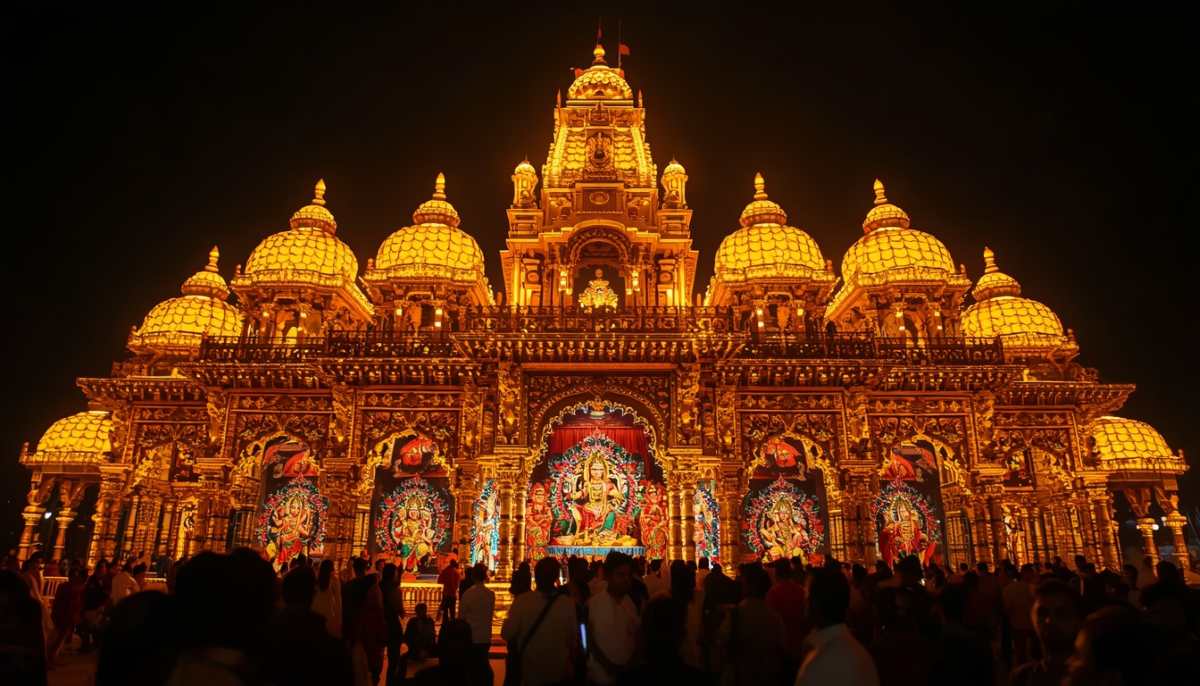
The grand commencement of West Bengal’s largest cultural festival, Durga Puja, is officially marked on Mahashashthi through deeply rooted traditional rituals conducted across various illuminated marquees. Essential ceremonies such as the Kalparamba ritual are performed to initiate the festive celebrations, while the bodhan or invocation of the goddess is observed alongside mothers offering sincere prayers for the well-being of their children. Greetings are extended by political figures, including Chief Minister Suvendu Adhikari, who conveys best wishes through public platforms. The bodhan ritual symbolizes the awakening of Goddess Durga for her mythical battle against the demon king Mahishasura, echoing the legendary tradition of Lord Ram invoking the deity at an unconventional time of the year, historically recognized as Akal Bodhan. Early visitors begin thronging decorated marquees to admire intricate idols and elaborate artistic installations, setting the stage for massive gatherings across Kolkata.
Impact on Travellers and Tourism Dynamics
The onset of the festivities brings profound changes to regional mobility, visitor influxes, and overall tourism patterns across the state. Travelers arriving during Mahashashthi experience a vibrant atmosphere characterized by bustling streets, dense pedestrian traffic, and heightened security deployments around major puja hubs. Accommodation facilities, local transportation networks, and hospitality sectors operate at peak capacity to accommodate the massive influx of domestic and international visitors. Tourism agencies and local authorities coordinate extensive crowd-management strategies to ensure smooth movement through popular pandal zones, allowing sightseers to navigate historical and contemporary artistic installations safely.
Advertisement
Advertisement
Industry Insights and Economic Implications
The socio-economic landscape of the state undergoes significant revitalization during this festive period, generating substantial revenue for small businesses, artisans, decorators, lighting technicians, and the retail sector. Industry analysts observe that the grand celebration acts as a major catalyst for economic growth, boosting hospitality, transport, and consumer goods markets. Investments in thematic architecture, elaborate illumination, and artisan craftsmanship highlight the commercial magnitude of the event, transforming cultural heritage into a thriving creative economy that sustains thousands of local livelihoods throughout the year.
Practical Information, Routes, Timings, and Tourist Itinerary
For visitors wishing to explore the grandeur of Durga Puja, structured itineraries and practical guidelines are established to optimize the experience. Pandal hopping typically commences from the evening of Mahashashthi and continues through Maha Saptami, Maha Ashtami, Maha Navami, and Bijoya Dashami.
Advertisement
Advertisement
Recommended Routes and Zones:
- North Kolkata Circuit: Encompassing traditional and heritage pujas such as Kumar Park, Ahiritola Maitri Sammilani, and Bagbazar Sarbojanin, ideal for experiencing classical idol-making artistry and historical charm.
- South Kolkata Circuit: Famous for contemporary thematic artistry, covering prominent locations like Ekdalia Evergreen, Singhi Park, Deshapriya Park, Suruchi Sangha, and Badamtala Ashrubindu Sangha.
- Central Kolkata Circuit: Featuring high-footfall artistic marvels around Santosh Mitra Square.
Recommended Tourist Itinerary:
- Day One (Mahashashthi): Arrival in Kolkata, checking into accommodation, and witnessing the initial Kalparamba and bodhan rituals in neighborhood marquees during the evening.
- Day Two (Saptami & Ashtami): Dedicated morning temple visits followed by a structured north-to-south pandal hopping route to observe elaborate themes, lighting displays, and traditional cultural performances.
- Day Three (Navami): Exploration of remaining suburban and central installations, sampling traditional festive Bengali cuisine at pop-up food stalls, and capturing architectural photography.
- Day Four (Dashami): Witnessing the sacred Sin door Khela ritual and participating in the grand immersion processions along the Hoogly River banks.
Practical Guidelines:
- Utilize metro rail networks and designated pedestrian pathways to bypass massive vehicular traffic congestion.
- Wear comfortable footwear suitable for extensive walking across crowded zones.
- Carry essentials such as water bottles, identity cards, and mobile power banks.
Comparison with Previous Policies and Developments
In comparison to previous years, current administrative frameworks reflect enhanced crowd-monitoring technologies, upgraded digital traffic advisories, and improved infrastructural coordination. Earlier celebration models relied heavily on manual police barricades and fragmented local announcements, whereas contemporary policies integrate CCTV surveillance grids, real-time crowd-density tracking, and streamlined public transport extensions operating late into the night. These progressive developments ensure enhanced safety standards and a more organized experience for millions of festival-goers.
Advertisement
