
Portugal, Spain, Italy, Germany, Poland and More Face Major Summer Travel Disruption as Ryanair Expands EU EES Airport Warning List to 15 European Hotspots Amid Growing Biometric Border Chaos

Published
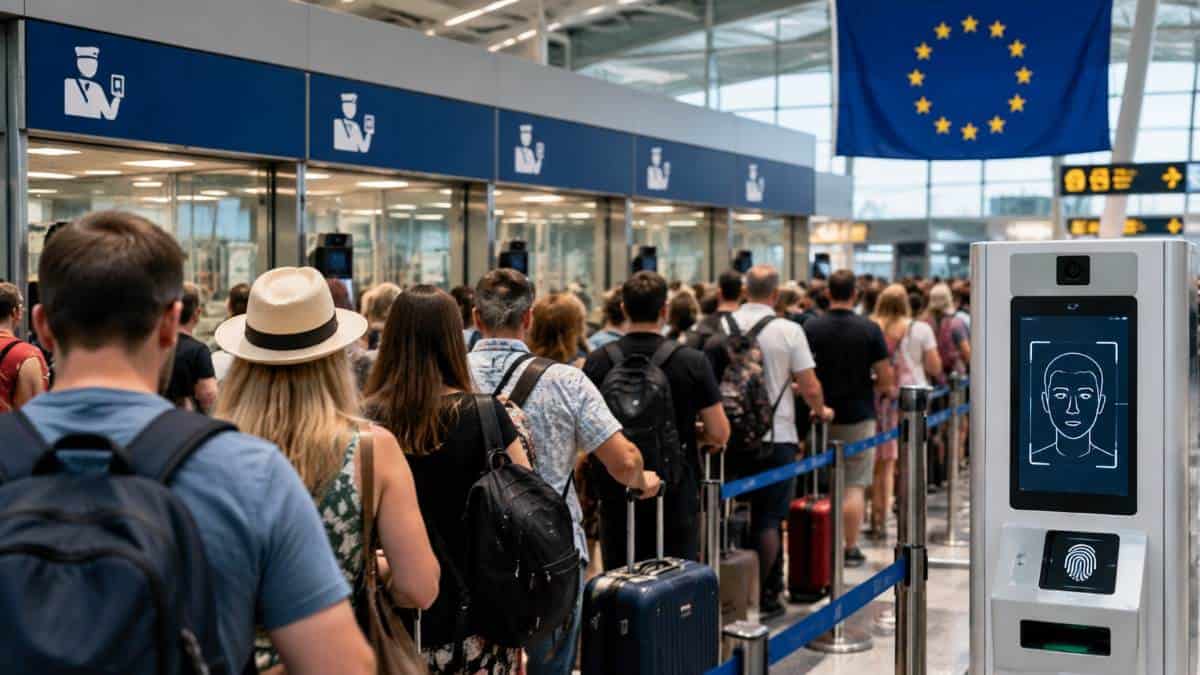
Portugal, Spain, Italy, Germany, France, Poland and Hungary are facing increasing summer travel pressure as Ryanair expands its warning over long passport-control queues linked to the European Union’s Entry/Exit System (EES). The airline has identified 15 European airports where travellers could experience significant delays as biometric border checks, technical problems and staffing shortages continue to challenge airport operations during one of the busiest travel periods of the year.
The growing disruption is centred around the introduction of the EES, a digital border system designed to replace traditional passport stamping with automated identity verification. However, the transition has created major operational difficulties at several airports, with airlines warning that passengers are experiencing extended waits at immigration controls across key European travel hubs.
Advertisement
Advertisement
EU Entry/Exit System Creates New Pressure Across European Airports
The EU Entry/Exit System is a large-scale digital border management programme introduced to modernise Schengen Area entry procedures. The system requires non-EU nationals, including British travellers, to provide biometric information such as facial images and fingerprints when entering or leaving the Schengen Area.
The objective of EES is to create a more secure and efficient border process by digitally recording travellers’ movements, reducing passport fraud and improving monitoring of short-stay visitors.
Advertisement
Advertisement
However, the implementation has created significant challenges at several airports. Technical failures, malfunctioning biometric kiosks, limited processing facilities and shortages of border-control staff have slowed passenger movement.
During the peak summer travel season, when millions of international visitors pass through European airports, these issues have created long queues at passport desks. Travellers are facing delays not only when arriving in Europe but also when departing from Schengen airports.
Advertisement
Advertisement
Industry representatives have warned that the pressure could continue for an extended period as airports adapt to the new technology and strengthen operational capacity.
Ryanair Expands Warning to 15 European Airport Hotspots
Ryanair has expanded its passenger warning list after identifying additional European airports experiencing serious EES-related congestion.
The airline’s current high-risk list includes:
- Lisbon, Portugal
- Tenerife South, Spain
- Madrid, Spain
- Lanzarote, Spain
- Alicante, Spain
- Malaga, Spain
- Milan Bergamo, Italy
- Milan Malpensa, Italy
- Verona, Italy
- Paris Beauvais, France
- Berlin, Germany
- Cologne, Germany
- Frankfurt Hahn, Germany
- Krakow, Poland
- Budapest, Hungary
These airports represent some of Europe’s busiest leisure and city travel gateways, serving millions of passengers travelling for holidays, business trips and connecting journeys.
The addition of major airports in Portugal, Spain, Italy and Germany highlights the growing scale of the problem as the EES system faces its first major summer travel test.
Passengers travelling through these airports are being advised to expect longer processing times and allow additional time before flights.
Advertisement
Advertisement
Airlines Warn Passengers Are Paying the Price for Infrastructure Problems
Airlines have expressed growing frustration over the operational challenges surrounding EES implementation. Carriers argue that passengers are experiencing disruption because airport infrastructure and staffing levels have not fully matched the demands of the new biometric border system.
Ryanair has called for greater flexibility during the summer period, arguing that border authorities need additional time to improve equipment, expand staffing capacity and resolve technical issues.
The airline, along with other European carriers including Jet2, has pushed for existing EES flexibilities to remain in place until early 2027. The proposed extension would allow airports and border agencies more time to prepare before stricter procedures become fully established.
The aviation sector has warned that without additional flexibility, passengers could continue facing long queues during major holiday periods.
Passenger Delays Create Wider Travel Disruption Across Europe
The impact of EES-related congestion is extending beyond passport-control areas. Long immigration queues can disrupt entire airport operations and create problems throughout the passenger journey.
Travellers may miss flights after spending extended periods waiting at border desks. Connecting passengers face increased risks when transfer times are limited, while airlines may experience additional pressure from rebooking requests and delayed departures.
Advertisement
Advertisement
The disruption is particularly significant at airports serving popular summer destinations, where passenger numbers increase sharply during school holiday periods.
In some cases, aircraft operations can also be affected when passengers remain delayed inside terminals, creating challenges for boarding schedules and turnaround times.
The situation has increased concerns among airlines that border delays could become one of the biggest operational challenges affecting European summer travel.
Airlines Demand More Time Before Full Enforcement Measures
Ryanair and other aviation companies are urging European authorities to provide additional operational flexibility while airports continue adapting to EES requirements.
The airline industry believes that extending temporary measures would give authorities more time to recruit border staff, improve biometric equipment reliability and ensure smoother passenger processing.
The concerns have become so serious that Malta Air, a Ryanair Group carrier, previously warned it could reconsider operations from Malta because of severe delays linked to EES-related processing problems.
Advertisement
Advertisement
The situation reflects wider concerns across European aviation that new digital border systems require sufficient preparation, infrastructure investment and trained personnel before handling the full volume of international travellers.
ETIAS Timeline Remains Separate From Current EES Disruption
The difficulties surrounding EES have also increased attention on another major European travel initiative, the European Travel Information and Authorisation System (ETIAS).
ETIAS will require visa-exempt travellers from outside the European Union to complete an online travel authorisation before visiting participating European countries. The scheme will include an application fee and will apply to travellers who currently do not require a visa for short stays.
Although concerns have been raised about the readiness of European border infrastructure, ETIAS remains a separate system from EES. The European Union has not officially confirmed a postponement of ETIAS until 2027, with current guidance continuing to indicate a planned launch in late 2026.
While EES focuses on border entry and exit registration, ETIAS will operate as a pre-travel authorisation process completed before departure.
What Travellers Need to Know Before Flying Through Affected Airports
Passengers travelling through the 15 airports identified by Ryanair should prepare for possible delays and allow extra time for immigration procedures.
Advertisement
Advertisement
Travellers should:
- Arrive earlier than normal, especially when travelling during peak holiday periods.
- Check airport and airline updates before departure.
- Keep passports and travel documents easily accessible.
- Avoid short connection times involving Schengen border checks.
- Prepare for possible delays during both arrival and departure.
The introduction of biometric border controls represents one of the biggest changes to European travel procedures in decades. However, the transition period has created operational pressure across several major airports.
As millions of travellers prepare for summer journeys across Europe, Portugal, Spain, Italy, Germany, France, Poland and Hungary remain among the destinations where passengers may need additional patience and preparation while airports continue adapting to the new EES environment.
Advertisement
