
Germany and Norway cruise travel innovation sees Meyer Werft unveil world’s first battery electric cruise ship for sustainable voyages : Latest Update
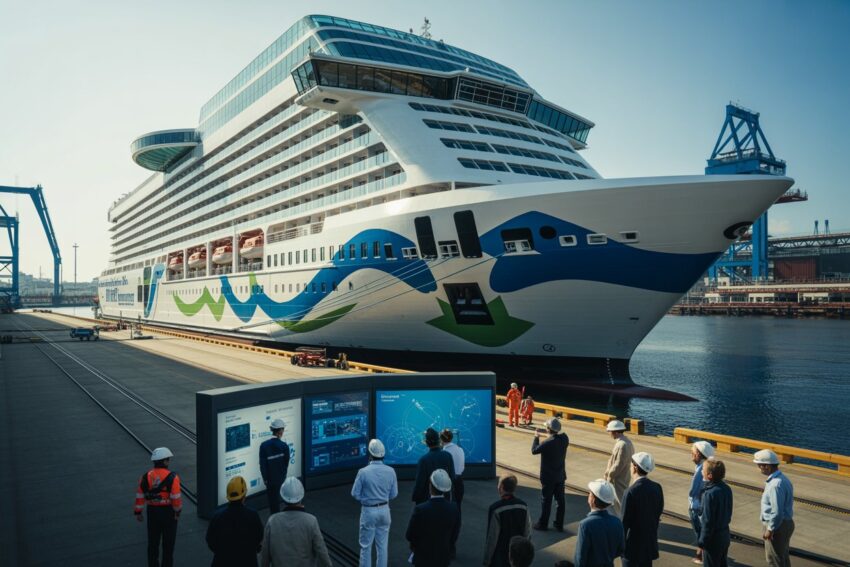 Image generated with Ai
The Germany and Norway cruise travel sector is entering a transformative phase as Meyer Werft unveils plans for the world’s first fully battery electric cruise ship. The Germany and Norway cruise travel industry is now focusing on sustainability, with this breakthrough project expected to redefine how passengers experience sea travel while drastically cutting emissions.
What is the new battery electric cruise ship concept
The new concept, known as “Vision”, is being positioned as the world’s first large-scale fully battery-electric cruise ship, with a size exceeding 80,000 gross tonnes.
Advertisement
Advertisement
The vessel is expected to be around 275 metres long and capable of carrying approximately 1,856 passengers, placing it in the same category as major modern cruise ships.
Unlike smaller electric ferries or hybrid ships already in operation, this project aims to bring full electrification to large ocean cruise vessels, marking a major milestone for the industry.
Advertisement
Advertisement
Why this is a major breakthrough for cruise travel
The biggest impact of this project lies in sustainability. The ship is designed to reduce greenhouse gas emissions by up to 95 percent compared to conventional cruise ships.
Cruise ships have long faced criticism for their environmental impact, particularly due to fuel consumption and emissions in port cities. This new electric model directly addresses those concerns by eliminating traditional fuel-based propulsion during operation.
Advertisement
Advertisement
For travellers, this means cleaner air, quieter journeys and a more environmentally responsible way to explore destinations.
How the technology behind the ship works
The ship will rely entirely on advanced battery systems developed in partnership with Corvus Energy, a leader in maritime energy solutions.
These batteries are designed to power the vessel across typical cruise routes, particularly in Europe where distances between ports are relatively shorter.
The concept also allows for a hybrid version with small generators, enabling longer journeys such as transatlantic crossings if required.
This flexibility ensures that the ship can operate across a variety of routes while still maintaining a strong focus on sustainability.
What routes and travel experiences this ship will support
The electric cruise ship is expected to operate mainly on European itineraries, such as routes between Barcelona and Civitavecchia.
Advertisement
Advertisement
These routes are ideal because charging infrastructure is rapidly expanding across European ports. Industry projections suggest that around 100 ports in Europe could be equipped for electric ship charging by 2030.
For travellers, this means more sustainable cruise options across popular Mediterranean and European destinations.
How ship design is changing with electric technology
The shift to battery-electric propulsion is also transforming cruise ship design. Without the need for large exhaust systems or funnels, the ship can offer more open deck space and uninterrupted views.
This design change enhances passenger experience by reducing noise, vibrations and visual obstructions. It also allows for more innovative onboard features and layouts.
The concept includes all-weather design elements, making it suitable for year-round travel and expanding cruise season possibilities.
When could travellers see this ship in operation
If development moves forward as planned, the first fully electric cruise ship could be delivered as early as 2031.
Advertisement
Advertisement
This timeline depends on factors such as investment decisions, infrastructure readiness and regulatory approvals. However, the technology required to build the ship is already available, indicating that the project is feasible within the next decade.
For travellers, this signals a near-future shift where sustainable cruise options become more widely available.
What this means for the future of cruise travel
The introduction of a fully electric cruise ship represents a turning point for the industry. As environmental concerns grow, cruise lines are under increasing pressure to adopt cleaner technologies.
This project demonstrates that large-scale electrification is no longer just a concept but a realistic solution for the future of travel. It also sets a benchmark for other shipbuilders and cruise operators to follow.
For travellers, this could lead to a new era of eco-friendly cruising, where sustainability becomes a core part of the travel experience rather than an afterthought.
The cause behind this innovation is the urgent need to reduce emissions in the cruise industry. The answer lies in battery-electric technology that enables near-zero emission travel. The reason this matters is that it offers a practical and scalable solution for sustainable tourism at sea.
As Germany and Norway cruise travel innovation continues to evolve, projects like this electric cruise ship will play a crucial role in shaping the future of global travel, offering travellers cleaner, quieter and more responsible journeys across the world’s oceans.
Advertisement
