
Japan’s Kumamoto to Introduce 50% Contactless Bus and Tram Fare Discounts from 29 October 2026

Published
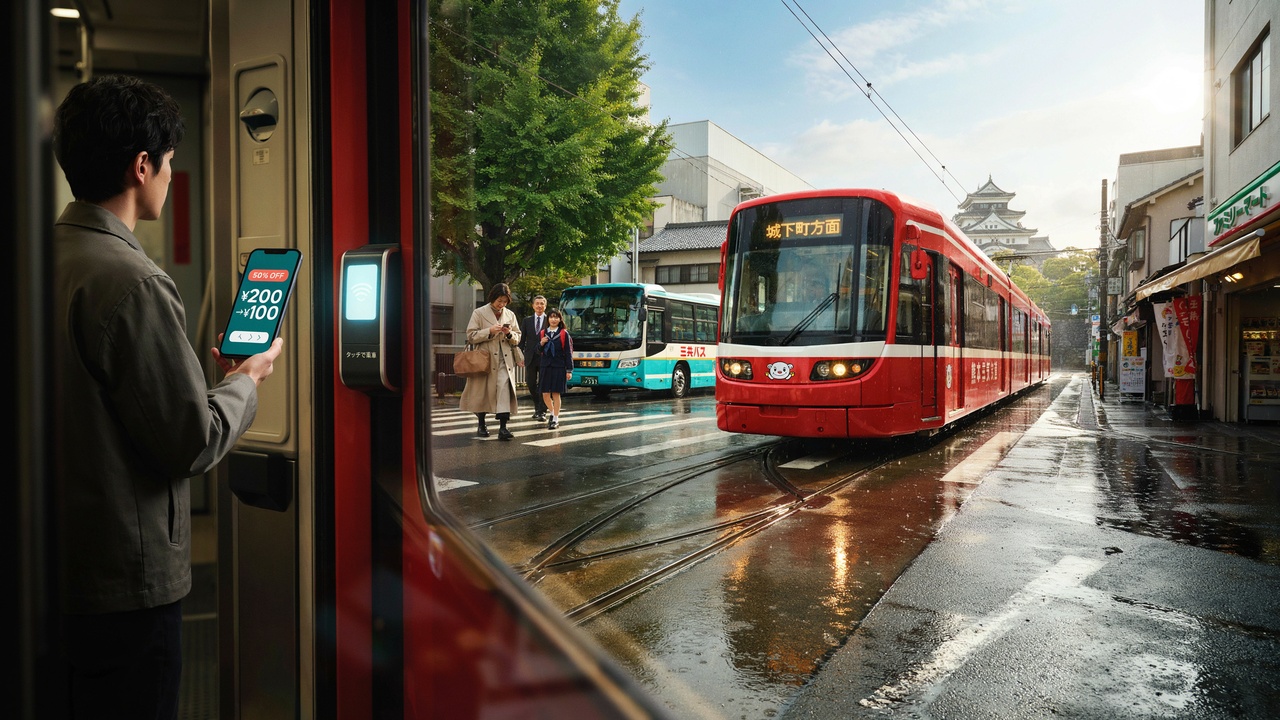
Japan’s Kumamoto Prefecture is preparing to introduce a 50% public transport fare discount from 29 October 2026, allowing eligible passengers to pay half the usual price on designated buses, trams and railway services using contactless bank cards or compatible digital devices. The initiative, called the Kumamoto Support Project, covers participating bus routes, Kumamoto City Tram, Kumamoto Electric Railway and Minami Aso Railway. The Hinokuni-go express bus between Kumamoto and Fukuoka is also included. No advance registration is required, but several airport, mountain and intercity services are excluded. The discount will remain available only until the programme’s allocated budget is exhausted.
What Is Changing for Public Transport Passengers in Kumamoto?
The Kumamoto Support Project introduces a temporary fare reduction for passengers using eligible contactless payment methods on participating public transport services.
Beginning on 29 October 2026, qualifying journeys will receive a 50% discount on the normal fare. The initiative applies across several transport operators that have introduced compatible payment terminals.
The scheme is particularly relevant to travellers because it does not require a dedicated promotional ticket, advance application or registration at a ticket counter.
Advertisement
Advertisement
Instead, passengers can use an eligible contactless bank card, smartphone or wearable device when travelling on participating services.
The discount is intended to be applied automatically through the payment system.
Advertisement
Advertisement
This approach differs from conventional public transport promotions that require travellers to purchase a special pass or present a discount voucher.
It also allows eligible visitors to benefit from the scheme without first obtaining a locally issued transport card.
However, the promotion does not cover every bus or railway service operating in Kumamoto Prefecture.
Its scope is determined by the participating routes, payment equipment and specific exclusions announced by the operators.
The programme is also budget-limited. It is not a permanent reduction in public transport fares, and the discount will end once the allocated funding has been used.
When Does the Kumamoto Contactless Fare Discount 2026 Begin?
The Kumamoto contactless fare discount 2026 is scheduled to begin on Thursday, 29 October 2026.
Advertisement
Advertisement
The scheme will apply to eligible journeys made using compatible contactless payment cards or devices on designated participating services.
Unlike promotions with a fixed closing date, the announced programme has a funding-based end condition.
The discount will stop when the available budget is exhausted, meaning passengers should not assume it will remain in effect throughout a particular holiday or travel period.
Key Information About the Kumamoto Support Project
| Category | Announced details |
|---|---|
| Programme | Kumamoto Support Project |
| Location | Kumamoto Prefecture, Japan |
| Starting date | 29 October 2026 |
| Fare reduction | 50% |
| Payment requirement | Eligible contactless bank card or linked digital device |
| Advance registration | Not required |
| Participating transport | Designated buses, Kumamoto City Tram, Kumamoto Electric Railway and Minami Aso Railway |
| Included express service | Hinokuni-go between Kumamoto and Fukuoka |
| Eligible card networks | Visa, Mastercard, JCB, American Express, Diners Club, Discover and UnionPay |
| Discount application | Automatically through the payment system |
| End condition | When the programme budget is exhausted |
The published announcement does not identify a guaranteed final operating date or the amount of funding allocated to the promotion.
Passengers should therefore check current operator information before travelling.
Which Buses, Trams and Railways Are Included in the 50% Discount?
The programme covers seven transport operators in Kumamoto Prefecture, including five bus companies, the Kumamoto City Tram and two railway operators, with Kumamoto Electric Railway operating both bus and rail services.
Advertisement
Advertisement
The participating organisations are Kyushu Sanko Bus, Sanko Bus, Kumamoto Electric Railway, Kumamoto Bus, Kumamoto City Bus, Kumamoto City Transportation Bureau and Minami Aso Railway.
The official campaign identifies the following operators and services.
| Transport operator | Eligible transport |
|---|---|
| Kyushu Sanko Bus | Designated bus services with compatible payment terminals |
| Sanko Bus | Participating local and regional bus routes |
| Kumamoto Electric Railway | Eligible bus and railway services |
| Kumamoto Bus | Participating bus routes |
| Kumamoto City Bus | Eligible city bus routes |
| Kumamoto City Transportation Bureau | Entire Kumamoto City Tram network |
| Minami Aso Railway | Eligible railway journeys |
The inclusion of different transport modes makes the programme relevant to journeys beyond central Kumamoto.
Visitors may use participating city buses for local sightseeing, regional buses for travel between communities and railway services for selected journeys into surrounding areas.
Kumamoto City Tram is particularly important because the municipal transport authority confirms that contactless payment is available across its entire tram fleet.
This provides a relatively straightforward option for visitors travelling within the city.
Advertisement
Advertisement
Regional bus coverage requires closer attention because some express and specialist routes are excluded.
Travellers should therefore verify the eligibility of the specific service they intend to use, rather than assuming that every vehicle operated by a participating company qualifies.
How Much Can Travellers Save on Popular Routes?
The official announcement provides several examples showing how the 50% discount changes the cost of individual journeys.
These examples include short urban trips, regional bus journeys and the intercity connection between Kumamoto and Fukuoka.
Confirmed Fare Comparisons
| Route | Normal fare | Discounted fare | Saving |
|---|---|---|---|
| Kumamoto Station – Torichosuji | ¥200 | ¥100 | ¥100 |
| Sakuramachi Bus Terminal – Kikuchi Onsen/Shimin Hiroba-mae | ¥1,180 | ¥590 | ¥590 |
| Sakuramachi Bus Terminal – Tsujunkyo-mae | ¥1,480 | ¥740 | ¥740 |
| Sakuramachi Bus Terminal – Hondo Bus Centre | ¥2,700 | ¥1,350 | ¥1,350 |
| Sakuramachi Bus Terminal – Tenjin Bus Terminal | ¥2,500 | ¥1,250 | ¥1,250 |
Fare examples published in the official project announcement. Actual eligibility remains subject to the campaign rules and the service used.
The savings become more substantial on longer journeys.
Advertisement
Advertisement
A passenger travelling from Sakuramachi Bus Terminal to Tenjin Bus Terminal on the eligible Hinokuni-go service would pay ¥1,250 instead of ¥2,500, saving ¥1,250 on the advertised one-way fare.
A return journey at those example fares would cost ¥2,500 instead of ¥5,000, provided both trips qualify and the campaign remains active.
For visitors exploring Kumamoto Prefecture, the discount may reduce the cost of travelling to destinations outside the city centre.
However, the programme should not be interpreted as a universal half-price ticket for every journey in Kyushu.
Its eligibility is tied to specific participating services and payment arrangements.
Why Is the Hinokuni-go Discount Important for Fukuoka–Kumamoto Travel?
The inclusion of the Hinokuni-go express bus is one of the most significant elements of the campaign for intercity travellers.
Advertisement
Advertisement
The service connects Kumamoto with Fukuoka, including major transport locations such as Sakuramachi Bus Terminal and Tenjin Bus Terminal.
Fukuoka is one of Kyushu’s principal urban gateways, with an international airport, railway connections and a substantial commercial district.
Kumamoto, meanwhile, is an important destination for visitors exploring central Kyushu and its surrounding attractions.
The express bus provides an alternative to rail travel between the two cities.
During the campaign, eligible passengers using contactless payment will receive the 50% fare reduction on participating Hinokuni-go journeys.
The official announcement confirms that jointly operated services are included, covering relevant operations involving Kyushu Sanko Bus and Nishitetsu.
Advertisement
Advertisement
The discounted fare example of ¥1,250 between Sakuramachi and Tenjin makes the promotion particularly relevant to budget-conscious visitors.
An existing Hinokuni-go card-payment discount, which applies a 50% reduction to the fourth qualifying journey under specified conditions, will be suspended during the new campaign. Instead, the temporary promotion provides the discount from the first eligible journey.
Passengers should check the current timetable and boarding arrangements separately, as the promotion does not itself establish changes to service frequency or journey duration.
Which Express Buses and Airport Services Are Excluded?
Several important services are excluded from the campaign.
These exclusions are particularly relevant to visitors planning journeys to airports, mountain destinations or neighbouring prefectures.
Excluded Services
| Service | Route or destination | Discount status |
|---|---|---|
| Yamabiko-go | Kumamoto – Oita | Not eligible |
| Takachiho-go | Kumamoto – Takachiho | Not eligible |
| Kyushu Trans-Island Bus | Cross-Kyushu service | Not eligible |
| Aso Mountain Line | Kumamoto – Mount Aso summit area | Not eligible |
| Kumamoto Airport Limousine Bus | Airport transfer service | Not eligible |
| Takamori-go | Kumamoto – Takamori | Not eligible |
These exclusions appear in the official joint project announcement.
Advertisement
Advertisement
The exclusion of the Kumamoto Airport Limousine Bus is especially important for international travellers.
Visitors arriving at or departing from Aso Kumamoto Airport should not assume that their airport transfer qualifies for the half-price fare.
Similarly, passengers planning journeys towards Takachiho or Mount Aso should confirm the specific bus route and operator arrangements.
There is also an important distinction between similarly named services. Sanko Bus’s separate operator notice lists some eligible regional routes, including the Aso Station–Kusasenri–Aso summit terminal service, while the joint announcement excludes the Kumamoto–Aso summit route.
Travellers should check the exact service name and route before relying on the discount.
How Does Contactless Payment Work on Participating Transport?
The campaign uses contactless payment technology, allowing passengers to pay with compatible cards or digital devices.
Advertisement
Advertisement
The participating payment networks include Visa, Mastercard, JCB, American Express, Diners Club, Discover and UnionPay.
Eligible credit, debit and prepaid cards are supported, provided they have the required contactless functionality.
Smartphones and wearable devices can also be used when a compatible card has been configured.
The programme does not require advance registration or a visit to a ticket office.
Using the Discount
Passengers should use their eligible payment method at the designated terminal when boarding and alighting, following the instructions for the relevant service.
The fare reduction is processed automatically through the payment system.
Advertisement
Advertisement
An important detail is that the terminal may display the normal fare rather than the discounted amount.
This does not necessarily indicate that the promotion has failed.
The campaign organisers explain that the actual charge will reflect the 50% reduction when the payment is processed.
Passengers can check their discounted transaction through the Q-move service.
If a card or device is not recognised, travellers should try the payment terminal again and seek assistance from transport staff if the problem continues.
The campaign website also confirms that payment for multiple passengers using one card is possible, subject to the relevant payment procedure.
Advertisement
Advertisement
How Could the Discount Benefit Visitors Exploring Kumamoto City?
Kumamoto City is one of the principal destinations in central Kyushu, offering historic landmarks, shopping districts, cultural attractions and connections to surrounding communities.
The temporary fare reduction may make it less expensive for visitors to move between the city’s transport hubs and sightseeing areas.
Kumamoto Station serves as an important arrival point for railway passengers, while Sakuramachi Bus Terminal provides connections to city and regional bus services.
Torichosuji is located within the city’s central commercial area, making the announced ¥100 discounted fare from Kumamoto Station relevant to visitors travelling towards shopping and dining districts.
Kumamoto Castle is another major attraction in the city. Visitors can use the public transport network to reach central areas before continuing towards the castle and surrounding attractions.
The city’s tram system is particularly useful because it connects railway stations with important urban districts.
Advertisement
Advertisement
For visitors unfamiliar with local transport arrangements, the ability to use an eligible bank card rather than purchasing a separate payment product may simplify some journeys.
However, the campaign does not change the existing transport network or guarantee additional services.
Travellers should continue to check timetables, operating hours and the location of the nearest stops when planning sightseeing activities.
What Does the Programme Mean for Regional Tourism Across Kumamoto Prefecture?
The Kumamoto Support Project extends beyond the prefectural capital, making it relevant to visitors exploring regional destinations.
The inclusion of participating bus and railway operators creates opportunities to use discounted public transport for selected journeys towards smaller communities and countryside attractions.
Kikuchi, for example, is associated with hot springs and natural scenery. The official fare comparison includes a journey between Sakuramachi Bus Terminal and the Kikuchi Onsen area.
Advertisement
Advertisement
The programme also provides a discounted example for travel towards Tsujunkyo, an area associated with the historic Tsujunkyo aqueduct.
Further west, the Hondo Bus Centre connection serves the Amakusa region, known for its islands, coastal landscapes and cultural heritage.
The inclusion of Minami Aso Railway adds another regional dimension. The railway operates through the Minamiaso area, which is associated with the landscapes surrounding the Aso volcanic region.
These destinations illustrate how the campaign may benefit visitors interested in travelling beyond central Kumamoto.
Nevertheless, the discount does not establish additional tourism services, guaranteed attraction access or new transport connections.
Visitors should verify the operating timetable and the precise eligible route before travelling.
Advertisement
Advertisement
Why This Matters
The Kumamoto Support Project is significant because it combines a substantial fare reduction with a relatively straightforward payment process across several public transport operators.
For travellers, the most immediate benefit is financial. Eligible journeys cost half the normal fare, potentially reducing transport expenditure during visits to Kumamoto and neighbouring areas.
The programme may be particularly useful to international visitors who already possess compatible contactless payment cards.
Its automatic application removes the need to purchase a special promotional ticket or complete a separate registration process.
For local residents, the discount also applies to eligible everyday journeys, including commuting, shopping and leisure travel.
The participation of bus companies, railway operators and the municipal tram network demonstrates a coordinated approach to public transport promotion.
Advertisement
Advertisement
From a tourism perspective, the initiative could make selected regional destinations more affordable to reach.
However, no official passenger growth forecast or tourism revenue projection has been established in the information reviewed. Any suggestion that the programme will generate a specific increase in visitor numbers would therefore be speculative.
Its confirmed impact is the reduction in fares for qualifying journeys while the campaign remains funded.
What Travellers Should Know
The 50% discount begins on 29 October 2026 and will remain available until the allocated budget is exhausted.
Passengers should check whether their intended route participates and ensure that their payment card or device supports the required contactless technology.
Before Travelling
- Start date: 29 October 2026.
- Discount: 50% of the normal eligible fare.
- Payment methods: Supported contactless credit, debit and prepaid cards, smartphones and wearable devices.
- Registration: No advance registration required.
- Eligible services: Participating buses, Kumamoto City Tram, Kumamoto Electric Railway and Minami Aso Railway.
- Intercity travel: Hinokuni-go services between Kumamoto and Fukuoka are included.
- Airport travel: Kumamoto Airport Limousine Bus is excluded.
- Fare display: The terminal may show the full fare before the discount is applied.
- Transaction records: Discounted charges can be checked through Q-move.
- Closing date: Not fixed; the programme ends when its funding limit is reached.
Passengers should also remember that a contactless payment card and a conventional transport IC card are not necessarily interchangeable for this promotion.
Advertisement
Advertisement
The official eligibility rules refer specifically to supported bank-card contactless payments and compatible digital devices.
Visitors using other ticketing methods should not assume that the 50% reduction will apply.
Frequently Asked Questions
When does Kumamoto’s half-price public transport campaign begin?
The Kumamoto Support Project begins on 29 October 2026. It provides a 50% fare discount on eligible journeys using supported contactless payment methods.
Are all buses and trams in Kumamoto included?
The entire Kumamoto City Tram network is included, along with designated bus and railway services. Several express, airport and specialist routes are excluded.
Can international visitors use foreign-issued contactless bank cards?
The campaign lists Visa, Mastercard, JCB, American Express, Diners Club, Discover and UnionPay as supported networks. Travellers should confirm that their individual card and payment device are compatible.
Is the Hinokuni-go bus between Fukuoka and Kumamoto included?
Yes. Eligible Hinokuni-go services are covered, including jointly operated journeys. The published example fare between Sakuramachi and Tenjin falls from ¥2,500 to ¥1,250.
Advertisement
Advertisement
When will the 50% discount end?
No fixed closing date has been announced. The programme will end when its allocated budget is exhausted, with updates provided through the official campaign website and participating operators.
Closing Update: Kumamoto Prepares to Make Eligible Public Transport Journeys More Affordable
Kumamoto Prefecture’s new contactless payment campaign will introduce a substantial temporary reduction in transport costs from 29 October 2026.
By offering a 50% discount across participating buses, trams and railways, the initiative provides a practical benefit to residents and visitors using eligible payment methods.
The inclusion of the Hinokuni-go express bus also extends the promotion’s relevance beyond Kumamoto Prefecture, creating a discounted travel option between Kumamoto and Fukuoka.
For tourists, the main advantages are lower fares, simplified payment and access to participating urban and regional services.
However, important exclusions remain, including the Kumamoto Airport Limousine Bus and several express routes.
Advertisement
Advertisement
Travellers should therefore verify route eligibility before relying on the promotion.
With no fixed end date, the campaign’s duration will depend on the remaining budget. Passengers planning journeys later in the year should monitor official announcements to confirm whether the discount remains available.
The initiative provides a clear example of how contactless payment technology can support temporary public transport promotions while making eligible journeys more affordable.
Advertisement
