
Tanmen Teams Up With Qingdao and More as China’s Fishing Destinations Come Forward for the Ultimate Sea Angling Adventures

Published
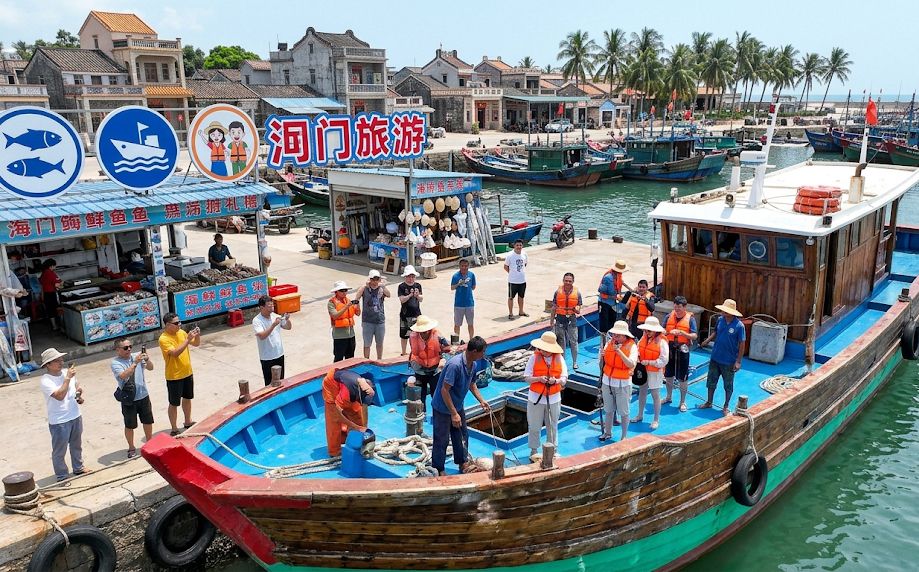
Tanmen teams up with Qingdao and more as China’s fishing destinations come forward for the ultimate sea angling adventures. From historic fishing harbours to spectacular coastal escapes, China invites travellers to discover a different side of its maritime charm. Tanmen teams up with Qingdao and other fishing destinations to bring sea angling adventures, fresh seafood and authentic fishing culture into the spotlight. Moreover, these destinations offer exciting opportunities to explore coastal communities and discover unforgettable experiences. Travel And Tour World invites global travellers to explore China’s fishing destinations, uncover remarkable seaside attractions and discover what makes these ultimate sea angling adventures worth experiencing.
China’s Fishing Tourism Trail Beyond Tanmen: Visitor Statistics, Coastal Destinations and a Complete Travel Guide
Tanmen in Hainan is offering travellers an opportunity to experience China beyond its famous cities, shopping districts and conventional beach resorts. Its recreational fishing trips, seafood restaurants, working harbour and traditional fishing heritage demonstrate how coastal communities can create distinctive tourism experiences around maritime life.
Advertisement
Advertisement
However, Tanmen is not China’s only destination for travellers interested in sea angling and fishing culture. Qingdao in Shandong, Weihai on the Shandong Peninsula and Zhoushan in Zhejiang offer other ways to combine fishing, island exploration, seafood and coastal sightseeing. Each destination has a different character, from organised recreational fishing events to island-based marine adventures.
The wider tourism market provides important context for this development. China’s National Bureau of Statistics reported 6.52 billion domestic tourist trips in 2025, up 16.2% from 2024, while domestic tourism expenditure reached approximately 6.30 trillion yuan. These figures cover the national tourism market, not fishing tourists specifically, but they illustrate the scale of the potential domestic audience for specialised coastal experiences.
Advertisement
Advertisement
Tanmen Fishing Tourism: The Latest Statistics and Infrastructure Plans
Tanmen is part of Qionghai, on Hainan’s eastern coast. The Qionghai municipal profile published by the Hainan provincial government describes a substantial maritime landscape, transport connections and a tropical climate that supports year-round outdoor tourism, although weather conditions can interrupt boat excursions.
The following figures help explain why Tanmen deserves attention from travellers and tourism businesses.
Advertisement
Advertisement
| Indicator | Reported figure | What it means for travellers |
|---|---|---|
| Tanmen visitors during China’s 2026 National Day holiday | Approximately 89,600 | Indicates demand during a major domestic holiday |
| Tourism revenue during that holiday | Approximately CNY 3.08 million | Reflects spending across the local tourism economy |
| Qionghai recreational fishing output in 2025 | CNY 284 million | Shows the economic scale attributed to recreational fisheries |
| Tanmen visitors, January–August 2026 | Approximately 1.33 million | Provides a broader measure of reported destination visitation |
| Tanmen tourism revenue, January–August 2026 | Approximately CNY 47.8 million | Indicates reported tourism earnings over eight months |
| Planned recreational fishing pier | 310 metres | A proposed facility intended to support recreational fishing |
| Planned pier capacity | 19 boats | Indicates the intended scale of the dedicated facility |
| Investment to convert one traditional wooden vessel | More than CNY 3 million | Illustrates private investment in heritage-based tourism |
| Converted vessel’s reported tonnage | 205 tonnes | Demonstrates the scale of the vessel used for tourism |
| Qionghai land area | 1,710 square kilometres | Gives visitors a sense of the municipality’s geographic scale |
| Qionghai sea area | 1,530 square kilometres | Highlights the importance of its maritime setting |
| Qionghai forest coverage | 69% | Adds an ecological dimension to the destination |
| Boao International Airport connections | Routes to 26 major cities, according to the official municipal profile | Offers an entry point for planning a visit |
Sources: Hainan government destination information and October 2026 reporting on Tanmen’s fishing tourism initiative. The recent Tanmen tourism figures were reported in contemporary coverage, rather than a separately linked statistical bulletin available for independent verification. Planned infrastructure figures describe proposals, not necessarily completed facilities.
The numbers require careful interpretation. The reported 1.33 million visits between January and August 2026 and 89,600 visits during the National Day holiday use different time periods. They should not be added together because the holiday falls within the January–August reporting window only if the reporting dates overlap, and the underlying counting methods have not been fully specified.
Advertisement
Advertisement
The same caution applies to revenue. The CNY 284 million figure refers to Qionghai’s recreational fishery output in 2025, while CNY 47.8 million is reported as Tanmen tourism revenue for eight months of 2026. They measure different economic categories and cannot be treated as a direct year-on-year comparison.
China’s Domestic Tourism Statistics for the Last Five Years
China’s national travel figures offer a useful benchmark for understanding the potential market for recreational fishing, coastal holidays and marine heritage experiences. They must not be mistaken for Tanmen-specific or fishing-tourism visitor counts.
The Ministry of Culture and Tourism and the National Bureau of Statistics publish national travel indicators. The table below brings together the latest annual figures available for 2021–2025.
| Year | Domestic tourist trips | Year-on-year change | Domestic tourism expenditure | Key interpretation |
|---|---|---|---|---|
| 2021 | Approximately 3.25 billion | Recovery from 2020 restrictions | Approximately CNY 2.92 trillion | Domestic travel remained affected by pandemic-era disruption |
| 2022 | 2.530 billion | −22.1% | CNY 2.04 trillion | Travel weakened amid restrictions and uncertainty |
| 2023 | 4.891 billion | +93.3% | CNY 4.91 trillion | Strong rebound in domestic travel |
| 2024 | 5.615 billion | +14.8% | CNY 5.75 trillion | Travel demand continued expanding |
| 2025 | 6.520 billion | +16.2% | CNY 6.3003 trillion | Domestic travel reached a new high in the reported series |
Sources: Ministry of Culture and Tourism annual domestic tourism releases for 2022–2024 and the National Bureau of Statistics’ 2025 statistical communiqué. The 2021 figures are approximate calculations based on the reported 2022 decline, rather than independently quoted exact figures. Rounding may produce minor differences.
Advertisement
Advertisement
The five-year comparison reveals a major change in China’s domestic tourism market. Trips fell by 22.1% in 2022, then increased by 93.3% in 2023 as travel recovered. The pace of growth became more moderate in 2024, before reaching 16.2% in 2025.
Between 2022 and 2025, annual domestic tourist trips increased from 2.53 billion to 6.52 billion. That represents approximately 158% growth over the period. Domestic tourism expenditure also more than tripled, moving from CNY 2.04 trillion to CNY 6.30 trillion.
These national totals count trips, not necessarily unique individuals. One person can make multiple trips in a year. They also include every kind of domestic holiday, from city breaks and family visits to mountain tourism and beach holidays.
An important limitation: Comparable, verified annual fishing-tourism visitor totals for Tanmen from 2021 through 2025 were not established in the available sources. It would be misleading to manufacture a five-year local series from national tourism figures. Tanmen’s reported 2026 visitor counts provide a recent snapshot, but not a complete historical trend.
Six Other Chinese Destinations for Fishing Tourism
1. Qingdao, Shandong — Organised Recreational Sea Angling
Best for: First-time sea anglers, coastal sightseeing and summer holidays
Qingdao is one of the clearest alternatives for travellers seeking organised recreational fishing in China. In 2026, the city’s official fishing season programme ran from 4 July to 30 August, covering 58 days. The initiative connected multiple coastal locations, including Xiaogangwan Leisure Sea Fishing Base, Jimiya Wharf, Yangkou and Fengshan Bay, Riyuetian Wharf, and Feiyang Yacht Wharf. Activities were designed for different experience levels, from introductory angling to more specialised fishing trips. Visitors can combine a booked fishing session with Qingdao’s beaches, waterfront promenades, seafood restaurants and historic urban districts. Local menus commonly feature seafood, including shellfish and fish dishes. Travellers should confirm the current status of each pier, departure arrangements and seasonal availability before booking. The 2026 programme is a dated event, not a guarantee that all locations operate daily or will repeat the same schedule in 2027.
Advertisement
Advertisement
2. Weihai, Shandong — A Coastal Centre for Leisure Fisheries
Best for: Angling enthusiasts, fishing communities and slower coastal holidays
Weihai has a longstanding official profile in China’s leisure-fishery sector. In 2015, it received the title of China’s Leisure Fishery Capital, according to the Weihai Marine Development Bureau. A 2021 municipal government report said the city had established 11 national-level leisure-fishery demonstration bases, four national demonstration bases recognised for high-quality leisure fisheries and four provincial sea-angling demonstration bases. The same report stated that the city’s leisure-fishery sector attracted more than seven million visitor trips annually and generated over CNY 10 billion in income, with related industries employing more than 200,000 people. These are historical figures reported in 2021, not current 2026 totals. Weihai is worth considering for travellers who want to explore coastal fishing culture alongside beaches, island scenery and local seafood. Ask local tourism offices which licensed operators currently offer sea-angling trips and whether trips are suitable for beginners.
3. Zhoushan Archipelago, Zhejiang — Island Hopping and Sea Fishing
Best for: Island itineraries, marine activities and longer coastal holidays
Zhoushan offers a broad island-based setting for marine tourism. Its official development direction includes coastal leisure, diving, marine sports, island tours, cruises, yacht tourism and sea fishing. The city’s 2025 tourism figures provide a useful indication of the scale of its wider visitor economy: Zhoushan recorded 24.143 million tourist visits, up 12.4% from the previous year, and CNY 35.07 billion in comprehensive tourism revenue, up 12.8%. Authorities have also identified a 2030 ambition of 46 million annual visitor trips. That is a future target, not a confirmed forecast. Travellers can build an itinerary around island scenery, coastal villages, seafood and suitable locally organised marine activities. Putuo District and Shengsi County are relevant areas to investigate for island tourism and fishing-related experiences. The official sources do not provide a comparable citywide annual count of sea-angling participants, so total Zhoushan tourism visits should not be presented as fishing tourists.
4. Shengsi County, Zhejiang — Island Communities and Fishing Culture
Best for: Island stays, coastal photography and quieter maritime experiences
Shengsi County is part of the Zhoushan island region and offers a different experience from a large urban waterfront. The area combines island settlements, marine landscapes, fishing-related activities and coastal environmental management. Official reporting in 2025 noted that Shengsi was advancing marine and coastal restoration while developing industries that included mussel farming and recreational fishing. Its tourism industry added value grew by 7.4% in 2024, while visits increased by more than 10%, according to the report. These are county-level tourism indicators, not fishing-specific statistics. Travellers can investigate guided fishing experiences, local seafood restaurants, island walks and overnight stays in coastal guesthouses. Before finalising a route, check ferry schedules and weather-related service notices. Boat services and the availability of recreational fishing can vary by island, season and sea conditions.
Advertisement
Advertisement
5. Putuo District, Zhoushan — Marine Culture and Seafood
Best for: Cultural attractions, seafood dining and island excursions
Putuo District provides an option for visitors who want to combine maritime experiences with established cultural attractions. In 2024, Putuo Mountain recorded 12.3 million visits and CNY 10.11 billion in tourism revenue. Luojia Mountain received 1.68 million visits, an increase of 5% year on year. Putuo also recorded CNY 610 million in accommodation revenue and CNY 127 million in catering revenue. These figures cover the district’s wider visitor economy and are not measurements of recreational fishing demand. For a fishing-themed itinerary, visitors can investigate local marine tours, fishing-related experiences and coastal seafood dining while allowing time for the area’s cultural and scenic attractions. Seafood choices depend on season and local supply. Travellers should confirm which experiences permit participation in fishing, rather than assuming that every boat excursion is an angling trip.
6. Qionghai and Boao, Hainan — A Wider Coastal Escape Around Tanmen
Best for: Combining fishing, wellness, coastal culture and nature
Travellers who want to spend more time in Hainan can extend a Tanmen visit to other parts of Qionghai and neighbouring Boao. The municipal profile describes Qionghai as covering 1,710 square kilometres of land and 1,530 square kilometres of sea. It also reports forest coverage of 69%, while identifying Boao International Airport and the Hainan Ring High-Speed Railway as important transport connections. Beyond sea angling, visitors can investigate local villages, coastal scenery, regional cuisine and the area’s hot springs. Guantang Hot Spring has a reported natural daily outflow of 10,700 tonnes, with water temperatures of 70–90°C; this is a geological and wellness attraction rather than a fishing statistic. Combining these experiences makes it possible to create a more varied holiday without changing provinces.
Comparative Statistics for China’s Leading Fishing-Tourism Destinations
The following comparison brings together the strongest available destination-level statistics. Figures cover different reporting periods and tourism categories, so they should be compared as contextual indicators rather than as a ranking of fishing-tourism performance.
| Destination | Latest available visitor statistic | Tourism revenue or economic indicator | Fishing-tourism evidence | Best travel angle |
|---|---|---|---|---|
| Tanmen, Hainan | 89,600 visits during the 2026 National Day holiday | CNY 3.08 million during that holiday | Recreational sea angling, fishing heritage and homestays | Fishing culture and local life |
| Qingdao, Shandong | No comparable figure established in the sources reviewed | No comparable fishing-tourism revenue figure established | Official 58-day fishing programme in summer 2026 | Organised sea-angling activities |
| Weihai, Shandong | More than 7 million leisure-fishery visitor trips annually, reported in 2021 | More than CNY 10 billion, reported in 2021 | National and provincial demonstration bases | Established leisure-fishery experiences |
| Zhoushan, Zhejiang | 24.143 million visits in 2025 | CNY 35.07 billion in comprehensive tourism revenue in 2025 | Sea fishing included in regional marine-tourism plans | Island hopping and marine recreation |
| Shengsi County, Zhejiang | Visits increased by more than 10% in 2024 | Tourism industry added value increased by 7.4% in 2024 | Recreational fishing and marine-related industries | Island stays and coastal culture |
| Putuo District, Zhejiang | Putuo Mountain received 12.3 million visits in 2024 | CNY 10.11 billion in Putuo Mountain tourism revenue | Wider marine and coastal tourism setting | Cultural visits and seafood |
| Qionghai, Hainan | Tanmen reported 1.33 million visits from January to August 2026 | Tanmen reported CNY 47.8 million in tourism revenue for that period | Tanmen fishing trips, coastal heritage and village stays | Multi-day Hainan coastal holiday |
Sources: official Hainan, Qingdao, Weihai and Zhejiang government publications, plus the reported Tanmen 2026 figures. The Tanmen and Qionghai rows overlap geographically. Putuo Mountain visits are a sub-destination statistic, not a district-wide total. The Weihai figures are historical and must not be treated as current annual performance.
Advertisement
Advertisement
What to Do on a Fishing-Tourism Holiday in China
China’s coastal destinations offer several experiences that can be combined into a single trip.
- Join a guided sea-angling excursion: Ask licensed operators about beginner-friendly trips, fishing equipment, trip length and catch-handling arrangements.
- Explore a working fishing port: Observe harbour activity from public areas and learn how local communities depend on fishing.
- Visit maritime museums: In Tanmen, the China Museum of the South China Sea provides historical context for the region’s maritime heritage.
- Try local seafood: Sample regional fish dishes, shellfish and other locally available seafood.
- Stay in a fishing village: Choose a licensed guesthouse or homestay where hosts can explain local customs and help arrange suitable activities.
- Combine fishing with island exploration: Zhoushan and Shengsi are useful starting points for planning a broader marine itinerary.
- Learn about sustainable fishing: Ask guides about local conservation rules, seasonal restrictions and responsible catch practices.
Fishing activities should always be booked through operators who can demonstrate appropriate vessel safety arrangements and legal authorisation. Visitors should not assume that a working fishing boat is automatically permitted to carry tourists.
Where to Visit, Eat and Stay
The table below provides practical planning guidance. It identifies areas to investigate rather than inventing unverified restaurant or hotel names.
| Destination | Places and experiences to prioritise | What to eat | Where to stay |
|---|---|---|---|
| Tanmen | Central Fishing Port, Paigang Village, China Museum of the South China Sea | Locally available seafood and regional Hainan dishes | Village homestays or accommodation in Qionghai |
| Qingdao | Xiaogangwan, coastal promenades and the city’s historic waterfront | Seafood, shellfish and Qingdao-style local dishes | Central Qingdao or a coastal neighbourhood convenient for the booked departure point |
| Weihai | Coastal fishing areas, beaches and local marine attractions | Fresh seafood and Shandong coastal cuisine | Weihai city or a coastal guesthouse |
| Zhoushan | Putuo District, island communities and marine recreation areas | Local fish, shellfish and other seasonal seafood | Island guesthouses or accommodation in Zhoushan’s main urban areas |
| Shengsi | Island villages, coastal landscapes and locally organised marine activities | Seafood and island-style dishes | Guesthouses or homestays on the island selected for the itinerary |
| Putuo | Putuo Mountain, Luojia Mountain and coastal cultural attractions | Seafood and regional Zhejiang cuisine | Putuo District or accommodation near transport connections |
| Qionghai and Boao | Tanmen, Boao’s coastal area and Guantang Hot Spring | Hainan cuisine and locally available seafood | Qionghai hotels, coastal accommodation or a village homestay |
Restaurant availability, hotel standards, boat departure points and transport connections should be verified before booking. On smaller islands, advance reservations are particularly useful during weekends and public holidays.
Detailed Seven-Day Fishing-Tourism Travel Plan
A week-long itinerary can combine Tanmen’s fishing heritage with the island landscapes of Zhejiang. Because Hainan and Zhejiang are in different parts of China, travellers should plan a domestic flight or another suitable long-distance transfer between the two regions.
Day 1 — Arrive in Qionghai
Advertisement
Advertisement
Travel to Qionghai, check into your accommodation and explore Tanmen’s harbour area. Have a seafood dinner and confirm the next day’s excursion with a licensed operator.
Day 2 — Sea angling in Tanmen
Join a pre-booked fishing trip if weather and operating conditions permit. Learn about local fishing techniques and spend the evening exploring seafood restaurants.
Day 3 — Maritime heritage and village life
Visit the China Museum of the South China Sea and explore Paigang Village. Consider a homestay to experience the local community at a slower pace.
Day 4 — Transfer to Qingdao
Advertisement
Advertisement
Travel from Hainan to Qingdao using suitable transport connections. Check in and enjoy the waterfront, allowing time to confirm a fishing excursion for the following day.
Day 5 — Recreational fishing and coastal dining
Join an available guided angling trip. Explore Qingdao’s coastal districts afterwards and sample regional seafood.
Day 6 — Travel to Zhoushan
Transfer to Zhejiang and explore an island or coastal settlement. Check local transport schedules before committing to an island excursion.
Day 7 — Island scenery and departure
Advertisement
Advertisement
Enjoy a relaxed morning in Zhoushan or Shengsi. Choose a guided marine activity if available, then connect to your onward transport.
This itinerary is a suggested framework, not a confirmed package. The travel times and transport arrangements depend on the selected routes, season and schedules. Travellers with only three or four days should concentrate on Tanmen and Qionghai rather than combining distant provinces.
Five-Year Visitor Comparison: What the Data Actually Shows
A final distinction matters for tourism reporting. National domestic travel statistics and individual destination visitor statistics measure different things. They cannot be combined to produce a reliable five-year fishing-tourism total.
| Year | China’s domestic tourist trips | Year-on-year change | Tanmen fishing-tourism visitor total |
|---|---|---|---|
| 2021 | Approximately 3.25 billion | Not calculated here | No comparable annual figure verified |
| 2022 | 2.53 billion | −22.1% | No comparable annual figure verified |
| 2023 | 4.891 billion | +93.3% | No comparable annual figure verified |
| 2024 | 5.615 billion | +14.8% | No comparable annual figure verified |
| 2025 | 6.52 billion | +16.2% | No comparable annual figure verified |
National figures: China’s Ministry of Culture and Tourism and National Bureau of Statistics. The 2021 figure is approximate and derived from the reported 2022 decline.
The available destination-specific evidence is more limited:
- 2021: Weihai’s municipal government reported more than seven million annual leisure-fishery visitor trips and over CNY 10 billion in related income. This is a historical sector indicator, not a nationwide fishing-tourism figure.
- 2022: No comparable annual Tanmen or national fishing-tourism visitor count was verified.
- 2023: China’s domestic tourism recovered strongly, with 4.891 billion trips, but no comparable Tanmen annual total was verified.
- 2024: Zhoushan’s Putuo Mountain recorded 12.3 million visits, while Luojia Mountain received 1.68 million. These are attraction-level figures, not fishing-tourism counts.
- 2025: Zhoushan recorded 24.143 million visits across its wider tourism economy, while Qionghai’s recreational fishery output was reported at CNY 284 million.
- January–August 2026: Tanmen reportedly received 1.33 million visits and generated CNY 47.8 million in tourism revenue. These figures provide a recent reference point, but they do not establish a comparable five-year series.
The evidence suggests that fishing tourism is developing within a much larger Chinese domestic travel market. However, reliable conclusions about the sector’s annual growth require consistent local statistics on fishing excursions, participating visitors, licensed vessels and tourism revenue.
Advertisement
Advertisement
Final Outlook for Fishing Tourism in China
Tanmen, Qingdao, Weihai and Zhoushan demonstrate different ways to experience China’s maritime culture. Tanmen stands out for its historic fishing community and village-based experiences. Qingdao offers organised recreational angling programmes, Weihai has an established leisure-fishery identity, and Zhoushan provides a wider island-tourism setting.
For travellers, the most rewarding approach is to combine a responsible fishing excursion with local food, coastal walks and cultural visits. For tourism businesses and destination planners, the challenge is to expand visitor experiences without undermining marine conservation, harbour safety or traditional fishing livelihoods.
China’s domestic tourism statistics show a substantial market for travel, but fishing-specific demand should be measured separately. That distinction is essential for accurate reporting, sustainable planning and meaningful comparisons between destinations.
Conclusion
Tanmen teams up with Qingdao and more to put China’s fishing destinations in the spotlight, offering travellers exciting sea angling adventures, authentic maritime traditions and unforgettable coastal experiences. From Weihai’s leisure-fishing heritage to Zhoushan’s island landscapes and Hainan’s traditional fishing villages, these destinations invite visitors to discover China beyond its famous cities. Moreover, fresh seafood, scenic harbours and local cultural encounters add further appeal to every journey. As coastal tourism continues to diversify, China’s fishing destinations offer global travellers fresh inspiration for their next holiday. Travel And Tour World encourages readers to explore these remarkable coastal escapes and plan a memorable Chinese fishing tourism adventure.
Advertisement
