
Indonesia Forest Fires Intensify as Kalimantan Haze Threatens Southeast Asia Tourism

Updated
Published
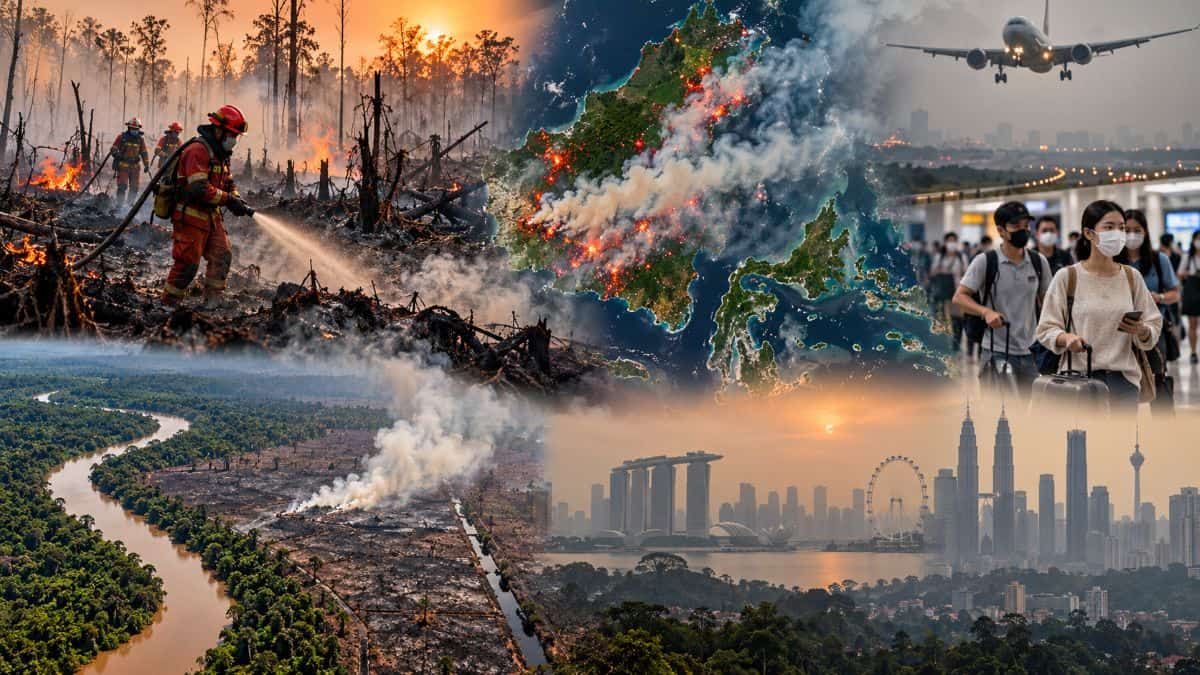
Image generated with Ai
Indonesia is confronting a severe late-season fire threat, with Kalimantan emerging as a major hotspot zone in August and September 2026. Dry peatlands, prolonged rainfall deficits and strengthening El Niño conditions are sustaining widespread fire activity across Indonesian Borneo. The resulting smoke has already crossed national borders, with Singapore recording unhealthy air linked to haze earlier this month. Malaysia has also monitored deteriorating air quality in affected areas. For travellers, the consequences extend beyond uncomfortable skies. Haze can reduce outdoor comfort, affect visibility and complicate aviation operations when conditions deteriorate. Indonesia’s tourism sector is entering this period with substantial visitor demand. Official statistics recorded 1.53 million international tourist visits in July alone.
Kalimantan Emerges as Fire Front
The latest fire map shows extensive concentrations across Kalimantan, Sumatra and parts of Sulawesi. Kalimantan, however, stands out for the scale and density of detected activity across central and southern areas.
Satellite hotspot data requires careful interpretation because a hotspot indicates a possible fire location. It does not automatically represent a confirmed burning area or the intensity of every fire. Cloud cover can also conceal active hotspots, meaning satellite counts may understate activity.
The regional monitoring picture nevertheless remains significant. On 24 August, NOAA-20 detected 287 hotspots in Kalimantan. The figure reached 190 hotspots on 25 August, while Sumatra recorded 65 and 81 hotspots respectively. Those observations prompted ASEAN’s regional monitoring system to raise its alert level to Level 3.
Advertisement
Advertisement
| Indicator | 2026 Reading | Travel Relevance |
|---|---|---|
| Kalimantan hotspots, 24 August | 287 | Indicates concentrated fire activity |
| Kalimantan hotspots, 25 August | 190 | Shows continuing regional activity |
| Sumatra hotspots, 24 August | 65 | Adds another smoke source |
| Sumatra hotspots, 25 August | 81 | Sustains haze potential |
| Singapore PSI, 4 September | 101 | Entered Unhealthy range |
| Singapore PSI, 26 September | 71–96 | Moderate range, with further haze risk |
The figures demonstrate why the issue has become a regional travel story rather than a local environmental event. Smoke movement follows weather patterns, allowing fires thousands of kilometres away to influence conditions in neighbouring destinations.
El Niño Keeps Southeast Asia Dry
Indonesia’s meteorological outlook had already signalled a difficult fire season. The national weather agency forecast that much of the country would experience a drier-than-normal 2026 dry season.
Advertisement
Advertisement
BMKG’s March outlook found that 64.5 per cent of seasonal zones could receive below-normal rainfall. It also projected that 57.2 per cent of zones could experience a longer-than-normal dry season. August was identified as the dominant peak of the dry period.
The June update became more specific about El Niño. BMKG assigned a 100 per cent probability to weak El Niño conditions, 98 per cent to moderate conditions and 62 per cent to strong conditions. It also identified August as the peak dry-season month across 369 seasonal zones.
By September, the warning had become more immediate. BMKG described the month as a critical phase for forest and land fires, citing dry weather, El Niño and elevated hotspot activity.
The ASEAN Specialised Meteorological Centre has likewise warned that strong El Niño conditions could sustain below-normal rainfall across much of southern ASEAN. It expects above-normal temperatures across much of the region during September and November.
Peatlands Make Fires Harder
The geography of Indonesian Borneo adds another layer to the crisis. Peatlands can retain organic material below the surface, allowing fires to smoulder underground after visible flames disappear.
That creates a difficult cycle for firefighters. Teams can suppress surface flames, yet dry peat may reignite later when heat and oxygen return.
Advertisement
Advertisement
The situation described around Palangkaraya illustrates that challenge. Firefighters have repeatedly returned to affected areas to wet combustible ground and prevent renewed ignition.
One firefighter quoted in the material, Heru Hartarto, described the operational pressure simply: “We’re exhausted. Many new fires are appearing.”
The broader land-use context also matters. Slash-and-burn clearing has historically contributed to Indonesia’s seasonal fire problem. However, weather alone does not explain every ignition. Land management, peat drainage, agricultural activity and prolonged dryness can interact to create highly combustible landscapes.
Haze Crosses Borders Quickly
The regional consequences are already visible beyond Indonesia. Singapore’s National Environment Agency reported smoke plumes from Kalimantan drifting towards the city-state during September.
On 14 September, Singapore recorded one-hour PM2.5 readings of 56–115 micrograms per cubic metre. Its 24-hour PSI reached 88–117, spanning Moderate to Unhealthy conditions.
The situation subsequently improved but remained unstable. On 26 September, the 24-hour PSI stood between 71 and 96, while one-hour PM2.5 readings reached 46–96 micrograms per cubic metre. Singapore continued warning about haze because dry conditions persisted over southern and eastern Kalimantan.
Advertisement
Advertisement
The September deterioration also carried historical significance. Singapore’s government said the PSI first entered the Unhealthy range because of haze on 8 October 2023. The September 2026 episode therefore marked the first such occurrence since that date.
Malaysia faces a similar geographical exposure because western Kalimantan borders Sarawak and lies close to Sabah. Malaysian environmental authorities have maintained air-quality monitoring in Sabah during the episode.
Tourism Demand Raises Stakes
The timing matters for Indonesia’s travel economy. Visitor demand remains substantial despite the environmental pressure.
Indonesia recorded 1.53 million international tourist visits in July 2026, according to Statistics Indonesia. International visits increased 2.95 per cent year on year, while domestic tourist journeys reached 107.44 million.
Neighbouring markets are particularly important to Indonesia’s tourism ecosystem. Malaysian passport holders accounted for 228,714 visits in July. Singaporean visitors contributed another 117,278 visits during the same month.
That regional dependence makes haze particularly relevant to travel businesses. Short-haul travellers can react quickly to changing conditions, especially when outdoor sightseeing forms a major part of the itinerary.
Advertisement
Advertisement
| Tourism Measure | July 2026 | Year-On-Year Change |
|---|---|---|
| International tourist visits | 1.53 million | +2.95% |
| Domestic tourist journeys | 107.44 million | +7.23% |
| National tourist journeys abroad | 802,670 | -7.73% |
| Star-rated hotel occupancy | 54.54% | +1.75 percentage points |
| Malaysian visitors | 228,714 | Not stated |
| Singaporean visitors | 117,278 | Not stated |
The figures show why prolonged haze could matter commercially. Hotels, attractions, restaurants and tour operators depend heavily on predictable visitor flows and comfortable outdoor conditions.
Aviation Faces A Visibility Test
Haze does not automatically mean widespread flight cancellations. Aviation authorities and airlines make operational decisions using current visibility, weather observations, runway conditions and safety requirements.
However, reduced visibility can complicate airport operations. This becomes particularly relevant across Borneo, where several airports connect regional cities with major Malaysian and Indonesian hubs.
Malaysia’s civil aviation authority maintains formal aeronautical information systems for operational hazards. Its NOTAM system provides time-sensitive information essential for flight operations.
Travellers should therefore distinguish between haze risk and confirmed flight disruption. A smoky skyline does not necessarily indicate airport closure, while poor visibility at a particular airport can create local operational restrictions.
The practical lesson is straightforward. Passengers travelling through affected areas should check airline notifications and official airport information before leaving for the airport.
Advertisement
Advertisement
What Travellers Should Monitor
Travellers visiting Indonesia, Singapore or Malaysia should treat air quality as a live travel variable during prolonged haze episodes.
Singapore provides particularly useful public information. Its authorities recommend using one-hour PM2.5 readings for immediate outdoor activity and the 24-hour PSI forecast for planning the following day.
Travellers should also remain flexible with outdoor-heavy itineraries. City walks, cycling excursions, hiking and long-distance sightseeing can become less comfortable as particulate concentrations rise.
Indoor attractions provide a useful alternative during poorer air-quality periods. Travellers can also schedule outdoor activities during periods when official readings show improved conditions.
| Traveller Concern | What To Check | Practical Response |
|---|---|---|
| Air quality | PM2.5 and PSI | Adjust outdoor plans |
| Flight status | Airline notification | Recheck before departure |
| Airport operations | Official airport information | Allow additional time |
| Outdoor excursions | Local air-quality readings | Consider flexible scheduling |
| Regional travel | Weather and haze outlook | Monitor conditions daily |
| Photography | Visibility conditions | Expect reduced distant visibility |
The most important point is that conditions can change rapidly. Travellers should use official measurements rather than judging air quality solely from photographs or visibility.
October Could Bring Some Relief
There is a potential shift ahead, although it should not be treated as an immediate resolution.
Advertisement
Advertisement
The ASEAN Specialised Meteorological Centre expects the Southwest Monsoon to transition towards the inter-monsoon period around early October. Increasing shower activity could provide some relief across equatorial areas.
However, the outlook remains conditional. ASMC’s September-November forecast still points to a high chance of below-normal rainfall across much of the Maritime Continent.
Its latest outlook also warns that drier-than-usual conditions could persist through the period from 28 September to 11 October. That leaves continued fire and haze risk even as the seasonal pattern begins changing.
The contrast with previous years is important. Singapore’s latest episode has already crossed an air-quality threshold not reached because of haze since 2023. Meanwhile, Indonesia entered 2026 with forecasts pointing towards a longer and drier fire season.
Travel Industry Must Track Conditions
For the travel industry, the episode reinforces the importance of environmental intelligence alongside conventional demand forecasting.
Hotels can monitor air-quality trends when planning outdoor events. Tour operators can maintain alternative indoor itineraries during smoky periods. Destination marketers can also communicate conditions without overstating either risks or disruptions.
Advertisement
Advertisement
Airlines and airports operate under a different framework. They rely on aviation-specific meteorological and operational information rather than general public haze readings.
This distinction matters for business communication. A haze warning should not automatically become a flight-disruption claim without evidence of an operational impact.
The tourism sector also faces a reputational challenge. Travellers need accurate information about affected destinations, while destinations need to avoid unnecessary alarm when conditions remain manageable.
Regional Travel Enters Sensitive Period
Indonesia’s 2026 fire season has developed into a wider Southeast Asian travel concern because three forces are converging. Dry weather, elevated fire activity and shifting winds are allowing smoke to travel beyond Indonesia’s borders.
Kalimantan remains central to that picture. Satellite monitoring has recorded substantial hotspot concentrations, while official meteorological agencies continue to warn about persistent dryness and El Niño conditions.
For travellers, the immediate priority is not abandoning regional travel. It is understanding the difference between a local haze episode, an airport-specific visibility problem and a broader regional deterioration.
Advertisement
Advertisement
Indonesia’s tourism market remains substantial, with strong international and domestic travel volumes. Yet the latest episode shows how quickly environmental conditions can become a tourism variable across borders.
If October rainfall arrives as forecast, conditions could gradually improve. Until then, travellers and tourism businesses should continue monitoring official air-quality, weather and aviation information before making time-sensitive plans.
FAQs
1. Are Indonesia’s forest fires affecting travellers?
Yes. Smoke from fires in Kalimantan can reduce air quality and visibility, particularly in affected areas and neighbouring countries.
2. Is Singapore affected by the Indonesian haze?
Yes. Smoke from Indonesian fires can cross into Singapore, causing elevated PM2.5 levels and poorer air quality.
3. Which Indonesian region is seeing major fire activity?
Kalimantan is among the principal affected regions, with extensive hotspot concentrations recorded during August and September 2026.
4. Can the haze disrupt flights in Southeast Asia?
Potentially. Severe visibility reductions can affect airport operations, although haze does not automatically mean flight cancellations.
Advertisement
Advertisement
5. When could Indonesia’s fire conditions improve?
Conditions could ease if seasonal rainfall increases during the October transition towards the inter-monsoon period, although risks may persist.
6. What should travellers do during the haze season?
Check official air-quality readings, weather updates and airline notifications before travelling, particularly when planning outdoor activities.
Advertisement
