

Portugal Turns World Cup Attention Into a Bold European Football Tourism Opportunity

Updated
Published
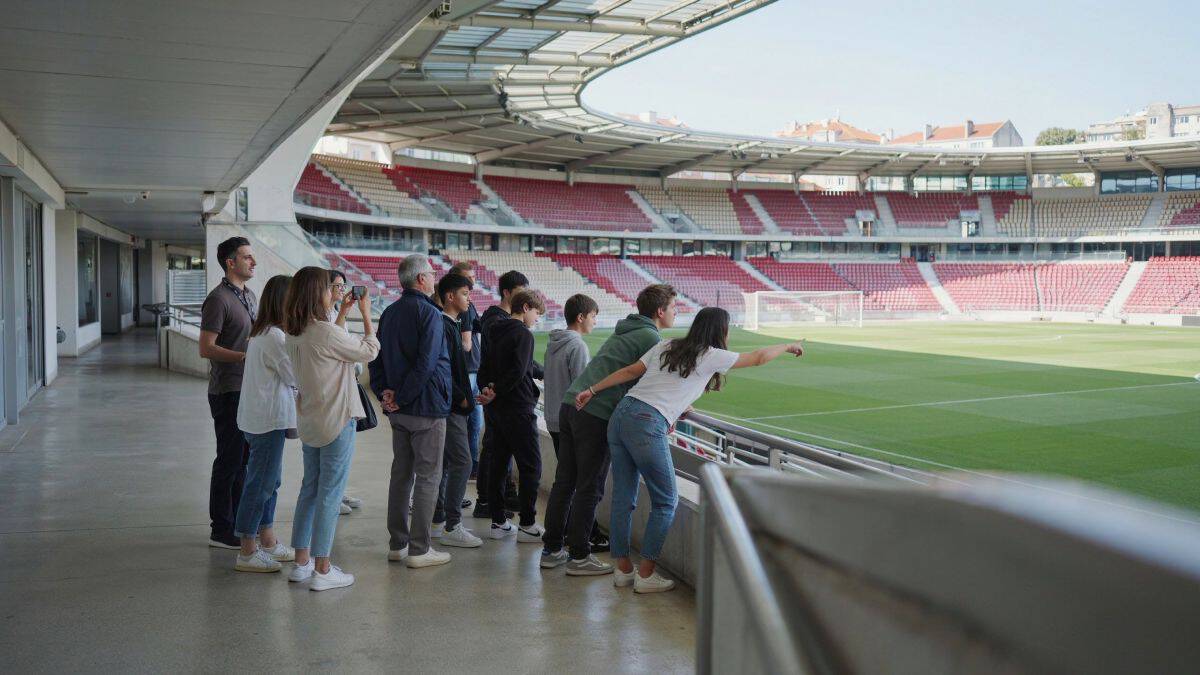
Portugal makes good use of World Cup interest in creating an exciting European football tourism experience by ensuring that tourists learn that football means much more than a match. To begin with, Portugal uses football together with its history, gastronomy, landscapes and surfing as part of the package offered to tourists. At the same time, Britain provides stadium tours, Germany uses its World Cup figures to demonstrate regional success and Spain gets ready for the World Cup in 2030. Nevertheless, increased number of tourists cannot be seen as a proof of the impact of football.
Portugal Turns the 2026 World Cup Into a Tourism Shop Window
Portugal built a tourism campaign around the 2026 World Cup. The country’s tourism authority, Turismo de Portugal, announced “It’s Portugal Time” in June. It worked with the Portuguese Football Federation to promote Portugal in the United States, Canada, Brazil, the United Kingdom, Spain, Germany and France.
The campaign used football to introduce visitors to other parts of the country. It featured Portuguese heritage, nature, food and surfing. On days when Portugal played, Visit Portugal’s online channels showed an “opening eleven” of eleven experiences that represented the country. Portugal House in New York also hosted promotion for visitors, journalists and travel businesses. This gives the article a fresh angle: football can be a doorway to a wider holiday, rather than the whole reason for a trip.
A Tourism Campaign Is Not Proof of a Visitor Boom
The campaign shows that Portugal used the World Cup to seek attention from potential visitors. It does not show how many people booked a holiday because of it. That difference matters when reporting on post-World Cup travel.
Advertisement
Advertisement
Portugal recorded 3.9 million guests and 10.9 million overnight stays in tourist accommodation in August 2026. Overnight stays rose 1.7% compared with August 2025. These figures describe the country’s tourism performance during the month; they do not identify why each visitor travelled. Holiday seasons, flight options, prices and other events can also affect demand.
A strong article can report the campaign and the visitor figures side by side, while making clear that the official data do not link one directly to the other. That careful distinction makes the story more credible.
Advertisement
Advertisement
Portugal’s Regional Numbers Add a Second Story
Portugal’s latest figures offer more detail than a national total. In August, overnight stays from Canada rose 11.2% year on year. Stays from the United States increased 5.8%, while those from Spain rose 5%. Portugal had included all three countries in its campaign.
The Norte region recorded the largest increase among the regions highlighted in the report, with overnight stays up 4.5%. The Alentejo followed with a 2.6% rise. Across the first eight months of 2026, Portugal recorded 22.4 million guests and 57.3 million overnight stays. The United Kingdom, Germany and Spain were its largest source markets by share of stays. These trends are worth investigating, but they do not prove the campaign caused growth in those markets or regions.
Advertisement
Advertisement
Europe’s Tourism Figures Need Context
Tourism was already growing across much of Europe in the first half of 2026. Eurostat counted 1.321 billion overnight stays in EU tourist accommodation from January to June. That was 1.7% more than during the same period in 2025. Nights spent by foreign visitors rose 2.5%.
Spain also reported a rise in international arrivals. It welcomed 12.3 million international tourists in August 2026, up 9.2% on August 2025. From January to August, arrivals reached nearly 70.4 million, an increase of 5.4%.
These figures help set the scene for a European football tourism story. They are not evidence that the World Cup created a Europe-wide surge. The EU figure covers the first half of the year, while Spain’s August report records visitor arrivals without linking them to football.
Germany Shows How Football Can Help Host Regions
Germany’s EURO 2024 figures reveal how a major tournament can affect different regions in different ways. In June and July 2024, about 4.1 million foreign guests stayed in accommodation in the regions around the ten host cities. That was 23.8% more than in the same months of 2023.
Advertisement
Advertisement
The Ruhr region, which includes Dortmund and Gelsenkirchen, recorded a 68.3% increase in foreign guests. The rest of Germany saw a much smaller rise of 3.9%. The number of domestic guests across the ten host regions stayed close to the previous year’s level.
This comparison points to a useful story about local impact. National totals can hide major differences between areas. Football tourism may bring a sharp increase to certain host regions, but the size and spread of that benefit depend on where matches take place and what else visitors can do nearby. These results describe EURO 2024, not a lasting increase in 2026.
Britain’s Football Trips Can Reach Beyond London
Britain has a long-standing international football tourism market. VisitBritain research found that 1.5 million inbound visitors attended a live football match during 2019. Their average spending per visit was £909, which was 31% higher than the average for all UK visitors in that research.
Football visits also reached beyond London. In 2019, 18% of international visits to North West England included a live football match. The equivalent figure for London was 3%. Manchester and Liverpool give visitors strong football draws, while surrounding areas offer museums, food, music and other attractions.
These numbers are historical and should be labelled as such. They do not describe current visitor volumes. They do, however, show why a regional football tourism angle can be more distinctive than focusing only on the largest capitals and best-known stadiums.
Stadium Tours and Museums Keep the Trip Going
A football holiday does not have to depend on securing a match ticket. In Manchester, the National Football Museum’s 2026 exhibition “Head, Shoulders, Knees & Goals” explores how the body moves and how science, exercise, food and clothing affect football. It is scheduled to run until 1 November 2026.
Advertisement
Advertisement
Spain’s official tourism portal also promotes stadium tours and football experiences in cities including Bilbao, San Sebastián, Seville, Valencia and Villarreal. These products can help visitors build a wider city break around a club or stadium. Bilbao, for example, can pair a San Mamés visit with its food and other city attractions.
This is a practical story for travellers and tourism businesses. Museums and tours give fans something to do between matches or outside the football season. They can also interest friends and family who do not follow a team closely.
Zurich Offers World Cup Experiences Without Hosting Matches
Switzerland adds another useful example. Zurich is home to the FIFA Museum, which used the 2026 World Cup as the focus for a special programme. Its “World Cup Fever: Skills Zone” invites visitors to try interactive challenges based on football skills such as speed, precision and coordination.
The Skills Zone costs CHF 8 as an addition to a regular museum ticket, according to the museum. The attraction gives the city a football-themed visitor experience even though Switzerland is not hosting the 2026 tournament.
This example shows how football tourism can work through culture and interactive experiences, as well as through live matches. It also gives the article a traveller-facing detail: fans can include a football attraction in a Zurich visit without planning the trip around a stadium fixture. The experience is evidence of a tourism offer, however, not proof of a rise in museum visits.
Spain Is Preparing for the 2030 World Cup
Spain’s government has begun organising its work for the 2030 World Cup. In March 2026, it announced specialist groups covering security, stadiums and infrastructure, team accommodation, transport, technology, communications and legal matters.
Advertisement
Advertisement
The groups will coordinate with FIFA, Spain’s football federation, Portugal, Morocco and public authorities. This shows that preparations involve more than match venues. Visitors will also need places to stay, transport between destinations and clear information.
The planning creates a reporting opportunity: what changes will make travel easier, which areas will benefit, and what improvements will remain useful after the tournament? The government has stated its aim of creating a lasting legacy, but that aim should not be presented as a result already achieved. Reporters can track progress by checking completed projects and published transport, accommodation and visitor plans.
EURO 2028 Puts Eight Cities in the Picture
EURO 2028 will run from 9 June to 9 July 2028. UEFA has set matches across nine stadiums in eight cities: London, Cardiff, Manchester, Liverpool, Newcastle, Birmingham, Glasgow and Dublin. The opening match is scheduled for Cardiff, while Wembley will host the final.
The schedule gives the next major European football tournament a strong regional focus. Visitors may travel between cities for matches, while host locations can encourage fans to stay longer or add local attractions to their plans.
UEFA’s September 2026 Innovation Programme also looks beyond the stadiums. It seeks ideas to improve volunteer experiences and connect more communities with the tournament. UEFA says the programme has a funding budget of up to £200,000, with support allocated at its discretion.
The article can ask how this community work will develop, and how host cities will help visitors explore beyond match venues. It should describe these as goals and plans, not guaranteed tourism gains.
Advertisement
Advertisement
The 2030 World Cup Will Cross Continents
FIFA appointed Spain, Portugal and Morocco as the main hosts of the 2030 World Cup. The tournament will also include three centenary matches in Argentina, Paraguay and Uruguay. The event therefore spans Europe, Africa and South America.
That geography gives Spain and Portugal a chance to connect football promotion with wider travel in the Iberian Peninsula. Morocco’s role also makes the tournament a cross-border story. But the article should be clear about the format: 2030 is not a tournament held only in Europe.
The next opportunity is to follow preparations country by country. Spain has set up government working groups. Portugal has already used the 2026 World Cup to promote its visitor offer and expects the 2030 tournament to bring benefits. Those are different stages of planning and promotion, so they should not be described as one shared European tourism campaign.
Football Could Help Tackle Europe’s Summer Peak
There is a wider reason to examine football tourism: Europe’s visitor demand is highly seasonal. Eurostat reports that 31.1% of EU tourist accommodation nights in 2025 occurred in July and August. Across the EU, August had 3.6 times as many overnight stays as January.
Football museums, stadium tours and city attractions could give visitors reasons to travel at other times of year. A match or museum visit might also encourage a traveller to stay an extra night or visit a neighbouring city. Those are possibilities for destinations to test, rather than proven results in the data reviewed here.
Future reporting can look at monthly attraction visits, accommodation stays and spending in football cities. If destinations want football to support year-round tourism, they will need to show whether visitors arrive outside peak months and whether local businesses gain from the extra activity.
Europe’s Next Test Is Turning Attention Into Local Value
The bold World Cup campaign from Portugal makes European cities famous for their football even before 2030. First of all, Portugal organized a campaign using the 2026 World Cup to introduce its food, heritage, nature, and surf tourism to seven countries. In addition, Britain provides tours of its stadia. The results of the EURO 2024 in Germany illustrate how successes varied in each region of the host country. Spain is getting ready for the 2030 World Cup by organizing the necessary infrastructure including transportation and accommodation. Yet, arrivals do not indicate that football was the reason for increased tourism.
Advertisement
