

United Arab Emirates Rises With UK and Others as Global Winter Festivals Support Cultural Tourism for Travellers

Published
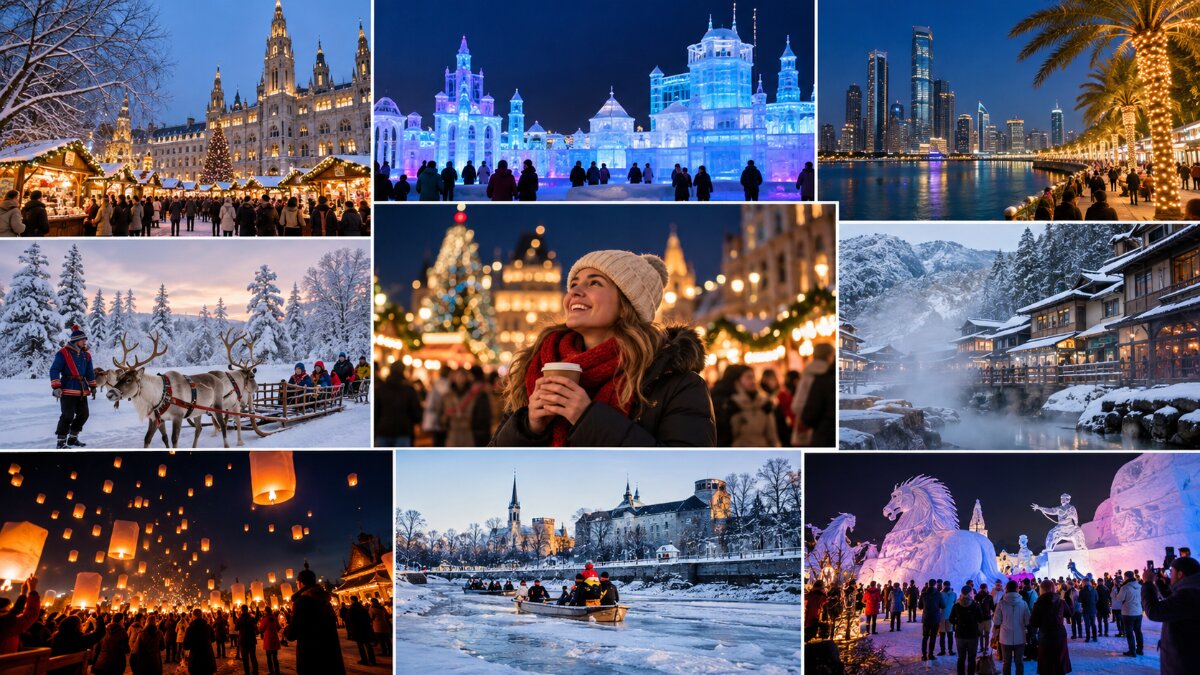
The United Arab Emirates is adding a new waterfront attraction to its winter tourism offering as DXB Winter Festival prepares to welcome visitors beside Dubai Festival City Mall. The development comes as destinations across Europe, Asia, North America and the Southern Hemisphere prepare Christmas markets, light festivals, snow carnivals and cultural celebrations between late 2026 and mid-2027. Together, these events create opportunities for hotels, restaurants, attractions and travel companies to attract visitors beyond traditional sightseeing, although their commercial impact will vary considerably between destinations.
Dubai’s New Waterfront Winter Festival Strengthens the UAE’s Seasonal Tourism Offering
Dubai’s forthcoming DXB Winter Festival is positioning the waterfront beside Dubai Festival City Mall as a new festive entertainment destination, adding European-inspired Christmas market experiences to the city’s established shopping, hospitality and events economy.
The official DXB Winter Festival organiser confirms a programme featuring festive vendor streets, retail and food businesses, Santa’s grotto, a Christmas tree, fairground rides, entertainment stages, workshops and daily parades. The festival is designed to appeal to residents, families and visitors from different cultural backgrounds.
Published operating hours are 4pm to midnight on weekdays, with an earlier opening at 2pm on weekends. Visitors can access the festival from the mall and waterfront. The programme is intended to cover the UAE’s National Day celebrations, Christmas, New Year’s Eve and Orthodox Christmas.
Advertisement
Advertisement
The organiser is also inviting businesses, vendors and performers to participate, creating a potential commercial platform for local hospitality operators, food traders and entertainment providers.
The event has been publicised with a proposed season from 1 December 2026 to 10 January 2027. However, as of 13 October, the accessible official organiser page does not independently display those exact dates, the reported 20,000-square-metre footprint or the figure of more than 150 vendors. These details should therefore not be treated as fully verified institutional statistics until a dated organiser announcement confirms them.
Advertisement
Advertisement
Dubai’s Existing Tourism Calendar Creates a Wider Commercial Opportunity
The new attraction is entering an already substantial winter tourism calendar.
According to Dubai’s official tourism calendar, Dubai Shopping Festival will run from 4 December 2026 to 17 January 2027. The programme includes shopping promotions, entertainment and family experiences across the city.
Advertisement
Advertisement
Sole DXB is also scheduled for 11–13 December 2026, adding music, fashion, sport and creative programming to the wider destination offering.
These separate events create opportunities for visitors to combine shopping, cultural entertainment, dining and waterfront experiences within one trip. They are not being presented as a formally integrated festival or a joint ticketing programme.
The commercial importance lies in the range of possible itineraries. A family visiting Dubai for several nights could combine mall-based shopping, seasonal entertainment and established attractions without travelling to another city. For hotels and tour operators, that creates additional products to market during an already important tourism period.
Official Tourism Statistics Show Why Dubai’s Winter Market Matters
Dubai enters the festive season with a large hospitality base, although its latest tourism figures also demonstrate why operators should avoid assuming automatic growth.
Advertisement
Advertisement
The Dubai Department of Economy and Tourism recorded 19.59 million international overnight visitors in 2025, an increase of 5% compared with 18.72 million in 2024. December 2025 became the first month in which the city welcomed more than two million international overnight visitors.
The department’s January–August 2026 performance report recorded 6.97 million international overnight visitors. Hotel inventory approached 149,000 rooms by the end of August, while hotels reported 21.61 million occupied room nights during the eight-month period.
August occupancy reached 66%, recovering from 36% in March 2026. Those figures reflect the broader tourism environment and should not be interpreted as evidence of demand created by the newly planned winter festival.
Verified Tourism Indicators and Their Business Relevance
| Official indicator | Verified figure | Period | Implication for tourism businesses |
|---|---|---|---|
| Dubai international overnight visitors | 19.59 million | Full year 2025 | Demonstrates the established scale of international demand |
| Dubai annual visitor growth | 5% | 2025 against 2024 | Provides historical context, not a winter 2026 forecast |
| Dubai international overnight visitors | 6.97 million | January–August 2026 | Shows the current year’s visitor base |
| Dubai hotel-room inventory | Approximately 149,000 | End of August 2026 | Indicates the scale of accommodation available |
| Dubai occupied hotel room nights | 21.61 million | January–August 2026 | Helps assess existing hospitality activity |
| Global international tourist arrivals | Approximately 690 million | January–June 2026 | Establishes the worldwide demand environment |
| Global tourism growth | 0.4% | First half of 2026 | Shows that worldwide arrivals are growing only modestly |
Official sources: Dubai Department of Economy and Tourism and UN Tourism, 17 September 2026.
UN Tourism’s latest September 2026 assessment also recorded first-half growth of 3% in Europe and 4% in Africa, alongside a 22% decline in international arrivals to the Middle East.
The contrasting regional figures underline the need for destination-specific marketing. Festivals can provide an additional reason to travel, but they cannot remove wider influences such as transport disruption, travel costs or changing consumer confidence.
Advertisement
Advertisement
Europe Joins Dubai in Using Christmas Markets and Winter Attractions to Support Tourism
Europe’s winter calendar provides an extensive comparison with Dubai’s new waterfront concept.
The United Kingdom, Germany, Austria, Belgium and other countries have established seasonal events that combine shopping, dining, entertainment and cultural tourism.
Their programmes also demonstrate different operating models. Traditional markets often close before Christmas, while skating attractions, illuminated trails and citywide programmes can continue into January or February.
Official 2026–27 Winter Festival Calendar Across Europe
| Country | Festival and destination | Official dates or status |
|---|---|---|
| United Kingdom | Hyde Park Winter Wonderland, London | 19 Nov 2026 – 3 Jan 2027 |
| Germany | Nuremberg Christkindlesmarkt | 27 Nov – 24 Dec 2026 |
| Austria | Vienna Christmas Market, Rathausplatz | 13 Nov – 26 Dec 2026 |
| Belgium | Winter Wonders, Brussels | 27 Nov 2026 – 3 Jan 2027 |
| Netherlands | Amsterdam Light Festival | 26 Nov 2026 – 17 Jan 2027 |
| Czech Republic | Prague Christmas markets | Main Old Town market: 28 Nov 2026 – 6 Jan 2027 |
| Denmark | Christmas at Tivoli, Copenhagen | 13 Nov 2026 – 3 Jan 2027 |
| Finland | Helsinki Christmas Market | 27 Nov – 22 Dec 2026 |
| Switzerland | Basel Christmas Market | 26 Nov – 23 Dec 2026 |
| Norway | Oslo Winter Wonderland | 7 Nov 2026 – 3 Jan 2027 |
| Estonia | Tallinn Christmas Market | 20 Nov 2026 – 6 Jan 2027 |
| Croatia | Advent Zagreb | 28 Nov 2026 – 7 Jan 2027 |
| Slovenia | Festive December, Ljubljana | Opens 27 Nov 2026; programme continues into early January |
Germany and Austria offer classic Christmas markets built around local crafts, traditional food and historic city centres. London and Copenhagen incorporate larger entertainment attractions, while Amsterdam’s winter programme connects cultural experiences with its canal tourism economy.
Belgium illustrates the increasing importance of extending tourism beyond the main Christmas holiday. Brussels Winter Wonders finishes in early January, but Bruges Winter Glow will continue until 14 February 2027, bringing activities to quieter weeks after the festive season.
For travel businesses, the distinction matters. A market closing in December cannot be sold as a January attraction, even when other seasonal activities remain open.
Advertisement
Advertisement
Further European Destinations Add Diversity to the Winter Tourism Market
| Country | Festival and destination | Official dates or status |
|---|---|---|
| Italy | Bolzano Christmas Market | 26 Nov 2026 – 6 Jan 2027 |
| Poland | Gdańsk Christmas Market | 20 Nov – 23 Dec 2026 |
| Hungary | Advent Basilica, Budapest | 13 Nov 2026 – 1 Jan 2027 |
| Iceland | Reykjavík Winter Lights Festival | 4–7 Feb 2027 |
| Luxembourg | Winterlights, Luxembourg City | 20 Nov 2026 – 3 Jan 2027 |
| Spain | Plaza Mayor Christmas Market, Madrid | Late Nov – 31 Dec 2026 |
| Sweden | Christmas at Liseberg, Gothenburg | Seasonal programme confirmed; check individual operating dates |
| Ireland | Winterval, Waterford | 13 Nov – 23 Dec 2026, mainly weekends |
| Lithuania | Vilnius Christmas Market | 28 Nov – 27 Dec 2026 |
| Romania | Craiova Christmas Market | 13 Nov 2026 – 3 Jan 2027 |
| Malta | Winter Wonderland, Gozo | 27–29 Nov 2026 |
| France | Strasbourg Christmas programme | Returning in late November; final programme details should be checked |
| Portugal | Wonderland Lisboa | Established attraction; 2026–27 dates not confirmed on the official listing reviewed |
The diversity of these events creates different visitor opportunities.
Iceland’s Reykjavík Winter Lights Festival is scheduled across six municipalities and includes more than 150 events, with free admission to its programme. Madrid’s municipal tourism authority identifies 104 stalls at its historic Plaza Mayor market.
In Italy, the Bolzano Tourist Board has already developed accommodation packages combining three-night stays, guided visits, museum admission and Christmas market experiences.
This is an important example of a winter festival being converted into a bookable tourism product rather than promoted only as a single attraction.
Japan, South Korea, India, China and Singapore Expand Asia’s Winter Tourism Appeal
Asia’s winter attractions cover several different visitor segments, including snow tourism, illuminated theme parks, cultural festivals and festive indoor attractions.
Japan’s Sapporo Snow Festival is scheduled for 4–11 February 2027. The event’s 77th edition will use the Odori, Tsudome and Susukino areas, continuing Hokkaido’s established snow-sculpture tradition.
Advertisement
Advertisement
Tokyo offers a longer alternative through Yomiuriland Jewellumination, scheduled from 29 October 2026 to 4 April 2027.
South Korea’s Seoul Metropolitan Government lists its winter festival from 14 December 2026 to 31 January 2027, incorporating illuminated public spaces, digital art and skating.
Asian and Middle Eastern Winter Tourism Programmes
| Country | Festival or seasonal tourism product | Official schedule and planning status |
|---|---|---|
| Japan | Sapporo Snow Festival | 4–11 Feb 2027 |
| South Korea | Seoul Winter Festival | 14 Dec 2026 – 31 Jan 2027 |
| India | Hornbill Festival, Nagaland | 1–10 Dec 2026 |
| Singapore | Gardens by the Bay Christmas Train Show | 20 Nov 2026 – 3 Jan 2027 |
| China | Harbin International Ice and Snow Festival | Recurring winter attraction; next detailed programme pending |
| Saudi Arabia | Winter at Tantora, AlUla | Established cultural festival; the next edition’s dates remain unverified |
| Qatar | Winter in Qatar events calendar | Multiple seasonal festivals, concerts and sporting events; not one combined festival |
| United Arab Emirates | DXB Winter Festival, Dubai | New waterfront programme confirmed; exact public run dates require organiser confirmation |
Nagaland’s Hornbill Festival provides an important distinction from Christmas-based tourism. Its appeal centres on heritage, cultural performances and regional traditions, making it relevant to specialist cultural tour operators.
In Singapore, the Christmas Train Show takes place inside the Flower Dome. The organiser confirms that admission charges apply, making advance budgeting important for family itineraries.
China’s Harbin festival and Saudi Arabia’s Winter at Tantora provide established winter tourism comparisons, but their forthcoming editions must not be presented with unannounced dates.
Similarly, Qatar’s official winter calendar comprises several independent experiences. It does not establish a formal combined programme with Dubai or the other destinations covered in this report.
Advertisement
Advertisement
United States and Canada Extend Winter Tourism Beyond Christmas
North America adds another important commercial model: attractions that continue well after the main holiday shopping period.
New York’s Bryant Park Winter Village is scheduled to begin on 28 October 2026. Its skating season extends to 28 February 2027, although the holiday shops finish earlier, on 3 January.
Chicago’s Christkindlmarket runs from 20 November to 24 December 2026, maintaining the traditional European-style market format.
Canada combines festive markets with more extensive winter attractions.
| Country | Destination and festival | Official dates |
|---|---|---|
| United States | New York – Bryant Park Winter Village skating | 28 Oct 2026 – 28 Feb 2027 |
| United States | Chicago – Christkindlmarket | 20 Nov – 24 Dec 2026 |
| Canada | Niagara Falls Winter Festival of Lights | 14 Nov 2026 – 10 Jan 2027 |
| Canada | Vancouver Christmas Market | 16 Nov – 24 Dec 2026 |
| Canada | Québec Winter Carnival | 5–14 Feb 2027 |
Niagara Falls Tourism has confirmed that the 44th Winter Festival of Lights will feature approximately three million lights and more than 25 new displays and interactive exhibits.
The outdoor illumination programme is free to attend and extends through the tourist districts. Its official visitor guidance encourages accommodation stays and transport planning, demonstrating how a free attraction can sit within a wider commercial tourism offering.
Advertisement
Advertisement
Québec’s February carnival provides a different winter product focused on snow, ice and outdoor celebration. For travel sellers, these distinctions help match destinations to travellers seeking either festive shopping or genuine cold-weather experiences.
Australia, New Zealand and South America Carry Seasonal Tourism Into Mid-2027
The worldwide calendar requires an important geographical distinction.
December is summer in the Southern Hemisphere. Its winter tourism programmes generally fall between May and August, while Christmas-themed events may still operate in December.
Australia has already confirmed the next edition of Vivid Sydney for 28 May to 19 June 2027.
New Zealand’s Ministry for Culture and Heritage confirms the Matariki public holiday on 25 June 2027, creating a fixed national date around which individual cultural celebrations can be planned.
Southern Hemisphere and African Seasonal Festival Calendar
| Country | Festival and destination | Verified timing or status |
|---|---|---|
| Australia | Vivid Sydney | 28 May – 19 Jun 2027 |
| New Zealand | Matariki, Māori New Year | Public holiday: 25 Jun 2027; local programmes vary |
| Brazil | Natal Luz, Gramado | 22 Oct 2026 – 17 Jan 2027; occurs during Brazilian spring and summer |
| Peru | Inti Raymi, Cusco | Traditionally 24 Jun; detailed 2027 arrangements pending |
| Argentina | National Festival of the Longest Night, Ushuaia | Annual June event; 2027 dates pending |
| Chile | Winter Carnival, Punta Arenas | Annual July celebration; 2027 schedule pending |
| South Africa | National Arts Festival, Makhanda | Annual June–July arts festival; 2027 programme pending |
| Tunisia | International Sahara Festival, Douz | Traditionally December; next dates unverified |
| Egypt | Abu Simbel Solar Alignment Festival | Annual solar events on 22 Feb and 22 Oct; detailed visitor programmes vary |
Brazil’s Natal Luz has been confirmed by the municipal tourism authority for 22 October 2026 to 17 January 2027. It provides a useful festive tourism comparison with Dubai, but it should not be described as a Brazilian winter festival.
Advertisement
Advertisement
Peru’s Inti Raymi and New Zealand’s Matariki are rooted in distinct cultural traditions. Their inclusion demonstrates how seasonal events can offer experiences beyond conventional Christmas entertainment.
Argentina, Chile and South Africa also show how arts, parades and community celebrations can help build visitor interest during the Southern Hemisphere winter.
For Tunisia, the traditional Sahara festival connects cultural tourism with desert experiences. Egypt’s Abu Simbel observance instead centres on a specific heritage phenomenon, making its visitor appeal quite different from a commercial festive market.
Sydney Provides a Measurable Example of Festival-Linked Business Opportunities
An official announcement from the New South Wales Government, published on 12 October 2026, provides particularly useful evidence of the commercial relationship between festivals and local businesses.
More than 550 businesses participated in Vivid Sydney’s Local Business Program in 2026, representing a 19% increase from the previous year.
Among programme respondents, 52% reported higher-than-normal revenue, while 68% considered extended trading hours worthwhile. More than 83% indicated that they would recommend the programme to other businesses.
Advertisement
Advertisement
These are responses from participating businesses, not proof that all Sydney businesses experienced revenue growth. They are also not forecasts for the 2027 event.
The government has opened expressions of interest for the next edition, inviting restaurants, retailers, bars and waterfront operators to develop festival-related offers.
For Dubai and other destinations, Sydney provides a practical comparison of how public authorities and event organisers can create structured opportunities for businesses beyond the main attraction.
Independent Tourism Analysis: Why Visitor Spending Matters More Than Festival Footfall
The central commercial question for the 2026–27 season is not simply how many people enter a festival. It is whether the event creates additional visitor expenditure that would not otherwise have occurred.
A large market may attract substantial numbers of local residents without generating many hotel stays. A smaller cultural event, by contrast, may encourage visitors from overseas to remain for several nights. Those outcomes should be measured separately.
Dubai’s waterfront location creates possibilities for combining accommodation, shopping and evening entertainment. Amsterdam’s light festival connects with canal experiences, while Bolzano already offers three-night accommodation packages. Sydney has a structured programme connecting festival audiences with local businesses.
Advertisement
Advertisement
These different approaches suggest that the strongest tourism products combine an event with complementary experiences and convenient access.
They also highlight a measurement problem. High attendance does not automatically establish new international arrivals, higher hotel occupancy or positive economic impact. Visitors may simply shift spending from one local attraction to another.
Destination managers should therefore examine incremental room nights, visitor origin, average length of stay, local supplier participation and revenue per visitor alongside attendance.
This distinction is particularly important when assessing new festivals. Without comparable baseline data, claims of tourism transformation risk overstating what an individual attraction has achieved.
How Winter Festivals Affect Hotels, Transport, MICE and Tour Operators
For accommodation providers, winter festivals can support experience-led packages that include event admission, breakfast, transfers and nearby attractions.
Their effectiveness will depend on event dates, hotel location, ticket availability and the traveller’s wider reasons for visiting.
Advertisement
Advertisement
Transport operators face a different operational challenge. Some programmes occupy historic pedestrian districts, while others are spread across waterfronts, parks or several municipal areas.
Amsterdam’s programme can be experienced by canal cruise or on foot. Vienna’s Christmas Market is accessible through several public transport connections. Niagara Falls offers an illuminated route exceeding eight kilometres across tourist districts.
MICE organisers can also consider selected winter attractions for corporate hospitality, incentive groups and seasonal social programmes. However, private event capacity, accessibility, weather arrangements and cancellation terms need separate verification.
There is no evidence in the official festival announcements reviewed that the worldwide winter calendar represents a coordinated route-expansion initiative. Airlines and rail operators may independently adjust capacity, but no new services should be attributed to these events without a specific operator announcement.
Commercial Opportunities and Risks for Travel Businesses
| Tourism segment | Potential commercial opportunity | Main risk requiring management |
|---|---|---|
| Hotels and serviced accommodation | Multi-night packages and seasonal experiences | Unverified demand forecasts and fluctuating room rates |
| Destination management companies | Combined city tours and event visits | Schedule changes, crowding and supplier reliability |
| Retailers and restaurants | Festival-linked menus, shopping and longer trading hours | Staffing costs and uncertain additional spending |
| Tour operators | Specialist winter, culture and family itineraries | Different event dates and incomplete programmes |
| MICE and incentive travel | Corporate events and group experiences | Capacity, accessibility and cancellation terms |
| Local transport providers | Event transfers and last-mile connections | Road restrictions, weather and crowd management |
Critical Operational Takeaways for Travel Agents and Tour Operators
- Verify every festival date before selling packages. Some events have confirmed 2026–27 schedules, while others have only published historical information.
- Distinguish admission from optional charges. Free public access does not mean that skating, rides, exhibitions or private experiences are included.
- Check opening times and event boundaries. A Christmas market may close while a wider winter programme continues.
- Use official transport and safety guidance. Plan alternatives for weather disruption, road closures and crowded public areas.
- Protect suppliers against payment fraud. Waterford City and County Council issued a September 2026 warning about fraudulent applications for festival trading spaces.
- Avoid unverified economic claims. Attendance figures, hotel room nights and international arrivals represent different measurements.
- Build flexible itineraries. Weather-sensitive and outdoor activities require alternative options.
- Confirm group arrangements. MICE and incentive bookings need written capacity, accessibility, insurance and cancellation conditions.
Global Winter Festivals Point Towards a Longer Seasonal Tourism Calendar
The emerging 2026–27 festival calendar demonstrates that seasonal tourism is no longer confined to Christmas markets operating for a few weeks in December.
Dubai’s new waterfront festival expands the UAE’s festive entertainment offer, while cities such as Bruges, Amsterdam, New York, Sapporo and Québec extend their programmes into January and February.
Advertisement
Advertisement
Australia and other Southern Hemisphere destinations carry the seasonal tourism opportunity into the middle of 2027.
For the international travel trade, the long-term opportunity lies in building complete destination experiences around these events, rather than marketing festival admission alone.
The most convincing evidence of success will come from additional visitor nights, stronger local business participation and measurable spending, balanced against transport capacity, environmental pressures and the needs of resident communities.
FAQs
1. Where is the new DXB Winter Festival taking place in Dubai?
DXB Winter Festival is planned beside Dubai Festival City Mall, with access from the mall and waterfront. The official organiser confirms seasonal retail, food, entertainment and family attractions.
2. Which European countries have confirmed winter festivals for 2026–27?
Confirmed programmes include events in the United Kingdom, Germany, Austria, Belgium, the Netherlands, Denmark, Finland, Switzerland, Estonia, Croatia, Italy, Hungary, Ireland and several additional European destinations. Exact closing dates differ.
3. Which winter festivals continue after Christmas 2026?
Examples include Amsterdam Light Festival until 17 January 2027, Bruges Winter Glow until 14 February 2027 and Bryant Park’s skating season until 28 February 2027. Québec and Sapporo hold major festivals in February.
Advertisement
Advertisement
4. How can winter festivals benefit international tourism?
They can provide additional reasons to visit, encourage hotel packages and create business opportunities for restaurants, retailers, guides and entertainment providers. Actual economic gains must be established through visitor and spending data.
5. Are winter festivals in Australia, New Zealand and South America held during December?
Not generally. The Southern Hemisphere experiences winter around June and July. Australia’s Vivid Sydney is scheduled for May–June 2027, while events such as Matariki and Inti Raymi take place in June. Brazil’s Natal Luz is a Christmas celebration held during the country’s warmer months.
Advertisement
