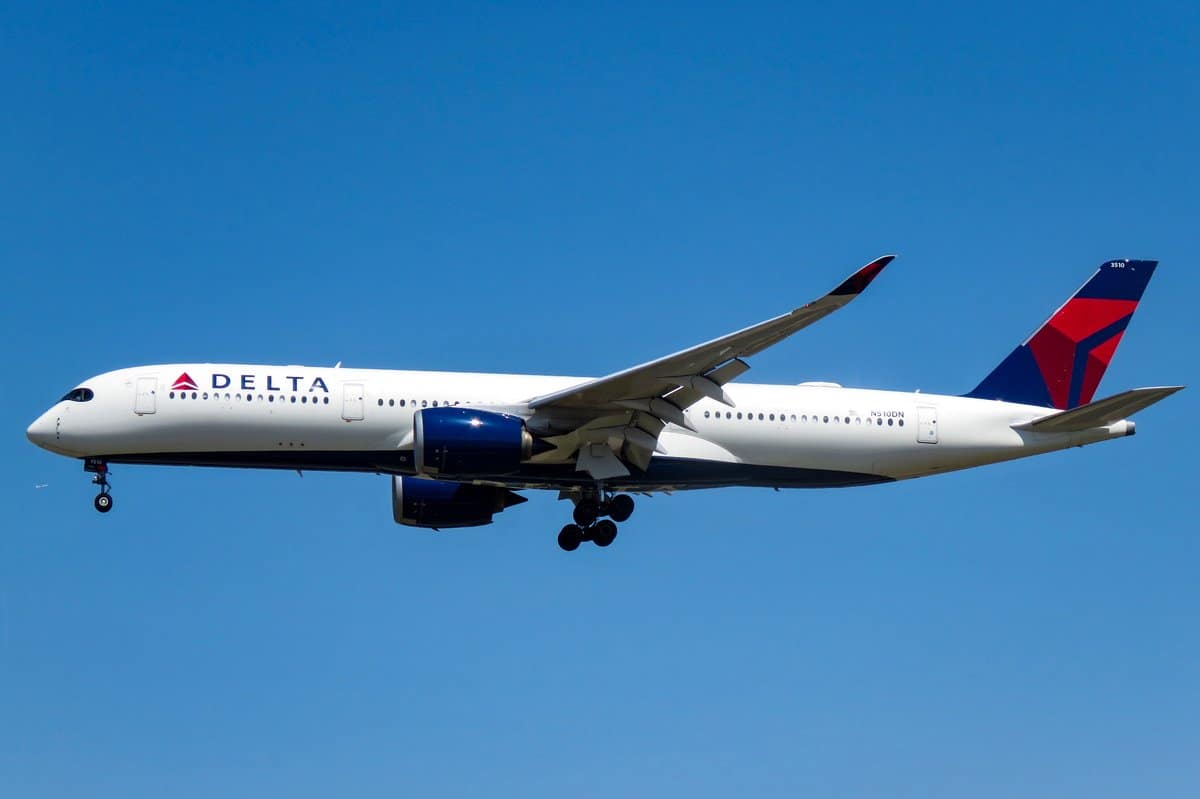
Image generated with Ai
On 28 July 2026, Delta Air Lines flight DL691 from San Francisco (SFO) to New York (JFK) was forced to divert to Boston Logan International Airport (BOS) due to severe weather and congestion over the New York metropolitan region. Operating on a Boeing 767-300ER wide-body aircraft (tail number N186DN), the crew landed safely in Boston before completing the final leg to JFK early the following morning.
Why did Delta Air Lines flight DL691 from San Francisco to New York divert to Boston on 28 July 2026? Travel news readers need to know what caused this unexpected reroute. Severe weather forced the transcontinental jet into an urgent detour.
Advertisement
Passengers aboard Delta Air Lines flight DL691 from San Francisco to New York experienced a dramatic course change when their aircraft diverted to Boston on 28 July. Travel news readers need to know why this routine cross-country journey suddenly turned into an unexpected overnight delay. Severe weather systems rolled across the East Coast. Air traffic control restricted local airspace arrivals immediately. The flight crew evaluated fuel limits swiftly and made a safe decision. Consequently, the twin-engine wide-body jet touched down smoothly in Massachusetts instead. Airlines prioritized safety over schedules as passengers adjusted their plans.
On 28 July 2026, Delta Air Lines flight DL691 departed San Francisco International Airport bound for New York’s John F. Kennedy International Airport, but severe meteorological conditions over the Atlantic coast forced pilots to modify their flight path. Although initial flight reports misidentified the jet as an Airbus model, the service was actually operated by a Boeing 767-300ER registered as N186DN, a robust twin-engine wide-body aircraft engineered for high-density transcontinental routes.
Advertisement
As the aircraft approached the New York airspace, heavy rainfall, reduced visibility, and strict Air Traffic Control holding patterns severely constrained landing capacity across the region’s major hubs. Rather than circling endlessly in holding patterns and consuming critical emergency fuel reserves, the flight crew made the prudent decision to redirect to Boston Logan International Airport. Image generated with Ai
When flight planners and flight crews evaluate diversion options along the busy North-East corridor, Boston Logan International Airport stands out as an optimal primary alternate due to its extensive infrastructure and operational capacity. The airport features long, heavy-duty runways capable of accommodating large wide-body airliners like the Boeing 767-300ER without requiring special load restrictions or structural ground modifications.
Furthermore, because Delta Air Line maintains a major operational hub at Boston Logan, the carrier already possesses the essential ground crews, maintenance personnel, and gate availability required to handle an unexpected arrival smoothly. Choosing a non-hub airport often results in severe logistical headaches, whereas landing at Boston allowed Delta to service the jet efficiently while providing adequate terminal support for passengers.
Managing hundreds of displaced travelers following an unexpected diversion demands rapid coordination between regional flight dispatchers, airport customer service teams, and ground support crews. When flight DL691 touched down safely in Boston, ground agents immediately initiated protocols to assist passengers, offering updated travel itineraries, local accommodation vouchers, and meal allowances where necessary.
Depending on weather developments and mandatory crew rest limits set by aviation authorities, airlines must decide whether to keep passengers on board for a quick refuelling stop or deplane them into the terminal building. In this instance, after waiting out the severe storm system and completing necessary safety checks, the Boeing 767 completed its short hopper flight into JFK early the next morning.
Aviation regulations mandated by civil aviation authorities dictate that every commercial flight plan must legally designate at least one official alternate airport before taking off. Pilots continuously recalculate their fuel burn throughout the flight, ensuring they always retain enough fuel to execute a missed approach, fly directly to their alternate destination, and hold for an additional forty-five minutes.
If fuel reserves approach that mandatory safety margin due to unexpected weather delays or traffic holding patterns, flight commanders are legally obligated to execute a diversion immediately. By prioritizing safety over schedule adherence, flight crews ensure that unexpected environmental challenges never compromise the ultimate security of the aircraft and its passengers.
In summary, Delta Air Lines flight DL691 from San Francisco to New York diverted to Boston on 28 July. Travel news readers need to know how flight safety protocols function during unexpected weather events. The aircrew managed fuel reserves carefully while navigating severe storm clouds near their destination. Ground teams in Massachusetts handled the unexpected landing efficiently. The aircraft eventually completed its short hopper journey early the following morning.Ultimately, this successful rerouting highlights the strict safety standards, legal fuel mandates, and constant vigilance that define modern aviation operations.
The primary cause was severe rainfall and low visibility surrounding the New York area. In answer to these hazardous conditions, pilots redirected the aircraft to Boston Logan International Airport.The fundamental reason for choosing Boston rests on its superior wide-body runway capacity and strong local hub operations. Extending holding patterns near New York would risk draining mandatory contingency fuel reserves dangerously low. Therefore, the flight crew selected an optimal alternate airport to ensure passenger safety, smooth ground handling, and quick refuelling before completing the final domestic leg.
Advertisement
Advertisement
Advertisement













Saturday, September 5, 2026

Friday, September 4, 2026
Saturday, September 5, 2026

Saturday, September 5, 2026

Thursday, September 3, 2026

Wednesday, September 2, 2026

Saturday, September 5, 2026