
Ethiopia Expands Community-Led Wildlife Conservation and Sustainable Tourism

Published
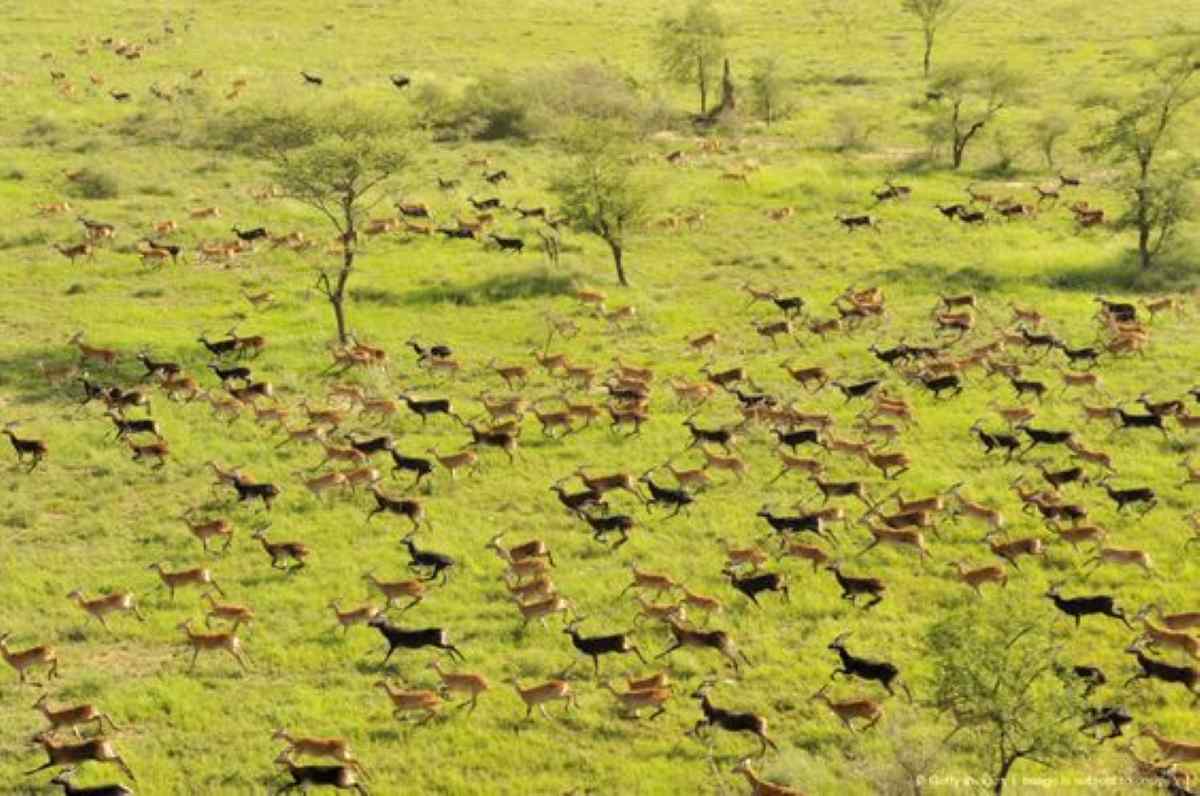
The Ethiopian government is taking steps to improve its conservation strategies concerning the country’s wildlife and landscapes through new programs that give more importance to community involvement, restoration of ecosystems, and sustainable utilisation of natural resources. This initiative follows from Ethiopia’s continued integration of environmental conservation within its developmental objectives as part of the Green Legacy project. But contrary to the allegation that the Ethiopian Wildlife Conservation Authority (EWCA) had marked 87 newly identified biodiversity zones on 18 September 2026 for community ecotourism purposes, this particular piece of information could not be validated by any recent press release from the EWCA. Rather, the EWCA’s recent press release talks about a seven-year program of wildlife and landscape conservation started in August.
A New Conservation Programme Takes Shape
On 26 August 2026, EWCA, the Ethiopian Biodiversity Institute and the United Nations Development Programme launched the Promoting Integrated Conservation of Wildlife and Landscapes for Sustainable Development of Ethiopia (PICWLSDE) project.
The seven-year programme will run from 2026 to 2033 and is financed through the Global Environment Facility. Its objectives include strengthening wildlife conservation, restoring degraded ecosystems, combating illegal wildlife trafficking and supporting sustainable landscape management.
The programme also places emphasis on community resilience, making local participation an important part of conservation planning.
Advertisement
Advertisement
This is consistent with EWCA’s stated mission, which specifically calls for communities and other stakeholders to participate in wildlife and protected-area management so that conservation generates ecological, economic and social benefits.
Community Participation Is Already Part Of The Model
Ethiopia’s conservation system is not based solely on nationally managed parks.
Advertisement
Advertisement
Community conservation areas already exist alongside formal national parks, providing alternative models for protecting wildlife habitats while involving residents.
One example is the Guassa Community Conservation Area, a highland landscape that provides habitat for the endemic gelada. EWCA identifies Guassa alongside Simien Mountains National Park as an important habitat for the species.
Such landscapes demonstrate how conservation and local stewardship can operate together.
For tourism, community-based models can also create opportunities for guiding, accommodation, cultural experiences, food services and other visitor activities, although the scale and structure of these benefits varies between destinations.
Ethiopia’s Endemic Wildlife Remains A Major Tourism Asset
Ethiopia has an unusually high concentration of endemic wildlife.
EWCA lists 36 endemic mammal species, alongside endemic birds, reptiles, amphibians, fish and plants. Its wildlife portfolio includes the Ethiopian wolf, Walia ibex, mountain nyala, Swayne’s hartebeest and gelada.
Advertisement
Advertisement
The Walia ibex, found only in Ethiopia, is associated with the steep escarpments and high-altitude terrain of Simien Mountains National Park.
The gelada is another distinctive Ethiopian species, occupying Afro-alpine grasslands and highland plateaus. These animals are already central to the country’s nature-tourism appeal, particularly around the Simien and Bale mountain landscapes.
Green Legacy Connects Conservation With Restoration
The conservation agenda also sits alongside Ethiopia’s Green Legacy Initiative, launched in 2019.
According to the Ministry of Agriculture, the initiative was established to restore ecosystems, combat deforestation and soil erosion, expand forest coverage and improve environmental conditions while supporting economic opportunities.
The programme has mobilised large-scale tree-planting campaigns across the country. The ministry reports that 8 billion seedlings were planted in 2025, while the current plan targets 7.5 billion seedlings and an overall ambition of 50 billion seedlings.
Green Legacy is therefore broader than wildlife tourism. It encompasses restoration, forestry, climate resilience and natural-resource management across Ethiopia.
Advertisement
Advertisement
Wildlife Tourism Needs Stronger Local Benefits
For Ethiopia’s tourism industry, the relationship between conservation and communities is particularly important.
Wildlife destinations often lie far from major urban centres, requiring visitors to spend money on transport, accommodation, guides, food and other services. Ensuring that surrounding communities participate in these economic activities can strengthen the connection between tourism revenue and conservation.
UNESCO has previously highlighted the need for sustainable tourism activities that support communities around Ethiopia’s natural World Heritage sites. Its work with EWCA has included strengthening institutional capacity and exploring approaches that encourage local participation in the management of protected natural areas.
The approach also creates room for tourism products that extend beyond conventional wildlife viewing.
Community-guided walks, cultural experiences, conservation interpretation and locally operated accommodation can give visitors a broader understanding of Ethiopia’s landscapes while creating additional sources of income.
Simien And Bale Remain Important Conservation Landscapes
Two of the country’s most prominent mountain destinations are Simien Mountains National Park and Bale Mountains National Park.
Advertisement
Advertisement
Simien is home to the Walia ibex and gelada, while Bale supports Ethiopian wolves, mountain nyala and other highland species. Both landscapes demonstrate the close relationship between biodiversity protection and nature-based tourism in Ethiopia.
EWCA’s current conservation programme could provide additional institutional support for landscapes such as these, particularly through ecosystem restoration, research, wildlife protection and stronger cooperation between government agencies, communities and conservation partners.
However, there is no verified evidence that the new programme replaces Ethiopia’s existing national-park system with decentralised pastoralist-run conservancies.
Lowland Conservation Is Also Important
The emphasis on community participation is especially relevant to Ethiopia’s lowland regions, where pastoralist livelihoods and wildlife habitats often overlap.
The country’s wildlife authority describes Ethiopia as ranging from the highlands above 4,500 metres to the Danakil Depression, more than 100 metres below sea level. This geographical diversity creates very different conservation and tourism conditions across the country.
Any expansion of community tourism therefore needs to account for local land use, livestock mobility, water availability, wildlife movement and access to remote destinations.
Advertisement
Advertisement
A single conservation model would not necessarily suit every region.
A Gradual Shift Towards Shared Conservation
These developments demonstrate Ethiopia taking an approach to conservation where the government agencies, communities, researchers, and international partners all contribute to conserving their wildlife and landscapes. This is evident from the newly introduced seven-year plan called the PICWLSDE, but the Green Legacy initiative has been providing an excellent platform for restoration of the ecosystems. With regard to the 87 areas designated as conservation areas on 18 September 2026, there is no evidence of this in any of the official releases of EWCA. However, what is clear is that there is an effort towards integrating conservation, landscape restoration, and community development. Travellers visiting the wildlands of Ethiopia may in future get the chance to participate in the same.
Advertisement
