
Croatia Links With Italy and More Nations to Strengthen a New Adriatic–Ionian Railway Network Across Europe

Updated
Published
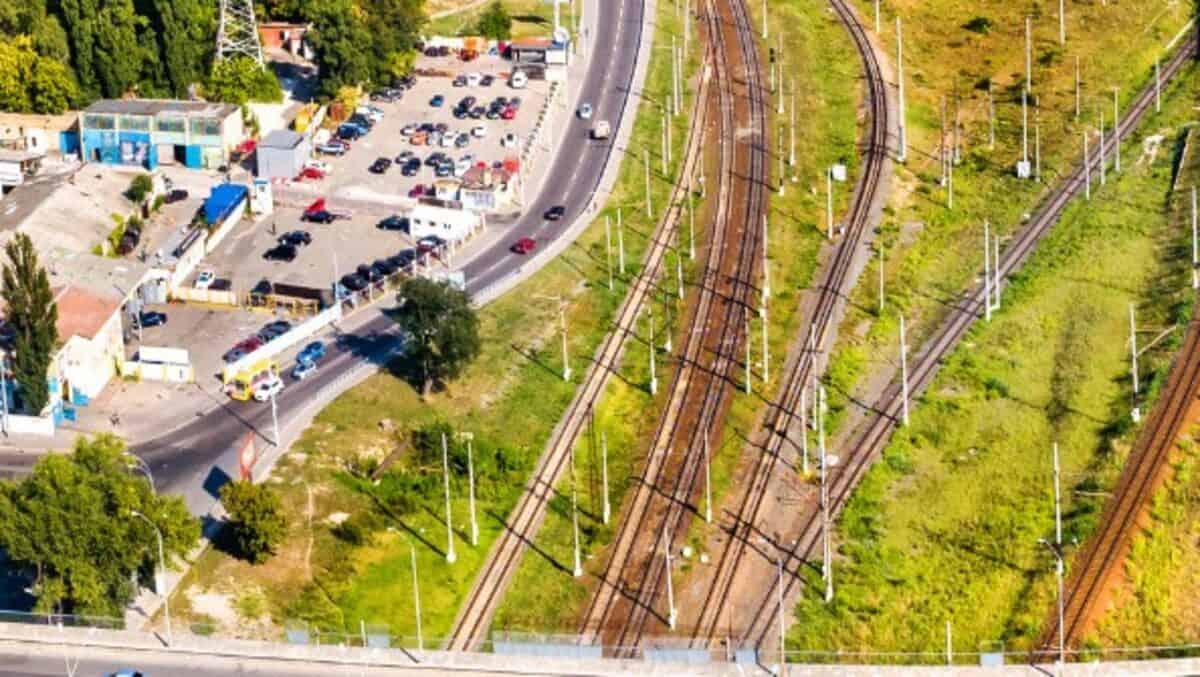
Croatia moved on 2 October 2026 to advance a proposed Adriatic–Ionian Railway Corridor connecting Italy, Slovenia, Croatia, Bosnia and Herzegovina, Montenegro, Albania and Greece, opening the door to a new north–south rail axis linking some of Europe’s most important coastal tourism regions, ports and emerging Balkan destinations. The initiative was signed in Zagreb as a first strategic step towards stronger cross-border railway integration, with the stated aim of improving Croatia’s links with neighbouring states, encouraging coordinated infrastructure investment and eventually connecting the south-eastern part of Europe more efficiently with north-western European transport networks.
Seven countries move towards a new Adriatic–Ionian railway spine
The proposed Adriatic–Ionian Railway Corridor represents a potentially important shift in the transport map of southern Europe. Rather than concentrating only on the established east–west and Central European railway routes, the initiative seeks to strengthen a north–south corridor stretching along the Adriatic and Ionian region.
The concept would connect Italy and Slovenia with Croatia before extending through Bosnia and Herzegovina, Montenegro and Albania towards Greece. Croatian authorities say the project could eventually become an important international rail corridor involving countries both inside and outside the European Union.
For the travel sector, the significance lies in the geography. The route would bring together several of Europe’s strongest coastal destinations while improving access to Western Balkan markets that continue to build their international tourism profiles. This could eventually give tour operators, rail companies and destination management organisations a stronger transport framework for creating multi-country journeys across the Adriatic.
Advertisement
Advertisement
Proposed route brings Trieste, Rijeka, Split, Bar and Durrës into one transport vision
The proposed alignment gives the project clear tourism relevance because it passes through or near a series of major urban, coastal and port destinations. According to Croatia’s Ministry of the Sea, Transport and Infrastructure, the envisaged corridor would connect Trieste, Koper, Rijeka, Zadar, Šibenik, Split, Ploče, Bar and Durrës before continuing towards Greek transport centres.
That creates a broad travel axis stretching from northern Italy to south-eastern Europe.
Advertisement
Advertisement
| Proposed corridor location | Country | Potential travel significance |
|---|---|---|
| Trieste | Italy | Northern gateway to the Adriatic and Central Europe |
| Koper | Slovenia | Coastal tourism and port connectivity |
| Rijeka | Croatia | Major port and northern Croatian gateway |
| Zadar | Croatia | Established Adriatic leisure destination |
| Šibenik | Croatia | Heritage and coastal tourism centre |
| Split | Croatia | Major Dalmatian tourism and maritime hub |
| Ploče | Croatia | Strategic southern Croatian port |
| Bar | Montenegro | Coastal gateway and port city |
| Durrës | Albania | Major Albanian port and tourism access point |
| Greek centres | Greece | Connection towards the wider Greek rail and tourism network |
The geographical sequence matters because travellers currently moving between many of these destinations often depend heavily on road transport, coaches, private vehicles, ferries or flights. A more coherent railway corridor could eventually introduce a stronger overland alternative.
Croatia could gain most from connecting its fragmented coastal rail network
Croatia sits at the heart of the initiative. The country has one of Europe’s most heavily visited coastlines, but its railway network does not yet offer the same level of continuity along the Adriatic that travellers find across several Central European transport corridors. This is especially relevant for Istria, Kvarner and Dalmatia. Croatian authorities have highlighted the importance of integrating Istrian railways more effectively into the national network while improving connections between the country’s coastal regions and the wider European system.
The proposed corridor could therefore address more than international connectivity. It could also strengthen domestic railway integration. For tourism businesses, that matters because stronger rail access can change how visitors move between major gateways and secondary destinations. It can also reduce dependence on cars in highly seasonal coastal regions where road congestion can become intense during peak summer travel.
Rijeka, Zadar, Šibenik, Split and Ploče could gain strategic importance
The project places several Croatian coastal cities at the centre of a larger transport strategy. Rijeka would be particularly significant because of its role as a major port and its position between Central Europe, the northern Adriatic and Croatia’s internal transport network. Farther south, Zadar, Šibenik and Split are already major tourism destinations, while Ploče carries considerable logistics importance. The Croatian transport ministry has specifically emphasised the importance of creating stronger rail links between Ploče and the ports of Split, Zadar, Šibenik and Rijeka.
If these connections become operational over time, the tourism consequences could be considerable. Visitors could find it easier to combine several Croatian destinations without returning to Zagreb or relying on long-distance road journeys. This would be particularly useful for international travellers interested in coastal touring, island gateways, heritage cities and multi-stop Balkan itineraries.
Tourism could shift from single-country holidays towards regional rail journeys
The strongest long-term travel opportunity may lie in multi-country tourism. A traveller arriving in northern Italy could theoretically move south through Slovenia and Croatia before continuing into Montenegro, Albania and Greece using increasingly connected rail infrastructure.
Advertisement
Advertisement
That type of itinerary would appeal to several established travel segments:
- independent rail travellers;
- slow-tourism visitors;
- younger backpacking markets;
- cultural and heritage tourists;
- environmentally conscious travellers;
- organised escorted-tour operators;
- travellers combining coastal and urban destinations.
The corridor could also create new opportunities for longer European itineraries that combine mature tourism economies with emerging Balkan markets. Instead of selling Croatia, Montenegro or Albania only as stand-alone holidays, tour operators could increasingly package them within broader Adriatic journeys. That would represent a structural change in the way tourism is distributed across the region.
Ports are central to the project, not secondary
The Adriatic–Ionian Railway Corridor should not be viewed simply as a passenger rail proposal. Its logistics and maritime role is equally important. Croatian authorities have linked modern rail infrastructure directly with stronger logistics capacity and the competitiveness of national ports. Ports such as Rijeka and Ploče are strategically positioned for freight moving between maritime routes and inland European markets. Better rail links could increase their ability to transfer cargo towards Central and South-East Europe.
For tourism, port connectivity has a separate significance. Several of the cities involved in the corridor also function as passenger ports, ferry gateways or cruise destinations. Rail improvements could therefore strengthen the relationship between maritime tourism and inland travel. Passengers arriving by sea could gain more practical onward rail options, while travellers from inland Europe could reach Adriatic ports more easily.
Učka railway tunnel emerges as a crucial Croatian project
One of the most important details in Croatia’s wider railway strategy concerns the proposed Učka railway tunnel. The Croatian transport ministry confirmed that study documentation is currently being prepared for the Učka railway tunnel and that a tender connected with the project is expected next year. The same planning process relates to the proposed lowland railway and the connection of Rijeka to that route.
This development is particularly significant for Istria. Better integration of Istria into Croatia’s national railway network has long been strategically important because the region’s rail geography has historically differed from the rest of the country. If the Učka connection moves forward, it could become one of the building blocks needed to create a more continuous Adriatic rail system. For travellers, that would mean stronger prospects for rail access between Istria, Kvarner and the rest of coastal Croatia.
Advertisement
Advertisement
Croatia is already investing €1.5 billion in active railway projects
The Adriatic–Ionian initiative is arriving during a major railway investment cycle in Croatia. The Croatian government said on 1 October that approximately €1.5 billion is currently being invested in railway infrastructure across the country. The government also plans almost €6 billion in railway modernisation by 2035, indicating that the new corridor proposal sits within a much broader programme of infrastructure transformation rather than being an isolated idea.
This matters for the viability of the Adriatic–Ionian concept. International railway corridors depend on the quality of domestic infrastructure. Faster, double-track and modernised national railways provide the capacity needed to support future cross-border services. Croatia’s existing investment cycle could therefore form part of the physical foundation for a larger international rail strategy.
€900 million Dugo Selo–Novska project underlines the scale of Croatia’s rail push
One day before the Adriatic–Ionian initiative was signed, Croatia completed contracts for what the government described as the largest railway project in the country’s modern history. The Dugo Selo–Novska railway project is valued at almost €900 million and covers approximately 83 kilometres of track. The programme will reconstruct the existing railway and construct a second track.
It is divided into four main sections:
- Dugo Selo–Ivanić Grad;
- Ivanić Grad–Popovača;
- Popovača–Kutina;
- Kutina–Novska.
The construction period is expected to last five years and ten months. Once modernised, the railway is designed to support speeds of up to 160 kilometres per hour. The project will also reconstruct stations at Ivanić Grad, Popovača, Kutina and Novska, remove or grade-separate more than 30 railway-road crossings, and introduce new traffic-management, signalling and safety systems.
European funding is driving major infrastructure expansion
European Union financing is playing an important role in Croatia’s railway programme. The government previously placed the total value of the Dugo Selo–Novska project at approximately €898.9 million. Of that total, around €518.5 million is associated with the European Regional Development Fund, while another €289 million comes from the Connecting Europe Facility.
Advertisement
Advertisement
The scale of European funding helps explain why Croatia is increasingly focused on positioning its railway network within wider continental transport corridors. The Adriatic–Ionian initiative could potentially provide another framework through which Croatia and neighbouring countries seek coordinated infrastructure investment. However, substantial work would still be required before such a corridor could move from political concept to fully financed infrastructure programme.
Existing tracks would need reconstruction while missing links may require new lines
The new rail corridor will not involve a single uniform construction project. Some sections could use existing railways after reconstruction or modernisation. Other sections may require new infrastructure. The Croatian transport ministry has explicitly stated that the initiative could influence both the reconstruction of existing railway corridors and the construction of new railway lines.
That makes the project technically and financially complex. Different countries have different railway standards, infrastructure conditions, planning systems and investment priorities. Cross-border sections will also require coordination between governments, infrastructure managers and European institutions. For tourism operators, this means the initiative should be viewed as a long-term connectivity strategy rather than an immediately bookable passenger route.
What happens next
The October signing represents only the first institutional step. Croatian authorities have indicated that the next phase will involve engagement with stakeholders and national governments from countries through which the proposed corridor would pass. A larger conference is expected to take place at the European Parliament in early 2027, followed by a final conference in Brussels. The initiative is expected to be presented to the European Commission’s transport leadership as part of efforts to build wider institutional support.
Before construction could advance at scale, participating countries would still need to address:
- route definition;
- spatial planning;
- strategic studies;
- environmental assessments;
- financing;
- technical design;
- cross-border interoperability;
- reconstruction priorities;
- new railway construction;
- passenger and freight operating models.
This means no confirmed date currently exists for through trains connecting all seven countries.
Advertisement
Advertisement
Rail could strengthen sustainable tourism across the Adriatic
The sustainability dimension gives the project particular relevance for Europe’s tourism industry. Rail can provide an alternative to road and short-haul aviation for certain regional journeys. A stronger Adriatic rail corridor could therefore support destinations seeking to reduce transport emissions while encouraging visitors to stay longer and travel through multiple locations.
Rail connectivity can also spread visitor demand beyond airports and major highway corridors. For Croatia, Montenegro and Albania, improved rail access could eventually channel travellers towards destinations that currently receive fewer international visitors because public transport connections remain limited. This could help broaden tourism geographically rather than concentrating it solely in the best-connected coastal hotspots.
Why the Western Balkans could benefit
Bosnia and Herzegovina, Montenegro and Albania could gain particular strategic value from stronger integration with EU transport systems. All three occupy important positions between Croatia and Greece, but cross-border rail connectivity across the Western Balkans remains fragmented. The Adriatic–Ionian proposal could provide a framework for coordinating national infrastructure projects around a shared international objective.
For the tourism industry, improved rail links could make these destinations easier to combine with established EU markets. A visitor travelling through Italy, Slovenia or Croatia could potentially continue into Montenegro or Albania more efficiently. That could expand demand for regional touring rather than destination-by-destination travel.
The key facts travellers and tourism businesses need to know
| Key issue | Current position as of 3 October 2026 |
|---|---|
| Countries involved | Italy, Slovenia, Croatia, Bosnia and Herzegovina, Montenegro, Albania, Greece |
| Initiative signed | 2 October 2026 |
| Location of signing | Zagreb, Croatia |
| Main objective | Stronger Adriatic–Ionian rail connectivity and coordinated investment |
| Core Croatian destinations | Rijeka, Zadar, Šibenik, Split, Ploče |
| Wider route points | Trieste, Koper, Bar, Durrës and Greek centres |
| Current status | Strategic initiative and planning stage |
| Continuous railway operational? | No |
| Confirmed through passenger service? | No |
| Croatia current rail investment | Around €1.5 billion |
| Croatia planned rail investment | Nearly €6 billion by 2035 |
| Dugo Selo–Novska project | Nearly €900 million |
| Potential rail speed after modernisation | Up to 160 km/h on Dugo Selo–Novska |
| Učka project | Study documentation under preparation |
| Next international step | Engagement with participating governments and European institutions |
A potentially transformative corridor, but not yet a passenger railway
The Adriatic–Ionian Railway Corridor has the potential to become one of the most strategically interesting rail projects for tourism in southern Europe. Its importance comes from the destinations it could eventually connect. Few proposed European transport axes combine major Mediterranean ports, globally recognised Croatian coastal cities, fast-growing Balkan tourism markets and access towards Greece within one continuous geographical corridor.
However, expectations need to remain realistic. The initiative signed in Zagreb on 2 October 2026 does not mean travellers can soon board one train in Trieste and remain on rail all the way through Croatia, Montenegro, Albania and Greece. The project still requires extensive technical, political and financial preparation. Its immediate importance is strategic.
Advertisement
Advertisement
Croatia has placed a continuous Adriatic–Ionian railway higher on the regional transport agenda at precisely the moment when the country is committing billions of euros to railway modernisation. If participating governments turn the initiative into coordinated investment, the result could eventually reshape tourism movement across the Adriatic and Western Balkans. For the global travel industry, the development is therefore worth watching not because a new train is about to depart, but because Italy, Slovenia, Croatia, Bosnia and Herzegovina, Montenegro, Albania and Greece are beginning to frame their coastal and cross-border rail networks as parts of a much larger tourism and transport system.
Advertisement
