
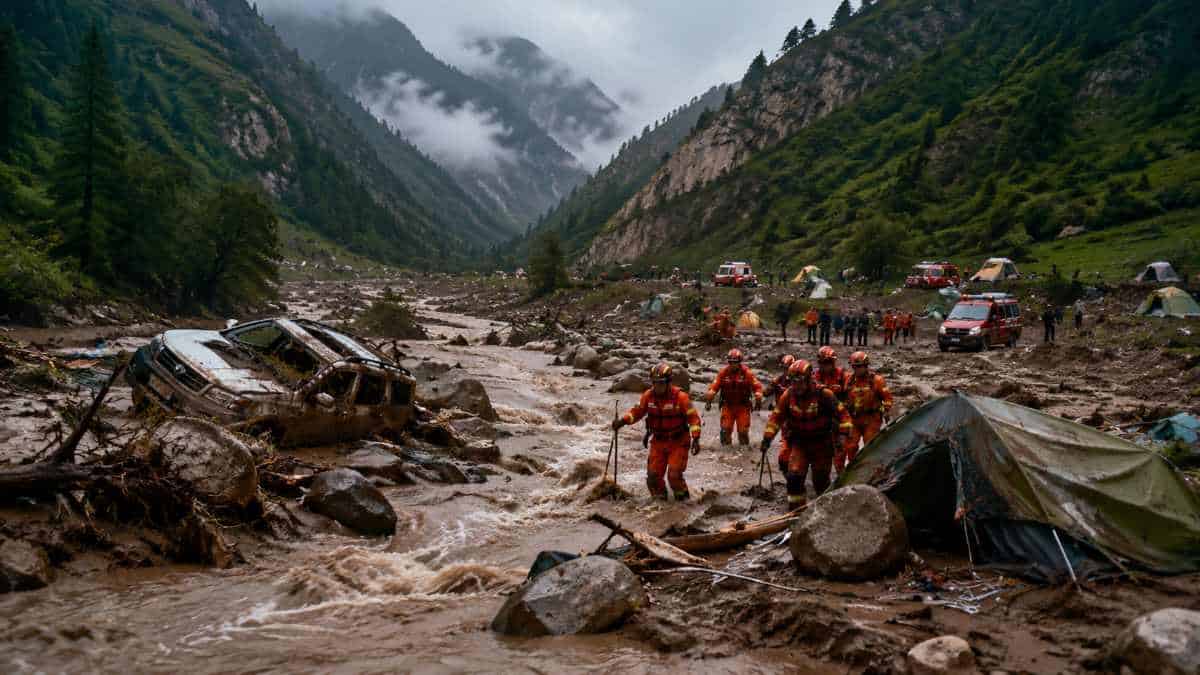
Image generated with Ai
A deadly flash flood struck the Shuangshimen Scenic Area in Weiyuan County, Dingxi City, Gansu Province, China, on July 26, 2026, after sudden heavy rainfall unleashed a powerful mountain torrent through a popular summer camping destination, leaving 10 people dead and 23 injured. The disaster affected a scenic mountain tourism area known for alpine meadows, natural rock formations and flowing streams, prompting a large-scale emergency response, rescue operation and safety review as authorities across China respond to growing weather-related risks at outdoor travel destinations.
The incident has placed renewed focus on the vulnerability of mountain tourism sites during extreme weather events, particularly locations where visitors gather for camping, hiking and nature-based experiences. Emergency agencies have deployed rescue teams, medical support and disaster management resources while authorities have issued wider warnings for high-risk scenic areas facing heavy rainfall and potential flooding.
The flash flood hit the Shuangshimen Scenic Area in Gansu Province, a destination that attracts visitors during the summer months for its dramatic mountain scenery, green valleys and outdoor recreation opportunities. The area’s natural environment, including alpine landscapes and mountain streams, has made it increasingly popular among travellers seeking camping and adventure tourism experiences.
However, intense rainfall over a short period caused water levels to rise rapidly across the valley. The sudden surge carried mud, rocks and debris through the camping area, damaging vehicles and sweeping away temporary tents used by visitors staying in the mountainous location.
Advertisement
Advertisement
The disaster resulted in 10 fatalities, while 23 injured people were transported to nearby hospitals for medical treatment. Emergency officials continued search and recovery activities after the initial flood impact, focusing on areas where visitors and temporary structures were affected.
The incident highlights the growing need for stronger safety management systems at mountain tourism destinations, where changing weather patterns can create dangerous conditions within a short timeframe.
Following the flash flood, China’s emergency management authorities activated a Level-IV flood control emergency response for Gansu Province. National and local agencies coordinated rescue efforts, damage assessments and recovery operations in Weiyuan County.
More than 305 rescue personnel were sent to the affected area along with 68 specialised vehicles from national fire and rescue teams. Emergency crews carried out extensive search operations across the Shuangshimen valley, completing multiple sweeps through difficult mountain terrain to locate affected visitors and remove debris.
Rescue teams successfully evacuated and assisted 174 people from the disaster zone. The operation faced challenges due to unstable ground conditions, damaged access routes and continuing risks from additional rainfall.
Medical teams remained involved in supporting the injured visitors, while authorities assessed the impact on tourism facilities, roads and surrounding infrastructure. The recovery phase includes efforts to secure the area and prevent further danger from possible landslides or additional flooding.
The Gansu mountain flood occurred as several regions across China experienced severe weather conditions, creating broader challenges for transportation, tourism operations and public safety management.
Typhoon Noul made landfall in southern Guangdong Province during the same period, bringing powerful winds and heavy rainfall. The storm became the strongest typhoon to affect China in 2026 and triggered widespread precautionary measures.
More than 715,000 people were evacuated as authorities prepared for the storm’s impact. Major travel networks, including flights and high-speed rail services in areas such as Guangzhou, Shenzhen and Hong Kong, experienced cancellations and operational disruption due to hazardous weather conditions.
Although the Gansu disaster was caused by localised intense rainfall rather than direct typhoon impact, both events demonstrated the increasing pressure placed on travel infrastructure during periods of extreme weather.
For tourism destinations, the combined weather events underline the importance of emergency planning, visitor communication systems and rapid response capabilities.
Following the Shuangshimen disaster, authorities across several provinces strengthened warnings for mountain flood risks and issued precautionary measures for vulnerable tourism locations. Mountain scenic areas, valley campsites and high-altitude attractions have faced increased monitoring due to the danger of sudden rainfall, flash floods and river surges. Local authorities have been instructed to temporarily close areas considered unsafe during periods of severe weather.
The China Meteorological Administration has warned that the remaining effects of Typhoon Noul could continue producing heavy rainfall across central provinces, including Jiangxi, Hunan, Hubei and Henan. These warnings are particularly important for tourism areas located near rivers, steep valleys and mountainous landscapes, where rainfall can quickly transform into hazardous flooding conditions.
Travel operators and destination managers are increasingly required to integrate real-time weather information into visitor planning, especially during peak travel seasons when outdoor attractions receive large numbers of tourists.
Emergency assistance has expanded beyond rescue operations as authorities begin repairing damaged infrastructure and supporting affected communities.
China’s National Development and Reform Commission has allocated central government funds for immediate recovery work in flood-affected regions. The funding will support infrastructure repairs and restoration of public service facilities impacted by flooding and related damage.
Authorities have also delivered emergency supplies, including temporary shelters, sleeping equipment and food resources, to support people affected by flooding, landslides and secondary hazards.
Recovery efforts will include assessments of tourism infrastructure around the Shuangshimen Scenic Area, including visitor pathways, camping zones and access facilities. Ensuring safer conditions will be a key priority before tourism activities can fully resume.
The deadly flood in Gansu reflects a wider challenge facing outdoor tourism destinations worldwide as unpredictable weather events become more frequent and intense. Mountain destinations continue to attract travellers seeking nature, adventure and unique landscapes, but these areas require stronger safety systems to manage sudden environmental threats. Improved warning technology, controlled access during storms and effective emergency communication are becoming essential elements of modern tourism management.
The Shuangshimen Scenic Area disaster has encouraged authorities to review safety measures at similar destinations across China, particularly locations where visitors participate in camping, hiking and outdoor activities.
As extreme weather continues to influence travel patterns, governments and tourism organisations are expected to place greater emphasis on disaster preparedness, infrastructure resilience and visitor protection. The response to the Gansu flash flood will likely shape future safety policies for mountain tourism destinations, ensuring that natural attractions remain accessible while reducing risks for travellers during increasingly unpredictable weather conditions.
Advertisement
Tags: China Gansu flash flood disaster, China mountain tourism safety, extreme weather travel risks, scenic area emergency response, Shuangshimen Scenic Area flood
Advertisement
Advertisement













Saturday, September 5, 2026

Friday, September 4, 2026

Saturday, September 5, 2026

Saturday, September 5, 2026

Thursday, September 3, 2026

Wednesday, September 2, 2026

Saturday, September 5, 2026