
Türkiye Overtakes Saudi Arabia and More Middle Eastern Countries With $1.64 Trillion Economy

Published
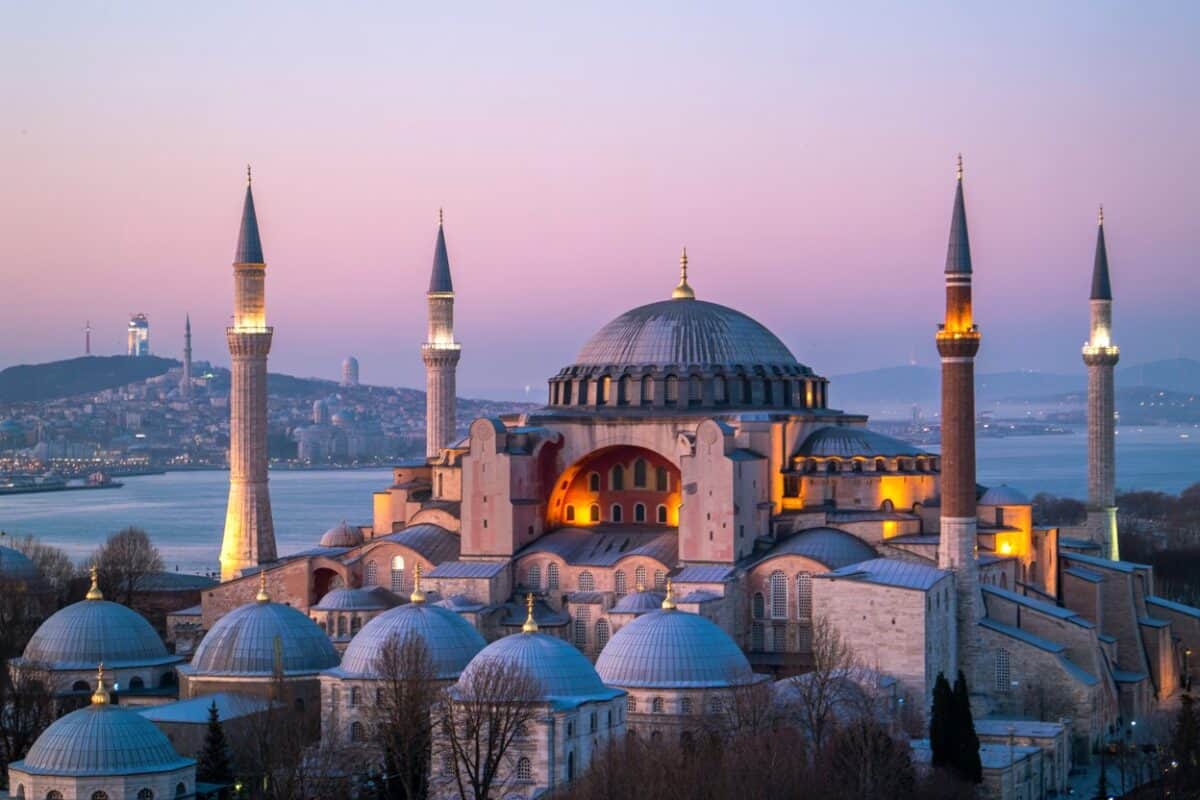
Image generated with Ai
Türkiye Overtakes Saudi Arabia and More Middle Eastern Countries With $1.64 Trillion Economy, creating a powerful new story for global travel. Türkiye’s $1.64 trillion economy is strengthening its position among major Middle Eastern economies, while Türkiye’s tourism appeal continues attracting travellers worldwide. Moreover, this economic rise gives Türkiye, Saudi Arabia, and other Middle Eastern countries a fascinating new competitive landscape. From Istanbul and Cappadocia to Antalya and the Turkish Riviera, Türkiye offers experiences that complement its growing economic influence. Meanwhile, Saudi Arabia and other Middle Eastern countries are rapidly expanding their tourism ambitions. Therefore, Travel And Tour World urges readers to read the entire story and discover how Türkiye’s economic rise could reshape Middle Eastern travel.
Türkiye Rises as a Major Regional Economy
Türkiye is gaining a stronger economic and tourism profile in 2026, with the IMF projecting nominal GDP at approximately $1.64 trillion. The latest IMF data also projects 2.9% real GDP growth for 2026, alongside consumer-price growth of 28.6%.
The economic expansion adds importance to Türkiye’s position between Europe, Asia and the Middle East. For travellers, its growing economy accompanies a tourism industry offering increasingly diverse experiences.
Tourism Generates Billions in Visitor Spending
Türkiye’s tourism performance remains central to the travel story. According to TurkStat, tourism income reached $9.896 billion in the first quarter of 2026, increasing 4.2% year-on-year. Visitor spending accounted for $9.695 billion, while transfer passengers generated another $201.9 million.
Advertisement
Advertisement
TurkStat’s latest tourism database also reports $16.095 billion in tourism income for the second quarter of 2026, demonstrating the substantial value generated by international travel.
More Reasons for Travellers to Explore Türkiye
The country offers far more than its famous Istanbul-Cappadocia-Antalya circuit. Official GoTürkiye information promotes cultural routes, UNESCO heritage, rail journeys, trekking, cycling, camping, skiing, gastronomy and nature experiences.
Advertisement
Advertisement
Travellers can explore Istanbul’s historic attractions before travelling towards Cappadocia’s distinctive landscapes. The Mediterranean coast offers beach holidays around Antalya and the Turkish Riviera, while Aegean destinations provide coastal, archaeological and culinary experiences.
GoTürkiye also highlights sustainable destinations including Halfeti, Gökçeada, Akyaka, Göynük and Şavşat, giving visitors alternatives to heavily visited tourism centres.
Advertisement
Advertisement
A Broader Travel Opportunity in 2026
Türkiye’s projected $1.64 trillion economy, continued tourism income and extensive destination network make it an increasingly important choice for global travellers. The strongest opportunity is to explore beyond the headline cities and build journeys around Türkiye’s culture, nature, heritage, cuisine and coastline.
Türkiye’s $1.64 Trillion Story Needs an Important Statistical Clarification
Türkiye’s economic position is strengthening, but the $1.64 trillion figure should be treated as a 2026 projection, not a final measured GDP result. IMF data currently available for Türkiye gives a 2026 nominal GDP estimate of roughly $1.57 trillion in its February 2026 country report, while the April/July 2026 WEO data has subsequently been revised. The IMF’s current country page places 2026 real GDP growth at 2.9%.
The longer-term rise is substantial. IMF figures show Türkiye’s nominal GDP increasing from $827.7 billion in 2021 to $924.8 billion in 2022, $1.153 trillion in 2023, $1.358 trillion in 2024, and approximately $1.597 trillion in 2025.
| Türkiye economic indicator | 2021 | 2022 | 2023 | 2024 | 2025 | 2026 projection |
|---|---|---|---|---|---|---|
| Nominal GDP, US$ bn | 827.7 | 924.8 | 1,153 | 1,358 | 1,576–1,597 | ~1,574+ |
| Real GDP growth | 11.8% | 5.4% | 5.0% | 3.3% | 4.1% | 2.9–4.2%* |
| GDP per capita, US$ | 9,601 | 10,659 | 13,243 | 15,882 | 18,320 | 18,209* |
| Population, million | 84.7 | 85.3 | 85.4 | 85.7 | 86.2 | 86.6* |
*Different IMF releases contain revised projections. The current IMF country page reports 2.9% real GDP growth for 2026, while the January 2026 Article IV table had 4.2%.
Advertisement
Advertisement
Türkiye’s Tourism Numbers Make the Travel Story Stronger
Türkiye recorded approximately 63.9 million visitors in 2025, while tourism revenues reached $65.2 billion, according to the IMF’s 2026 country assessment. Turkish government communications separately reported about 64 million foreign visitors and $65.2 billion tourism revenue for the year.
The first quarter of 2026 also showed continuing demand. Tourism income reached approximately $9.9 billion, with visitor spending accounting for nearly $9.7 billion and transfer passengers generating about $201.9 million.
For travellers, the significance is clear. Türkiye has developed a tourism model combining major cities, archaeological heritage, Mediterranean resorts, gastronomy, wellness, nature and adventure.
Other Middle Eastern Economies Showing Similar Tourism Momentum
The comparison should not imply that these countries have overtaken Türkiye economically. Instead, they demonstrate how the region is simultaneously investing in tourism diversification.
| Country | 2025 real GDP growth | 2026 IMF growth projection | Major tourism/economic direction |
|---|---|---|---|
| Saudi Arabia | 4.5% | 3.1% | Vision 2030, leisure, heritage, religious tourism |
| UAE | 5.8% | 3.1% | Dubai, Abu Dhabi, aviation, luxury tourism |
| Qatar | 2.8% | -8.6% | Events, stopovers, luxury and sports tourism |
| Oman | 2.4% | 3.5% | Nature, heritage and adventure tourism |
| Bahrain | 3.1% | -0.5% | Gulf leisure and business tourism |
| Kuwait | 3.5% | -0.6% | Diversification and hospitality |
| Egypt | — | 4.2% | Nile, archaeology, Red Sea and resort tourism |
| Jordan | — | 2.7% | Petra, religious heritage and adventure |
IMF projections show particularly strong 2026 growth expectations for Oman at 3.5%, Saudi Arabia and the UAE at 3.1%, Egypt at 4.2%, and Jordan at 2.7%. Qatar’s 2026 projection is currently negative because of the major regional disruption incorporated into the IMF’s April outlook.
Saudi Arabia: A Rapidly Expanding Tourism Competitor
Saudi Arabia is arguably Türkiye’s most important regional comparison. Its Vision 2030 strategy is expanding tourism infrastructure while developing destinations beyond traditional religious travel.
Advertisement
Advertisement
GASTAT reported 983,253 employees in tourism activities in Q1 2025, up 4.1% year-on-year. Saudi employees represented 24.8%, while non-Saudi workers accounted for 75.2%. Hotel occupancy reached approximately 63%, compared with 60.9% a year earlier.
Saudi Arabia also recorded 6.45 million visitors to Madinah during Q1 2025, including 4.41 million external visitors, illustrating the continuing importance of religious tourism.
For tourists, the emerging product now extends toward Riyadh, AlUla, the Red Sea and other developing destinations.
United Arab Emirates: Tourism Built Around Global Connectivity
The UAE remains another major competitor because of its international aviation links and highly developed hospitality infrastructure.
Dubai and Abu Dhabi continue to combine city tourism, luxury accommodation, shopping, entertainment, business travel and stopover tourism. UAE.Stat, the country’s official statistics platform, provides national datasets covering population, economic activity and tourism-related indicators.
The UAE’s appeal differs from Türkiye’s. Türkiye offers immense geographical and cultural variety across one country, while the UAE concentrates heavily on premium urban, business, leisure and events-based experiences.
Advertisement
Advertisement
Qatar: Small Market, Large Tourism Ambition
Qatar has built a powerful international tourism profile through aviation, major sporting events, museums, cultural attractions and luxury hospitality.
The IMF forecasts 8.6% real GDP growth for Qatar in 2026, although the April 2026 outlook incorporates a major disruption that sharply affected the current-year forecast.
For travellers, Doha functions particularly well as a short-stay destination and international stopover, with museums, waterfront attractions, desert experiences and cultural districts providing a compact itinerary.
Oman: The Adventure Alternative
Oman presents a different tourism proposition. The country combines mountains, wadis, deserts, coastline and historic settlements.
The IMF projects 3.5% real GDP growth in 2026, followed by 3.4% in 2027.
This makes Oman particularly relevant for travellers searching for outdoor experiences rather than large-scale resort tourism.
Advertisement
Advertisement
Egypt and Jordan: Heritage-Led Tourism Powerhouses
Egypt remains one of the region’s most recognisable cultural destinations, combining the pyramids, the Nile, Luxor, ancient temples and Red Sea resorts. The IMF projects 4.2% real GDP growth in 2026.
Jordan offers a more compact heritage experience centred around Petra, Wadi Rum, the Dead Sea and religious sites. The IMF projects 2.7% growth in 2026.
Five-Year Monthly Visitor Data: Why a Direct Country-by-Country Comparison Requires Caution
A genuinely accurate January-to-December visitor series for every country for every year from 2021 through 2025 cannot responsibly be fabricated. National statistical systems publish tourism data at different frequencies and often use different definitions.
Türkiye publishes extensive monthly visitor statistics through TurkStat. Saudi Arabia’s official tourism statistics are increasingly quarterly, while GASTAT explicitly identifies administrative records, surveys and secondary data as sources.
Jordan’s official statistical publications similarly compile tourism information through national statistical and tourism authorities.
The pandemic also makes 2021 especially difficult for straight monthly comparisons. Border restrictions and reopening schedules differed substantially across countries.
Advertisement
Advertisement
| Data requirement | Türkiye | Saudi Arabia | UAE | Qatar | Jordan/Egypt |
|---|---|---|---|---|---|
| Monthly tourism data | Extensive | More limited | Available through official datasets | Available through official statistics | Frequency varies |
| 2021 comparability | Disrupted | Disrupted | Disrupted | Disrupted | Disrupted |
| 2022 comparison | Better | Better | Better | Better | Better |
| 2023 comparison | Strong | Strong | Strong | Strong | Strong |
| 2024 comparison | Strong | Strong | Strong | Strong | Strong |
| 2025 comparison | Strong | Strong | Official data available | Official data available | Official data available |
| Best comparison metric | Arrivals + tourism income | Visitors + accommodation | International arrivals + hotel guests | Visitors + hotel guests | Arrivals + tourism receipts |
What This Means for Global Travellers
The regional competition is becoming more interesting for travellers. Türkiye combines scale, heritage, beaches, food, nature and major international gateways, while Saudi Arabia is developing new destinations, the UAE dominates luxury connectivity, Qatar specialises in compact premium experiences, Oman offers adventure and Egypt and Jordan remain powerful heritage destinations.
For travellers planning a Middle East journey, the economic data therefore tells only half the story. The more important development is the region’s widening tourism choice, giving visitors more opportunities to combine culture, adventure, beaches, heritage and luxury within a single multi-country itinerary.
Conclusion
Türkiye’s rise to a projected $1.64 trillion economy marks a significant shift across the Middle East, while its tourism sector adds another powerful dimension. As Türkiye competes with Saudi Arabia and other Middle Eastern countries, global travellers gain more destinations, experiences and reasons to explore the region. From Istanbul’s heritage and Cappadocia’s landscapes to Antalya’s beaches, Türkiye offers remarkable variety for international visitors. At the same time, Saudi Arabia, the UAE, Qatar, Oman, Egypt and Jordan are strengthening their own tourism offerings. Ultimately, this growing regional competition could create exciting opportunities for travellers seeking culture, adventure, luxury, history and unforgettable experiences.
Advertisement
