
Hong Kong Tightens Travel Security Rules With Tough New Password Powers for Electronic Devices

Published
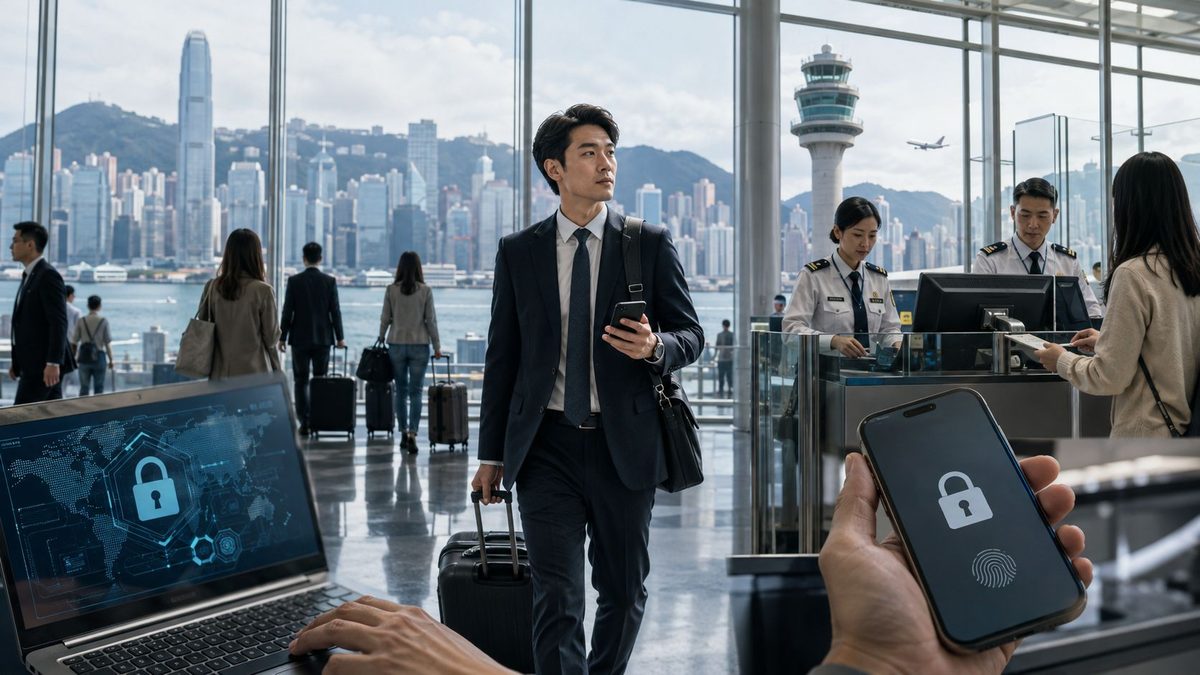
Some new laws introduced in Hong Kong likely affect international travelers. One law, effective March 2026, adds measures that prevent travellers from providing access to digital devices. Law enforcement now has the right to demand travelers provide passwords for devices. This also includes the use of digital devices to store text, communications, photos, videos, etc. Individuals who fail to provide passwords can face up to one year in prison and a fine in the amount of HK$100,000. With the new law, knowingly providing false information or digital evidence can result in up to three years imprisonment and a fine of HK$500,000. Hong Kong officials have stated that travelers should not be overly concerned with password demand by Hong Kong law enforcement. Only legally authorized search requests will trigger this new law. This new law does not give travellers the right to ignore legally authorized law enforcement requests in all circumstances.
Why The Digital Border Matters
For travellers, the change adds a new dimension to border-risk planning. A smartphone now carries far more than boarding passes, hotel confirmations and photographs.
Advertisement
Advertisement
Business devices can contain confidential contracts, client correspondence, financial information and corporate access credentials. They can also contain communications involving several jurisdictions and teams.
That makes digital exposure an increasingly important consideration for corporate travel managers. It also changes how multinational companies should assess employee travel to Hong Kong.
Advertisement
Advertisement
The measures do not create a new national security offence. Instead, they modify enforcement mechanisms under the existing Article 43 framework. The Hong Kong Government says the changes refine existing powers and introduce additional procedural detail.
The distinction matters because online commentary has sometimes presented the rules as unrestricted authority to inspect every visitor’s phone.
Advertisement
Advertisement
Hong Kong authorities have specifically rejected that interpretation. They say police must generally obtain a magistrate’s warrant before searching an electronic device for evidence of a national security offence.
Only after that legal authorisation can police require a specified person to provide the necessary password or decryption method.
Advertisement
Advertisement
What Changed In March 2026
The amended rules came into force on 23 March 2026. They sit within the wider enforcement framework created by Article 43 of Hong Kong’s National Security Law.
The framework already allowed authorities to use specified investigative measures in national security cases. The 2026 amendments provide greater detail around electronic equipment and other enforcement mechanisms.
The most significant development for travellers concerns encrypted devices.
Authorities can require a specified person to provide a password, decryption method or necessary assistance when the relevant legal conditions are met. The concept can extend beyond the person being investigated.
Advertisement
Advertisement
A person who owns, possesses or controls the device may potentially fall within the relevant category. Someone who knows how to access the device can also become relevant to an investigation.
The Government’s legislative explanation says the change addresses difficulties investigators face when electronic equipment contains encrypted evidence.
The following table sets out the principal implications.
| Measure | What The 2026 Rules Provide | Potential Traveller Relevance |
|---|---|---|
| Device search | Electronic equipment can be searched under the specified national security procedures | Smartphones and laptops may become relevant in an investigation |
| Password disclosure | A specified person may be required to provide access information | Device owners or people able to unlock equipment may be affected |
| Decryption assistance | Authorities can require necessary assistance with decryption | Encrypted corporate devices require particular attention |
| Refusal | Up to HK$100,000 fine and one year in prison | Non-compliance can carry serious consequences |
| False information | Up to HK$500,000 fine and three years in prison | Travellers should avoid guessing or deliberately misleading authorities |
| Judicial oversight | Police generally require a magistrate’s warrant for device searches | The rules do not create unrestricted street-level phone searches |
| Customs seizure | Certain materials suspected of having seditious intent may be seized | Border controls can create additional scrutiny around physical and digital material |
The Government has also emphasised that the amended rules contain judicial safeguards. It says police must establish reasonable grounds before obtaining authorisation to search an electronic device.
The Penalties Travellers Need Know
The financial penalties are significant, but the potential imprisonment terms make compliance particularly important.
A person who fails to comply with a lawful decryption requirement without reasonable excuse can face one year in prison and a fine of HK$100,000. A person who knowingly or recklessly provides false or misleading information can face three years in prison and a HK$500,000 fine.
Advertisement
Advertisement
The practical lesson is straightforward. Travellers should not treat a password request as an ordinary airport inconvenience if it arises within a national security investigation.
Equally, travellers should not assume that refusing access is automatically available as a privacy-based response.
The legislative materials address the interaction between decryption requirements and the common-law privilege against self-incrimination. They state that self-incrimination alone does not excuse compliance with the decryption requirement.
However, the rules also provide protections concerning the evidential use of the decryption requirement and information supplied under specified conditions.
That legal distinction makes professional advice important for companies with employees travelling on sensitive assignments.
Hong Kong Remains A Major Gateway
The new rules arrive while Hong Kong is experiencing strong tourism and passenger flows.
Advertisement
Advertisement
The Hong Kong Tourism Board recorded 49.89 million visitor arrivals in 2025, representing a 12% increase from 2024. Mainland arrivals reached about 37.83 million, while non-Mainland arrivals reached about 12.06 million.
The growth has continued into 2026. Government figures show approximately 23 million visitor arrivals during the first five months of 2026, 14% above the comparable period in 2025.
Authorities expect approximately 53.8 million arrivals for the full year, representing projected annual growth of 8%.
Hong Kong’s position as a global aviation and commercial gateway makes the digital-security issue particularly relevant.
In 2025, about 335 million passengers passed through Hong Kong’s control points. That was roughly 12% higher than 2024 and exceeded the previous 2019 record.
About 11.22 million visitor trips passed through Hong Kong’s airport control point during 2025. Land crossings accounted for about 36.87 million visitor trips, while sea control points handled about 1.81 million.
Advertisement
Advertisement
These figures underline the scale of international movement through the city. Even a low-probability enforcement scenario therefore has implications for corporate travel policies.
Business Travellers Face A Different Risk
Leisure travellers and corporate travellers do not carry the same digital exposure.
A holidaymaker may have photographs, personal messages and banking applications on a smartphone. A senior executive could carry confidential transaction documents, board communications and commercially sensitive correspondence.
An engineer could have technical drawings. A lawyer could have privileged material. A journalist could possess confidential source information.
Consequently, the corporate travel risk is not limited to the possibility of detention. Data exposure itself can become a significant business concern.
Companies should therefore examine what information employees carry across borders. They should also determine which information genuinely needs to remain accessible during international trips.
Advertisement
Advertisement
A simple travel-device policy can reduce unnecessary exposure.
| Corporate Travel Issue | Why It Matters | Sensible Risk-Control Approach |
|---|---|---|
| Confidential documents | Sensitive material may remain locally stored | Carry only essential files |
| Shared passwords | Several employees may know device credentials | Review access responsibilities |
| Cloud accounts | Devices may provide access to corporate systems | Use appropriate access controls |
| Client communications | Messages can contain commercially sensitive information | Minimise unnecessary local data |
| Personal and corporate data | Mixed-use devices increase exposure | Consider separate travel equipment |
| Encryption | Locked devices can create access complications | Establish a lawful corporate response procedure |
| Emergency response | Employees may not know whom to contact | Maintain internal and consular escalation contacts |
For some organisations, a clean travel device may therefore become a sensible precaution. Such equipment should contain only the applications and information genuinely required for the assignment.
That approach does not imply that every traveller faces imminent scrutiny. Instead, it follows the basic principle of minimising unnecessary exposure.
Why Transiting Travellers Matter
The rules are especially relevant to travellers who see Hong Kong merely as a connecting point.
Hong Kong is an important regional aviation hub, and travellers can pass through without intending to enter the city for business or tourism.
The legal framework, however, is not designed exclusively around conventional holidaymakers. Its application can depend on the circumstances surrounding an investigation and the person involved.
Advertisement
Advertisement
That makes transit planning important for multinational businesses. A traveller connecting through Hong Kong should not automatically assume that a short airport stop eliminates all legal considerations.
At the same time, travellers should avoid overstating the risk. The Hong Kong Government has explicitly said police cannot randomly stop ordinary visitors and demand access to their phones.
The government’s clarification states that police generally need a magistrate’s warrant before searching an electronic device for national security evidence.
Customs Powers Add Another Layer
Digital-device rules are not the only relevant development.
The amended framework also strengthens provisions concerning material that authorities reasonably suspect has seditious intent. Customs officials can seize relevant items and pursue forfeiture through the prescribed legal process.
For travellers, that creates a broader border-management consideration.
Advertisement
Advertisement
Printed material, digital storage and other content can carry different legal sensitivities from ordinary tourism information. The safest approach is therefore to avoid carrying material whose legal status is unclear when travelling for sensitive assignments.
Companies should also brief employees before departure rather than relying on informal advice at the airport.
How Hong Kong Compares Internationally
Hong Kong’s Government argues that comparable decryption or digital-access powers exist in several common-law jurisdictions.
It specifically cites the UK’s Regulation of Investigatory Powers Act 2000, Australia’s Crimes Act 1914 and New Zealand’s Search and Surveillance Act 2012. Singapore’s Criminal Procedure Code and provisions in the United States are also cited as comparable examples.
The important difference for travellers is not simply whether another country has digital-access powers.
The crucial issue is when those powers can be exercised, who can be compelled, what judicial safeguards apply and what penalties follow non-compliance.
Advertisement
Advertisement
| Jurisdiction | Digital Access Context | Key Traveller Consideration |
|---|---|---|
| Hong Kong | National security investigations can trigger decryption requirements under specified procedures | Understand the Article 43 framework before sensitive travel |
| United Kingdom | Investigatory powers include mechanisms addressing protected electronic information | Requirements depend on the relevant legal authority |
| Australia | Criminal investigations can involve compelled access to digital information | Travellers should distinguish ordinary border checks from formal investigations |
| New Zealand | Search and surveillance legislation provides powers concerning electronic material | Legal authority and circumstances determine the scope |
| Singapore | Criminal procedure law provides investigative powers involving digital evidence | Corporate travellers should follow local legal guidance |
| United States | Federal and state authorities have various digital-search and decryption mechanisms | Rules differ according to circumstances and jurisdiction |
This comparison should not be read as suggesting that these regimes operate identically. They do not.
Instead, it demonstrates a broader international trend. Electronic devices have become an established part of modern border and law-enforcement considerations.
What Travellers Should Do Before Departure
The first step is to understand the purpose of the trip and the information being carried.
Employees travelling with sensitive corporate material should consult their employer’s legal or security team before departure. They should know the company’s procedure if authorities question them or seek access to equipment.
Travellers should also avoid carrying unnecessary sensitive files. Data minimisation remains useful regardless of the destination.
A device used exclusively for travel can limit the amount of historic correspondence and confidential information stored locally. Companies should decide whether that approach suits their own regulatory and operational requirements.
Advertisement
Advertisement
Travellers should never deliberately provide false information to authorities. The amended rules make the consequences of knowingly or recklessly supplying misleading information particularly serious.
Finally, travellers should keep relevant embassy or consulate contact information available. Corporate security teams should maintain an internal escalation route for employees who encounter unexpected legal issues.
These measures are prudent risk management rather than an indication that ordinary visitors should expect routine device inspections.
A Practical Corporate Travel Checklist
Corporate travel managers can translate the legal change into a straightforward pre-trip process.
Before departure, companies should review whether employees need every locally stored document on their devices. They should also determine whether sensitive projects require additional safeguards.
Employees should understand who can provide legal guidance if questioning occurs. They should also know the company’s escalation procedure.
Advertisement
Advertisement
| Before Travel | During Travel | After Travel |
|---|---|---|
| Review sensitive data | Follow lawful instructions | Report unusual incidents |
| Remove unnecessary files | Avoid speculation or false statements | Review device-security concerns |
| Consider a travel device | Contact the company’s escalation point | Change credentials if instructed |
| Confirm emergency contacts | Seek appropriate legal advice | Record relevant lessons |
| Review company policy | Keep communications professional | Update future travel protocols |
The objective is not to make international travel cumbersome.
Instead, it is to bring digital information into the same risk-management conversation as insurance, visas, health requirements and physical security.
Tourism Growth Meets Digital Risk
Hong Kong’s tourism rebound makes this issue more consequential for the travel industry.
The city welcomed almost 50 million visitors in 2025, while overseas and non-Mainland traffic grew faster than total arrivals. Non-Mainland arrivals increased 15% year on year, according to official tourism figures.
The Government has also identified tourism as an important economic pillar supporting hotels, retail and catering. Its latest tourism strategy aims to strengthen Hong Kong’s position as an international tourism hub.
That creates a delicate operational balance.
Advertisement
Advertisement
Hong Kong continues to court international visitors, business travellers and major events. At the same time, its national security framework continues to evolve.
For travel companies, the practical response is therefore better preparation rather than alarm.
Airlines, travel management companies, conference organisers and multinational employers can all benefit from clearer pre-trip guidance. Travellers, meanwhile, need accurate information rather than exaggerated claims about universal phone searches.
The Message for International Travellers
The largest change isn’t that digital checks are conducted on every visitor to Hong Kong.
Changing the role of electronically stored data in the enforcement of national security is the most important change.
Some changes in the law, introduced in March, allow authorities to apply for passwords and decryption assistance under defined circumstances. The changes to the law also define what will happen to a person who refuses to provide the password and/or assist with the decryption or who provides false information.
Advertisement
Advertisement
It is difficult to estimate how likely it is that ordinary tourists will be involved in such an investigation. The Government has stated that the power cannot be used for arbitrary searches of visitors’ phones.
The policy will be important to business travellers. Corporate data can change the risk profile of what was previously a low-risk device.
Corporate duty of care to staff travelling through Hong Kong should be reviewed. Data minimization practices need to be reviewed as well as escalation practices.
Hong Kong is an important international travel hub. However, the legal changes in Hong Kong amplify the need for travellers to be digitally ready.
Advertisement
