
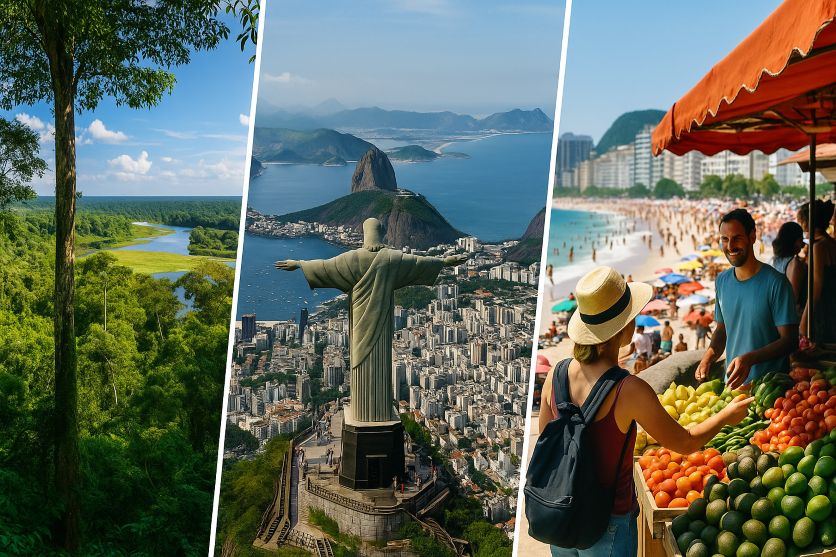
Image generated with Ai
According to official projections from Brazil‘s Ministry of Tourism (Ministério do Turismo) and government-supported market analyses, Brazil’s tourism market is expected to achieve significant growth, expanding from USD 246.26 million in 2024 to USD 395.33 million by 2033.
This robust growth, representing a compound annual growth rate (CAGR) of 5.40%, is driven by diverse factors including rich cultural heritage, unique natural attractions, sustainable travel trends, and proactive governmental policies aimed at enhancing both domestic and international tourism.
Brazil’s Ministry of Tourism has officially identified several factors propelling growth within the tourism sector.
Advertisement
Advertisement
Foremost among these is the nation’s extraordinary natural diversity, encompassing world-renowned destinations such as the Amazon Rainforest and the Pantanal wetlands, officially recognized by UNESCO as sites of global ecological importance.
The Brazilian government actively promotes sustainable and eco-tourism initiatives aimed at attracting international tourists who seek immersive environmental and cultural experiences.
This official endorsement of sustainable practices aligns with global tourism trends prioritizing responsible travel and conservation.
Additionally, official tourism campaigns emphasize Brazil’s iconic beaches such as Copacabana and Ipanema in Rio de Janeiro, widely recognized as key destinations by Embratur, Brazil’s official tourism promotion agency.
Government-sponsored marketing efforts consistently showcase these attractions globally, emphasizing Brazil’s vibrant coastal landscapes as essential components of the nation’s international tourism appeal.
Official sources from the Ministry of Culture (Ministério da Cultura) and Embratur underscore the critical role of cultural heritage in enhancing Brazil’s appeal.
Major cities such as Rio de Janeiro, São Paulo, and Salvador are central to governmental strategies aimed at attracting cultural tourists through festivals, music, gastronomy, and historical experiences.
Initiatives officially supported by local and federal authorities promote international events like Carnival, music festivals, and historic celebrations that highlight Brazil’s unique cultural identity.
Brazil’s government has made substantial official commitments to improve aviation infrastructure, significantly benefiting tourism growth.
Official investments in airports, air transport services, and regional connectivity initiatives have been crucial in making Brazil more accessible.
The growth of low-cost carriers in Latin America, officially recognized and encouraged by Brazil’s Civil Aviation Authority (ANAC – Agência Nacional de Aviação Civil), has significantly increased both domestic and international visitor numbers.
Brazil’s Ministry of Sports (Ministério do Esporte) and the Ministry of Tourism have jointly emphasized the country’s legacy of hosting major international sporting events, including the FIFA World Cup and the Rio Olympic Games.
Official promotional strategies leverage this legacy, positioning Brazil as a premier global destination for adventure and sports tourism.
Such strategies are formally recognized as significant contributors to Brazil’s international tourism profile.
Brazilian government agencies actively promote digital transformation within the tourism sector, enhancing visitor experience and travel planning capabilities.
Official government resources and Embratur actively support digital platforms and online booking systems, facilitating seamless travel planning and interaction across all segments, including leisure, medical, and business tourism.
The Brazilian Ministry of Tourism has formally acknowledged the increasing popularity of wellness and experiential travel.
Official initiatives encourage niche markets such as yoga retreats, countryside getaways, and gastronomy tours.
Governmental recognition of these emerging trends has resulted in targeted promotions aimed at niche tourism markets, aligning with global wellness travel trends.
Governmental improvements in urban infrastructure and public transportation, particularly in major cities, have been officially documented as critical factors enhancing visitor experiences and perceptions of safety.
Additionally, Brazilian authorities actively encourage domestic tourism, promoting internal travel through various incentive programs.
The increase in domestic travel is driven by the growing Brazilian middle class, supported by official economic policies aimed at improving purchasing power and encouraging internal travel exploration.
According to official Brazilian tourism statistics and market classifications, the tourism market encompasses several segments:
Brazil’s government has officially fostered an environment conducive to private-sector investment in tourism infrastructure, hospitality, and related services.
Official strategies include competitive analyses and detailed industry assessments to attract international and domestic investors, enhancing Brazil’s position within the global tourism market.
Officially recognized strategic recommendations from Brazilian authorities emphasize continued investment in infrastructure, increased promotion of sustainable practices, and strengthening digital integration within the tourism sector.
Brazil’s government forecasts sustained growth driven by these official strategies, aligning with global trends in sustainability and digital tourism.
In conclusion, official government support, sustainable travel practices, and Brazil’s unique cultural and natural attractions collectively position the country’s tourism industry for powerful growth, projecting market expansion to USD 395.33 million by 2033.
Advertisement
Tags: brazil, Brazil eco-tourism, Brazil tourism forecast 2033, Brazil tourism industry, Brazilian cultural tourism, digital tourism Brazil, domestic travel Brazil, government tourism policies Brazil, sustainable tourism Brazil, tourism market growth Brazil, Tourism news, Travel News, travel trends Brazil
Advertisement
Advertisement













Saturday, September 5, 2026

Friday, September 4, 2026

Saturday, September 5, 2026
Saturday, September 5, 2026

Thursday, September 3, 2026

Wednesday, September 2, 2026

Saturday, September 5, 2026
Saturday, September 5, 2026


