
Greenville’s Iconic Revival Reveals How Front Royal Can Build A Future-Ready Tourism Experience

Published
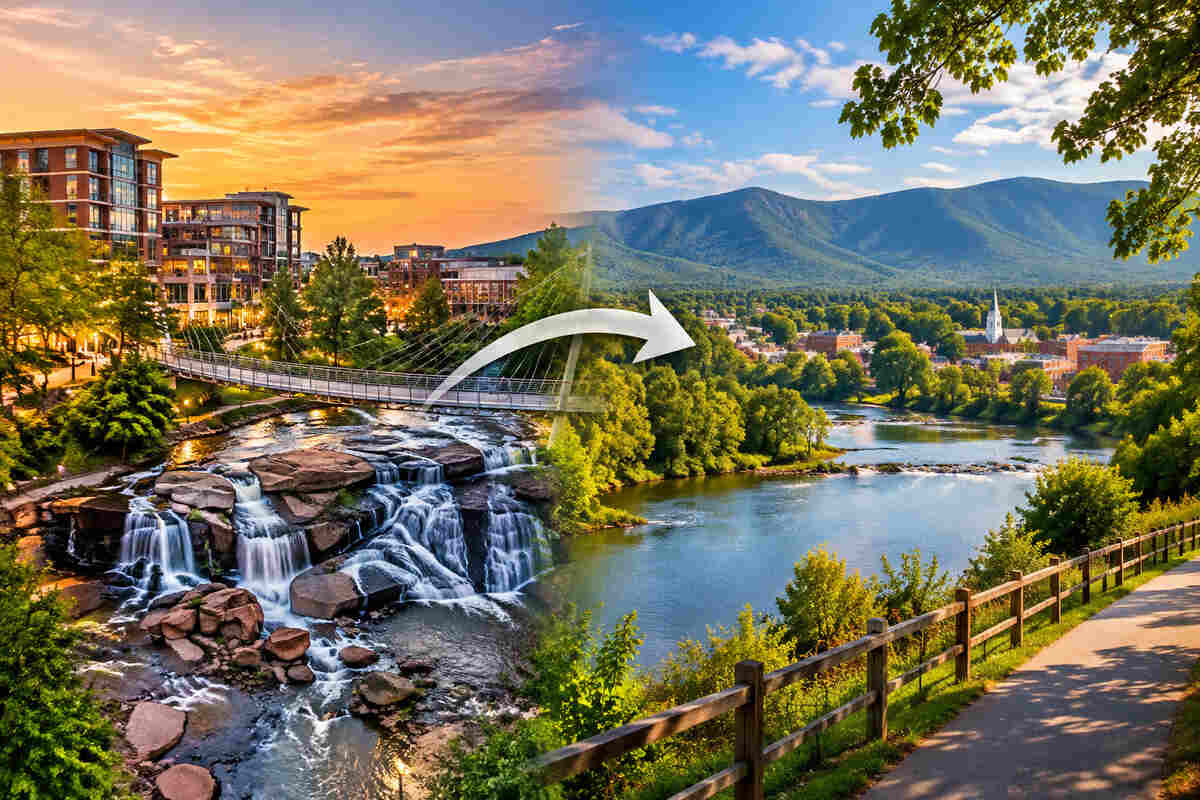
Image generated with Ai
Greenville’s example demonstrates that Front Royal can improve tourism by implementing a strategy to integrate destination attractions, especially natural features, throughout Front Royal and surrounding areas to further strengthen the visitor experience. Greenville redeveloped its riverfront to create an engaging tourism destination. Communities have the opportunity to improve public spaces and connectivity to enhance tourism potential. Front Royal has the Shenandoah River, Blue Ridge Mountains, and historic districts. When integrated with other attractions in nearby areas, these features can help tourism destinations engage visitors.
The city’s famous Reedy River waterfall, now surrounded by restaurants, shops, hotels and public spaces, has become one of Greenville’s most recognisable landmarks. However, for many years, the natural attraction was almost invisible, with a four-lane road bridge passing directly above the falls.
Advertisement
Advertisement
Instead of accepting the separation between the city and its landscape, Greenville chose a different approach. The bridge was removed, the river was restored as a public attraction, and the area was redesigned to bring people closer to nature.
The transformation created a powerful lesson in destination development: communities do not always need to create new attractions. Sometimes, the greatest opportunity comes from recognising and improving what already exists.
Advertisement
Advertisement
Greenville’s Journey From Industrial Town To Tourism Destination
Greenville’s transformation was not the result of a single project. It developed through years of strategic decisions focused on improving the downtown experience and reconnecting people with the city’s unique character.
Once heavily dependent on the textile industry, Greenville faced economic challenges as manufacturing declined. Like many American cities with changing industries, it needed a new direction.
The city began a long-term process of renewal by improving public spaces, making Main Street more pedestrian-friendly, planting trees, enhancing sidewalks and encouraging the growth of restaurants, shops, arts venues and entertainment areas.
A major turning point came when the city decided to remove the highway bridge covering the Reedy River falls. Demolition work began in the early 2000s, and the opening of Falls Park and the pedestrian-only Liberty Bridge created a new centre of activity.
The waterfall, once hidden beneath infrastructure, became the heart of downtown life.
The project demonstrated how urban design can change the way residents and visitors interact with a destination. A natural feature that had been overlooked became a symbol of community identity and tourism growth.
The Power Of Connecting Existing Attractions
The success of Greenville was not based only on building a new park. The greater achievement came from connecting different parts of the city into one complete visitor experience.
Main Street links businesses, restaurants, hotels and public areas. Falls Park connects downtown with the river environment. The West End district and sports facilities extend the visitor experience, while the Swamp Rabbit Trail creates connections between neighbourhoods, parks and commercial areas.
Each individual attraction has value, but the combined network creates a stronger destination.
This approach highlights an important principle in tourism development: visitors are more likely to stay longer and spend more when attractions, businesses and public spaces are connected and easy to explore.
Front Royal’s Opportunity To Build Around Existing Assets
Front Royal, Virginia, does not need to copy another city’s transformation. Its opportunity lies in developing its own identity by strengthening connections between the attractions it already has.
The town is surrounded by significant natural and cultural resources, including the Shenandoah River, Blue Ridge Mountains, Skyline Drive, Shenandoah National Park, the Appalachian Trail, historic downtown areas, outdoor recreation, restaurants, shops, wineries, breweries and scenic countryside.
The challenge is not a shortage of attractions. The opportunity is creating stronger links between them.
A more connected visitor experience could begin with improved physical and visual connections between downtown Front Royal and the Shenandoah River.
Walking and cycling routes could help visitors move easily between commercial areas, parks, riverfront spaces and recreational destinations. A river trail network could create a stronger connection between residents, businesses and outdoor experiences.
The river could become more than an access point for water activities. With thoughtful development, it could become a gathering place featuring walking areas, seating spaces, outdoor dining, community events and public activities.
Creating A Seamless Visitor Experience
Small improvements can have a major impact on how visitors understand and experience a destination.
Clear wayfinding systems could help travellers recognise how close key attractions are to each other.
Signs and visitor information could highlight connections such as:
Downtown attractions within minutes.
The Shenandoah River nearby.
The Appalachian Trail easily accessible.
Skyline Drive as a gateway to outdoor adventures.
When attractions are presented as part of one connected destination, visitors are more likely to explore beyond a single stop.
Front Royal and Warren County also have opportunities to rethink existing public spaces. Areas that are currently overlooked could potentially become community gathering points through improvements such as pocket parks, public art, outdoor seating, scenic viewpoints and small performance spaces.
Underused properties could be transformed into places that attract both visitors and local residents.
Destination development does not always require large-scale construction. Often, it begins with improving connections and making existing assets easier to experience.
Building A Destination One Step At A Time
Greenville’s transformation developed over several decades. Each improvement increased the value of the next.
A stronger downtown environment supported more businesses. More businesses encouraged more visitors. New public attractions increased the amount of time people spent in the city. Improved connectivity created additional opportunities for tourism, hospitality and economic growth.
This gradual approach shows that successful destinations are built through continuous improvements rather than one single project.
Front Royal already has many of the essential elements of a tourism destination.
The Shenandoah River.
The Blue Ridge Mountains.
Downtown history.
Outdoor recreation.
Parks and trails.
Local businesses.
Cultural experiences.
The next stage may not require discovering something new. It may involve creating stronger links between the attractions already available.
Greenville did not create its waterfall. It changed how people experienced it.
Greenville’s iconic revival shows how Front Royal can build a future-ready tourism experience by connecting natural assets, downtown spaces and visitor attractions to create a stronger destination.
Greenville is evidence that Front Royal should focus on connecting their existing resources rather than developing new ones. Front Royal has opportunities to improve and combine their resources to create an integrated destination that includes their river, historic district, and surrounding mountains and recreational opportunities. Similar destinations are able to grow and develop their existing resources in a manner that draws visitors to stay longer and better experience and explore the community. New attractions and development may not be a prerequisite for the success of a community-based destination.
Advertisement
