Anirban Bhattacharya Anirban Bhattacharya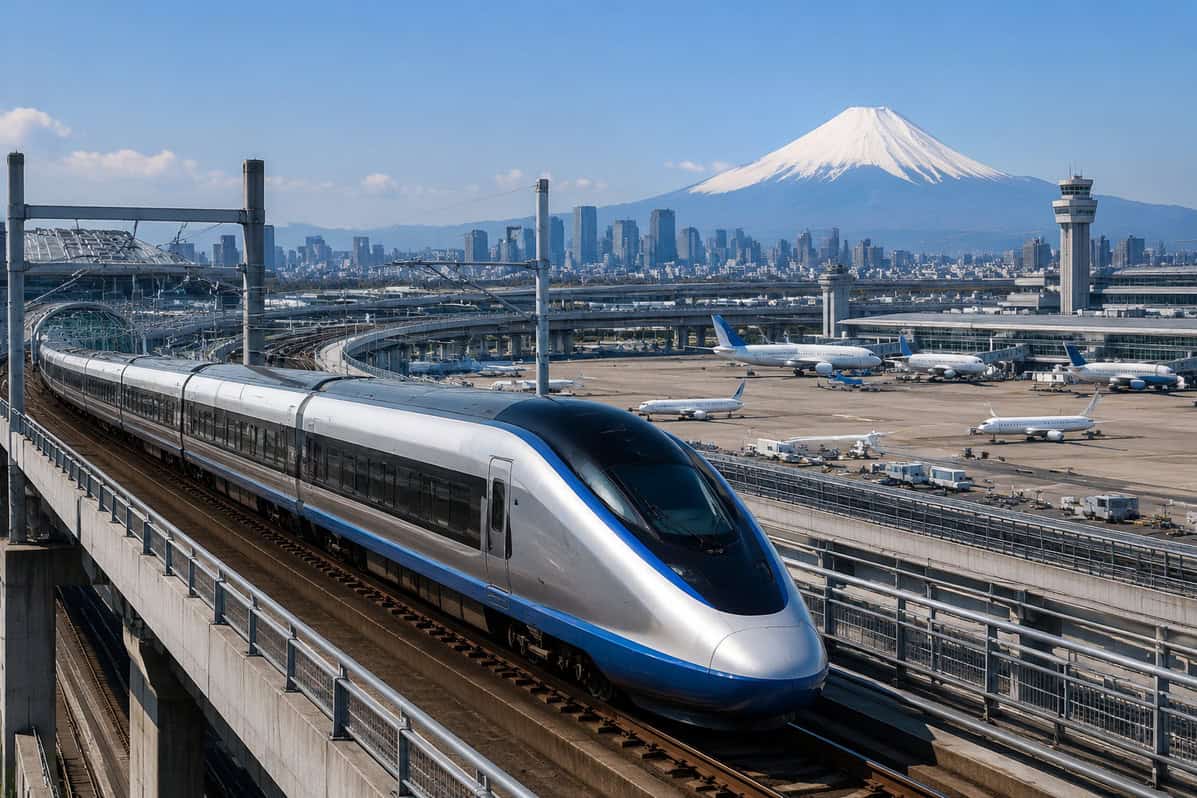
Image generated with Ai
Japan is preparing a major transport upgrade that could reshape how international travellers move through Tokyo, with a new Limited Express railway service planned to directly connect Narita International Airport and Tokyo Haneda Airport. The project aims to reduce lengthy airport transfers, improve passenger convenience, and support Japan’s growing tourism industry by creating a faster link between the country’s two busiest aviation gateways.
Currently, travellers transferring between Narita Airport in Chiba Prefecture and Haneda Airport in Tokyo often require around ninety minutes of travel through existing rail and road connections. The planned express service is expected to provide a smoother alternative, particularly for overseas visitors arriving at Narita before continuing on domestic flights from Haneda.
Advertisement
The development reflects Japan’s broader strategy to modernise transport infrastructure, improve airport accessibility, and prepare for sustained international visitor growth. With tourism demand continuing to recover and expand, the new rail connection is expected to strengthen Tokyo’s position as a major global travel hub.
The planned direct rail connection between Narita International Airport and Haneda Airport represents a significant step towards improving Tokyo’s airport accessibility. The new Limited Express service is designed to address one of the biggest challenges faced by international travellers: the lengthy journey between the capital region’s two major airports.
Advertisement
Advertisement
At present, passengers transferring between Narita and Haneda usually need to rely on multiple transport options, including airport buses and connecting railway services. The journey can take approximately ninety minutes, creating additional pressure for travellers managing tight flight schedules.
The proposed express service will provide a more direct and efficient travel option. By reducing transfer complexity, Japan expects to make Tokyo’s aviation network easier to navigate for international visitors, business travellers, and domestic passengers.
The project will be especially valuable for tourists arriving on international flights at Narita who need to connect with domestic routes operating from Haneda. A faster airport link could improve travel experiences by reducing waiting times and offering greater flexibility when planning journeys across Japan.
The initiative also supports Japan’s long-term tourism ambitions. As the country continues attracting record numbers of international visitors, efficient airport connectivity has become increasingly important. Better links between major transport hubs can encourage longer stays, smoother itineraries, and stronger visitor confidence.
The new railway service will not only benefit passengers but also improve Tokyo’s overall transport efficiency. By creating a stronger connection between two critical aviation gateways, Japan is strengthening the foundation needed for future tourism growth.
The development of the Narita-Haneda express service requires major improvements to existing railway infrastructure. Japan plans to introduce the project in phases, combining new construction with upgrades to current rail networks.
Keisei Electric Railway is expected to begin the first stage of the project by launching a Limited Express service between Narita Airport and Oshiage Station in Tokyo’s Sumida Ward by 2028. This initial phase will improve connections from Narita into central Tokyo while preparing the network for the future airport-to-airport route.
During the 2030s, the service is planned to extend towards Haneda Airport through existing railway corridors, including the Toei Asakusa Line and the Keikyu Line. This expansion will eventually create a direct rail connection between Tokyo’s two primary airports.
To support increased train operations, Japan will also develop additional railway facilities at Narita Airport. New elevated tracks and expanded infrastructure will be constructed for the Narita Sky Access Line, allowing smoother movement of express trains.
Further upgrades are planned across sections of the Keisei Railway network and East Japan Railway (JR East) lines. Some existing single-track sections will receive additional tracks, enabling trains to operate in both directions more efficiently.
These improvements are essential because airport rail services require high reliability and frequent operations. By strengthening the railway network, Japan aims to prevent delays, increase capacity, and create a dependable transport system capable of handling future passenger growth.
The infrastructure investment demonstrates Japan’s commitment to improving mobility across the Tokyo metropolitan area. Beyond tourism, the upgrades will support business travel, airport operations, and regional economic activity.
The planned airport rail connection will also bring a major increase in express train frequency, improving transport options for travellers moving between Narita and Haneda airports.
According to project estimates, infrastructure improvements will allow the number of Limited Express trains operating each hour to nearly double. This increase will provide passengers with more departure choices and reduce the need to plan journeys around limited schedules.
More frequent services will be particularly beneficial during busy travel periods when airports experience higher passenger volumes. Japan’s tourism industry has seen strong international demand, and efficient transport systems are becoming increasingly important as visitor numbers rise.
A higher frequency rail service can also reduce congestion on alternative transport options, including airport buses and road connections. By shifting more passengers onto rail networks, Japan can improve overall travel efficiency while supporting more sustainable transportation.
The express service is expected to create a seamless travel experience for passengers arriving from overseas. Instead of navigating complicated transfers, travellers will eventually have a simpler route between Tokyo’s international gateways.
The project also aligns with Japan’s wider efforts to develop smart, connected, and passenger-focused infrastructure. Modern airport transportation is becoming a key factor in global tourism competitiveness, and countries worldwide are investing in faster links between airports and cities.
For Tokyo, the Narita-Haneda connection could become an important advantage. A more integrated airport network will help strengthen the city’s appeal among international travellers, airlines, and businesses.
Japan’s decision to develop a direct airport rail connection comes as the country continues strengthening its position as one of the world’s leading tourism destinations. Improved transport links are becoming essential as international arrivals increase and travellers seek faster, more convenient journeys.
Narita Airport remains a major gateway for international flights, while Haneda Airport plays a crucial role in both domestic and international aviation. Connecting these two airports more effectively will create a stronger travel network for visitors entering Japan.
The new rail service could benefit tourists exploring destinations beyond Tokyo. Faster airport transfers may encourage travellers to combine Tokyo visits with domestic trips to cities such as Osaka, Kyoto, Sapporo, and Fukuoka.
Better connectivity may also support Japan’s business tourism sector. International conferences, corporate travel, and investment activities depend heavily on efficient transport systems. A direct airport link can improve accessibility for global visitors arriving through different routes.
The project also reflects Japan’s focus on preparing infrastructure for future demand. As airlines expand international services and tourism markets continue recovering, transport capacity must keep pace with passenger growth.
Tokyo has already developed one of the world’s most advanced urban transport networks, and the Narita-Haneda connection would further strengthen this reputation. By combining railway expansion with airport accessibility improvements, Japan is creating a more connected travel environment.
The long-term benefits extend beyond airports. Improved mobility can support local businesses, hotels, attractions, and tourism operators by making Tokyo easier to access for visitors from around the world.
The upcoming Limited Express rail connection between Narita and Haneda airports represents a major transformation for Tokyo’s future transport landscape. Once completed, the project is expected to provide international visitors with a faster, easier, and more reliable airport transfer option.
The initiative highlights Japan’s long-term vision of building efficient infrastructure that supports tourism growth and global connectivity. Instead of treating Narita and Haneda as separate gateways, the new rail link will bring them together as part of a more integrated aviation system.
For travellers, the biggest advantage will be convenience. Reduced transfer times, increased train frequency, and improved connections can make arriving in Japan less complicated and more enjoyable.
For the tourism sector, the project could create new opportunities by improving access to destinations across the country. Visitors may feel more confident planning multi-city journeys when airport transfers become simpler.
The development also demonstrates how transportation investment can influence tourism competitiveness. Modern travellers increasingly value speed, reliability, and convenience when choosing destinations.
As Japan prepares for the 2030s, the Narita-Haneda express service will become a key part of Tokyo’s next generation transport network. The project represents not only a railway upgrade but also a strategic investment in the future of international travel.
By connecting two major airports with a dedicated express service, Japan is positioning Tokyo for a new era of seamless tourism and global mobility.
Advertisement
Advertisement
Advertisement













Saturday, September 5, 2026

Friday, September 4, 2026

Saturday, September 5, 2026

Thursday, September 3, 2026

Wednesday, September 2, 2026

Saturday, September 5, 2026

Saturday, September 5, 2026