
Malaysia and Singapore F1 Double-Header Fuels 74% Cross-Border Travel Surge in October

Updated
Published
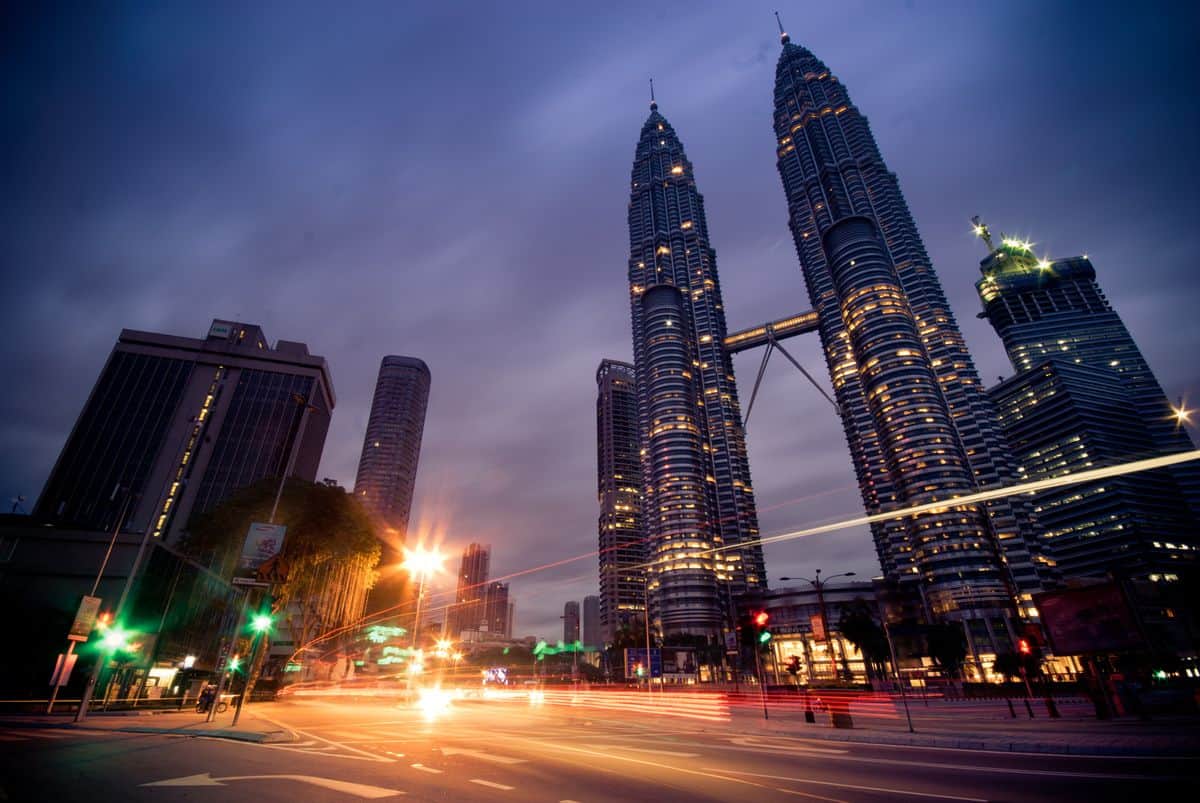
Image generated with Ai
Malaysia and Singapore’s F1 double-header is fuelling a 74% cross-border travel surge in October as Formula 1 fans build Southeast Asian holidays around two consecutive race weekends. New Amadeus Travel Intelligence data shows air arrivals from Kuala Lumpur to Singapore rising sharply between the events, while long-haul arrivals into both markets are also strengthening. Malaysia hosts Formula 1 at Sepang from 2 to 4 October 2026 before racing moves to Singapore’s Marina Bay from 9 to 11 October. With just five days separating the two events, the schedule is encouraging travellers to combine motorsport with longer regional holidays rather than treating each Grand Prix as an isolated weekend trip.
Formula 1 Creates an Unusual Southeast Asian Double-Header
October 2026 will produce an unusual concentration of Formula 1 activity in Southeast Asia.
Racing takes place at Malaysia’s Sepang International Circuit from 2 to 4 October. The Formula 1 Singapore Grand Prix then follows at Marina Bay from 9 to 11 October.
That leaves fans only five days between the two events.
Advertisement
Advertisement
The proximity is creating a natural opportunity for international visitors to attend both races within one Southeast Asian trip.
Advertisement
Advertisement
Amadeus Travel Intelligence data indicates that travellers are doing exactly that.
Air arrivals from Kuala Lumpur into Singapore between 5 and 11 October are tracking 74% above the equivalent period last year.
F1 travel demand at a glance
| Travel indicator | Year-on-year change |
|---|---|
| Kuala Lumpur to Singapore air arrivals, 5–11 October | +74% |
| UK arrivals into Kuala Lumpur during Malaysia race period | +49% |
| Australian arrivals into Kuala Lumpur | +40% |
| Singapore-origin arrivals into Kuala Lumpur | +38% |
| US arrivals into Singapore, 5–11 October | +88% |
| UK arrivals into Singapore | +73% |
| New Zealand arrivals into Singapore | +54% |
| Taiwan arrivals into Singapore | +43% |
| Kuala Lumpur stays of 1–5 nights | +17% |
| Singapore stays of 6–13 nights | +49% |
The figures demonstrate that the tourism effect extends considerably beyond spectators travelling between the two race circuits.
Kuala Lumpur-to-Singapore Travel Jumps 74%
The strongest evidence of a two-race travel pattern appears in movement between Kuala Lumpur and Singapore.
Amadeus reports that booked air arrivals on the Kuala Lumpur-to-Singapore corridor are 74% higher year on year between 5 and 11 October.
Advertisement
Advertisement
Those dates are significant.
The period begins immediately after the Malaysia race and continues through the Singapore Grand Prix weekend.
The data does not establish that every passenger is a Formula 1 spectator. Normal business, leisure and visiting-friends-and-relatives traffic continues between the two cities.
However, the timing of the increase provides strong evidence that the back-to-back race calendar is contributing to additional cross-border demand.
Malaysia Attracts More Long-Haul Visitors
International demand is also rising around the Malaysia race itself.
Advertisement
Advertisement
The United Kingdom is the fastest-growing major source market identified by Amadeus for Kuala Lumpur, with arrivals up 49% year on year.
Australia follows with 40% growth.
Arrivals originating in Singapore are up 38%.
Amadeus identifies Australia, India, the United Kingdom, Taiwan, South Korea, Singapore, Hong Kong, Thailand, Indonesia and Japan among the leading origin markets for Malaysia during the race period.
That mix demonstrates the broad geographic reach of Formula 1 tourism.
Advertisement
Advertisement
Some spectators are travelling from neighbouring Asian markets, while others are making considerably longer journeys from Europe and Australia.
Singapore Sees an Even Bigger Long-Haul Increase
Singapore’s international arrival pattern is particularly striking.
US arrivals for 5–11 October are 88% above the comparable period last year.
UK arrivals are up 73%.
New Zealand rises 54%, while Taiwan increases 43%.
Advertisement
Advertisement
The four fastest-growing markets identified by Amadeus therefore include three long-haul origins.
That matters economically because long-haul travellers generally need to commit more time and money to a trip than visitors arriving from nearby markets.
When two major sporting events can be combined within the same journey, the additional value of travelling to Southeast Asia can become easier to justify.
Fans Are Spending Different Amounts of Time in Each Destination
Length-of-stay data provides another indication of how the unusual F1 schedule is changing travel behaviour.
Kuala Lumpur is seeing stronger demand for shorter visits.
Advertisement
Advertisement
Stays of one to five nights increased 17% year on year around the relevant period.
Medium and longer stays both declined by 8%.
That suggests many visitors may be treating Kuala Lumpur and Sepang as the first stage of a wider trip before moving elsewhere.
Singapore shows the opposite pattern.
Trips lasting six to 13 nights are up 49% year on year.
Advertisement
Advertisement
That increase indicates some travellers are building a longer holiday around the Singapore Grand Prix rather than arriving solely for the race weekend.
Sports Tourism Can Turn One Event Into a Regional Holiday
This is where the 2026 Formula 1 calendar becomes especially important for tourism.
A spectator flying from London, Sydney or New York has already made a substantial commitment simply to reach Southeast Asia.
With races in Malaysia and Singapore separated by only five days, attending both can become more attractive than flying to the region for only one weekend.
The itinerary could potentially include:
Advertisement
Advertisement
- The Malaysia race at Sepang
- Several days in Kuala Lumpur
- A flight or overland journey to Singapore
- The Singapore Grand Prix
- Additional leisure time in Singapore
- An extension into another Southeast Asian destination
The Formula 1 ticket therefore becomes an anchor around which a much larger holiday can be constructed.
Singapore Has Already Shown Its Ability to Generate Wider Asian Travel
Previous travel data supports this broader sports-tourism effect.
Visa research into the Singapore Grand Prix found that around 20% of visitors to Singapore had additional travel plans after the race weekend.
Among long-haul visitors from outside Asia, around 35% travelled to at least one additional country.
Malaysia, Indonesia and Thailand were among the leading onward destinations.
Advertisement
Advertisement
Those travellers also spent additional time moving around the region.
This illustrates why a major sporting event can create tourism benefits outside its host city.
Singapore may be the reason someone initially books a flight to Asia, but that visitor can subsequently spend money across several countries.
Malaysia’s Race Adds an Exceptional 2026 Opportunity
Malaysia’s presence on the 2026 Formula 1 calendar is unusual.
Sepang last hosted Formula 1 in 2017.
Advertisement
Advertisement
For 2026, the circuit is hosting the Formula 1 Gulf Air Bahrain Grand Prix after the original Bahrain event was affected by Middle East conflict and subsequently relocated.
The Malaysia event is therefore a one-off race under the Bahrain Grand Prix title rather than a conventional permanent Malaysian Grand Prix return.
That distinction could increase interest among motorsport enthusiasts because Sepang’s return provides an experience unavailable on the normal recent Formula 1 calendar.
Its timing immediately before Singapore adds another incentive.
Malaysia Tourism Businesses Report International Interest
Travel businesses in Malaysia are also seeing demand from multiple international markets.
Advertisement
Advertisement
Tour operators have reported interest and bookings from India, the Middle East and Southeast Asian countries.
Some companies are packaging race access with hotels and transfers to Sepang International Circuit.
This is an important part of the sports-tourism economy.
A Grand Prix visitor does not spend money only on an event ticket.
Demand can flow into:
Advertisement
Advertisement
- Airlines
- Hotels
- Restaurants
- Airport transfers
- Rail and road transport
- Tour operators
- Attractions
- Shopping
- Nightlife
- Entertainment
When visitors attend two races and remain in the region between them, that spending period becomes considerably longer.
Singapore Could Capture Longer-Stay Spending
The 49% increase in six-to-13-night stays in Singapore is therefore particularly important.
A Formula 1 weekend itself does not require nearly two weeks in the city.
Longer stays suggest visitors are attaching other activities to their race plans.
Some may arrive before the Grand Prix. Others may remain afterwards or use Singapore as a base for additional regional travel.
Advertisement
Advertisement
Singapore’s role as a major aviation hub makes this relatively easy.
Travellers can connect to destinations across Southeast Asia within short flight times, while Malaysia is also accessible by road, rail and air.
Hotels Could Benefit From the F1 Travel Effect
Accommodation is one of the sectors most exposed to major event demand.
Formula 1 can create intense room demand around race dates, particularly near circuits and central entertainment areas.
The 2026 double-header could extend this effect.
Advertisement
Advertisement
Rather than two entirely separate groups of visitors arriving for Malaysia and Singapore, some spectators may remain within the region throughout the gap between races.
That creates accommodation opportunities during weekdays as well as the two race weekends.
Kuala Lumpur’s short-stay growth and Singapore’s longer-stay increase suggest the two markets are benefiting differently from the same motorsport calendar.
Multi-City Travel Could Spread Benefits Further
The economic opportunity is not restricted to Kuala Lumpur and Singapore.
Travellers arriving from long-haul markets may add other destinations because they have already travelled a considerable distance to reach Asia.
Advertisement
Advertisement
Potential extensions could include beach destinations, heritage cities and neighbouring capitals.
Previous Singapore Grand Prix data has already shown onward travel towards Malaysia, Indonesia and Thailand.
The 2026 calendar could reinforce this behaviour because travellers have several days to fill between the two races.
Tourism boards and travel companies can therefore market the Grand Prix period as a regional journey rather than simply a pair of sporting events.
Data Shows Correlation Rather Than Every Traveller’s Motivation
The Amadeus figures require careful interpretation.
Advertisement
Advertisement
They show forward air arrivals and changing travel patterns during periods surrounding the races.
They do not prove that every additional passenger is travelling specifically because of Formula 1.
Similarly, the 74% increase between Kuala Lumpur and Singapore should not be described as a 74% increase exclusively in F1 fans.
Business trips, conventional holidays and other forms of travel remain part of the overall market.
The strength of the data lies in its timing.
Advertisement
Advertisement
Large increases coincide directly with two major sporting events being staged only five days apart, providing a strong indication of the influence the unusual race schedule is having on demand.
Formula 1 Shows the Growing Value of Event Tourism
The broader lesson extends beyond motorsport.
Major sporting events can influence when people travel, how long they stay and how many destinations they visit.
This is particularly valuable in Southeast Asia, where major cities and resort destinations can often be combined relatively easily.
A traveller who comes for Formula 1 can become a city tourist, hotel guest, restaurant customer and regional air passenger within the same journey.
Advertisement
Advertisement
The October double-header provides a particularly clear example because the two races actively encourage movement between neighbouring countries.
Conclusion: Malaysia and Singapore F1 Double-Header Fuels 74% Cross-Border Travel Surge in October
Malaysia and Singapore’s F1 double-header is fuelling a 74% cross-border travel surge in October because the two Formula 1 weekends are close enough for international spectators to combine them within a single Southeast Asian itinerary.
Amadeus Travel Intelligence shows Kuala Lumpur-to-Singapore air arrivals rising 74% year on year between 5 and 11 October. At the same time, long-haul demand is strengthening sharply. UK arrivals into Kuala Lumpur are up 49%, while Singapore is recording increases of 88% from the United States and 73% from the United Kingdom.
Length-of-stay patterns add another layer to the story. Short visits to Kuala Lumpur are increasing, while Singapore is seeing a 49% rise in stays lasting six to 13 nights.
Together, these trends suggest Formula 1 is doing more than filling grandstands.
Advertisement
Advertisement
The Malaysia and Singapore F1 double-header is helping transform race attendance into wider regional tourism, with visitors combining sporting events, city stays and cross-border travel.
For Southeast Asia’s airlines, hotels and tourism businesses, October 2026 demonstrates the economic power of placing major international events close together. One race can bring visitors into a destination. Two consecutive race weekends can give them a reason to stay in the region, cross another border and turn Formula 1 into a much larger Asian holiday.
Advertisement
