
Dubai Tourism 2026 Surges as 6.97 Million Visitors Fuel a New Era of Luxury and Experiences in the UAE

Updated
Published
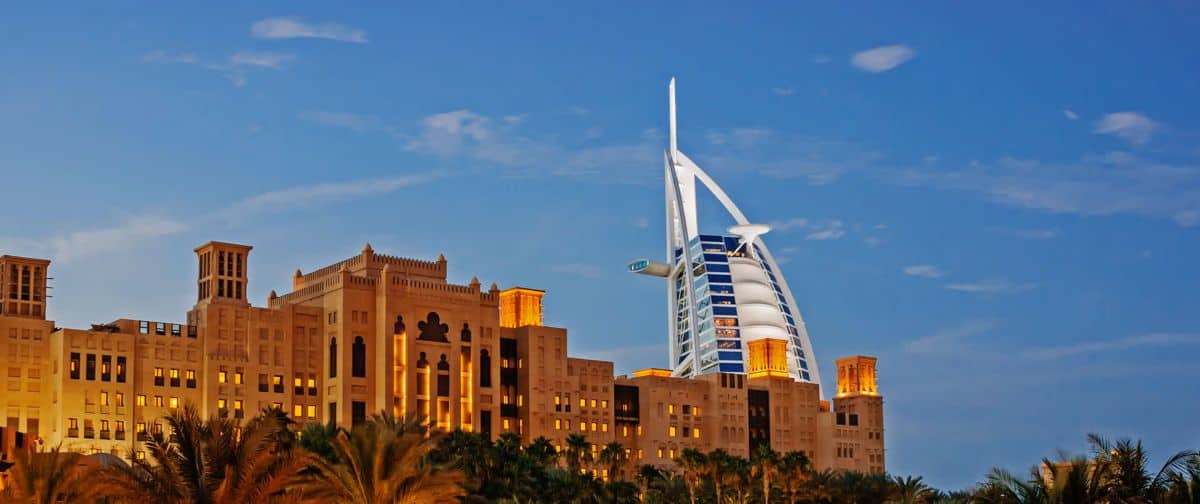
Dubai tourism 2026 is entering a new phase as the emirate recorded 6.97 million international overnight visitors between January and August. The performance is strengthening a strategy that moves beyond luxury, shopping and iconic architecture towards wellness, sustainability, accessibility and immersive experiences. South Asia supplied 1.143 million visitors, while Western Europe remained the largest source region with 1.365 million arrivals. At the same time, Dubai is expanding its hotel inventory, aviation infrastructure and urban transport network. Bader Ali Habib, Regional Head of Proximity Markets at Dubai Department of Economy and Tourism, said the destination now wants to offer greater substance beyond its established image.
Dubai’s Visitor Growth Enters a New Phase
Dubai welcomed 6.97 million international overnight visitors during the first eight months of 2026, reinforcing the emirate’s position as one of the world’s most significant urban tourism destinations. August contributed 869,000 visitors, making it the second-strongest month after February during the period. The figures indicate that demand is continuing across different seasons rather than concentrating solely around traditional peak travel periods.
Western Europe remained the largest source region, accounting for 1.365 million visitors or 20% of the total. South Asia followed with 1.143 million visitors, representing 17%, while the GCC contributed 1.134 million or 16%. CIS and Eastern Europe supplied another 962,000 visitors, giving Dubai a notably diversified source-market structure.
| Source Region | Visitors Jan–Aug 2026 | Share |
|---|---|---|
| Western Europe | 1.365 million | 20% |
| South Asia | 1.143 million | 17% |
| GCC | 1.134 million | 16% |
| CIS & Eastern Europe | 962,000 | 14% |
| MENA | 703,000 | 10% |
| NE & SE Asia | 639,000 | 9% |
| Americas | 513,000 | 7% |
| Africa | 370,000 | 5% |
| Australasia | 139,000 | 2% |
The geographical distribution highlights how Dubai has built resilience across multiple international markets. MENA accounted for 10% of arrivals, followed by North East and South East Asia at 9%, the Americas at 7%, Africa at 5% and Australasia at 2%. This spread gives the destination a broad demand base while allowing the travel trade to develop products for different visitor profiles.
Advertisement
Advertisement
India remains particularly important within the South Asian market. Habib said on 23 September 2026 that South Asia and India would remain crucial to Dubai’s visitor strategy, with continued cooperation planned with the travel trade. The focus reflects the depth of travel links between India and the UAE, alongside Dubai’s established appeal among Indian leisure, family and luxury travellers.
Hotel Supply Mirrors Rising Visitor Demand
The expansion in arrivals is occurring alongside a substantial accommodation base. Dubai had 794 hotel establishments and 148,796 available rooms as of August 2026, while occupied room nights reached 21.6 million during the year to date. The figures show how strongly the hospitality sector has expanded around the destination’s international visitor economy.
Advertisement
Advertisement
Five-star properties remain the largest hotel category by room inventory, with 162 establishments offering 51,846 rooms. Four-star hotels followed with 194 establishments and 43,464 rooms, demonstrating that Dubai’s accommodation proposition combines substantial premium capacity with a broader upper-upscale market.
| Accommodation Indicator | Jan–Aug 2026 |
|---|---|
| Hotel establishments | 794 |
| Available rooms | 148,796 |
| Occupied room nights | 21.6 million |
| Five-star hotels | 162 |
| Five-star rooms | 51,846 |
| Four-star hotels | 194 |
| Four-star rooms | 43,464 |
The structure is significant because Dubai is not simply adding rooms to accommodate more visitors. The city continues to invest heavily in premium accommodation, while simultaneously expanding the range of experiences available around those hotels. This creates opportunities for operators to package luxury accommodation with wellness, entertainment, dining, adventure and cultural experiences.
Advertisement
Advertisement
Dubai’s 2025 performance provides further context. The emirate welcomed 19.59 million international overnight visitors last year, while hotel occupancy reached 80.7%. Occupied room nights increased 4% to 44.85 million, while average daily rate rose 8% to AED579.
Dubai Wants Visitors to Experience More
The next phase of Dubai tourism 2026 is not simply about attracting more people. It is increasingly about encouraging visitors to experience more of the destination during each stay. Dubai now promotes more than 150 attractions, allowing travellers to combine entertainment, dining, shopping, nature, culture and family activities within relatively short itineraries.
Habib said Indian visitors increasingly want to experience several attractions during one trip. That behaviour supports Dubai’s proposition as a compact, high-density destination where families and short-break travellers can build varied itineraries without spending large amounts of time travelling between experiences.
The destination’s seasonal offer also helps address Dubai’s traditionally hot summer months. Indoor attractions such as Green Planet, AYA Universe and IMG Worlds of Adventure can support summer itineraries, while Hatta provides a stronger outdoor proposition during the cooler months.
Advertisement
Advertisement
This shift also challenges Dubai’s older image as primarily a shopping and architecture destination. Habib said on 23 September that the city wanted to move beyond the perception of shopping malls and visually impressive infrastructure towards a proposition with greater substance.
Hatta Builds a Bigger Outdoor Proposition
Hatta is emerging as one of the clearest examples of this broader destination strategy. Located roughly 90 minutes from central Dubai, the area has traditionally attracted visitors for hiking, trekking and other outdoor activities. The Hatta Master Development Plan now aims to create a much broader visitor ecosystem.
The planned development includes new food and beverage offerings, enhanced visitor facilities, natural attractions and proposed cable-car infrastructure. The objective is to transform Hatta from a relatively focused excursion into a more complete destination with reasons to stay longer and explore further.
For tour operators, the change could prove significant. Hatta can increasingly be incorporated into multi-night programmes that combine Dubai’s urban attractions with mountain landscapes and outdoor experiences. This provides another way to diversify the standard Dubai itinerary while encouraging visitors to explore beyond the central city.
Aviation Continues to Power Dubai’s Growth
Aviation remains fundamental to Dubai’s tourism model because the destination’s global reach depends heavily on its international air connectivity. Dubai International handled 95.2 million guests in 2025, retaining its position as the world’s busiest international airport.
India was the airport’s largest country market, generating 11.9 million passengers during 2025. The airport connected Dubai with 291 destinations across 110 countries through 108 international carriers, demonstrating the scale of the network supporting the destination.
Advertisement
Advertisement
| Aviation Indicator | Latest Figure |
|---|---|
| DXB passenger traffic in 2025 | 95.2 million |
| India passenger traffic | 11.9 million |
| DXB destinations | 291 |
| Countries connected | 110 |
| International carriers | 108 |
| DWC planned first-stage capacity | 150 million passengers |
| Ultimate DWC capacity | 260 million passengers |
The next major aviation development is Al Maktoum International Airport. The planned expansion carries an estimated investment of US$35 billion and is designed to eventually accommodate 260 million passengers annually. The first major development phase is expected to provide capacity for 150 million passengers each year.
The scale of the project indicates that Dubai is planning for sustained long-term growth rather than simply addressing current airport capacity. For travellers, the future development should create greater aviation resilience while supporting the destination’s ambition to remain a global gateway.
Metro Expansion Could Transform Tourist Itineraries
Connectivity within Dubai is also undergoing a major transformation. The Dubai Metro Blue Line is scheduled to open in 2029, while the emirate has also approved the Gold Line to improve connectivity across 15 districts.
The 42-kilometre Gold Line is expected to strengthen links between important residential, commercial and visitor areas. Meanwhile, the Blue Line will create new connections between Dubai Creek Harbour, International City, Mirdif and other growing districts.
These developments could change how travel companies construct city itineraries. Metro-led programmes can reduce reliance on private transfers while making emerging neighbourhoods more accessible to visitors. They can also make short stays more efficient by linking accommodation, attractions and dining areas through public transport.
Sustainability Becomes a Practical Selling Point
Dubai’s sustainability strategy is becoming increasingly visible within the hospitality sector. In 2026, the Dubai Sustainable Tourism Stamp was awarded to 237 hotels, representing a 55% increase from the previous cycle.
Advertisement
Advertisement
The programme evaluates hotels against 19 sustainability requirements covering areas such as energy efficiency, water consumption, waste management, responsible sourcing and employee engagement. The latest recognised properties included 22 Gold, 92 Silver and 123 Bronze recipients.
| Dubai Sustainable Tourism Stamp | 2026 Cycle |
|---|---|
| Recognised hotels | 237 |
| Increase from previous cycle | 55% |
| Gold | 22 |
| Silver | 92 |
| Bronze | 123 |
| Assessment requirements | 19 |
For travellers, such programmes offer a more practical way to identify sustainability efforts within the hotel sector. For travel advisers, the certification can also provide useful information when clients request environmentally responsible accommodation.
Sustainability is therefore moving from a broad destination message towards a measurable hospitality consideration. That shift is important as responsible travel becomes increasingly relevant across international markets.
Accessibility Broadens the Visitor Proposition
Dubai is also expanding its focus on accessible tourism. In 2025, the destination became the first Certified Autism Destination in the Eastern Hemisphere, following coordinated work across hotels, attractions, aviation and transport.
More than 70,000 people have received autism and sensory-awareness training, while hundreds of hotels and multiple attractions have participated in the wider accessibility programme. The initiative addresses an increasingly important issue for families seeking destinations with trained staff and more predictable visitor environments.
The value extends beyond certification itself. Accessible tourism depends on the consistency of service, staff awareness and communication throughout the journey. Dubai’s approach therefore attempts to integrate accessibility into the wider visitor ecosystem rather than limiting it to individual attractions.
Advertisement
Advertisement
Wellness Moves Beyond Traditional Luxury
Wellness is another pillar of Dubai’s evolving tourism proposition. The destination is increasingly positioning wellness around longevity, preventive health, lifestyle and long-term wellbeing rather than relying solely on conventional spa experiences.
Habib said on 23 September that Dubai’s wellness ambition extends beyond spas. The Dubai Longevity Authority is part of the city’s strategy to develop a broader global profile around longevity and wellness.
That direction creates opportunities across hotels, resorts, medical wellness, fitness, nutrition and lifestyle travel. It also gives luxury operators another way to differentiate Dubai beyond rooms, restaurants and traditional leisure facilities.
For Indian travellers, this could create more specialised premium itineraries. Wellness retreats, luxury accommodation, fitness programmes and longevity-focused experiences can be combined with the city’s established hospitality proposition.
Digital Technology Removes Travel Friction
Technology is increasingly becoming part of Dubai’s visitor infrastructure. The destination has introduced digital systems designed to simplify hotel processes and reduce friction during arrival and departure.
Dubai has also invested in biometric and digital airport processes. Habib highlighted faster immigration and security procedures as an under-communicated advantage for international travellers.
Advertisement
Advertisement
For short-break visitors, these improvements can have an outsized effect. Reducing time spent at airports and hotel reception effectively creates additional time for attractions, dining and business engagements.
The wider objective is to make convenience almost invisible. The traveller should spend less time navigating the destination and more time experiencing it.
D33 Remains Dubai’s Long-Term Compass
Behind these tourism developments sits the Dubai Economic Agenda D33, which provides the wider economic framework for the emirate’s long-term growth. The agenda seeks to double Dubai’s economy by 2033 while reinforcing its status as a leading global business and lifestyle centre.
Tourism forms part of this broader economic strategy rather than operating as an isolated sector. Aviation, hospitality, technology, infrastructure, sustainability and urban development are being planned as interconnected components of the visitor economy.
That integration explains why Dubai’s tourism strategy increasingly reaches beyond traditional destination marketing. New airports, metro lines, hotels, attractions and digital systems all contribute to the same wider objective.
India Remains a Strategic Luxury Market
India occupies a particularly important position within this expansion. Strong connectivity, a large Indian community in the UAE and Dubai’s established luxury profile have created a deep ecosystem between the two markets.
Advertisement
Advertisement
Habib described luxury as an important driver of aspiration across India. He also identified opportunities across aspirational luxury, entry-level luxury and ultra-luxury, suggesting that the market should not be viewed as a single premium segment.
The ultra-luxury opportunity remains particularly relevant as Dubai adds new hotels, experiences and specialised services. For travel advisers, the opportunity lies in matching different levels of luxury with specific traveller motivations rather than treating luxury as one uniform category.
What Dubai’s Next Chapter Means for Travellers
The direction of Dubai tourism 2026 is increasingly clear. The emirate is retaining the luxury hotels, aviation infrastructure and landmark attractions that established its global tourism profile, while adding more experiences around nature, wellness, sustainability, accessibility and technology.
For Indian travellers, the implications are especially relevant because connectivity remains strong and the destination offers an unusually dense concentration of attractions. Families can combine indoor entertainment with outdoor experiences, while luxury travellers can access an expanding premium accommodation and experience portfolio.
The infrastructure pipeline also points towards a longer-term transformation. Al Maktoum International Airport, metro expansion and new destination developments will progressively alter how visitors move through Dubai.
The city’s next tourism chapter is therefore less about replacing its established identity and more about expanding it. Dubai is moving from a destination defined by spectacle towards one increasingly defined by choice, convenience and depth.
Advertisement
