
US Tourism Websites Face New Accessibility Era as ADA Digital Rules Raise Stakes for Public Travel Platforms

Published
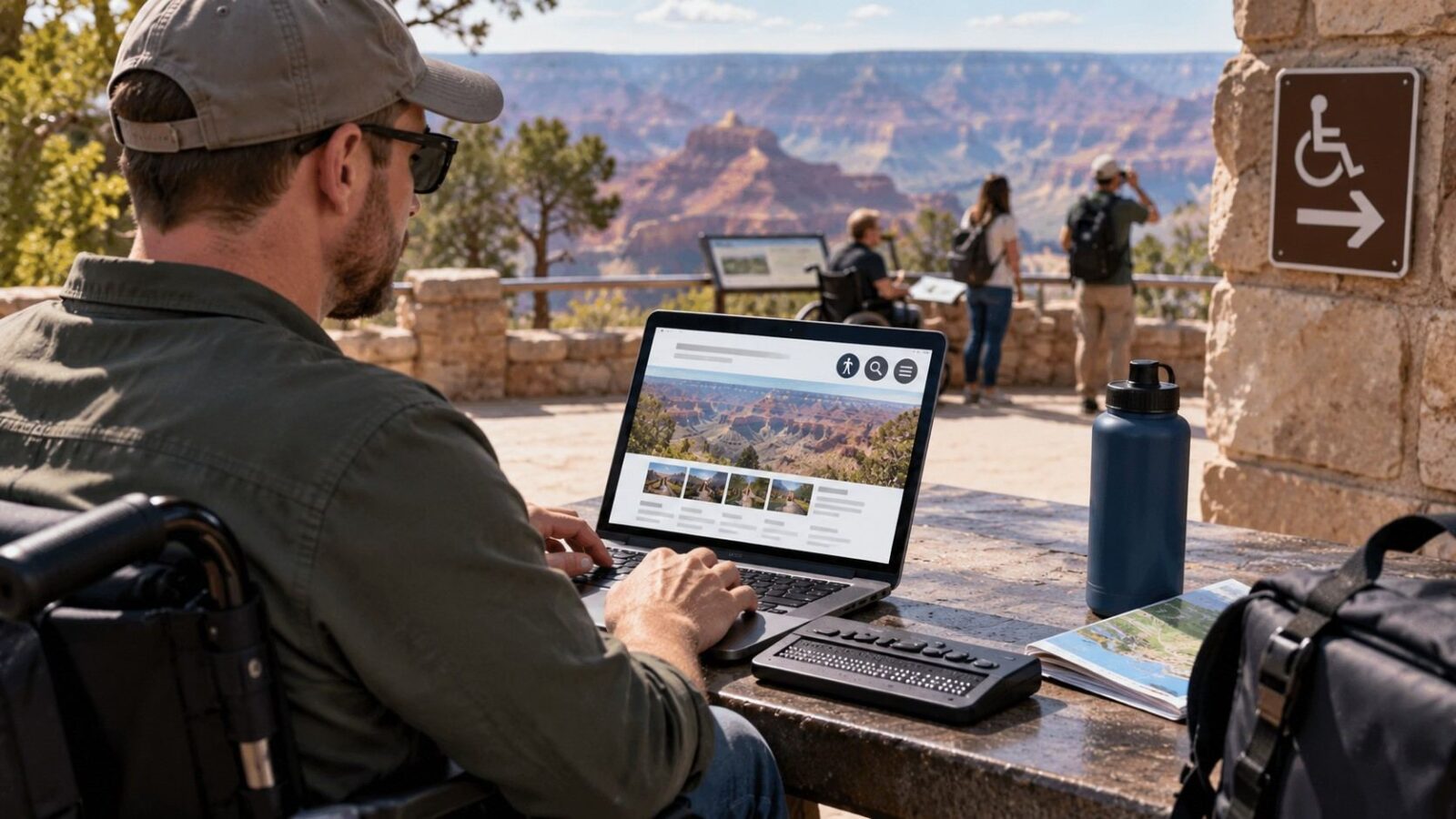
As the US Department of Justice (DOJ) updates its ADA Title II requirements, US state and local tourism websites and apps will also be required to comply with WCAG 2.1 Level AA by April 2027. Like the ADA, the DOJ’s requirements will impact a wide range of tourism, transportation, and recreational services. As more tourists plan their trips online, having accessible information in transport, tourism, and recreation websites will allow many disabled Americans to search for and plan their trips to various destinations within the US, including transport and activities at their destination.(ADA.gov)
ADA digital rules move closer to the travel experience
The Americans with Disabilities Act has protected people with disabilities since 1990. But travel has changed profoundly since the law was enacted. Visitors now plan much of a journey through websites, mobile apps, online maps, digital documents and reservation interfaces.
Advertisement
Advertisement
The US Department of Justice has long maintained that state and local government programmes and services offered online fall within ADA requirements. Its 2024 Title II rule went further by establishing a specific technical benchmark for covered public entities: WCAG 2.1 Level AA. (ADA.gov)
That has direct relevance to tourism where the service is provided by a state or local public entity. The DOJ’s own 2025 compliance guidance even uses a county tourism department as an example when explaining how the rule can apply to social-media content. (ADA.gov)
Advertisement
Advertisement
This is an important distinction. The rule does not mean every hotel, airline, travel agency or private booking website suddenly falls under the new Title II technical deadline. Title II governs state and local government entities; private businesses fall under a different ADA framework. (ADA.gov)
The compliance timetable changed in 2026
The timeline is especially important because some older articles and guidance still display the original dates.
Advertisement
Advertisement
The DOJ issued an Interim Final Rule in April 2026 extending the compliance dates by one year. Public entities with populations of 50,000 or more now have until 26 April 2027, while smaller public entities and special district governments have until 26 April 2028. (Federal Register Public Inspection)
| Public entity | Current compliance date |
|---|---|
| State/local government with 50,000+ population | 26 April 2027 |
| State/local government below 50,000 | 26 April 2028 |
| Special district government | 26 April 2028 |
The DOJ says entities must continue meeting the accessibility requirements after their applicable deadline. Its guidance also explains that population for the rule is calculated according to prescribed Census-based methods rather than simply the number of people an organisation serves. (ADA.gov)
That distinction can matter to tourism departments. A visitor bureau or recreation department that is structurally part of a larger government may not determine its deadline simply by counting visitors, website users or employees.
What WCAG 2.1 Level AA means for a traveller
The rules sound technical, but their practical purpose is straightforward: people with disabilities should be able to use digital government services.
A traveller who is blind may depend on a screen reader. Someone with limited mobility may navigate a website with a keyboard rather than a mouse. Deaf and hard-of-hearing users may need captions for video information.
The DOJ identifies barriers including poor colour contrast, inaccessible navigation and content that does not work effectively with assistive technology. It also stresses properly structured headings, keyboard access and accessible digital content. (ADA.gov)
Advertisement
Advertisement
For tourism, those principles can touch many parts of the visitor journey.
A public destination website may contain attraction information, festival schedules, recreation programmes, photographs, downloadable documents and links to transport information. A municipal mobile app may provide services useful to visitors as well as residents.
Making the physical destination accessible therefore addresses only part of the traveller’s experience. The digital journey can begin days or months before arrival.
Why the issue affects a large potential travelling population
The scale of disability in the United States shows why digital accessibility cannot be treated as a niche consideration.
The US Census Bureau reported in May 2026 that 45.8 million people, or 13.7% of the US civilian non-institutionalised population, had a disability in 2024. The figures come from the 2024 American Community Survey one-year estimates. (Census.gov)
| Indicator | Official figure |
|---|---|
| US population with a disability | 45.8 million |
| Share of civilian non-institutionalised population | 13.7% |
| People aged 18–64 with a disability who were employed | 10.5 million |
| Data year | 2024 |
| Source | US Census Bureau ACS |
Those numbers are population statistics rather than tourism statistics. They should not be interpreted as 45.8 million disabled tourists.
Advertisement
Advertisement
They do, however, establish the size of the population for whom accessible digital services can be important. (Census.gov)
Public tourism departments have a particularly clear connection
One of the most useful details in the DOJ’s compliance guidance concerns tourism directly.
The department gives the hypothetical example of a county tourism department in a county of 600,000 people using social media. It explains that posts created before the April 2027 compliance date would fall within the exception for pre-existing social-media posts, while posts made after that date would probably need to comply. (ADA.gov)
The example is significant because it moves tourism from an inferred consequence of the regulation into an activity expressly contemplated by DOJ guidance.
It also illustrates how accessibility is broader than rebuilding a homepage. Tourism departments increasingly distribute visitor information through social posts, photographs, video and other digital formats.
The rule contains exceptions, including provisions covering certain archived material, pre-existing social-media posts and some third-party content. Public entities therefore need to understand the precise scope rather than assuming every historic piece of digital material must be rebuilt. (ADA.gov)
Advertisement
Advertisement
Transport information is another important part of accessible tourism
Travel accessibility does not stop with destination marketing.
ADA Title II covers state and local government activities including transportation. The DOJ’s guidance specifically identifies mass-transit schedules and fare information as examples of information that increasingly depends on websites. (ADA.gov)
The DOJ also identifies a transit authority as an example of a special district government that can fall within the rule’s framework. Special district governments have until April 2028 under the revised timetable. (ADA.gov)
That can matter to visitors unfamiliar with a destination. They may need to find a route, understand a timetable, identify an accessible station or check service information before leaving their hotel.
Air travel operates under additional federal accessibility requirements. The US Department of Transportation already requires qualifying US and foreign airlines marketing air transportation to the US public to make their primary websites accessible under Air Carrier Access Act regulations. (Department of Transportation)
The new Title II story therefore sits within a much wider movement towards digital accessibility across the American travel journey.
Advertisement
Advertisement
What public destinations need to examine
The DOJ’s First Steps guidance recommends that public entities establish who is responsible for compliance and identify the web content and mobile apps they provide or make available. It also encourages entities to determine their compliance date and understand where their digital content is located. (ADA.gov)
For a public tourism operation, that inventory could extend beyond the main destination homepage.
Areas requiring attention can include:
- visitor-information pages and online forms
- event calendars and recreation programmes
- images and multimedia
- digital documents and PDFs
- mobile applications
- public transport information
- tourism department social-media content
The exact legal treatment depends on the entity, content and applicable exceptions. The DOJ also makes clear that content supplied through contractual, licensing or other arrangements can fall within the rule. (ADA.gov)
Outsourcing a public tourism website therefore does not automatically place the service outside the accessibility requirement.
Hotels and private travel companies need to be distinguished
There is an important legal boundary for the travel industry.
Advertisement
Advertisement
The 2027 and 2028 WCAG deadlines discussed here belong to the Title II rule for state and local governments. They should not be presented as new universal deadlines for US hotels, airlines, online travel agencies or privately owned attractions.
Hotels, inns and motels are among the private businesses treated as public accommodations under ADA Title III. The DOJ states that businesses open to the public must provide people with disabilities full and equal enjoyment of their goods and services and has long taken the position that ADA requirements apply to goods and services provided online. (ADA.gov)
But that is legally distinct from saying private hotels are covered by this new Title II WCAG 2.1 deadline.
For travellers, however, the practical distinction can be invisible. A journey may move from a government destination site to a private hotel site, then to a public transport platform and an airline website.
That means the quality of the overall accessible journey can depend on several different legal and operational systems working together.
Economic importance should not be confused with a new tourism levy
The accessibility rule does not create a tourism tax, visa requirement or visitor charge.
Advertisement
Advertisement
Nor does the DOJ rule provide an official forecast for additional tourism revenue, hotel demand, aviation traffic or employment generated by improved digital accessibility. Claims assigning a dollar value to this specific regulation would therefore require separate evidence.
Its direct impact is instead about equal digital access to public programmes, services and activities.
The economic relevance to tourism is indirect but clear. Digital destination platforms are gateways through which visitors research places and obtain information. Removing barriers can allow more people to use those public services independently.
That distinction matters journalistically. Accessibility is a civil-rights obligation under the ADA, not merely a tourism marketing strategy.
Why April 2027 is now the critical date
The April 2026 extension gives larger public entities additional implementation time, but it does not remove the underlying requirement.
The DOJ says that developing and maintaining accessible content takes planning. Its First Steps resource advises public bodies to start organising their compliance work ahead of the applicable deadline. (ADA.gov)
Advertisement
Advertisement
For public tourism organisations attached to larger states, counties and cities, the relevant deadline may therefore arrive on 26 April 2027.
Smaller jurisdictions and special district governments have another year, until 26 April 2028. (ADA.gov)
The result is not one national switch-over day for every travel website. It is a phased federal timetable tied to the status and population of the public entity.
What international travellers should know
Visitors do not need to register for anything because of the new digital rule. There is no new traveller form, visa condition or entry requirement.
Instead, the changes concern how covered public bodies provide their websites and mobile applications.
Travellers with disabilities may progressively encounter more accessible public digital services as entities work towards their deadlines. That could affect the usability of destination information, recreation services, public programmes and local transport resources.
Advertisement
Advertisement
Travellers who experience an ADA-related accessibility problem can also use the DOJ’s ADA Information Line for information about requirements and complaint procedures. (ADA.gov)
Future outlook is already set by the federal timetable
The next stage is defined by published federal policy rather than prediction.
Larger covered state and local government entities are scheduled to reach their compliance date on 26 April 2027. Smaller entities and special district governments follow on 26 April 2028. (ADA.gov)
After the relevant date, the DOJ says covered governments must continue ensuring their web content and mobile apps meet WCAG 2.1 Level AA, subject to the rule’s provisions. (ADA.gov)
For US tourism, that places digital accessibility alongside physical accessibility as an increasingly visible part of the visitor experience.
A destination can have accessible parks, attractions and public transport. But if essential public information about them cannot be independently used online, a barrier can arise before the trip has even begun.
Advertisement
Advertisement
Frequently Asked Questions
Does the ADA rule apply to every tourism and hotel website in the United States?
No. The specific WCAG 2.1 Level AA rule and the April 2027/2028 deadlines discussed here apply to covered state and local government entities under ADA Title II. Private hotels and other businesses open to the public are subject to Title III and other applicable requirements, but they should not be assigned these Title II deadlines. (ADA.gov)
When must public tourism websites comply?
It depends on the government entity responsible for the content. State and local governments with populations of 50,000 or more have a 26 April 2027 deadline. Those below 50,000 and special district governments have until 26 April 2028. (ADA.gov)
What does this change for a traveller with a disability?
The rule is designed to make covered public websites and mobile apps accessible and usable by people with disabilities. In tourism, that can matter when accessing government-provided destination information, public recreation services or transport information online. It does not impose a new requirement on the traveller. (ADA.gov)
Conclusion
Public tourism information is becoming easier to access as America pushes for greater website accessibility. Currently, larger state and local governments (and other large covered entities) have until April 2027 to achieve WCAG 2.1 accessibility. Smaller entities have until April 2028. Currently, departments of tourism, public recreation and some transport authorities are required to have accessible websites, and the same requirement is extending to tourism related websites. The changes will not affect immigration laws or create obligations on non-resident tourists. It will, however, mean that the general public will be able to more easily use the departments’ online services from wherever they are located.(ADA.gov)
Advertisement
