
Aer Lingus Flight EI440 Dublin to Athens Forced Emergency Landing at Amsterdam Schiphol After Mid-Air Squawk 7700 Alert and Rapid Descent at 35,000 Feet

Published
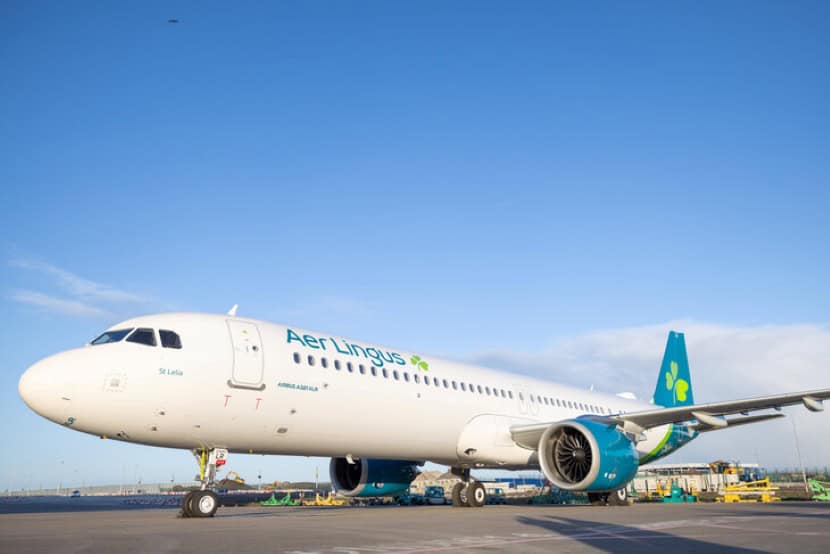
Aer Lingus flight EI440, operating a scheduled passenger service from Dublin Airport (DUB) to Athens International Airport (ATH), was forced into an emergency landing at Amsterdam Airport Schiphol (AMS) after declaring a mid-air emergency and diverting from its planned route over European airspace on June 14, 2026. The aircraft, an Airbus A320-214 registered EI-DEL, was carrying passengers on a standard international connection between Ireland and Greece when the situation developed during cruise flight.
The flight departed Dublin in the morning and climbed to its assigned cruising altitude of 35,000 feet as it entered established trans-European air traffic corridors. The route is commonly used for tourism and seasonal travel between Northern and Southern Europe, connecting two major capital cities with high passenger demand.
Advertisement
Advertisement
Mid-Flight Emergency Declaration and Squawk 7700 Activation
Roughly 45 to 50 minutes into the flight, while the aircraft was stable in cruise conditions, the flight crew transmitted Squawk 7700, the internationally recognised emergency transponder code used to signal a general onboard emergency. This immediate alert triggered coordinated response procedures across European air traffic control networks.
Once the emergency code was activated, surrounding airspace traffic was rapidly managed and separated to prioritise the affected aircraft. Air navigation authorities across multiple jurisdictions implemented real-time routing adjustments to ensure a safe corridor for descent and diversion, reflecting established safety protocols within European controlled airspace.
Advertisement
Advertisement
Rapid Descent from Cruise Altitude Over European Airspace
Following the emergency declaration, the aircraft initiated a rapid controlled descent from 35,000 feet. Such a descent profile is typically associated with scenarios requiring immediate reduction in cabin altitude, including suspected pressurisation issues or failures within environmental control systems.
During this phase, the aircraft altered its original southeast-bound trajectory toward Athens and redirected toward northern European airspace. The flight crew coordinated with air traffic control units to identify the nearest suitable major airport capable of handling an unscheduled arrival of a commercial narrow-body aircraft under emergency conditions.
Advertisement
Advertisement
Amsterdam Schiphol Selected for Diversion and Emergency Landing
Amsterdam Airport Schiphol was identified as the most appropriate diversion airport based on proximity, operational capacity, and runway availability at the time of the emergency. The aircraft was cleared for priority approach and landed safely on runway 36C.
Following touchdown, the aircraft taxied under its own power to gate D22, where standard ground handling and safety procedures were implemented. The total airborne duration from departure in Dublin to landing in Amsterdam was approximately one hour and nineteen minutes, significantly shorter than the originally scheduled journey to Athens.
Advertisement
Advertisement
Passenger Safety Confirmed and Aircraft Grounded for Inspection
All passengers and crew members disembarked safely at Amsterdam Schiphol without any reported injuries. Airport ground operations were immediately activated to support disembarkation and manage onward travel arrangements for passengers originally booked to Athens.
The aircraft remains grounded at Schiphol Airport pending detailed technical inspection and maintenance evaluation. Aviation safety protocols require comprehensive system checks following any emergency descent or Squawk 7700 event before an aircraft can be cleared to return to commercial service.
Aircraft Profile: Airbus A320-214 Operating European Short-Haul Network
The aircraft involved, Airbus A320-214 registered EI-DEL, is part of a widely used narrow-body fleet operating across European short and medium-haul routes. The aircraft has been in service for approximately 20 years and is powered by twin CFM56 turbofan engines, a standard configuration across many European carriers.
The Airbus A320 family is designed for high-frequency operations between major European cities, offering redundant safety systems including pressurisation controls, navigation systems, and automated flight monitoring technologies. These systems are designed to detect and manage anomalies during all phases of flight.
Advertisement
Advertisement
Operational Response and Passenger Rebooking at Amsterdam Schiphol
Following the emergency landing, airline operational teams at Amsterdam Schiphol initiated immediate passenger recovery procedures. Travellers bound for Athens International Airport were assisted with rebooking options, including transfer to later services or alternative connecting flights within the airline’s network and partner carriers.
Dublin Airport and Athens International Airport continued normal operations, as the disruption was isolated to a single aircraft and did not affect wider network traffic. Airport coordination systems ensured that departure and arrival schedules across the network remained stable despite the diversion event.
European Air Traffic Control Coordination and Safety Protocol Activation
The incident demonstrated the operational structure of European air traffic management, where multiple national aviation authorities coordinate in real time to manage emergencies across shared airspace. The activation of Squawk 7700 allowed immediate identification of the aircraft in distress, enabling rapid prioritisation and safe routing.
Standard aviation procedures were followed to ensure controlled descent, separation from other aircraft, and prioritised landing clearance at the selected diversion airport. These protocols are designed to maintain safety across densely trafficked European air corridors.
Aircraft Under Technical Investigation Following Emergency Event
The aircraft remains under technical review at Amsterdam Schiphol as maintenance teams conduct system diagnostics to determine the cause of the emergency descent. Inspections typically focus on pressurisation systems, environmental control units, and onboard avionics to identify potential irregularities.
Until aviation authorities complete their evaluation and issue clearance, the aircraft will remain out of active service. The investigation process forms part of mandatory European civil aviation safety regulations governing post-incident aircraft handling and return-to-service certification.
Image: Aer Lingus
Advertisement
