
Montenegro Tourism Revenue Reaches €465m as International Travel Demand Powers 2026 Growth

Published
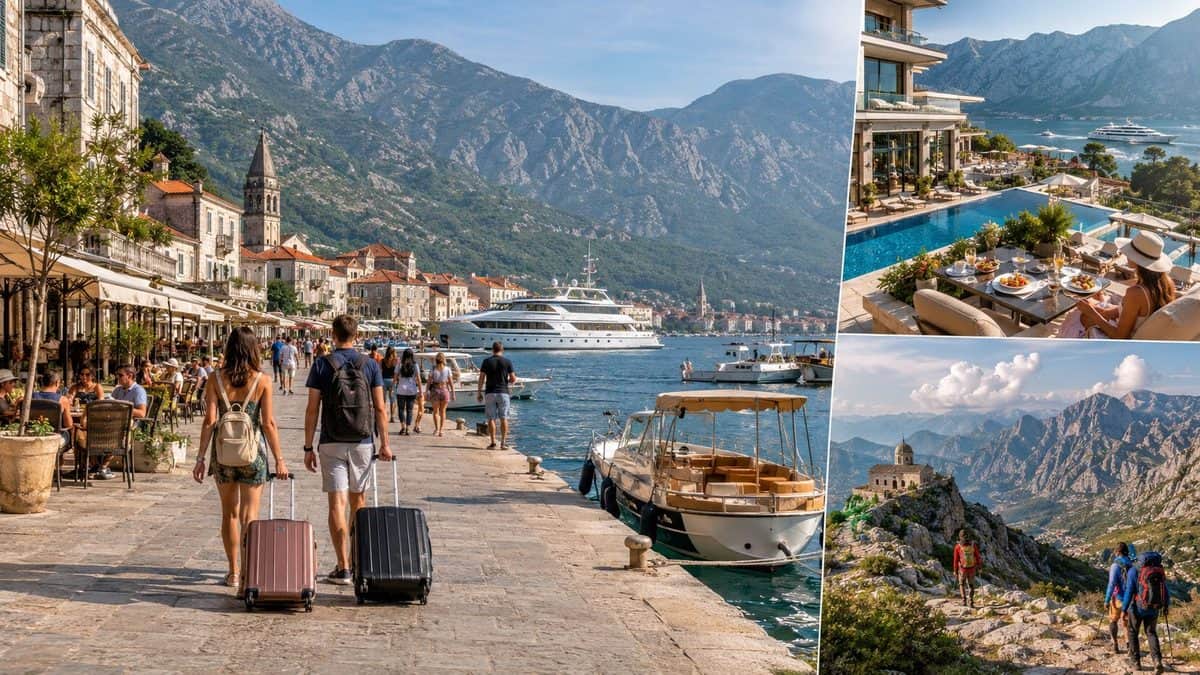
According to the Central Bank of Montenegro, the country made €465.05 million from tourism in the first six months of 2026, an 8.75% increase from the same period in 2025. This figure also indicates a jump of 82.34% from the first half of 2019. These numbers reveal the stability of the current season; travellers are observing sustained demand on the Adriatic Coast and the wider destinations. For these travellers, visitor numbers indicate a congested season. The intensity of the hiking season in Montenegro was apparent in the 244,754 arrivals to collective accommodation and 1,080,806 overnight stays in July 2026.
Montenegro Tourism Revenue Moves Into Record Territory
Montenegro has entered the final stretch of the 2026 summer season with unusually strong financial indicators. The €465.05 million tourism revenue figure gives the country a substantial lead over its pre-pandemic benchmark.
Advertisement
Advertisement
Kordić described the result as confirmation of what the sector had already experienced during summer. She said financial data now supports the perception of a stronger tourist season.
The minister made the remarks on 31 August 2026. She attributed the performance to Montenegro’s strengthening position in international tourism.
Advertisement
Advertisement
The comparison with 2019 is particularly significant. That year provides a useful pre-pandemic benchmark for European destinations.
Based on the reported 82.34% increase, first-half 2019 revenue stood at approximately €255.05 million. The 2026 result therefore represents an estimated additional €210 million over that benchmark.
Advertisement
Advertisement
The comparison with 2025 is also revealing. Applying the reported 8.75% increase gives an implied first-half 2025 figure of approximately €427.63 million.
| Tourism revenue indicator | First half 2026 | Change | Comparable period |
|---|---|---|---|
| Travel and tourism revenue | €465.05m | — | January–June 2026 |
| Year-on-year comparison | €465.05m | +8.75% | H1 2025 |
| Pre-pandemic comparison | €465.05m | +82.34% | H1 2019 |
| Implied H1 2025 revenue* | Approx. €427.63m | — | Derived from 2026 figure |
| Implied H1 2019 revenue* | Approx. €255.05m | — | Derived from 2026 figure |
The figures matter because tourism remains central to Montenegro’s external earnings. They also indicate that the country is generating considerably more tourism income than before the pandemic.
Advertisement
Advertisement
However, revenue should not be confused with visitor volume. Tourism income can rise through higher spending, longer stays, price changes and shifts towards higher-value accommodation.
That distinction is important for businesses assessing the quality of Montenegro’s recovery.
Visitor Demand Is Holding Firm Through Summer
Revenue growth has arrived alongside strong physical tourism indicators. Montenegro’s Statistical Office, MONSTAT, reported 244,754 tourist arrivals in collective accommodation during July 2026.
Those visitors generated 1,081,249 overnight stays. The figures cover hotels, resorts, hostels, motels and other collective accommodation establishments.
Advertisement
Advertisement
The July result came after a strong spring and early-summer period. In May, collective accommodation recorded 169,877 arrivals and 506,256 overnight stays.
Foreign visitors accounted for 86.3% of May overnight stays. That proportion underlines Montenegro’s continuing dependence on international demand.
The concentration on the coast remains pronounced. In May, seaside resorts accounted for 88.2% of collective-accommodation overnight stays.
That pattern reflects Montenegro’s enduring Adriatic appeal. Yet it also highlights one of the country’s structural challenges.
A tourism economy heavily concentrated around coastal summer demand remains exposed to seasonality. Extending stays into spring, autumn and winter can therefore improve resilience.
Montenegro is increasingly promoting that broader proposition. The national tourism organisation markets coastal experiences alongside mountains, national parks, adventure travel and cultural destinations.
Advertisement
Advertisement
Its official visitor platform describes Montenegro as a year-round destination. It also promotes experiences ranging from the Bay of Kotor and Adriatic coast to mountain towns and national parks.
Montenegro Tourism Revenue Tells A Bigger Story
The latest revenue figure is more meaningful when viewed against Montenegro’s post-pandemic trajectory.
The country suffered an extraordinary tourism shock during the pandemic. International travel restrictions sharply reduced arrivals, accommodation demand and tourism earnings.
Recovery followed as European travel reopened. However, the sector has faced a more complicated environment since then.
Higher operating costs, changing traveller behaviour and geopolitical uncertainty have altered the competitive landscape. Montenegro has therefore needed to convert visitor growth into stronger economic value.
The 2026 revenue figures suggest progress on that front.
Advertisement
Advertisement
| Measure | What it indicates for the sector |
|---|---|
| €465.05m H1 revenue | Strong tourism earnings during the first half |
| +8.75% year-on-year | Continued growth despite a higher comparison base |
| +82.34% versus 2019 | Substantial improvement over the pre-pandemic benchmark |
| 1.08m July overnight stays | Strong summer accommodation demand |
| 86.3% foreign share in May | International visitors remain crucial |
| 88.2% May coastal share | Tourism remains strongly concentrated on the Adriatic |
The industry should nevertheless avoid treating revenue growth as the sole measure of success.
Higher receipts can coexist with rising costs. Accommodation operators, restaurants, transport companies and activity providers all face their own margin pressures.
For destination managers, the more useful question is whether additional tourism spending spreads through the wider economy.
That includes rural accommodation, inland attractions, cultural sites, outdoor activities and local food producers.
Montenegro has already been seeking to broaden its tourism offer. Government-backed initiatives have also focused on improving hotel energy efficiency and strengthening the quality of tourism infrastructure. In July, the government said more than €2.2 million in grants had supported hotel energy-efficiency improvements.
Coastal Demand Still Dominates The Picture
For travellers, Montenegro’s strongest proposition remains its compact combination of sea, mountains and heritage.
Advertisement
Advertisement
The country’s geography allows visitors to combine several experiences within relatively short distances. A holiday can move from the Bay of Kotor to mountain landscapes within the same trip.
The official tourism organisation lists 117 beaches and 52 kilometres of beaches. It also highlights five national parks and major mountain and canyon landscapes.
That diversity creates opportunities beyond conventional beach tourism.
Kotor and the wider Bay of Kotor continue to attract cultural and cruise-related demand. Budva remains a major leisure centre. Ulcinj offers a different coastal experience with long sandy beaches.
Further inland, Durmitor, Biogradska Gora, Lovćen, Skadar Lake and Prokletije provide a contrasting tourism proposition.
For travellers, that means the revenue boom does not necessarily require choosing the busiest coastal locations.
Advertisement
Advertisement
Visitors seeking better value can consider shoulder-season travel. They can also combine coastal stays with inland excursions.
What The Numbers Mean For Travellers
The revenue surge does not mean every visitor will face dramatically higher prices. Tourism income reflects the entire sector and does not directly measure hotel rates.
Nevertheless, strong demand can affect availability during peak periods. Travellers planning summer trips should therefore expect popular coastal accommodation to remain competitive.
Advance booking becomes particularly useful for July and August. The same applies to car hire, airport transfers and popular excursions.
Travellers can also reduce pressure on their budgets by considering May, June, September or October.
Those months can offer a different balance between weather, availability and demand. They also give visitors more opportunities to explore inland areas without the intensity of the peak summer period.
Advertisement
Advertisement
The official national tourism organisation provides practical information covering accommodation, travel planning, visa information, safety and destination advice.
Montenegro Pushes Beyond A Summer-Only Model
The next test for Montenegro will be whether strong summer earnings can support a more balanced tourism economy.
The government has increasingly emphasised coordination between tourism authorities, local organisations and other institutions. In July, officials said the first five months had produced growth in both arrivals and overnight stays.
The government also reported an 8% increase in tourist-tax revenue through 17 June. That provides another indication of improving tourism activity.
There is also evidence of stronger performance in key regional markets.
Montenegro’s national tourism organisation reported that arrivals from Serbia increased 9% during the first four months of 2026. Overnight stays from that market rose 20%.
Advertisement
Advertisement
That is important because regional markets can provide relatively resilient demand. They also support road-based and short-break tourism.
At the same time, Montenegro continues to compete for longer-haul and higher-spending European travellers.
The strategic opportunity lies in combining both groups. Regional visitors can support volume, while premium and experiential tourism can strengthen average spending.
Travel Businesses Need More Than Visitor Growth
For hotels, tour operators and destination businesses, the latest figures offer encouragement. Yet the data also raises a more demanding question about capacity.
Montenegro must ensure that rising demand does not overwhelm infrastructure during peak months. Roads, airports, water systems, waste management and coastal public spaces all face seasonal pressure.
Service quality also becomes more important as destination expectations rise.
Advertisement
Advertisement
The government has previously stressed coordinated management of the tourist season. That includes cooperation among national and local tourism bodies, police and other public institutions.
Sustainability is becoming equally important.
Montenegro’s official tourism strategy increasingly presents the country through nature, responsible travel and year-round experiences. That approach can help spread visitor demand geographically.
It can also reduce dependence on a short coastal peak.
For investors, the opportunity may therefore extend beyond conventional seaside accommodation. Wellness, adventure tourism, rural stays, gastronomy and mountain experiences could gain strategic importance.
A Strong Season Raises The Stakes
Montenegro’s €465.05 million first-half tourism revenue is more than another seasonal statistic. It signals that the destination has moved well beyond its pre-pandemic financial baseline.
Advertisement
Advertisement
The 82.34% increase over 2019 is especially striking. Meanwhile, the 8.75% annual increase shows that momentum continued despite an already stronger base.
The next challenge is turning that momentum into durable tourism growth.
Montenegro must broaden demand beyond the peak Adriatic summer. It must also improve value, infrastructure, sustainability and visitor distribution.
For travellers, the message is equally clear. Montenegro remains highly sought after, particularly during the summer months. Yet its strongest advantage may lie in exploring beyond the busiest coastal hotspots.
The 2026 figures suggest a destination entering a more mature phase. The opportunity now is to make that growth broader, longer and more valuable.
Key Takeaways For Travel Businesses And Visitors
| Area | 2026 signal | Practical significance |
|---|---|---|
| Tourism revenue | €465.05m in H1 | Strong financial performance |
| Year-on-year growth | 8.75% | Momentum remains positive |
| Growth since 2019 | 82.34% | Major post-pandemic expansion |
| July arrivals | 244,754 | Strong peak-season demand |
| July overnight stays | 1,081,249 | High accommodation utilisation |
| Foreign demand | 86.3% of May overnights | International markets remain vital |
| Coastal concentration | 88.2% of May overnights | Summer and seaside demand dominate |
| Serbia market | Arrivals +9%; overnights +20% in H1 period | Regional demand remains important |
FAQs About Montenegro Tourism Revenue
Why has Montenegro tourism revenue surged in 2026?
Montenegro tourism revenue reached €465.05 million in the first six months of 2026. According to data cited by Tourism Minister Simonida Kordić, that represents an 8.75% increase over the same period in 2025 and an 82.34% increase over the first half of 2019.
Advertisement
Advertisement
How much tourism revenue did Montenegro generate in the first half of 2026?
Montenegro generated €465.05 million from travel and tourism during January–June 2026. The figure was reported by Tourism Minister Simonida Kordić, citing Central Bank of Montenegro data.
How does Montenegro’s 2026 tourism revenue compare with 2019?
First-half 2026 tourism revenue was 82.34% higher than the corresponding period in 2019. That makes the pre-pandemic comparison particularly significant for assessing the strength of Montenegro’s tourism recovery.
Is Montenegro tourism revenue higher than in 2025?
Yes. Tourism revenue during the first six months of 2026 was 8.75% higher than during the same period of 2025. The increase indicates that Montenegro continued to build momentum despite already strong tourism demand.
Is Montenegro having a record tourism season in 2026?
Tourism Minister Simonida Kordić has described the ongoing 2026 season as record-breaking. Revenue data and strong accommodation figures provide evidence of substantial activity during the year.
How many tourists visited Montenegro in July 2026?
Montenegro’s collective accommodation sector recorded 244,754 tourist arrivals in July 2026. Those visitors generated approximately 1.08 million overnight stays, according to MONSTAT.
Which part of Montenegro attracts the most tourists?
The Adriatic coast remains Montenegro’s dominant tourism region. Coastal destinations such as Kotor, Budva, Tivat, Bar and Ulcinj attract substantial summer demand, while mountain and inland destinations provide opportunities for year-round tourism.
Does Montenegro rely heavily on foreign tourists?
Yes. International visitors account for the overwhelming majority of tourism activity in collective accommodation. In May 2026, foreign tourists generated 86.3% of overnight stays, highlighting the importance of international markets.
Advertisement
