
United Airlines Dubai Flights Grounded Until March 2027, Disrupting Key US Travel Link

Published
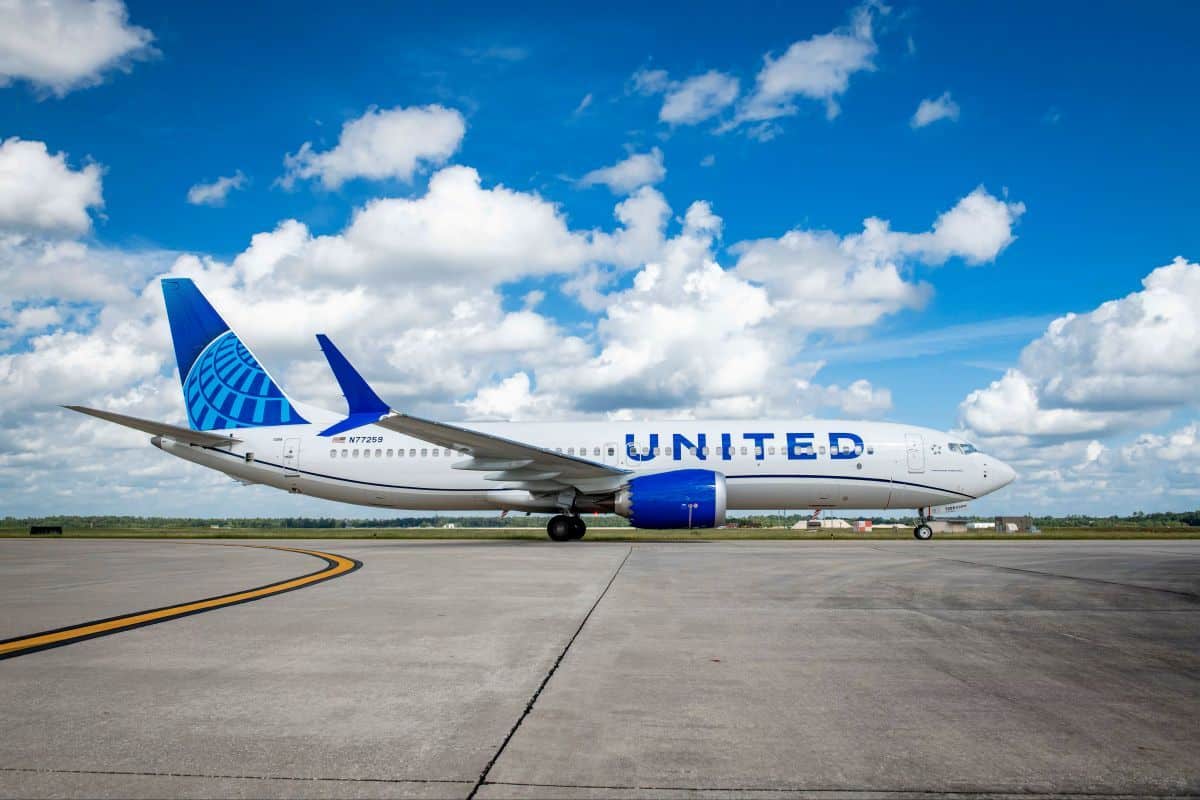
United Airlines Dubai flights from Newark to Dubai will remain suspended until at least March 27, 2027, extending a major interruption to one of the world’s most important international travel markets. The airline had planned to restore its daily nonstop service on October 24, 2026, but has now abandoned that winter restart amid continuing security concerns across the Middle East. The decision means passengers who had expected direct connectivity between New York and Dubai this winter must consider alternative carriers and routings.
The prolonged suspension follows the wider regional conflict that disrupted Middle Eastern aviation throughout 2026. United suspended its Dubai service in February after escalating tensions forced airlines to reassess routes and airspace exposure. Although Dubai International Airport has since restored its operating capacity, carriers continue to make separate decisions about when their own services can safely and reliably return.
Advertisement
Advertisement
United Extends Newark-Dubai Suspension
United Airlines has postponed the return of its daily Newark-Dubai service until March 2027, keeping a strategically important transatlantic-Gulf connection out of its network for the entire winter season. The airline had previously scheduled flights to resume from October 24, 2026, but customers booked on affected services between October 24 and March 27 can now seek full refunds. The revised timetable remains subject to further operational changes if regional conditions deteriorate.
The route connected Newark Liberty International Airport with Dubai International Airport, providing a direct link between the New York metropolitan market and one of the Gulf’s dominant aviation hubs. United’s decision does not mean Dubai International has closed or that the city has become inaccessible to American travellers. Instead, it demonstrates how airlines can maintain a cautious stance even after an airport and national aviation system have restored normal operating capacity.
Advertisement
Advertisement
The distinction is important for travellers planning winter holidays, business trips or onward journeys through Dubai. Dubai remains open and highly connected, but the availability of individual international routes can change according to security assessments, airspace conditions and airline network strategy.
Advertisement
Advertisement
Regional Conflict Changed The Calculation
The immediate background to the suspension stretches back to February 2026, when escalating military tensions across the Middle East triggered significant disruption to commercial aviation. Airlines faced airspace closures, altered flight paths and rapidly changing operating conditions, forcing several carriers to suspend or reduce services across the region. United subsequently kept its Dubai route grounded rather than immediately restoring the service when conditions improved.
One incident illustrated the potential operational risks. United Flight 164 was travelling from Newark towards Dubai in March when it was forced to turn back after regional airspace restrictions followed an Israeli attack on Iran. The episode demonstrated how a flight destined for Dubai can become vulnerable to developments occurring well beyond the UAE’s borders.
For long-haul airlines, such uncertainty carries considerable operational consequences. A carrier must consider aircraft routing, fuel requirements, crew positioning, diversion options and insurance exposure before restoring a regular service. Therefore, an airport’s reopening does not automatically translate into an airline’s immediate return.
Dubai Remains A Global Aviation Powerhouse
United’s decision is particularly significant because Dubai remains one of the world’s strongest international aviation markets. Dubai International handled 95.2 million guests in 2025, marking a record annual result and reinforcing its position as the world’s leading international passenger hub. The airport connected Dubai with 291 destinations across 110 countries through 108 international carriers.
The United States also remains an important market for Dubai’s aviation sector. DXB recorded approximately 3.3 million passengers linked to the US market during 2025, placing America among the airport’s largest country markets. That scale explains why the prolonged absence of a major US carrier matters despite the continued presence of other airlines.
Advertisement
Advertisement
Dubai’s tourism figures reinforce the same picture. The emirate welcomed 19.59 million international overnight visitors in 2025, compared with 18.72 million in 2024, representing growth of around 5%. The latest United decision therefore comes against a backdrop of strong underlying demand rather than a collapse in Dubai’s tourism market.
Dubai Aviation And Tourism At A Glance
| Indicator | Latest figure | Significance |
|---|---|---|
| DXB annual guests, 2025 | 95.2 million | Record passenger volume |
| International overnight visitors to Dubai, 2025 | 19.59 million | Strong tourism demand |
| DXB US-linked passenger traffic, 2025 | 3.3 million | Major American market |
| DXB destinations | 291 | Extensive international connectivity |
| Countries connected | 110 | Broad global reach |
| International carriers | 108 | Deep airline presence |
| Planned United return | March 27, 2027 | Winter suspension extended |
The figures underline a crucial point for travel businesses and consumers. United is delaying its route because of regional operating risk, not because Dubai lacks international demand. That difference will influence how the industry interprets the suspension and how other airlines respond.
Dubai Recovered Faster Than Some Airlines
Dubai’s airport infrastructure has demonstrated considerable resilience during the regional disruption. Between February 28 and April 30, Dubai Airports reported handling around six million guest journeys and more than 32,000 aircraft movements despite severe constraints affecting regional aviation.
UAE airspace capacity subsequently returned to normal levels, allowing airlines to rebuild schedules and restore connectivity. However, the recovery of national aviation infrastructure did not compel every airline to reinstate its suspended services immediately. Carriers continue to evaluate the security environment through their own operational and commercial frameworks.
That explains the apparent contradiction facing travellers. Dubai International can operate normally while an individual airline continues to suspend its route. The airport’s ability to handle aircraft is only one component of the wider decision-making process.
Advertisement
Advertisement
For airlines, reliability matters almost as much as safety. A route that can technically operate but faces repeated cancellations, diversions or restrictions may still prove commercially impractical during a period of uncertainty.
US Advisory Complicates Travel Planning
The US government’s travel guidance adds another layer to the situation. The US Department of State currently places the United Arab Emirates under a Level 3: Reconsider Travel advisory, citing risks associated with terrorism and armed conflict.
The advisory also highlights the possibility of drone and missile attacks and warns that the continuing regional conflict can disrupt commercial aviation. Such guidance does not constitute a blanket prohibition on travel, but it can influence traveller confidence, corporate travel policies and airline risk assessments.
For consumers, the warning reinforces the need to look beyond ticket prices when planning a Dubai trip. Travellers should examine airline cancellation rules, travel insurance exclusions, connection arrangements and government advisories before committing to non-refundable bookings.
The situation also demonstrates why travel insurance requires careful scrutiny. Policies can treat war, terrorism, government warnings and airline cancellations differently, meaning travellers should not assume that every disruption linked to geopolitical events will automatically qualify for reimbursement.
Advertisement
Advertisement
Emirates Offers The Strongest Alternative
Travellers who still need to reach Dubai have several options, with Emirates providing the most prominent alternative from the United States. The Dubai-based carrier maintains nonstop services from multiple American gateways, allowing passengers to bypass the suspended Newark-United connection.
The Emirates-United partnership also provides additional flexibility for some travellers. The two carriers have an extensive commercial relationship designed to connect their networks, giving passengers access to onward destinations beyond the airlines’ individual route maps.
Emirates operates services linking Dubai with major US gateways including Chicago, Houston and San Francisco, among others. United’s wider domestic network can then provide onward connections for eligible itineraries, although travellers should always check the exact operating carrier and ticket conditions before booking.
Options For US Travellers
| Traveller starting point | Possible alternative | Main advantage | Key consideration |
|---|---|---|---|
| New York metropolitan area | Emirates via another US gateway | Access to Dubai without waiting for United | May require additional positioning |
| Chicago | Emirates nonstop | Direct Dubai connectivity | Check frequency and fare availability |
| Houston | Emirates nonstop | Strong Gulf connectivity | Schedule changes remain possible |
| San Francisco | Emirates nonstop | Established Dubai service | Longer journey from East Coast markets |
| United frequent flyers | Emirates-United partnership | Potential network benefits | Verify fare and mileage conditions |
| Flexible travellers | Compare Gulf and European hubs | More routing choices | Connections may increase journey time |
The practical advantage of alternative carriers is significant. Travellers do not necessarily need to postpone a Dubai trip simply because United has delayed its return. However, they should expect fares, schedules and connection times to differ from the original Newark itinerary.
Other Airlines Are Taking A Cautious Approach
United’s decision does not stand alone within the international airline industry. Several foreign carriers have also delayed the restoration of Middle Eastern services as they continue to assess the region’s security and operational environment.
Advertisement
Advertisement
Air Canada has indicated a January 2027 return for Dubai services, while Virgin Atlantic has pushed its return towards the 2027 winter season. Other European airlines have also maintained restrictions or delayed certain Middle Eastern routes during different stages of the crisis.
This pattern suggests that the industry is confronting a broader network-management problem. Airlines are not simply deciding whether Dubai is open; they are assessing whether they can sustain predictable schedules around a region where geopolitical conditions can change rapidly.
That consideration becomes particularly important for long-haul operations. A carrier planning a daily service needs confidence that aircraft, crews and passengers can move through the network consistently for months rather than days.
United’s Tel Aviv Move Offers A Clue
United’s treatment of Dubai becomes even more interesting when compared with its approach to Israel. The airline suspended its San Francisco-Tel Aviv route in late February amid the conflict but subsequently resumed Newark-Tel Aviv service on September 8.
The contrast suggests that United is not applying a single regional policy to every destination. Instead, the carrier appears to be assessing routes individually according to security conditions, operational feasibility and network priorities.
Advertisement
Advertisement
That distinction could prove important when evaluating the eventual Dubai return. The March 2027 date should therefore be viewed as a planned target rather than an unconditional guarantee that service will definitely resume on that day.
Airlines frequently adjust international schedules when security conditions change. United could bring the route back earlier if circumstances improve, or postpone it again if risks remain elevated.
What The Suspension Means For Tourism
The direct effect on Dubai tourism should remain relatively contained because the destination retains extensive international connectivity. Dubai’s enormous aviation network gives travellers numerous alternatives, while Emirates continues to provide substantial access from the US.
However, the suspension still matters for the broader tourism ecosystem. Fewer nonstop options can affect fares, corporate travel patterns and the convenience of journeys between the United States and the UAE.
Business travellers may feel the impact particularly strongly because nonstop services save valuable time. Leisure travellers, meanwhile, may respond by comparing different US gateways or shifting travel dates to periods when capacity becomes more attractive.
Advertisement
Advertisement
Travel companies should also monitor the situation closely. Tour operators, destination-management companies and hotel businesses depend on predictable airlift, particularly during peak international travel periods.
Dubai’s Demand Remains Resilient
The available tourism data provides little evidence that Dubai’s international appeal has weakened fundamentally. The emirate’s 2025 visitor total rose to nearly 19.6 million, while DXB established another annual passenger record.
The US market remains especially valuable because American travellers tend to support higher-value leisure, business and luxury tourism segments. Dubai’s hotel, retail, entertainment and meetings infrastructure also gives it a diversified tourism base rather than dependence on a single visitor market.
Nevertheless, aviation connectivity remains an essential part of that success. A prolonged reduction in nonstop capacity from the United States could affect the distribution of American visitors across carriers and travel seasons.
The likely outcome is therefore not a sudden tourism downturn, but a redistribution of passengers among competing airlines and connecting hubs. Emirates stands to benefit most directly from that shift, while other carriers could also capture passengers seeking alternatives.
Advertisement
Advertisement
Travellers Need More Flexible Plans
Passengers holding United reservations should first check the status of their booking through the airline. Travellers affected by the cancellation period covering October 24, 2026 through March 27, 2027 should review their refund eligibility and any rebooking options offered.
Those making new reservations should pay close attention to the operating carrier. Codeshare arrangements can make an itinerary appear to belong to one airline while another carrier actually operates the flight.
Connection times also deserve greater attention during periods of uncertainty. A longer buffer at a major hub can reduce the risk of missing an onward flight if the first sector encounters disruption.
Travellers should also retain copies of booking confirmations, insurance documents and airline communications. Keeping these records accessible can simplify claims and rebooking discussions if schedules change unexpectedly.
Essential Checks Before Booking
| Check | Why travellers should care |
|---|---|
| Operating airline | Determines who controls the actual flight |
| Refund terms | Protects passengers if schedules change |
| Travel insurance | Coverage varies for conflict-related disruption |
| Government advisory | Provides current official security guidance |
| Connection time | Longer buffers can reduce missed connections |
| Transit airport | Regional developments can affect connecting routes |
| Fare flexibility | Useful if plans change suddenly |
| Airline alerts | Provides early notice of schedule changes |
These precautions are particularly relevant for international journeys through the Middle East. Flexibility has become a practical travel asset, especially when geopolitical conditions can alter aviation schedules with little warning.
Advertisement
Advertisement
The Route’s Future Still Matters
United’s delayed return should not be interpreted as a permanent withdrawal from Dubai. The airline continues to maintain its broader commercial relationship with Emirates, while Dubai remains too important to global aviation for the market to be overlooked.
The March 27, 2027 target also coincides with the beginning of the spring travel period. If regional conditions stabilise, the timing could allow United to restore the route ahead of another major summer travel season.
Yet the airline has already demonstrated that schedules can move when conditions change. Travellers should therefore treat March 2027 as the current planned resumption date rather than a firm promise.
For the aviation industry, the larger lesson is clear. Geopolitical risk can reshape international networks long after airports themselves have returned to normal operations.
A Winter Without United’s Dubai Link
United Airlines’ decision leaves the Newark-Dubai market without its planned winter nonstop service, but it does not isolate Dubai from American travellers. Emirates and other international carriers continue to provide substantial connectivity, while Dubai International remains one of the world’s busiest and best-connected aviation hubs.
Advertisement
Advertisement
The more important story is the growing gap between airport recovery and airline confidence. Dubai has restored capacity and continues to attract millions of international visitors, yet carriers remain cautious about restoring every suspended route. That caution reflects the wider uncertainty surrounding Middle Eastern airspace and security.
For travellers, the message is straightforward. Dubai remains accessible, but plans should allow for alternative routings, flexible tickets and possible schedule changes. For airlines and tourism businesses, United’s decision is another reminder that resilient connectivity now depends as much on geopolitical stability as passenger demand.
Advertisement
