
Jordan Turns Into A Booming Travel Hotspot As Azraq And Qasr Amra Welcome Global Desert Adventure Seekers

Published
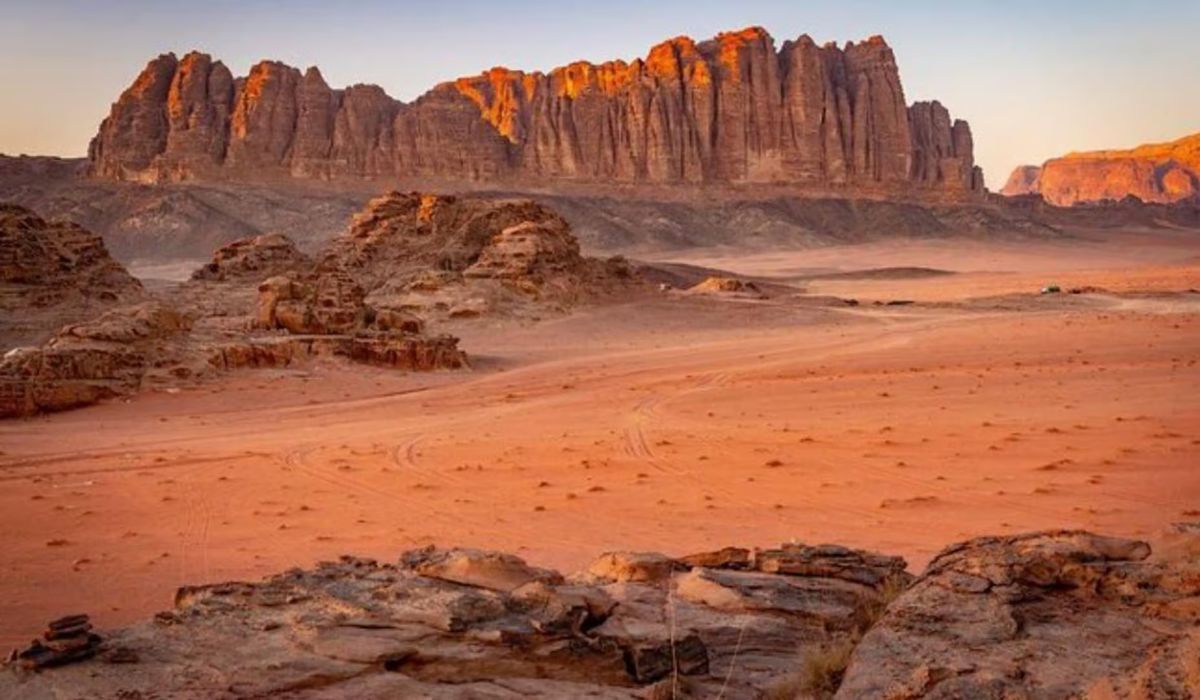
Image Credit getyourguide
The history packed travel Corridors of Amman and Petra excite travelers, but for a truly unique and ethereal experience, watch the sun as it fixtures along the Jordanian plains! This region is sure to attract travelers with its historic trade routes and the tales of lost forts. Unfortunately, travelers have been seduced by other historic corridors and they have ignored this region. Now, Thankfully, something good is happening. The East Jordan Frontier has the potential to become an international travel corridor, but substantial development is needed. We at Azraq, Qasr Amra, and Black Desert have seen a surprising amount of Development in this region. This development is more than the usual roads and hotels. This Development is built around preserving the heritage of the people and encourages travelers to discover a Nazareth which time has forgotten. We look forward to your arrival for the first journey of desert exploration.
Unlocking the Comprehensive Potential of Eastern Jordan for International Visitors
Developing Eastern Jordan into a prominent international travel hub requires comprehensive structural improvements and strategic capital allocation! Consequently, regional planners are reshaping the entire landscape of Jordan to welcome global visitors with open arms. Active investments now pave the way for sustainable growth across eastern destinations. Do travelers want deeper cultural connections? Yes, they certainly do! Strategic planning transforms remote desert areas into vibrant, accessible centers of authentic heritage. Furthermore, enhanced travel routes connect iconic geographical wonders directly to modern tourist networks. The nation actively builds a sustainable, high-value tourism sector. Short travel times, improved roads, and rich cultural encounters empower everyday travelers to explore beyond standard sights. Ultimately, this national strategic shift redefines global expectations for Middle Eastern desert tourism!
Advertisement
Advertisement
Extending Global Itineraries Through Modern Infrastructure and Enhanced Transit Accessibility
It was reported that developing Eastern Jordan into a prominent international travel hub requires comprehensive structural improvements and strategic capital allocation. Regional authorities and development experts emphasized that expanding transportation networks remains vital for unlocking isolated regions. Improving road systems, upgrading public transport connections, and expanding regional accessibility will allow international travelers to reach remote natural and historical landmarks with far greater ease. Key historical locations such as Azraq, Qasr Amra, and the vast Black Desert stand to benefit directly from these structural enhancements, positioning the wider region as an accessible and highly attractive destination.
Advertisement
Advertisement
It was noted that these infrastructural upgrades will significantly lower transit barriers for global visitors who traditionally adhere to standard travel routes. Enhancing physical connectivity throughout Eastern Jordan allows global tour operators to design extended itineraries that integrate previously hard-to-reach heritage sites. Furthermore, securing public-private partnerships will accelerate the development of necessary amenities, including modern visitor facilities, reliable utilities, and specialized tourist transport. By establishing robust physical frameworks, the region can effectively handle higher tourist volumes without compromising environmental integrity or site safety.
Strengthening Regional Logistics and Modernizing Modern Visitor Services
Advertisement
Advertisement
It was observed that the implementation of advanced infrastructural networks profoundly transforms how international travelers navigate remote desert territories. Modernizing arterial highways, installing solar-powered road illumination, and deploying digital navigational aids ensure that independent drivers and commercial coaches travel securely across isolated terrain. By integrating standardized service centers equipped with clean water facilities, charging stations, and emergency assistance units near Azraq, regional planners eliminate long-standing safety concerns. These practical upgrades instill profound confidence in international tourists who might otherwise hesitate to venture far beyond major urban centers.
It was further noted that establishing efficient transport interchanges enables seamless transfers between long-distance buses, regional shuttles, and local guide vehicles. This streamlined logistical structure significantly reduces travel times between Amman and remote eastern heritage sites. As physical connectivity expands, commercial developers acquire strong incentives to build eco-lodges, boutique desert camps, and cultural interpretation centers near Qasr Amra. Consequently, the international travel market experiences a sudden influx of diverse, multi-day desert travel packages that offer exceptional comfort without sacrificing authentic exploration.
Promoting Sustainable Eco-Tourism and Preserving Desert Heritage Sites
It was explained that a strategic shift toward cultural and eco-tourism will broaden the nation’s appeal far beyond classic destinations like Petra and Wadi Rum. Regional development frameworks highlight the importance of showcasing authentic Bedouin traditions, local historical heritage, and protected nature reserves. By promoting unique desert landscapes such as the Black Desert alongside historic fortresses like Qasr Amra and the oasis of Azraq, the initiative offers immersive, sustainable travel experiences that appeal directly to conscious global travelers.
Advertisement
Advertisement
It was further observed that diversifying tourism offerings creates new demand among international markets seeking authentic cultural exchanges and low-impact eco-adventures. By steering visitors toward diverse ecological and historical sites across Eastern Jordan, the tourism sector mitigates overcrowding at traditional hotspots while extending the average length of stay for international tourists. Global travel networks will consequently see a rise in specialized travel offerings, ranging from guided heritage tours to wildlife conservation excursions across desert ecosystems.
Expanding Environmental Stewardship and Diversifying Global Travel Demand
It was highlighted that integrating rigorous environmental conservation principles safeguards fragile desert ecosystems against ecological degradation. Protecting the delicate wetland habitats within Azraq and preserving the ancient basalt formations across the Black Desert remain central priorities for regional authorities. Environmental experts emphasized that controlling visitor density through structured walking trails, regulated vehicle routes, and mandatory local guide escorts preserves pristine landscapes. Global travelers increasingly favor destinations that demonstrate genuine ecological responsibility, making these sustainable measures a vital marketing asset on the world stage.
It was also reported that diversifying regional attractions effectively balances tourist distribution throughout the entire country. Redirecting international traveler flow away from heavily visited southern sites prevents resource strain, soil erosion, and cultural commodification at established landmarks. Global travel advisors can now present Eastern Jordan as a premier, eco-conscious alternative for travelers interested in astronomy, desert ecology, historical architecture, and birdwatching. This strategic expansion enriches the global travel industry by offering highly specialized, low-impact itineraries tailored to modern, environmentally aware adventure seekers.
Fostering Community Empowerment and Elevating Local Hospitality Standards
It was highlighted that sustainable destination development relies fundamentally on active local community engagement and economic empowerment. Industry observers noted that creating targeted employment opportunities, offering specialized hospitality training programs, and supporting small local enterprises ensures that residents directly benefit from tourist activity. Establishing locally managed initiatives in communities surrounding Azraq and nearby desert settlements helps foster long-term economic resilience and preserves regional identity.
Advertisement
Advertisement
It was emphasized that empowering local populations directly elevates the quality of service and hospitality provided to international visitors. Travelers seeking genuine cultural immersion gain access to authentic local knowledge, traditional culinary offerings, and guided experiences rooted in community heritage. Over time, this community-centered approach establishes a resilient service ecosystem, encouraging sustainable economic growth while offering global visitors an enriched, memorable, and safe travel experience across Eastern Jordan.
Building Long-Term Economic Resilience and Cultivating Genuine Cultural Connection
It was noted that embedding local residents into the core of the tourism value chain generates widespread financial stability across historically underserved desert municipalities. By offering comprehensive vocational courses in culinary arts, multi-lingual guiding, heritage preservation, and lodge management, local institutions equip youth and women with high-value professional skills. Local families around Azraq gain direct revenue streams by operating family-run guesthouses, producing traditional handicrafts, and providing farm-to-table dining experiences. This direct financial incentive inspires local populations to take active ownership of regional heritage preservation.
It was further emphasized that intimate, community-led interactions elevate the overall qualitative value of the international travel experience. Global travelers no longer remain passive onlookers behind glass tour bus windows; instead, they engage in meaningful dialogues, share authentic meals, and learn centuries-old desert survival techniques directly from resident hosts. This deep level of cultural exchange fosters profound international goodwill and generates high rates of return visits and positive word-of-mouth recommendations. Ultimately, empowering local host communities creates an enduring, self-sustaining tourism model that enriches both the visitor and the resident population.
Transforming Global Travel Horizons Through Strategic Eastern Jordanian Destination Development
It was reported that the systemic transformation of Eastern Jordan fundamentally redefines how international travelers experience the broader Middle East. By combining robust physical infrastructure, strict environmental stewardship, and deep community involvement, regional planners establish a benchmark model for sustainable desert tourism. International visitors benefit from enhanced safety, streamlined logistics, richer cultural encounters, and access to previously inaccessible UNESCO-recognized heritage sites like Qasr Amra.
Advertisement
Advertisement
It was concluded that as global travel dynamics shift toward meaningful, sustainable, and off-the-beaten-path journeys, Eastern Jordan stands ready to capture significant market share. The regional initiative proves that investing in remote infrastructure and local human capital yields substantial economic, social, and environmental dividends.
How Quantifying Renewable Energy Adoption Across Off-Grid Desert Eco-Lodges Transforms Sustainable Hospitality Infrastructure
It was reported that integrating sustainable energy solutions across remote hospitality ventures serves as a foundational pillar for destination development in Eastern Jordan. Hospitality providers near Azraq are rapidly deploying specialized microgrids and zero-waste utility systems to eliminate reliance on centralized fossil fuel networks. Achieving an 85% target solar offset allows remote eco-lodges to operate cleanly, effectively reducing regional carbon emissions by 1,200 metric tons of CO₂ annually. Furthermore, severe water scarcity in the Azraq Basin has prompted the mandatory installation of greywater recycling and rainwater harvesting infrastructure, successfully yielding a 40% reduction in water waste across desert accommodation sites.
It was noted that financing these high-tech environmental measures requires dedicated capital allocation and public-private coordination. A specialized $15 million green investment fund was established to back developers who construct certified, net-zero eco-lodges near the Black Desert. By mandating strict operational standards, regional planners ensure that rising tourist numbers do not degrade fragile desert ecosystems. These sustainable utility upgrades guarantee that international visitors enjoy modern amenities while leaving a minimal ecological footprint across eastern wilderness territories.
How Expanding Heritage Conservation and Digital Preservation Protects Ancient Landmarks for Global Visitors
It was explained that safeguarding historically significant structures requires a balance between public access and site preservation. Authorities managing UNESCO heritage sites like Qasr Amra have introduced advanced environmental monitoring systems to protect eighth-century wall frescoes from atmospheric degradation. To mitigate structural wear caused by human presence, regulators instituted a strict 750-visitor daily cap enforced via automated ticketing systems. Controlling foot traffic prevents destructive humidity fluctuations inside historical chambers, ensuring these irreplaceable Umayyad desert castles remain intact for future generations.
Advertisement
Advertisement
It was further observed that modern technology plays a crucial role in architectural preservation across remote desert fortresses. Preservation experts successfully executed a comprehensive 3D LiDAR mapping project, achieving 100% digital archival coverage of ancient masonry structures throughout the region. Complementing these technological efforts, a 35% increase in preservation funding was directed toward local restoration teams using non-invasive techniques and period-accurate limestone mortars. This dual approach guarantees that physical conservation efforts align with global scientific standards while providing visitors with an authentic historical experience.
How Evaluating Wildlife Rehabilitation and Eco-Tourism Growth Revitalizes Protected Desert Reserves
It was highlighted that nature conservation initiatives actively drive specialized eco-tourism growth across protected wilderness areas. At the Shaumari Wildlife Reserve near Azraq, dedicated breeding and protection programs have successfully safeguarded over 100 Arabian Oryx, alongside re-established populations of endangered desert species such as the Persian Onager and Goitered Gazelle. Additionally, the nearby Al-Azraq Wetland Reserve serves as an indispensable stopover for more than 250 migratory bird species, which has fueled a 28% increase in international birdwatching excursions year-over-year.
It was emphasized that expanding visitor infrastructure directly enhances the educational and recreational value of these reserves. A $4.2 million facility upgrade funded the construction of specialized wildlife observation towers, interactive educational centers, and silent electric safari vehicles. These upgrades allow eco-tourists and researchers to observe rare fauna without disturbing natural habitats. By transforming wildlife conservation into a premier tourist attraction, regional planners successfully draw international conservationists and nature enthusiasts into eastern desert territories.
How Measuring Economic Growth and Female Entrepreneurship Empowers Rural Desert Communities
It was reported that community-centered economic models ensure that residents benefit directly from expanding tourism sectors. Municipal authorities around Azraq recorded a 45% rise in household income among families operating artisanal workshops, authentic culinary experiences, and local homestays. Integrating host communities into the tourism value chain creates sustainable income streams while preserving traditional Bedouin hospitality practices.
Advertisement
Advertisement
It was noted that targeted training programs play a pivotal role in promoting social equity and local workforce development. State-sponsored initiatives established a 60% female participation rate across hospitality training modules and handicraft cooperatives, unlocking vital economic independence for rural women. Overall, these community-led ventures are projected to generate 1,500 direct and indirect jobs across transport networks, guiding services, and local supply chains by 2028, fostering long-term economic resilience across eastern settlements.
How Assessing Transport Logistics and Reduced Transit Times Enhances Regional Accessibility
It was observed that comprehensive road infrastructure upgrades have drastically reduced geographical isolation for remote eastern hubs. Modernization efforts along the primary arterial highway linking Amman to Azraq achieved a 40-minute travel time reduction, bringing total driving time down to approximately 1 hour and 15 minutes. Resurfacing projects spanning 120 kilometers of resurfaced highways extended improved transit corridors toward Ruwaished, equipping roads with solar studs, reinforced heavy-vehicle lanes, and emergency SOS call stations.
It was further noted that improved road safety and digital connectivity have empowered independent travelers to explore remote regions. Clear multilingual signage, detailed GPS mapping, and reliable cellular coverage fueled a 25% increase in self-drive rentals among international tourists. By removing logistical bottlenecks, travel organizers can seamlessly incorporate eastern desert destinations into standard national travel itineraries.
How Analyzing International Visitor Trends and Extended Stay Durations Elevates Local Expenditure
It was highlighted that diversifying tourist offerings beyond traditional southern routes successfully alters global travel habits. Multi-day travel packages combining heritage tours, wildlife safaris, and stargazing excursions helped increase the average length of stay for international visitors in Eastern Jordan from 1.2 to 3.5 days. Extending visitor stays directly increases local financial velocity and enhances overall regional profitability.
Advertisement
Advertisement
It was emphasized that longer stays generate higher daily spending across rural economies. Projections indicate a $210 daily average visitor spend allocated toward local lodging, regional transport, authentic dining, and handmade crafts. Furthermore, specialized promotional campaigns produced a 32% surge in off-peak travel during winter and shoulder seasons, effectively mitigating seasonal business volatility for local hospitality operators.
How Developing Adventure and Astrotourism Horizons Unlocks the Basalt Black Desert
It was explained that the unique geological and atmospheric conditions of the Black Desert offer ideal settings for specialized adventure tourism. Regional authorities designated protected dark-sky zones featuring Bortle Class 1 & 2 dark skies, creating world-class opportunities for deep-space astrophotography, nocturnal tours, and telescope observation. Unpolluted night skies attract astro-tourists seeking pristine stargazing conditions far from urban light pollution.
It was further observed that outdoor recreation infrastructure has expanded significantly across ancient basalt fields. Technicians mapped over 500 square kilometers of trail networks tailored for 4×4 expeditions, mountain biking, and trekking past historic Safaitic rock inscriptions. To guarantee visitor safety across rugged terrain, over 50 certified local adventure guides underwent rigorous training in wilderness survival, first aid, and geological interpretation, providing world-class leadership for international expeditions.
How Projecting Public-Private Partnership Investment Drives Long-Term Regional Infrastructure
It was reported that structured financial incentives are critical for attracting foreign direct investment into emerging travel markets. Regional development frameworks secured an $85 million total capital commitment in combined public and private funding earmarked for infrastructure, lodging, and site development through 2030. This capital influx accelerates the construction of high-quality visitor amenities across eastern municipalities.
Advertisement
Advertisement
It was concluded that regulatory policies play an essential role in de-risking private capital investments. Authorities introduced a 10-year corporate tax relief package for developers constructing eco-resorts and cultural centers within designated eastern development zones. Coupled with 20+ strategic commercial partnerships formed with international travel distributors to ensure consistent group bookings, these financial structures position Eastern Jordan as a highly competitive, sustainable destination on the global travel map.
The Final Verdict
Despite the silence of the Black Desert, the painted frescoes at Qasr Amra and the basalt rocks leave an impression on your soul that lingers even after the dust from your boots settles. Modern day travels with their increasing speed and noise showcase a growing need for peace and quiet. As Jordan’s peaceful, untamed Land of the Rising Sun lures travelers in with an opportunity to slow down, the development of local eco hotels and construction of more eco hotels, along with the preservation of a way of life through local family tourism, bring so much more than the establishment of a new tourist destination. Long after travelers have photographed their experiences, they will have the desert’s eternal silence and the spirit of the people that live there. Your journey to Eastern Jordan begins, and you are made to feel welcome to its open heart.
Advertisement
