
Philippines Advances Cruise Future as Manila Terminal Plan Emerges and Puerto Princesa Expands Travel Gateway

Published
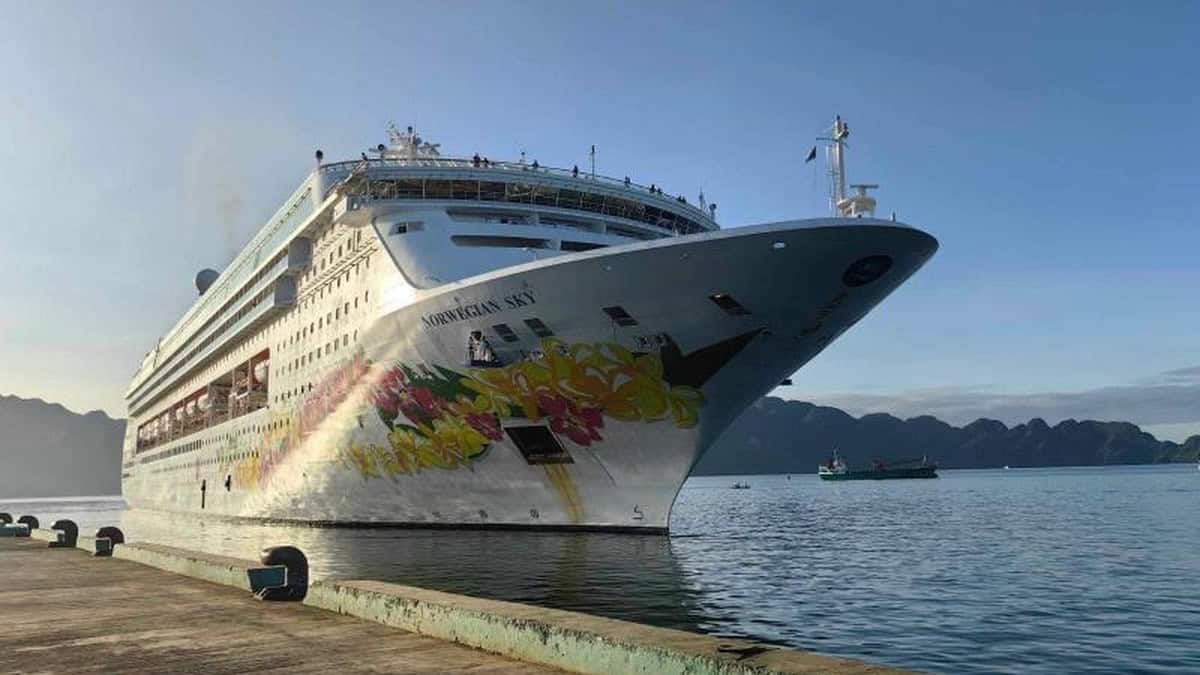
The Philippines is entering a more consequential phase of cruise development. Manila recorded six turnaround calls by April 2026, compared with two during 2025, while nationwide PPA ports handled 70 cruise calls and 165,340 passengers in the first half of 2026. More significantly, the Cruise Tourism Development Committee has agreed to adopt a resolution establishing a dedicated cruise terminal in Metro Manila. At the same time, Puerto Princesa remains an established cruise gateway with an active port-expansion programme, strengthening the case for a Philippine cruise model built around a Manila homeport and multiple island destinations.
The Philippines Cruise Story Is No Longer Just About More Ship Calls
The most important development in Philippine cruise tourism in 2026 is not simply the rise in passenger numbers. It is the increasingly visible separation of two functions within the country’s cruise network: Manila as a potential homeport and turnaround gateway, and regional ports such as Puerto Princesa as destination nodes capable of supporting multi-stop Philippine itineraries.
According to the Philippine Ports Authority H1 2026 performance update, PPA-managed ports registered 70 cruise ship calls between January and June 2026, a 4.48 per cent increase over the same period of 2025. Those calls accounted for 165,340 cruise passengers. Cruise activity spread beyond Manila into Ilocos Sur, Ilocos Norte, Pangasinan, Palawan and other itinerary points, with some vessels making several Philippine calls during a single voyage.
That detail is important. A cruise market becomes more strategically valuable when a country is not merely one stop between foreign ports but can support embarkation, disembarkation and several domestic destination calls within the same deployment.
Advertisement
Advertisement
The Philippines is now showing evidence of both sides of that equation.
| Verified cruise indicator | Official figure | What it means for the market |
|---|---|---|
| Cruise passengers in 2019 | 213,765 | Pre-pandemic benchmark |
| Cruise passengers in 2023 | 88,080 | Early post-pandemic recovery base |
| Cruise passengers in 2024 | 150,903 | Strong recovery acceleration |
| Cruise passengers in 2025 | 226,247 | Above the 2019 benchmark |
| Cruise calls, H1 2026 | 70 | 4.48% higher year on year |
| Cruise passengers, H1 2026 | 165,340 | Already 73.1% of the entire 2025 total |
| Manila turnaround calls by April 2026 | 6 | Three times the two recorded during 2025 |
| Approximate capacity of ships handled at Manila cruise terminal | 1,000–3,000 passengers | Existing facility already serves medium-to-large cruise vessels |
The historic passenger figures and Manila operational data come from PPA’s April 2026 cruise update, while the first-half figures come from its latest national performance report.
Advertisement
Advertisement
A calculation using those official figures shows that the 165,340 passengers reported for only the first six months of 2026 equal about 73.1 per cent of the full 2025 volume. They are also equivalent to roughly 77.3 per cent of the entire 2019 pre-pandemic total.
The 2025 figure of 226,247 was itself about 5.8 per cent above 2019.
These comparisons do not constitute a forecast for full-year 2026. Cruise deployment is seasonal, and passenger counts should not simply be doubled. They do, however, demonstrate the scale at which the 2026 season has begun.
Manila’s Turnaround Growth Is More Important Than A Conventional Port Call
A conventional cruise call allows passengers to leave a vessel temporarily, visit local attractions and return before departure.
A turnaround operation does considerably more.
Passengers finish one cruise or start another in the city. That creates requirements for baggage handling, transfers, immigration processing, provisioning, passenger staging and coordination with hotels, airports, ground operators and transport companies.
Advertisement
Advertisement
According to the PPA cruise tourism update on Manila turnaround operations, the Eva Macapagal Cruise Terminal in Manila had handled six turnaround calls by April 2026, compared with two turnaround calls during 2025. PPA also reports that the terminal accommodates medium-to-large cruise vessels carrying approximately 1,000 to 3,000 passengers.
PPA has identified covered walkways, improved gangways and restroom improvements among passenger-facility enhancements at the Manila terminal.
For travel companies, the distinction between a transit call and a turnaround is commercially significant. A transit passenger may purchase a shore excursion for several hours. A passenger beginning or ending a voyage in Manila can generate demand for an airport transfer, an overnight stay, meals, pre-cruise sightseeing, post-cruise extensions and domestic connections.
No current official PPA dataset reviewed for this report provides a verified per-passenger economic value for Manila turnaround guests. Assigning a spending figure would therefore be speculative. The broader tourism supply chain affected by homeporting, however, is materially wider than that generated by a short port-of-call visit.
Dedicated Metro Manila Cruise Terminal Resolution Creates A Stronger Policy Signal
The most important infrastructure signal comes not from PPA’s general port master-planning procurement, but from a separate government cruise-policy process.
According to the Maritime Industry Authority cruise development announcement of 18 March 2026, the reconstituted Cruise Tourism Development Committee agreed to adopt a resolution establishing a dedicated cruise terminal in Metro Manila during its first high-level meeting held in Pasay City on 17 March.
Advertisement
Advertisement
The committee’s work sits within the National Cruise Tourism Development Plan 2023–2028. Its identified areas of attention include cruise-port modernisation and development, maritime safety and security, operational efficiency, streamlined processes, environmental safeguards and priority cruise destinations.
This is the clearest official basis for reporting that a dedicated Metro Manila cruise-terminal concept has moved into the national policy agenda.
It is equally important to define what the announcement does not establish.
The MARINA release does not provide a final terminal location, construction contract, approved capital cost, engineering design, completion date or opening date. The resolution therefore represents an important policy-stage development, rather than evidence that a new terminal is already under construction.
That distinction protects travellers and the trade from interpreting an infrastructure intention as an operational commitment.
PPA’s ₱37.89 Million Master-Planning Contract Is Real But Should Not Be Misreported As A Manila Cruise-Terminal Contract
Another government record adds an important layer to the infrastructure story, but it must be handled carefully.
Advertisement
Advertisement
PPA’s current project register lists Consultancy Services for the Conduct of Feasibility Studies and Formulation of Master Plans at Selected Ports. The official project page records a project cost of ₱37,886,040, a Notice of Award dated 24 February 2026, a contract dated 11 March 2026, and accompanying Notice to Proceed documentation. The listed contractor is Science & Vision for Technology, Inc./Syconsult Inc./JV.
According to the official PPA project record for the selected-port feasibility and master-planning consultancy, this work has therefore moved beyond a simple open procurement into an awarded consultancy with a contract and Notice to Proceed listed by PPA.
However, the public project page reviewed for this report identifies only selected ports. It does not name Manila, and it does not identify the consultancy itself as the design or feasibility study for the proposed dedicated Metro Manila cruise terminal.
That is an important fact-checking point.
The Metro Manila cruise-terminal resolution and the ₱37.89 million PPA master-planning consultancy are both genuine official developments, but the available government records do not justify presenting them as the same project.
For the travel industry, this means the dedicated terminal should currently be treated as a policy-backed infrastructure direction, not as a confirmed construction project arising from that consultancy.
Advertisement
Advertisement
Puerto Princesa Strengthens The Destination Side Of The Philippine Cruise Network
While Manila provides the strongest evidence of rising homeport functionality, Puerto Princesa illustrates the other half of the emerging model.
PPA specifically lists Puerto Princesa among the authority-managed ports that have consistently received cruise ships, alongside Currimao, Salomague and Coron.
The city is particularly relevant because PPA also maintains an active Puerto Princesa Port Expansion Project Phase I within its project records. The authority’s project index lists Notice of Award, Notice to Proceed and contract documentation for the expansion.
Official PPA procurement records put the Phase I contract at approximately ₱597.03 million, following an approved budget of approximately ₱599.15 million. The scope includes work to expand and upgrade the port operational area, including marine and landside infrastructure.
A further current indicator appears in PPA Port Management Office Palawan’s 2026 procurement planning. The programme contains an Environmental Compliance Certificate application for the Puerto Princesa Phase I expansion, budgeted at ₱807,600 within calendar year 2026.
The Puerto Princesa project is not identified in these documents as a cruise-only expansion. It should therefore not be described as a dedicated cruise-terminal project.
Advertisement
Advertisement
Its relevance comes from the combination of two verified facts: Puerto Princesa already receives cruise vessels, and its wider port infrastructure remains within an active expansion and environmental-compliance programme.
That makes the city a credible regional node in a cruise network increasingly dependent on capable secondary gateways.
Manila And Puerto Princesa Now Represent Different But Complementary Functions
| Location or programme | Verified status as of 6 October 2026 | Cruise-sector relevance | Important limitation |
|---|---|---|---|
| Eva Macapagal Cruise Terminal, Manila | Existing operating facility | Six turnaround calls by April; accommodates roughly 1,000–3,000-passenger vessels | Existing facility is not the same as the proposed new dedicated Metro Manila terminal |
| Dedicated Metro Manila cruise-terminal proposal | CTDC agreed to adopt an establishing resolution | Strongest official policy signal for a purpose-built capital-region cruise gateway | No final location, budget, construction timetable or opening date identified in the MARINA release |
| PPA selected-port feasibility/master-plan consultancy | Awarded; contract and NTP listed; ₱37.886 million | Shows broader port-planning activity is under way | Public PPA project page does not identify Manila or the Metro cruise project within its scope |
| Puerto Princesa Port Expansion Phase I | PPA project with award, NTP and contract documentation | Supports infrastructure at a city already receiving cruise calls | Expansion is not described as cruise-exclusive |
| Puerto Princesa Phase I ECC work | Included in the 2026 PMO Palawan procurement plan | Shows environmental-compliance work remains part of the port-development process | ECC work alone does not establish completion or cruise capacity |
| Coron, Alegria, Catagbacan and Balbagon | Identified by PPA as additional cruise-port developments | Broadens the geographical base for Philippine itineraries | Development stages and operating readiness differ by port |
The Information Gain Hidden Inside The H1 2026 Numbers
A closer examination of the official data reveals why the infrastructure discussion matters now.
PPA recorded 45.69 million total passenger movements across its port system during the first half of 2026. Cruise passengers at 165,340 therefore represent only about 0.36 per cent of that broader passenger figure when the two reported totals are compared.
That comparison should not be mistaken for a measurement of cruise tourism’s economic contribution. The datasets represent different types of passenger activity, and no conclusion about spending can be drawn from the ratio.
It does demonstrate something strategically important: cruise tourism is a relatively specialised component of an enormous national maritime passenger system.
Advertisement
Advertisement
That helps explain why purpose-built cruise infrastructure matters. Cruise passengers have different operational requirements from regular ferry and domestic maritime traffic. International border processing, coach staging, baggage flows, tour dispatch, turnaround operations and cruise-line servicing can place very different demands on a terminal.
PPA’s H1 figures also produce an average of 2,362 reported cruise passengers for each of the 70 recorded calls. Because some ships made several Philippine calls and passenger data may therefore reflect port movements rather than 165,340 entirely unique travellers, this number should be viewed as a traffic-intensity indicator rather than an average ship capacity.
The more revealing development is geographical. Multiple Philippine calls give cruise companies the possibility of selling the country as an itinerary rather than a single shore excursion.
Manila can perform the embarkation function. Palawan can provide a high-value destination component. Other ports can add cultural, heritage, nature and island experiences.
That network effect is potentially more important than any single terminal project.
Cruise Visa Waiver Adds An Operational Layer To The Homeport Strategy
Infrastructure alone cannot create a competitive cruise hub. Passenger processing must also work efficiently, particularly when ships carry travellers from markets whose nationals ordinarily require Philippine visas.
Advertisement
Advertisement
The Philippine Bureau of Immigration Cruise Visa Waiver guidelines cover visa-required foreign nationals entering as tourists aboard cruise ships or passenger vessels.
Eligible passengers can receive an authorised stay matching the cruise voyage within Philippine territory, up to a maximum of 14 days, provided the applicable conditions are met. Applications are handled through accredited Philippine tour operators, and the guidelines require submission at least 72 hours before the vessel’s scheduled departure from its last foreign port of origin.
The Bureau of Immigration also specifies that the Cruise Visa Waiver is non-convertible and non-extendable, with the passenger required to arrive and depart aboard the same cruise ship.
For cruise lines, DMCs and travel agencies, that makes immigration preparation an important component of itinerary execution. A more ambitious Manila homeport operation could increase the importance of accurate passenger manifests, advance visa-waiver processing and coordination between cruise operators and accredited Philippine partners.
Why This New Cruise Infrastructure Direction Matters To Travellers
The traveller benefit is not limited to larger terminals.
If Manila develops further as an embarkation and disembarkation point, international passengers could gain more cruise programmes that begin or finish inside the Philippines rather than requiring the country to remain an intermediate call from another Asian homeport.
Advertisement
Advertisement
That can create more practical opportunities to combine a cruise with a Manila city stay, a domestic flight, or a post-voyage holiday elsewhere in the archipelago.
A stronger Puerto Princesa and regional-port network could simultaneously support voyages that expose passengers to several Philippine destinations without forcing every movement through the capital.
There is also an important caution.
The dedicated Metro Manila cruise terminal remains at the resolution stage in the official material reviewed through 6 October 2026. Travellers should not interpret it as an announced opening or book future travel on the assumption that a new terminal will be operational by a particular date.
For now, operational planning must continue to rely on confirmed cruise-line schedules, existing terminal assignments and official port advisories.
Critical Operational Takeaways For Travel Agents And Tour Operators
- Treat Manila’s rising turnaround activity as the immediate commercial opportunity. Six turnaround calls had already been recorded by April 2026, making pre-cruise hotels, post-cruise accommodation, transfers and city programmes increasingly relevant.
- Do not advertise a new Metro Manila terminal as under construction. The verified government milestone is the CTDC decision to adopt an establishing resolution; the official MARINA source reviewed does not provide a construction timetable.
- Do not link the ₱37.886 million PPA master-planning consultancy directly to the Manila cruise-terminal proposal without additional documentation. The public PPA record identifies selected ports but does not name Manila.
- Build multi-port products around confirmed calls rather than assumed future capacity. Puerto Princesa already appears among PPA-managed ports consistently receiving cruise vessels, while other cruise-port projects remain at varying development stages.
- Check visa-waiver eligibility early. Visa-required cruise passengers handled through the applicable accredited tour-operator process can be subject to the 72-hour advance application requirement and 14-day maximum authorised stay.
- Maintain contingency plans for terminal and shore-operation changes. Infrastructure programmes, environmental approvals and individual port works can move at different speeds; itinerary marketing should remain anchored to confirmed vessel and terminal information.
- Avoid double-counting cruise growth. Some ships make several Philippine calls during one voyage, so national call and passenger statistics should not automatically be interpreted as entirely unique international visitors.
- Watch the Metro Manila terminal process separately from broader PPA planning activity. A future government release identifying a location, feasibility study, investment structure, procurement package or construction schedule would represent a materially new milestone.
Philippines Could Gain More From Cruise Tourism By Connecting A Homeport To An Island Network
The Philippine cruise market is approaching a strategic fork.
Advertisement
Advertisement
The country has already recovered beyond its pre-pandemic passenger benchmark. It registered 226,247 cruise passengers in 2025, compared with 213,765 in 2019, and another 165,340 passengers were reported during only the first half of 2026. Manila’s turnaround activity is expanding, while government cruise policy now includes a dedicated Metro Manila terminal resolution.
Yet the larger opportunity lies outside Manila alone.
A capital-region homeport becomes more attractive when ships can connect it with credible destinations elsewhere in the same country. Puerto Princesa, Coron, northern Luzon gateways and developing cruise ports give the Philippines an unusually broad geographical product from which to build that network.
Puerto Princesa is therefore more than a second city attached to the Manila story. It illustrates why the country’s cruise competitiveness will depend on balancing gateway infrastructure with destinations passengers actually want to visit.
The immediate industry question is no longer simply whether cruise traffic is returning.
It is whether the Philippines can convert rising calls into a coherent homeport-and-destination system in which Manila handles more cruise beginnings and endings while Puerto Princesa and other gateways deepen the experience between them.
Advertisement
Advertisement
As of 6 October 2026, the official evidence shows that this transition has begun, but it also establishes a clear line between ambition and delivery. Manila’s turnaround growth is already measurable. The dedicated Metro Manila terminal has a policy foundation but no published construction schedule in the source reviewed. Puerto Princesa has active wider port-development work, but that work should not be labelled cruise-exclusive.
That distinction makes the story stronger rather than weaker. It shows a Philippine cruise market moving beyond recovery statistics into the harder phase of building infrastructure, processing systems and destination networks capable of supporting a genuine Asian homeport role.
Advertisement
