
China Aligns with Russia and More as Thailand Visitor Surge Lifts Hotel Occupancy Above 70%

Published
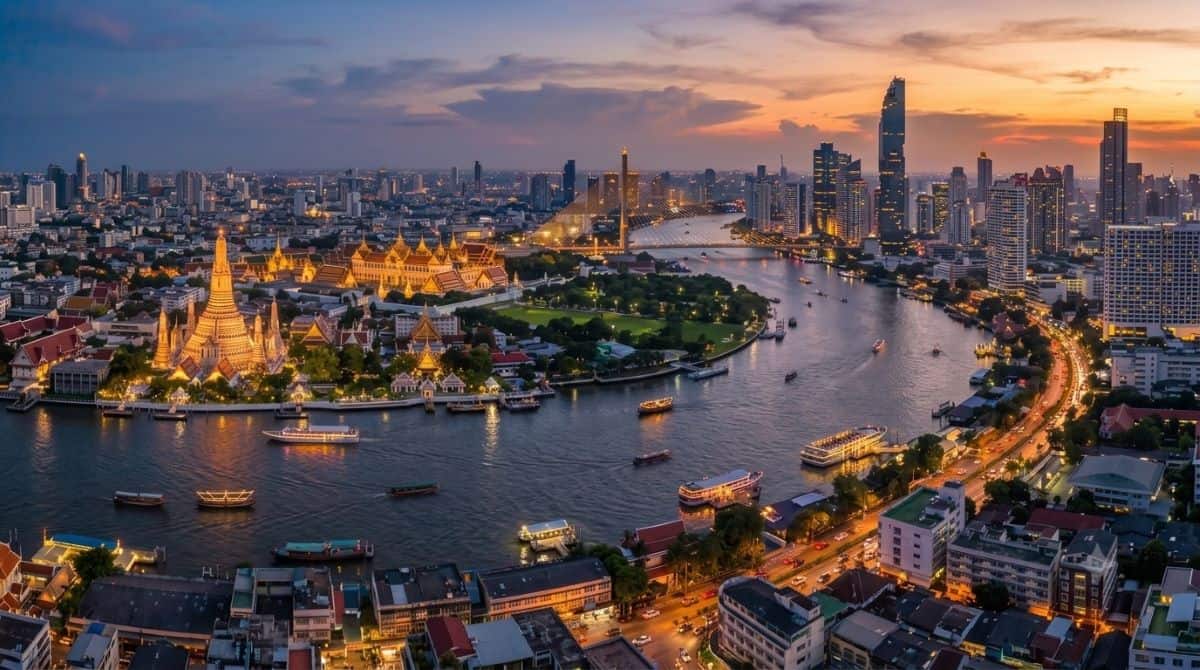
Image generated with Ai
Thailand’s tourism market is accelerating again, but the latest official data reveal a more complex picture than a simple rebound. International arrivals strengthened sharply in July 2026. National hotel occupancy climbed above 70%. China remained Thailand’s largest source market, while Malaysia, India, Russia and South Korea continued to supply substantial visitor demand. Yet hotel prices did not rise in step with occupancy. That matters for travellers.
Thailand is getting busier, but it is not becoming uniformly more expensive. Bangkok and southern Thailand are seeing the strongest room demand. Southern hotels are gaining more pricing power. Northern destinations still offer greater accommodation flexibility. Forward bookings remain softer than current occupancy levels suggest.
Advertisement
Advertisement
The result is a tourism market moving at different speeds across the country.
Thailand Tourism in 2026: The Key Numbers Travellers Should Know
| Indicator | Latest official figure |
|---|---|
| International arrivals in July 2026 | 2.546 million |
| National hotel occupancy | 70.05% |
| June hotel occupancy | 65.70% |
| July average room rate | THB1,796.89 |
| June average room rate | THB1,824.99 |
| Three-month forward-booking rate | 18.06% |
| Highest regional occupancy | Central Thailand: 72.40% |
| Strongest hotel pricing performance | Southern Thailand |
These figures show that Thailand’s recovery is not just about more people arriving. It is about where they travel, how early they book and whether hotels can turn stronger occupancy into higher revenue.
Advertisement
Advertisement
Thailand Visitor Arrivals Rebound in July, but the 38% Surge Needs Careful Reading
The Bank of Thailand’s tourism indicators show international arrivals rising from 1.842 million in June to 2.546 million in July 2026.
Advertisement
Advertisement
Taken directly, that produces a month-on-month increase of approximately 38.2%.
However, June’s visitor count was affected by incomplete reporting. A fuller Bank of Thailand estimate placed June arrivals at roughly 2.125 million.
Using that adjusted base, July’s increase was closer to 20%.
That remains a strong rebound.
The bigger point is that Thailand moved decisively higher after a softer second quarter. More international flight capacity, stronger long-haul activity, summer travel demand and improved domestic tourism all supported the July increase.
Advertisement
Advertisement
There is also an important year-on-year check.
July arrivals remained 2.48% below July 2025.
So the traveller takeaway is clear: Thailand is recovering strongly from June, but the market has not yet entered an uninterrupted boom.
China Still Leads Thailand Tourism as Five Markets Shape Nearly Half of Foreign Demand
Thailand welcomed 20.81 million international visitors by 29 August 2026.
Five markets accounted for approximately 46.3% of that total.
Advertisement
Advertisement
Thailand’s Largest International Visitor Markets
| Rank | Market | Arrivals | Share |
|---|---|---|---|
| 1 | China | 3,524,071 | 16.9% |
| 2 | Malaysia | 2,634,309 | 12.7% |
| 3 | India | 1,527,030 | 7.3% |
| 4 | Russia | 1,175,121 | 5.6% |
| 5 | South Korea | 765,842 | 3.7% |
China alone supplied almost one in six international visitors.
But Thailand’s biggest advantage is not simply the size of the Chinese market. It is the mix of countries driving demand.
Each major source market behaves differently.
- China drives large-scale regional leisure travel.
- Malaysia supports frequent short-haul and land-border tourism.
- India contributes family holidays, weddings, wellness and short breaks.
- Russia strengthens long-haul beach demand and winter travel.
- South Korea provides another major Northeast Asian visitor stream.
This market diversity helps Thailand generate demand across more months of the year.
China’s Thailand Travel Market Is Moving Beyond Pure Visitor Volume
China remains Thailand’s most influential overseas tourism market.
Advertisement
Advertisement
But Thailand is increasingly trying to attract a different type of Chinese visitor.
Tourism authorities are targeting:
- Families
- Wellness travellers
- Sports tourists
- Independent travellers
- Higher-spending visitors
- Travellers interested in culture and secondary destinations
This matters because Thailand is trying to reduce its dependence on a small number of heavily visited tourism centres.
If more Chinese travellers move beyond Bangkok, Pattaya and Phuket, spending could spread into regional destinations that traditionally receive less international demand.
That would change the competitive landscape for travellers too.
Advertisement
Advertisement
Smaller destinations could gain better air access, stronger hotel demand and more tourism investment, while major hotspots may face less concentrated pressure.
Malaysia, India and Russia Give Thailand Stronger Year-Round Tourism Demand
Malaysia is now Thailand’s second-largest visitor market.
Its strategic importance is unique because Malaysian travellers can reach Thailand by air, road and rail.
That gives southern destinations additional demand during weekends and public holidays, particularly around Hat Yai, Songkhla and other cross-border tourism areas.
India is also gaining influence.
Advertisement
Advertisement
Thailand is targeting more than 2.55 million Indian visitors in 2026, supported by demand for:
- Family holidays
- Destination weddings
- Wellness travel
- Golf
- Group trips
- Short leisure breaks
Russia adds another important layer.
Russian demand is especially valuable during periods when some Asian markets are outside their peak holiday season.
Together, these markets give Thailand something many destinations struggle to achieve: a more balanced tourism calendar built around different regional travel seasons.
Thailand Hotel Occupancy Rises Above 70%, but Regional Gaps Remain Wide
Thailand’s nationwide hotel occupancy rate increased from 65.70% in June to 70.05% in July.
Advertisement
Advertisement
That is a rise of 4.35 percentage points.
But national averages hide major differences.
Thailand Hotel Occupancy by Region
| Region | July occupancy | Average room rate |
|---|---|---|
| Central Thailand including Bangkok | 72.40% | THB2,015.96 |
| Southern Thailand | 71.65% | THB2,338.04 |
| Northeast Thailand | 67.74% | THB694.30 |
| Northern Thailand | 60.58% | THB1,323.09 |
Bangkok and central Thailand had the highest occupancy.
Southern Thailand followed closely.
Northern Thailand remained almost 12 percentage points below central Thailand.
Advertisement
Advertisement
This is why travellers should avoid treating Thailand as one single hotel market.
The country is effectively operating as several distinct accommodation markets at the same time.
Thailand Hotel Prices Fall Even as More Rooms Are Occupied
The most striking hotel trend is not occupancy.
It is pricing.
Thailand’s average room rate fell from THB1,824.99 in June to THB1,796.89 in July, even as hotel occupancy increased.
Advertisement
Advertisement
That represents a decline of about 1.5%.
The three-month forward-booking rate also slipped from 18.79% to 18.06%.
This tells travellers something important.
Hotels are filling more rooms, but the national market has not yet developed enough pricing power to push average rates sharply higher.
In practical terms, availability is tightening faster than prices are rising.
Advertisement
Advertisement
That can create opportunities for travellers who compare hotels carefully and remain flexible on neighbourhood, room type and travel dates.
Bangkok Is Busy, but Strong Hotel Competition Still Supports Traveller Choice
Bangkok and central Thailand recorded 72.40% occupancy, the highest regional level in July.
Yet average room rates declined to roughly THB2,015.96.
That combination suggests the capital’s vast hotel inventory is still placing pressure on pricing.
Bangkok benefits from several demand streams at the same time:
Advertisement
Advertisement
- International leisure travellers
- Domestic tourists
- Business visitors
- Meetings and conferences
- Events
- Short urban breaks
Because the capital has accommodation across almost every price category, travellers may still find significant differences between properties even when overall occupancy is high.
That makes rate comparison especially valuable in Bangkok.
Phuket and Southern Thailand Show the Strongest Signs of Hotel Pricing Power
Southern Thailand delivered one of the most commercially impressive performances in July.
Occupancy reached 71.65%.
The region’s average room rate increased from approximately THB2,309.65 to THB2,338.04.
Advertisement
Advertisement
Forward bookings also edged higher.
This is important because southern Thailand achieved something the national market did not: stronger occupancy and stronger pricing at the same time.
That makes the region the clearest hotel-yield leader in the July data.
For travellers heading to destinations such as Phuket, Krabi, Phang-nga and Surat Thani, the implication is straightforward.
Last-minute availability may become more difficult during high-demand periods, while the chances of significant late price reductions may be lower than elsewhere.
Advertisement
Advertisement
Northern Thailand Could Offer Greater Flexibility for Travellers Seeking Value
Northern Thailand recorded 60.58% occupancy, well below Bangkok and southern Thailand.
That lower occupancy does not mean the region lacks demand.
It means the accommodation market currently has more available capacity.
For travellers considering Chiang Mai and other northern destinations, that can translate into:
- More hotel choice
- Greater booking flexibility
- Better opportunities for longer stays
- Potentially stronger value
- Less accommodation pressure than in southern beach markets
This is also where Thailand’s wider tourism strategy becomes relevant.
Advertisement
Advertisement
Encouraging travellers to explore northern and secondary destinations could help distribute tourism income more evenly while reducing pressure on the country’s biggest hotspots.
Late-August Visitor Data Show Thailand’s Recovery Is Still Volatile
July’s rebound did not turn into a straight upward line.
Thailand welcomed 491,456 international visitors between 23 and 29 August, down 11.67% from the previous week.
The movement was heavily influenced by source-market timing.
Chinese arrivals declined as the summer holiday period approached its end. Malaysian traffic strengthened around public holidays.
Advertisement
Advertisement
This shows why weekly visitor figures can change rapidly even when the wider tourism market remains healthy.
Thailand’s largest source countries follow different:
- School holiday calendars
- Public holidays
- Weather preferences
- Aviation schedules
- Seasonal travel patterns
For travellers, that volatility can create sudden changes in flight prices, hotel availability and crowd levels.
Thailand Tourism Is Shifting from Bigger Numbers to Better Tourism Value
Thailand’s tourism strategy is increasingly focused on value over volume.
That shift is important because arrival growth alone does not guarantee stronger tourism economics.
Advertisement
Advertisement
A more sustainable model depends on:
- Higher visitor spending
- Longer stays
- Better hotel yields
- Greater demand for secondary destinations
- More tourism revenue reaching local businesses
- Less concentration in overcrowded hotspots
- Stronger experiences rather than simply larger visitor totals
Thailand’s revised 2026 outlook projects approximately 30 million to 34 million international visitors, alongside around 206 million domestic trips.
The July hotel data explain why that policy direction matters.
A destination can fill more rooms without increasing room prices.
It can receive more visitors without generating proportionally stronger revenue.
Advertisement
Advertisement
And it can experience crowded hotspots while other regions still have substantial spare capacity.
The next phase of Thailand’s recovery will therefore depend less on how many travellers arrive and more on where they go, how long they stay and how much value their trips create.
What Thailand’s Visitor Surge Means for Travellers Planning a Trip
China aligns with Russia and more major source markets in driving Thailand’s tourism momentum, while national hotel occupancy above 70% confirms that demand has strengthened.
But the market is not moving uniformly.
Travellers should read the data region by region.
Advertisement
Advertisement
- Bangkok: high occupancy, but strong hotel competition still supports price choice.
- Southern Thailand: strong occupancy, improving room rates and firmer forward demand.
- Northern Thailand: more accommodation capacity and greater flexibility.
- Malaysia-driven southern gateways: sensitive to weekends and public holidays.
- China-dependent destinations: more exposed to school-holiday and seasonal travel shifts.
The most important insight is not simply that Thailand is welcoming more visitors.
It is that Thailand is becoming busier in very different ways depending on the destination.
That distinction will increasingly shape the traveller experience.
Those heading to Phuket, Krabi or other southern hotspots may need to plan earlier. Bangkok visitors should compare rates carefully rather than assuming high occupancy means high prices. Travellers looking for flexibility and value may find stronger opportunities in northern and secondary destinations.
Thailand’s tourism recovery is real.
Advertisement
Advertisement
But for travellers, the best decisions will come from looking beyond the headline visitor surge and understanding where demand, pricing and hotel availability are actually moving fastest.
In conclusion, China aligns with Russia and more key international markets as Thailand visitor surge lifts hotel occupancy above 70%, confirming that the country’s tourism recovery is gaining real momentum. Stronger arrivals from China, Malaysia, India, Russia and South Korea are filling more rooms, especially in Bangkok and southern Thailand. However, softer national room rates and modest forward bookings show that higher occupancy has not created uniform price pressure. For travellers, Thailand is busier, but destination choice, seasonality and booking timing still determine value and availability.
Advertisement
