
Greece Tourism Hits 7.43 Million August Accommodation Arrivals as Short-Stay Properties Race Ahead of Hotels

Published
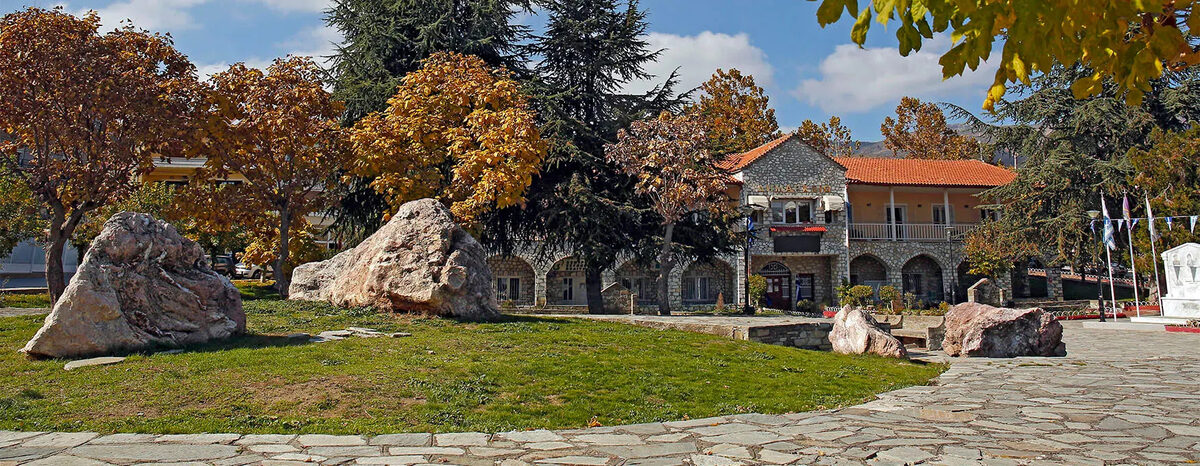
Greece’s accommodation sector recorded 7,429,931 guest arrivals and 34,685,695 overnight stays in August 2026, as international demand and faster growth in short-stay properties supported another summer increase. Provisional figures released by the Hellenic Statistical Authority, ELSTAT, on 20 October show arrivals rising 2.6% and overnight stays increasing 2.1% compared with August 2025.
The strongest growth came from rented rooms and other short-stay accommodation establishments. Hotels and campsites also gained business, but at a slower rate. Overseas residents remained central to demand, accounting for more than three-quarters of arrivals and 84% of overnight stays. The overall average stay held at 4.7 days.
Greece’s August tourism performance at a glance
The latest figures show growth across both main accommodation groups, with a clear difference in pace. Hotels and campsites retained the larger share of activity, while short-stay establishments expanded more quickly.
| Measure | August 2026 | Change from August 2025 |
|---|---|---|
| Total accommodation arrivals | 7,429,931 | +2.6% |
| Total overnight stays | 34,685,695 | +2.1% |
| Average length of stay | 4.7 days | Unchanged |
| Hotel and campsite arrivals | 5,245,620 | +1.5% |
| Hotel and campsite overnight stays | 24,413,380 | +1.1% |
| Short-stay accommodation arrivals | 2,184,311 | +5.2% |
| Short-stay accommodation overnight stays | 10,272,315 | +4.6% |
Source: ELSTAT, August 2026 provisional data.
Advertisement
Advertisement
The accommodation totals cover guest arrivals at establishments, including domestic visitors. A person staying at several properties can be counted at each one. They therefore measure accommodation activity across Greece and should be kept separate from statistics counting inbound travellers at the country’s borders.
International guests provide most of the growth
Non-residents accounted for 76.7% of all accommodation arrivals, leaving residents of Greece with 23.3%. The international contribution was even stronger for overnight stays: non-residents generated 84%, compared with 16% for residents. Both markets expanded. Non-resident arrivals increased 2.9% and their overnight stays rose 2.3%. Resident arrivals grew 1.7%, while their nights increased 1.2%. International demand therefore grew faster on both measures, reinforcing its importance to accommodation businesses during August.
Advertisement
Advertisement
The difference becomes clearer when the additional activity is examined. Calculations from ELSTAT’s tables show that non-residents generated approximately 85% of the extra arrivals and 91% of the additional overnight stays recorded compared with August 2025. Across the surveyed market, the increases amounted to 187,663 arrivals and 723,006 nights.
These categories follow a visitor’s usual residence. They do not divide guests solely by passport or nationality. A foreign national living in Greece can fall within the resident category, while a Greek national living abroad can be classified as a non-resident.
Short-stay accommodation grows more than three times as fast
The contrast between accommodation types is one of the clearest findings in the August release. Short-stay arrivals grew 5.2%, against 1.5% for hotels and campsites. Overnight growth reached 4.6%, compared with 1.1% in the hotel and campsite group. Using the published rounded percentages, the short-stay segment’s arrival growth rate was about 3.5 times the hotel and campsite rate. Its overnight growth rate was about 4.2 times as high. These comparisons describe the speed of growth, rather than the relative size of the two markets.
Hotels and campsites continued to accommodate substantially more guests. However, calculations from the released totals show that short-stay establishments generated around 57% of the additional arrivals and 62% of the extra overnight stays, despite representing less than a third of total activity.
For accommodation distributors and tour operators, that combination shows a larger hotel market alongside a short-stay segment growing faster. The ELSTAT category covers registered holiday and other short-stay establishments, including rented rooms. The release does not identify booking platforms or establish that guests moved from hotels to privately advertised homes.
Longer international stays strengthen overnight demand
International guests also stayed longer. Non-residents averaged 5.1 days, compared with 3.2 days for residents. That is a difference of 1.9 days, or approximately 59% when calculated from the rounded averages.
Advertisement
Advertisement
The pattern remained consistent across accommodation types:
- Hotels and campsites: Non-residents averaged 5.1 days, while residents averaged 3.2 days.
- Short-stay accommodation: Non-residents averaged 5.2 days, compared with 3.3 days for residents.
All these averages were unchanged from August 2025. Greece’s increase in overnight stays therefore accompanied higher guest volumes, while the published average duration remained stable. The gap between resident and non-resident stays also explains why international visitors represented a larger share of nights than of arrivals.
Tourism receipts reach €13.5 billion before August
The accommodation figures follow a strong financial performance during the first seven months of 2026. According to the Bank of Greece, travel receipts reached €13.518 billion between January and July, an increase of 12% from the same period in 2025. Inbound traveller flows rose 8.6% to 20.043 million, equivalent to approximately 20.04 million visitors. Average expenditure per trip increased 2.9%. Both the rise in traveller numbers and higher spending supported receipts, with revenue growth exceeding visitor growth by 3.4 percentage points.
July alone showed how these measures can move differently. Inbound flows declined 3.1%, but travel receipts increased 7.2% to €4.722 billion. Average expenditure per trip rose 10%, supporting revenue despite the reduction in arrivals. The central bank’s figures describe cross-border travel services. They provide the financial context for Greece’s tourism sector, while ELSTAT measures activity within accommodation establishments. The different coverage and reporting periods mean the two sets cannot be combined directly to calculate August spending per guest.
Chania, Mykonos and the Peloponnese show regional differences
International airport arrivals also varied across Greek destinations. INSETE’s August 2026 statistical bulletin reports the following performance for January–July 2026:
| Gateway or airport grouping | International arrivals, January–July 2026 | Year-on-year change |
|---|---|---|
| Athens International Airport | Approximately 4.9 million | −0.8% |
| Chania, Crete | Approximately 960,000 | +11.3% |
| Mykonos | Approximately 317,000 | +9.5% |
| Peloponnese grouping: Araxos and Kalamata | Approximately 154,000 | +15.2% |
Source: INSETE, August 2026 statistical bulletin.
Advertisement
Advertisement
The comparison places regional growth within a defined reporting period. Chania, Mykonos and the Peloponnese grouping recorded increases, while Athens registered a small decline in the international arrivals measure.
These are airport passenger arrivals, rather than accommodation check-ins or total airport passenger traffic. The Peloponnese figure covers the airports grouped by INSETE, rather than every visitor entering the wider region. Together, the figures show that national tourism growth was accompanied by differing results across selected gateways.
Rental standards, visitor fees and island limits shape operations
Greece’s tourism expansion takes place within an existing framework of accommodation standards and measures to manage visitor flows. These rules predate the August statistics and form part of the operating environment for property managers, travel companies and local tourism businesses. Minimum standards for short-term rental properties under Law 5170/2025 took effect on 1 October 2025. The Tourism Ministry identifies requirements covering approved primary-use premises, natural light, ventilation, air conditioning, liability insurance, electrical and pest-control documentation. Compliance inspections involve the ministry and the Independent Authority for Public Revenue, AADE.
The ministry’s September 2025 announcement also set out restrictions on new short-term rental registrations in Athens’ first, second and third municipal districts for 2025 and 2026. These measures address accommodation standards and the balance between visitor accommodation and housing availability.
Seasonal climate resilience fees add another distinction between accommodation categories. The AADE decision applying from 1 January 2025 sets the following April–October charges, covering the August reporting period:
- Hotels: €2 for one- and two-star properties, €5 for three-star hotels, €10 for four-star hotels and €15 for five-star hotels.
- Furnished tourist rooms and apartments: €2.
- Short-term rental properties: €8, rising to €15 for detached homes exceeding 80 square metres.
The charges apply per daily use of a room or apartment, rather than per guest. Lower seasonal rates apply from November to March. The separate categories also underline why furnished tourist rooms and short-term rental properties should not automatically be treated as identical products.
Advertisement
Advertisement
Santorini provides a specific example of visitor-capacity management. The Municipal Port Fund of Thira’s published policy for 2025 and 2026 sets a maximum of 8,000 cruise passengers visiting the island on the same day. For 2026 planning, expected passenger numbers are calculated at 100% of each ship’s capacity.
Adopted in September 2024, the policy links cruise scheduling to destination capacity, orderly port operations and better management of visitor flows. It establishes a planning limit; the accommodation statistics do not measure its implementation or environmental outcomes.
What the August figures mean for the travel trade
For businesses selling Greece, the report presents three distinct features: continued growth in accommodation demand, a dominant international customer base and faster expansion in registered short-stay accommodation. Hotels and campsites remain the larger segment, while overseas guests contribute disproportionately to overnight demand because they stay longer.
The regional airport figures add a separate view of destination performance, and the fee structure creates different additional charges for guests across accommodation categories. Together, these measures give travel businesses a more detailed picture than a single national arrivals total. ELSTAT’s August figures remain provisional. The Bank of Greece has scheduled its detailed August travel-services release for 22 October 2026, providing the next corresponding update on tourism receipts and inbound traveller flows.
Advertisement
