
Lisbon Teams Up With Barcelona and More as Europe’s Ultimate Cruise and City Break Destinations Enter the Spotlight for Magical 2026 Getaways!

Published
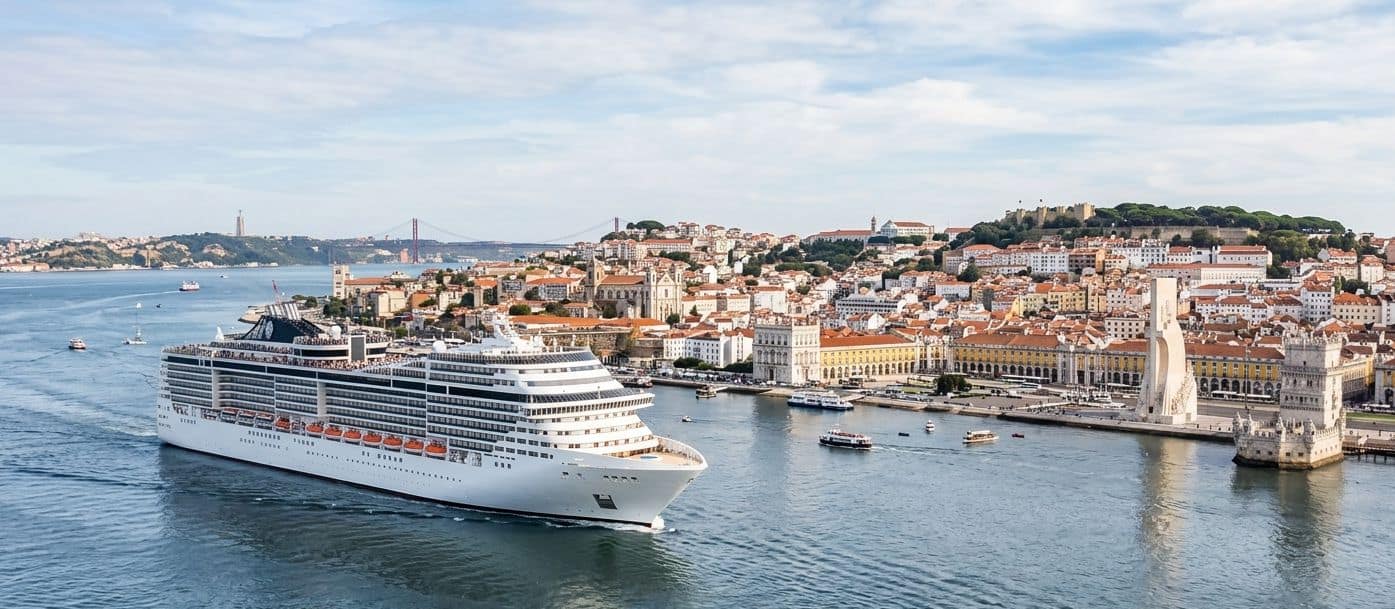
Lisbon teams up with Barcelona and more as Europe’s ultimate cruise and city break destinations enter the spotlight for magical 2026 getaways. From Lisbon’s historic waterfront to Barcelona’s Mediterranean charm, Europe offers unforgettable experiences for global travellers. Meanwhile, Athens, Copenhagen, Dubrovnik, Kotor and Southampton add fascinating history, spectacular coastlines and exciting cruise adventures to the travel picture. These ultimate cruise and city break destinations invite visitors to discover cultural treasures, iconic landmarks and memorable seaside escapes. Travel And Tour World urges readers to explore this detailed guide to Europe’s most captivating destinations and plan magical 2026 getaways.
Lisbon and Six More European City and Cruise Destinations to Explore in 2026, With Visitor Statistics, Port Data and Detailed Travel Plans
Lisbon’s recognition as Europe’s Leading City Destination at the 2026 World Travel Awards has placed Portugal’s capital firmly in the international travel spotlight. The awards ceremony took place in Montenegro on 17 October 2026. Portugal also won Europe’s Leading Destination title, Athens received Europe’s Leading City Break Destination, and Copenhagen retained Europe’s Leading Cruise Port recognition. These awards offer travellers a useful starting point for comparing different European holiday experiences.
Advertisement
Advertisement
For travellers planning a European holiday, the choice extends well beyond one award-winning capital. Barcelona combines Mediterranean architecture with extensive cruise connections, while Athens links ancient Greek history with island-hopping itineraries. Copenhagen offers Nordic design and Baltic voyages, and Dubrovnik, Kotor and Southampton provide different combinations of coastal scenery, historic attractions and cruise access.
This extended guide examines six alternative city and cruise destinations, with available visitor and port statistics, suggested attractions, practical itineraries and comparisons. It also distinguishes between overnight tourists, cruise passengers, port calls and passenger movements, because these figures measure different kinds of travel activity.
Advertisement
Advertisement
Important award clarification: Lisbon’s city-destination recognition and its cruise-destination title are reported in separate awards programmes. The World Travel Awards names Lisbon Europe’s Leading City Destination and Copenhagen Europe’s Leading Cruise Port for 2026. Lisbon was also named Europe’s Best Cruise Destination at the 2026 World Cruise Awards. The six alternatives below are selected for their travel appeal and cruise infrastructure, not presented as six additional winners of Lisbon’s exact award categories.
The European cruise and city-break landscape in numbers
The most useful way to compare these destinations is to examine their cruise operations alongside the wider visitor economy. Cruise statistics count passenger movements through ports, while city tourism statistics usually measure hotel guests, arrivals or overnight stays. Neither figure should automatically be interpreted as the number of unique tourists.
Advertisement
Advertisement
Table 1: Verified cruise passenger statistics for Lisbon and Barcelona
Figures represent annual passenger movements reported by the respective cruise-port operators, not unique city tourists.
| Year | Lisbon cruise passengers | Barcelona cruise passengers |
|---|---|---|
| 2021 | 115,984 | 345,940 |
| 2022 | 492,438 | 1,502,552 |
| 2023 | 758,328 | 2,184,610 |
| 2024 | 763,752 | 2,295,454 |
| 2025 | 705,437 | 1,464,540 |
Sources: Lisbon Cruise Port statistics and Barcelona Cruise Port statistics.
The five-year figures reveal two different patterns. Lisbon’s passenger traffic climbed sharply after the pandemic disruption, reaching 763,752 in 2024 before falling to 705,437 in 2025. Barcelona’s reported figure peaked at 2,295,454 in 2024 and fell to 1,464,540 in 2025.
Barcelona’s 2025 figure requires particular care when compared with earlier years. The port’s published breakdown shows a significant change in the balance between transit and turnaround passengers, alongside fewer calls. The operator reports 438 calls in its English statistics page, compared with 535 in 2024. Readers should use the operator’s latest figures rather than assume every year follows a continuous upward trend.
Table 2: Lisbon’s cruise activity, broken down by passenger type
| Year | Ship calls | Total passengers | Transit passengers | Turnaround passengers |
|---|---|---|---|---|
| 2021 | 97 | 115,984 | 94,711 | 21,273 |
| 2022 | 327 | 492,438 | 404,146 | 88,292 |
| 2023 | 347 | 758,328 | 554,324 | 204,004 |
| 2024 | 369 | 763,752 | 591,797 | 171,955 |
| 2025 | 335 | 705,437 | 499,211 | 206,226 |
Source: Lisbon Cruise Port.
Turnaround passengers begin or end their cruise in Lisbon, making the city relevant to travellers who want to add an overnight stay before sailing. Transit passengers visit during an existing itinerary, often with a more restricted sightseeing window. In 2025, turnaround passengers represented approximately 29.2% of Lisbon’s total cruise passenger movements, compared with about 22.5% in 2024. This indicates a changing passenger mix rather than a simple measure of destination popularity.
Advertisement
Advertisement
Six alternative city and cruise destinations for 2026
Barcelona, Spain — Mediterranean architecture and major cruise connections
Barcelona is an excellent choice for travellers who want to combine architecture, food, beaches and a Mediterranean cruise. Visitors can explore the Sagrada Família, stroll through the Gothic Quarter, enjoy the waterfront and discover Catalan cuisine. Park Güell adds colourful architectural details, while La Rambla provides access to markets and central attractions. Travellers should book popular monuments ahead of time and allow time for transfers between the port and city sights. Barcelona’s port recorded 1,464,540 cruise passenger movements in 2025, down from 2,295,454 in 2024. Its annual report recorded 3,655,981 cruise passenger movements in 2024 and estimated that approximately 2.2 million cruise visitors visited the city. The port recorded 793 cruise stopovers that year. These figures demonstrate the scale of its cruise operation, but they should not be confused with overnight hotel tourists.
Suggested two-day plan: Spend the first day exploring the Gothic Quarter, central markets and waterfront. Reserve the second day for the Sagrada Família and Park Güell, or use it for a relaxed beachside afternoon. Cruise passengers with only a few hours should choose one central district and one major attraction instead of crossing the entire city.
Athens and Piraeus, Greece — Ancient landmarks and island-hopping opportunities
Athens is a strong choice for history-focused travellers who also want access to Greek island cruises. The Acropolis and its surrounding archaeological sites are the city’s defining attractions, while the Plaka neighbourhood offers traditional streets, cafés and restaurants. Piraeus, the main port serving Athens, provides connections to cruise itineraries and ferry routes across the Aegean. In 2025, the Port of Piraeus reported approximately 1.85 million cruise passengers, with 863 cruise-ship calls. A separate annual financial report gives the more precise figure of 1,863,397 passengers, compared with 1,698,877 in 2024. The port also recorded 1,091,364 homeport passengers and 772,033 transit passengers in 2025. Greece’s national cruise survey reported 5.61 million cruise passengers across the country in 2025 and €1.166 billion in cruise passenger receipts. These are national figures, not Athens-only totals.
Suggested two-day plan: Dedicate the first day to the Acropolis, Acropolis Museum and Plaka. On the second day, explore central Athens before transferring to Piraeus, or arrange a longer island excursion if your schedule allows. Cruise passengers should confirm whether their ship departs from Piraeus and how much time they need to return from the city centre.
Copenhagen, Denmark — Nordic design and Baltic cruise experiences
Copenhagen is particularly attractive for travellers interested in Scandinavian design, cycling, waterfront architecture and Nordic food. Nyhavn’s colourful buildings provide a memorable introduction to the city, while the Little Mermaid statue, Rosenborg Castle and the city’s museums offer further sightseeing options. Visitors can also explore food markets and neighbourhood cafés before embarking on Baltic or Northern European cruises. Copenhagen Malmö Port reported nearly 866,500 cruise passengers and 316 cruise calls in Copenhagen during 2025. For 2026, the port operator projected approximately 880,000 passengers across 312 calls, meaning this figure is a forecast rather than a final annual result. In 2024, Copenhagen welcomed more than 818,000 cruise passengers, and 106 calls involved ships using the city as a turnaround port. The World Travel Awards named Copenhagen Europe’s Leading Cruise Port in both 2025 and 2026.
Suggested two-day plan: Spend the first day around Nyhavn, the historic centre and Rosenborg Castle. Use the second day for museums, food markets and a canal tour. Cruise passengers starting their journey in Copenhagen should consider arriving a day early, particularly when connecting international flights could be affected by delays.
Advertisement
Advertisement
Dubrovnik, Croatia — Walled-city heritage and Adriatic scenery
Dubrovnik suits travellers who want medieval architecture, sea views and a compact historic centre. Its UNESCO-listed Old Town, defensive walls, limestone streets and harbour create a distinctive Adriatic experience. Visitors can walk the historic centre, take a cable-car trip for elevated views, or plan a boat excursion when weather and schedules permit. Dubrovnik was named Europe’s Leading Seaside Metropolitan Destination at the 2026 World Travel Awards. Croatia’s official statistics also show the importance of the Dubrovnik-Neretva County in the national cruise sector: during January–June 2025, the county accounted for 46.8% of Croatia’s 252 recorded foreign cruise journeys. That is a share of cruise journeys, not the proportion of all Croatian tourists visiting Dubrovnik.
Suggested two-day plan: Spend the first day exploring the Old Town and city walls, checking opening conditions and ticket details beforehand. On the second day, consider a coastal excursion or a boat trip. During busy cruise periods, visit major landmarks early or later in the day to avoid concentrating every activity around peak arrival hours.
Kotor, Montenegro — Dramatic mountains and a compact historic harbour
Kotor is ideal for travellers who prefer a smaller historic destination surrounded by dramatic scenery. Its Old Town features medieval streets, churches and squares, while the Bay of Kotor creates a spectacular backdrop for boat excursions and scenic drives. Travellers with sufficient time can explore nearby coastal settlements, although road journeys may take longer than expected during the summer season. Kotor received Europe’s Leading Emerging Tourism Destination title at the 2026 World Travel Awards. Its port reported 586,403 cruise passengers and 476 ship calls in 2024, according to a study citing the Port of Kotor’s published figures. That figure is useful for understanding the destination’s cruise scale, although it is not a substitute for the port’s own year-by-year statistical series.
Suggested two-day plan: Explore the Old Town and harbour on the first day. If your fitness level and conditions permit, allow time for the uphill route towards the fortress viewpoints. Use the second day for a bay excursion or a visit to nearby coastal towns. Cruise passengers should be mindful that narrow streets and popular viewpoints can become crowded when multiple ships arrive.
Southampton, England — A practical gateway to British and Northern European cruises
Southampton is especially useful for travellers beginning or ending a cruise from the United Kingdom. The city has a strong maritime heritage, museums, shopping streets and convenient access to wider southern England. Depending on the length of the stay, visitors can add excursions to Winchester or other regional attractions. UK government statistics show that approximately 2.6 million international cruise passengers passed through Southampton in 2025, representing around 86% of the UK’s 3.1 million international cruise passengers. The Department for Transport also reported 3.1 million international cruise passengers nationally in 2024, with approximately 2.7 million passing through Southampton. Southampton therefore stands out primarily as a major embarkation and disembarkation hub rather than a destination with the same Mediterranean sightseeing profile as Barcelona or Dubrovnik.
Suggested two-day plan: Spend the first day exploring Southampton’s historic centre and maritime attractions. Use the second day for a pre-cruise rest day or a regional excursion, keeping luggage arrangements and ship check-in times in mind. Travellers flying into London should allow a generous transfer buffer rather than planning a tight connection on embarkation day.
Advertisement
Advertisement
Five-year cruise passenger comparison across the six alternatives
The table below consolidates the historical data available from the cited port operators and official statistical sources. Where a comparable annual figure was not verified in the reviewed material, it is marked “Not verified” rather than estimated.
Table 3: Annual cruise passenger movements, 2021–2025
| Destination / port | 2021 | 2022 | 2023 | 2024 | 2025 |
|---|---|---|---|---|---|
| Barcelona | 345,940 | 1,502,552 | 2,184,610 | 2,295,454 | 1,464,540 |
| Athens / Piraeus | 202,012 | Not verified | Not verified | 1,698,877 | 1,863,397 |
| Copenhagen | Not verified | Not verified | Not verified | More than 818,000 | Nearly 866,500 |
| Dubrovnik | Not verified | Not verified | Not verified | Not verified | Not verified |
| Kotor | Not verified | Not verified | Not verified | 586,403 | Not verified |
| Southampton | Not verified | Not verified | Not verified | Approximately 2.7 million | Approximately 2.6 million |
Sources and limitations: Barcelona Cruise Port; Greek Cruise Cluster’s Piraeus statistics; Piraeus Port Authority; Copenhagen Malmö Port; the Port of Kotor figures cited in a published study; and UK Department for Transport statistics. Southampton figures are rounded official national-statistics breakdowns for the port. Kotor’s 2024 figure comes from a published study citing port data.
The gaps do not mean that the destinations received no passengers. They mean that the same year-by-year series was not verified in the sources consulted for this comparison. For publication, these missing figures should be checked against each port’s annual reports before presenting the table as a complete statistical ranking.
Table 4: What the numbers tell travellers
| Destination | Most useful verified indicator | What it means for planning |
|---|---|---|
| Barcelona | 2,295,454 cruise passenger movements in 2024 | Allow time for transfers and book popular attractions in advance |
| Athens / Piraeus | 1,863,397 cruise passengers in 2025 | Combine archaeological sightseeing with a carefully timed port transfer |
| Copenhagen | Nearly 866,500 cruise passengers in 2025 | Consider a pre-cruise overnight stay and explore the city beyond the harbour |
| Dubrovnik | 46.8% of Croatia’s foreign cruise journeys were recorded in Dubrovnik-Neretva County in H1 2025 | Plan around ship schedules and busy periods in the Old Town |
| Kotor | 586,403 cruise passengers in 2024 | Prioritise the Old Town, bay scenery and realistic walking times |
| Southampton | Approximately 2.6 million international cruise passengers in 2025 | Build in transfer time and consider a night near the departure port |
The indicators are not directly interchangeable: some measure passenger movements, one measures a county’s share of cruise journeys, and others refer to a particular port. They are best used to understand each destination’s travel role, not to create a precise popularity ranking.
How to plan a European city and cruise holiday
The best itinerary depends on whether the traveller wants a port-intensive cruise, a cultural city break or a combination of both. A seven-to-ten-day holiday can combine one embarkation city with several days of independent sightseeing.
Table 5: Suggested travel plans by destination
| Destination | Recommended stay | Priority attractions | Best suited to |
|---|---|---|---|
| Barcelona | 2–3 days | Sagrada Família, Gothic Quarter, Park Güell, waterfront | Architecture, food and Mediterranean cruises |
| Athens / Piraeus | 2–3 days | Acropolis, Acropolis Museum, Plaka, Piraeus waterfront | History and Greek island itineraries |
| Copenhagen | 2–3 days | Nyhavn, Rosenborg Castle, museums, canal tours | Nordic culture and Baltic cruises |
| Dubrovnik | 2 days | Old Town, city walls, harbour, coastal excursions | Heritage and Adriatic scenery |
| Kotor | 1–2 days | Old Town, bay, fortress viewpoints, nearby coastal towns | Scenic escapes and compact historic centres |
| Southampton | 1–2 days | Maritime heritage, historic centre, regional excursions | UK cruise departures and pre-cruise stays |
These are suggested durations, not official tourism recommendations. Attraction opening times, weather, cruise schedules and personal mobility can affect how much visitors can comfortably see.
Advertisement
Advertisement
A sample seven-day European cruise holiday
Days 1–2: Barcelona
Arrive, settle into your accommodation and explore the historic centre. Reserve time for the Sagrada Família and enjoy a relaxed meal featuring Catalan cuisine before embarking on a Mediterranean cruise or continuing to another destination.
Day 3: Dubrovnik
Walk through the Old Town, explore the historic walls if conditions permit, and allow time for harbour views. Confirm the ship’s departure time before booking a long excursion.
Day 4: Kotor
Explore the medieval streets and enjoy the scenery of the Bay of Kotor. Choose a short, well-timed excursion rather than trying to cover several distant coastal towns in one port call.
Advertisement
Advertisement
Days 5–6: Athens
If the itinerary includes Piraeus, visit the Acropolis and central Athens when the ship’s schedule permits. For a longer stay, reserve a full day for archaeological landmarks and another for neighbourhoods, food and museums.
Day 7: Copenhagen or return to the embarkation city
If your chosen cruise route ends in Copenhagen, spend the final day exploring the harbour and central sights. If the ports are on separate itineraries, plan this as an alternative city break rather than assuming all six destinations can be visited on one sailing.
This is an illustrative planning framework, not a single cruise route. The destinations span different regions, and a traveller would need to select a cruise itinerary that actually connects the chosen ports or arrange separate flights and rail journeys.
Visitor statistics and the five-year comparison: What travellers should understand
Cruise-port statistics provide valuable evidence of how maritime tourism has changed, but they do not tell the whole story of a city’s tourism economy. A port passenger may visit for a few hours, stay overnight before embarkation or return several times during separate cruises. Hotel statistics, by contrast, usually count registered accommodation guests, arrivals or nights.
Advertisement
Advertisement
Lisbon’s cruise statistics illustrate the distinction. Passenger movements increased from 115,984 in 2021 to 763,752 in 2024, before reaching 705,437 in 2025. Barcelona’s published port series rose from 345,940 in 2021 to 2,295,454 in 2024, then recorded 1,464,540 in 2025. These figures show substantial changes in port activity, but they should not be used as substitutes for annual city visitor totals.
For a full five-year tourism comparison of all six cities, the most reliable approach is to compile a separate series for each city using a consistent measure, such as annual hotel arrivals or overnight stays. The statistical authorities may define these measures differently, so the reporting period, accommodation coverage and geographic boundary must be stated.
The official Barcelona tourism data portal reports that hotel tourists in the city approached nine million in 2025, 6.9% above 2024. The Rome tourism authority reported 22.9 million arrivals and 52.92 million overnight stays in 2025, but those figures should not be compared directly with Barcelona’s hotel-tourist measure because the statistical definitions and geographic coverage may differ.
Which destination should travellers choose in 2026?
Barcelona is a strong option for architecture, food and Mediterranean cruise connections. Athens is particularly attractive to history enthusiasts and travellers interested in Greek islands. Copenhagen suits visitors looking for Nordic culture and Baltic itineraries, while Dubrovnik and Kotor appeal to those who prioritise historic waterfronts and Adriatic scenery. Southampton is most practical for many travellers beginning or ending a British cruise.
Lisbon remains an excellent choice for a flexible city-and-cruise holiday, especially for visitors who want historic neighbourhoods, maritime heritage and the possibility of extending their stay into Portugal’s surrounding region.
The most useful takeaway from the 2026 awards is not that one city is automatically best for everyone. It is that travellers have several distinct European gateways to consider. Comparing cruise schedules, port access, attraction opening times and the amount of time available ashore will help visitors choose the destination that fits their interests.
Conclusion
Lisbon teams up with Barcelona and more to put Europe’s ultimate cruise and city break destinations in the spotlight for magical 2026 getaways. From Lisbon’s charming waterfront and Barcelona’s Mediterranean beauty to Athens’ ancient wonders, Copenhagen’s Nordic appeal, Dubrovnik’s historic streets, Kotor’s spectacular bay and Southampton’s maritime heritage, every destination offers a unique travel experience. Moreover, these European hotspots give global travellers exciting opportunities to combine sightseeing, cultural discoveries and unforgettable cruise adventures. Travel And Tour World encourages readers to explore these remarkable destinations, compare travel options and plan their next European escape for an extraordinary 2026 holiday.
Advertisement
