

Luxembourg Airport Targets Over Five Million Passengers in 2026 as More Than 120 Destinations, New Abu Dhabi Flights and Cross Border Travel Drive Growth

Published
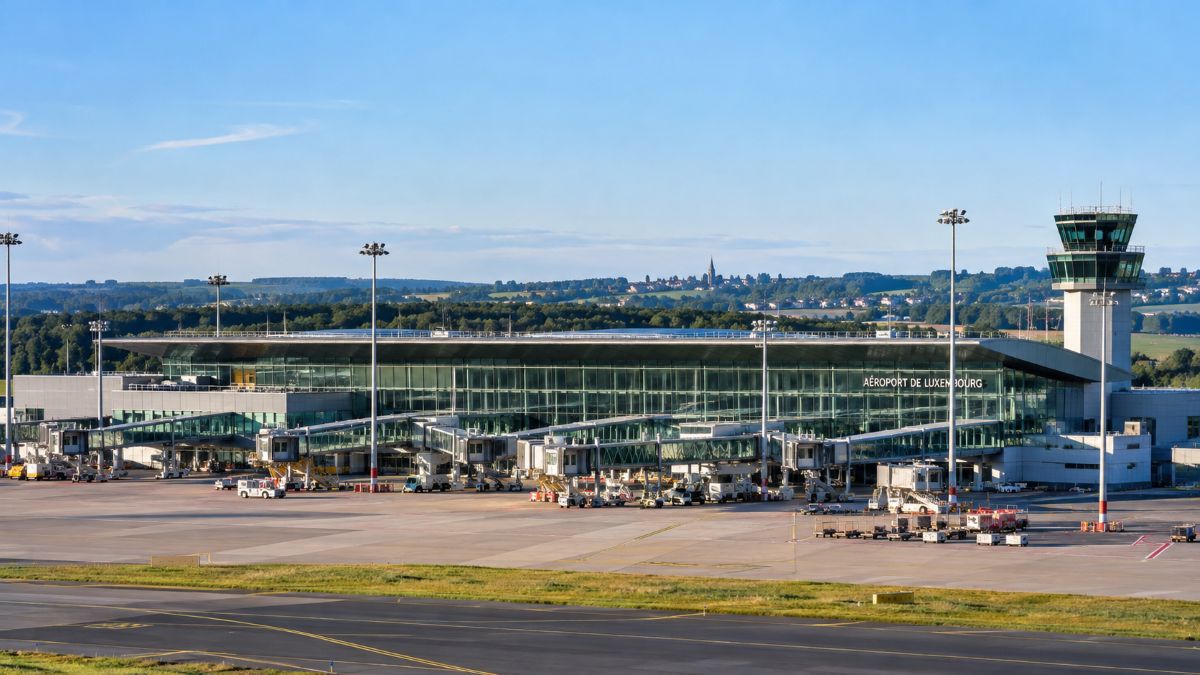 Image generated with Ai
Luxembourg Airport is moving into a major growth phase in 2026 as passenger demand, route expansion and cross-border travel continue to strengthen. Official airport planning points to more than five million passengers this year, supported by a network of more than 120 destinations and the launch of new nonstop Abu Dhabi flights. The airport’s role extends beyond Luxembourg itself, serving travellers from neighbouring France, Belgium and Germany while connecting with the country’s free domestic public transport system. With long-term infrastructure plans already looking towards 2050, Luxembourg Airport is becoming an increasingly important gateway for both European and international travel.
Luxembourg Airport Growth at a Glance
| Indicator | Latest official figure or development | Travel significance |
|---|---|---|
| 2025 passenger traffic | Around 5.3 million | Establishes the current traffic base |
| 2026 forecast | Around 5.7 million passengers | Indicates continued aviation expansion |
| Projected 2026 growth | 7.8% | Strong year-on-year increase |
| 2050 forecast | Around 10.6 million passengers | Long-term traffic could roughly double |
| Direct destinations | More than 120 by end-2025 | Expands international accessibility |
| Abu Dhabi route | Begins 29 October 2026 | First direct Luxembourg–Abu Dhabi service |
| Abu Dhabi frequency | Three flights per week | Adds regular Middle East connectivity |
| Aircraft type | Airbus A321LR | Supports longer-range operations |
| Master Plan | Development horizon through 2050 | Guides future airport expansion |
| Tourism arrivals | Up around 3% Jan–Jul 2026 | Shows wider travel demand growth |
| Overnight stays | Up around 6% Jan–Jul 2026 | Accommodation demand growing faster |
| Tourism investment | €70 million programme for 2023–2027 | Supports wider visitor infrastructure |
Passenger Traffic Is Expected to Reach Around 5.7 Million
Luxembourg Airport handled about 5.3 million passengers in 2025, providing a strong base for further expansion.
Advertisement
Advertisement
The airport’s official 2026 Master Plan projects passenger traffic rising by approximately 7.8% in 2026, bringing annual demand to around 5.7 million passengers.
That growth is significant for a comparatively small national market. Luxembourg Airport serves not only domestic travellers but also passengers from neighbouring areas of France, Belgium and Germany.
Advertisement
Advertisement
The airport therefore operates as a wider regional gateway, making growth in passenger volume relevant to both national tourism and cross-border travel.
Long-Term Traffic Could Reach 10.6 Million by 2050
The airport’s long-term planning is even more ambitious.
Advertisement
Advertisement
Official projections indicate passenger traffic could reach approximately 10.6 million annually by 2050.
That figure would represent a major increase compared with current volumes and would require additional capacity across several parts of the airport system.
Advertisement
Advertisement
The Master Plan therefore considers future requirements for terminals, aircraft stands, baggage handling, road access and other operational infrastructure.
The strategy reflects a long-term expectation that Luxembourg will continue gaining importance as an international transport hub rather than experiencing only short-term passenger growth.
More Than 120 Direct Destinations Support International Reach
By the end of 2025, Luxembourg Airport reported connections to more than 120 direct destinations.
This extensive network gives travellers access to a broad range of European and international markets while strengthening Luxembourg’s position as a business and leisure gateway.
Advertisement
Advertisement
The scale of the network is particularly notable because Luxembourg has a relatively small domestic population.
Much of the airport’s wider significance comes from its position within the Greater Region, where travellers can reach the airport from nearby parts of France, Belgium and Germany.
This cross-border role gives Luxembourg Airport a catchment area that extends well beyond national boundaries.
Abu Dhabi Flights Add a Major New International Connection
One of the most important upcoming aviation developments begins on 29 October 2026.
Etihad Airways is scheduled to launch direct flights between Luxembourg and Abu Dhabi, operating three times per week using Airbus A321LR aircraft.
The service represents the first nonstop connection between the two cities and introduces a direct Middle East route from Luxembourg.
Advertisement
Advertisement
For travellers, the importance goes beyond Abu Dhabi itself.
The route provides onward access through Etihad’s wider network, strengthening connections between Luxembourg and destinations across the Middle East, Asia and other international markets.
That gives the new service potential significance for both inbound tourism and outbound business and leisure travel.
Luxembourg Airport Is Planning for Infrastructure Expansion
Passenger growth is placing greater emphasis on airport capacity.
The 2026 Master Plan sets out a long-term framework for how Luxembourg Airport can adapt to rising demand through 2050.
The planning process covers several areas, including terminal capacity, aircraft stands, ground transport, baggage systems and passenger-processing infrastructure.
Advertisement
Advertisement
As annual traffic moves towards the projected 10.6 million level, existing facilities will need to be progressively expanded or reconfigured.
This means airport growth is not simply about adding more flights. It also involves creating the physical and operational capacity needed to handle larger numbers of travellers efficiently.
Early-Morning Operations Are Being Refined
Lux-Airport and Luxair also tested revised early-morning departure procedures during 2026.
The tests were designed to improve operational preparation and punctuality during the first wave of departures each day.
This may appear like a small operational change, but early-morning performance is important because delays at the beginning of the day can affect aircraft schedules later.
As passenger numbers increase, improving punctuality and reducing operational disruption becomes increasingly important.
Advertisement
Advertisement
The successful test therefore forms part of a wider effort to prepare airport operations for continued passenger growth.
September Drone Disruption Highlighted Operational Risks
Luxembourg Airport experienced a temporary operational disruption on 18 September 2026 after unauthorised drone activity.
Flight operations were briefly suspended before resuming.
Passengers were advised to check their flight status during the disruption.
The incident does not represent a new traveller rule, but it demonstrates the operational challenges airports can face even while expanding traffic and route networks.
It also reinforces the importance of real-time passenger information during unexpected security or airspace disruptions.
Advertisement
Advertisement
Airport Growth Connects With Wider Tourism Expansion
Luxembourg Airport’s expansion is happening alongside broader growth in the country’s tourism sector.
Official government data show tourist arrivals rising around 3% between January and July 2026, while overnight stays increased approximately 6% over the same period.
The country is also investing through its €70 million tourism infrastructure programme for 2023–2027.
That programme supports tourism development across areas including accommodation, cycling, cultural attractions, wine tourism and visitor infrastructure.
The airport therefore plays an important role in a wider national strategy aimed at improving both international access and the quality of the tourism offer.
Cross-Border Transport Adds to Luxembourg’s Travel Appeal
Luxembourg’s airport growth is strengthened by the country’s wider transport network.
Advertisement
Advertisement
Visitors can continue their journeys towards France, Belgium and Germany through rail connections, while domestic second-class public transport remains free.
This creates an unusual travel advantage.
International visitors arriving by air can move throughout much of Luxembourg without paying normal domestic train, tram or bus fares.
Cross-border travel still requires the appropriate international ticket, but the combination of airport connectivity and free domestic transport makes Luxembourg particularly accessible for multi-destination European travel.
Luxembourg Airport Is Moving Into a New Growth Phase
The official data point towards a clear long-term trend.
Passenger traffic has moved from around 5.3 million in 2025 towards a projected 5.7 million in 2026, while the airport’s longer-term planning anticipates approximately 10.6 million passengers by 2050.
Advertisement
Advertisement
At the same time, more than 120 direct destinations and the new Abu Dhabi service are expanding Luxembourg’s international reach.
The airport’s development is therefore becoming closely linked with national tourism growth, cross-border mobility and future infrastructure investment.
For travellers, the biggest immediate development is the launch of the Abu Dhabi route in October 2026. For Luxembourg, the bigger story is a long-term transformation of its airport into a larger and increasingly connected European gateway.
Luxembourg Airport’s 2026 growth story reflects more than rising passenger numbers. The combination of more than 120 destinations, new Abu Dhabi connectivity, stronger tourism demand and access from France, Belgium and Germany is expanding the airport’s regional and international role. Official long-term planning also shows that this growth is expected to continue well beyond the current year, with passenger volumes projected to rise significantly towards 2050. For travellers, the immediate benefit is greater connectivity. For Luxembourg, the larger development is the emergence of an airport system that is becoming more closely integrated with tourism, cross-border mobility and long-term national infrastructure expansion.
Advertisement
