
Dubai Year-Round Tourism Strategy Drives Summer Demand Through Shopping, MICE and Indoor Attractions

Published
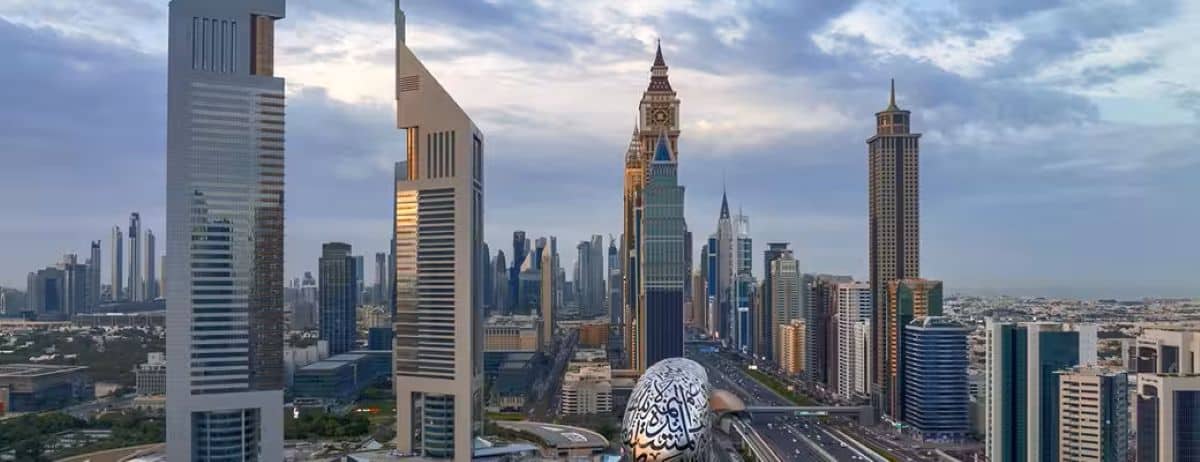
Dubai is steadily reducing its reliance on winter leisure demand by building a year-round tourism strategy around indoor attractions, retail, MICE, luxury hospitality and programmed events. The emirate welcomed 19.59 million international overnight visitors in 2025, up 5% from 18.72 million in 2024, while hotel occupancy climbed to 80.7%. The latest figures show that this momentum extends into the hotter months, with 6.97 million international visitors recorded from January to August 2026. August alone produced about 869,000 visitors, despite average summer temperatures reaching the mid-30s Celsius. The evidence points to a tourism model increasingly designed around diversified experiences rather than weather-sensitive sightseeing alone. Dubai’s strategy combines climate-controlled leisure, shopping festivals, business events, hotel-led experiences and a dense events calendar to keep the destination commercially active throughout the year.
Dubai Is Building Demand Beyond The Winter Peak
Dubai’s tourism growth provides the starting point for understanding its changing seasonal profile. International overnight arrivals increased from 17.15 million in 2023 to 18.72 million in 2024, before reaching 19.59 million in 2025. That represents a 14.2% increase across two years, according to Dubai’s Department of Economy and Tourism.
Advertisement
Advertisement
The hotel market also strengthened alongside visitor growth. Average occupancy reached 80.7% in 2025, compared with 78.2% in 2024, while occupied room nights increased 4% to 44.85 million. ADR rose from AED538 to AED579, while RevPAR advanced from AED421 to AED467.
| Dubai Tourism Indicator | 2024 | 2025 | Change |
|---|---|---|---|
| International overnight visitors | 18.72m | 19.59m | +5% |
| Hotel occupancy | 78.2% | 80.7% | +2.5 percentage points |
| Occupied room nights | 43.03m | 44.85m | +4% |
| ADR | AED538 | AED579 | +8% |
| RevPAR | AED421 | AED467 | +11% |
| Average length of stay | — | 3.7 nights | — |
These figures do not, by themselves, prove that seasonality has disappeared. They do, however, demonstrate a substantial base of sustained demand against which Dubai’s counter-seasonal measures can be assessed.
Advertisement
Advertisement
The latest 2026 data adds another useful layer. Dubai recorded 6.97 million international overnight visitors between January and August 2026, including approximately 869,000 in August. Hotel occupancy reached 66% in August, compared with 36% in March, while hotel inventory approached 149,000 rooms.
Heat Is Driving A Different Tourism Product
Summer remains a genuine climatic challenge. Visit Dubai places average temperatures at approximately 34°C in July and 35°C in August, while June averages around 36°C. The official tourism platform consequently promotes indoor entertainment, shopping, aquatic attractions and hotel-based experiences during the hottest months.
Advertisement
Advertisement
This has encouraged a fundamental shift in the architecture of the visitor experience. Dubai increasingly allows travellers to move between attractions without making outdoor exposure the central component of the day.
The result is what can be described as climate-resilient tourism infrastructure. Shopping centres, aquariums, museums, cinemas, indoor sports venues, immersive entertainment and restaurants collectively provide alternatives when prolonged outdoor activity becomes uncomfortable.
Advertisement
Advertisement
Dubai Mall illustrates the scale of this model. The destination contains more than 1,200 retail stores, around 150 restaurants and more than one million square metres of space. It therefore functions as a combined retail, entertainment, dining and leisure environment rather than a conventional shopping centre.
For travellers, that distinction matters. A summer itinerary can concentrate activities indoors during the afternoon, then shift towards outdoor dining, waterfront experiences or evening entertainment when temperatures become more manageable.
Shopping Has Become A Summer Demand Engine
Dubai’s retail calendar is one of the clearest examples of deliberate counter-seasonal planning. Dubai Summer Surprises 2025 lasted 66 days, bringing together more than 1,050 brands, 3,800 retailers and over 100 retail destinations. The programme also incorporated hotels, restaurants, attractions, entertainment and family activities.
Its economic significance extends beyond discounts. Dubai reported that average consumer spending increased 110% during the 2025 festival period, while the Shop, Scan & Win campaign alone generated more than AED150 million in consumer spending. More than 1,200 winners received prizes worth AED20 million across over 180 raffle draws.
Advertisement
Advertisement
| Dubai Summer Surprises 2025 | Scale |
|---|---|
| Duration | 66 days |
| Participating brands | 1,050+ |
| Retailers | 3,800+ |
| Retail destinations | 100+ |
| Restaurants | 746 |
| Concerts and shows | 76 |
| Raffle draws | 180+ |
| Prize value | AED20m |
| Reported consumer spending uplift | 110% |
This makes shopping more than a supplementary holiday activity. It becomes a seasonal demand mechanism capable of giving visitors a financial reason to travel when temperatures might otherwise discourage them.
The 2026 programme continued that approach. Dubai Summer Surprises ran from 2 July to 30 August, with retail offers accompanied by hotel, attraction, dining and entertainment deals.
MICE Keeps Business Travel Moving
Business events provide another layer of demand because conferences and exhibitions operate according to professional calendars rather than beach-season preferences.
Dubai secured 437 successful bids for future business events in 2024, expected to attract more than 210,000 delegates. The city’s major exhibitions also demonstrated the scale of this market, with GITEX Global drawing 200,000 visitors, Gulfood attracting 150,000 and Arabian Travel Market recording 46,000 attendees.
This creates a useful distinction between leisure seasonality and business-event seasonality. A conference delegate may spend several days in Dubai regardless of outdoor temperatures, generating demand for hotel rooms, restaurants, transport, retail and evening entertainment.
For the wider tourism economy, MICE therefore acts as a stabilising layer. It can also create repeat demand because successful events frequently return to established venues.
Advertisement
Advertisement
Luxury Hotels Are Becoming Destinations
Dubai’s hotels increasingly function as self-contained leisure ecosystems. During hotter months, resorts can shift their value proposition towards pools, spas, dining, wellness, children’s activities, indoor entertainment and preferential summer packages.
The commercial logic is visible in the city’s overall hotel performance. Despite expanding supply, Dubai generated 44.85 million occupied room nights in 2025, while RevPAR increased 11% year on year.
The city’s hotel inventory approached 149,000 rooms by August 2026, yet hotels recorded 21.61 million occupied room nights during the first eight months of that year.
This matters for travellers because summer pricing can create a different value equation. Visitors may find greater availability, hotel promotions and bundled experiences, although prices vary considerably by property, event calendar and booking period.
Dubai is also broadening the sustainability credentials of its accommodation sector. In July 2026, DET recognised 237 hotels under the Dubai Sustainable Tourism Stamp, 55% more than the previous cycle.
Events Keep The Calendar In Motion
Dubai’s year-round model depends heavily on calendar density. Shopping festivals, food programmes, sporting events, concerts, exhibitions and cultural activities provide reasons to visit that do not depend solely on temperature.
Advertisement
Advertisement
Dubai Calendar, the official events platform, lists more than 1,200 events annually, with new listings added each week. Its scope spans arts, culture, education, food, sport and shopping.
The approach extends beyond summer. Dubai Fitness Challenge, for example, has attracted more than 16 million participants across its first nine editions, with the tenth edition scheduled for October-November 2026. The programme shows how sporting participation can become a destination proposition rather than merely a local initiative.
This calendar engineering creates a tourism flywheel. A major event fills hotel rooms, brings international visitors and generates spending across restaurants, retail and attractions. Those visitors then encounter additional experiences, potentially extending stays and increasing expenditure.
The Numbers Show A More Resilient Market
The latest summer figures offer perhaps the clearest evidence of how the system is evolving. Dubai’s international visitor total reached 6.97 million in January-August 2026, while August delivered approximately 869,000 visitors. The August figure represented the strongest monthly visitor volume since February, according to DET.
The geographical mix also reduces dependence on a single market. From January through August 2026, Western Europe represented 20% of international visitation, followed by South Asia at 17%, the GCC at 16% and CIS and Eastern Europe at 14%.
| Indicator | Latest Figure |
|---|---|
| International visitors Jan-Aug 2026 | 6.97m |
| August 2026 visitors | 869,000 |
| August hotel occupancy | 66% |
| Hotel rooms by end-August 2026 | Nearly 149,000 |
| Occupied room nights Jan-Aug 2026 | 21.61m |
| Leading source region | Western Europe, 20% |
| Second-largest source region | South Asia, 17% |
The diversification is also visible through aviation. Dubai International handled 95.2 million guests in 2025, a record annual total, with 291 destinations served through 108 international carriers.
Advertisement
Advertisement
Airport throughput should not be treated as equivalent to tourist arrivals because DXB also handles transfer passengers. Nevertheless, its connectivity gives Dubai an unusually powerful distribution network for sustaining demand across different seasons.
What This Means For Travellers
The practical implication is that summer Dubai requires a different itinerary strategy. Travellers should not simply replicate a winter programme and expect identical conditions.
A more efficient summer itinerary can combine indoor attractions during the hottest afternoon hours with early-morning, late-evening or water-based activities. Shopping festivals can also alter the economics of a trip, while hotel packages may provide stronger value when demand is softer.
| Traveller Type | Useful Summer Strategy |
|---|---|
| Families | Indoor attractions, malls, aquariums and hotel activities |
| Luxury travellers | Resort packages, spas, dining and private experiences |
| Business visitors | Conferences combined with evening leisure |
| Shopping travellers | DSS offers and major retail destinations |
| Sports travellers | Indoor sporting facilities and event programmes |
| Short-stop visitors | Downtown attractions concentrated around connected indoor venues |
Dubai’s official tourism guidance specifically recommends indoor attractions during hotter months. It also promotes aquatic activities, pools, waterparks and other heat-conscious experiences.
For visitors, the larger lesson is straightforward. Summer is not simply a cheaper version of winter Dubai; it is a differently engineered tourism experience.
Dubai’s Model Is Still Evolving
The Dubai year-round tourism strategy should not be interpreted as an attempt to erase seasonality completely. Climate continues to influence traveller behaviour, outdoor activity and hotel pricing, and summer occupancy remains below the strongest winter levels.
Advertisement
Advertisement
The more significant development is diversification. Dubai is reducing its dependence on any single tourism proposition by combining retail, entertainment, MICE, hospitality, dining, sport and events within one destination economy.
That approach also explains why the emirate continues to invest in connectivity and accommodation alongside visitor programming. The tourism proposition works best when airports, hotels, attractions, retailers and event organisers reinforce one another.
The Dubai year-round tourism strategy therefore represents less a campaign than an evolving tourism architecture. Its durability will ultimately depend on whether Dubai can keep expanding demand without relying excessively on discounts, while maintaining visitor value, hotel performance and destination appeal.
For travellers, the result is a city where seasonality increasingly changes how a holiday is experienced, rather than determining whether the destination has enough reasons to visit. That distinction could become one of Dubai’s most consequential tourism advantages as the emirate moves deeper into the next phase of its visitor-economy ambitions.
Advertisement
