

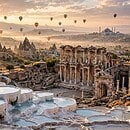
Image generated with Ai
These four countries: San Marino, Liechtenstein, Andorra, and Luxembourg, are becoming even more attractive to international tourism. Now, travelers begin to explore more of Europe and its smaller countries to appreciate their ancient castles, lesser-known mountain regions, and even their hidden cultural traditions. Located between slightly bigger countries on the European continent, these four nations offer travelers opportunities to slow down and travel across Europe in a more immersive way, as one is able to explore Europe’s ancient castles and fortresses, take alpine hikes, admire UNESCO listed sites, and visit beautiful smaller cities in more condensed amount of time than usual. The desire to travel these nature based, heritagebased, and quieter countryside alternatives to avoided overstuffed, urban traveling, has been a huge recent change in European travel.
For a long time, international travel has been synonymous with the big, famous cities of Europe. The appeal of Paris, Rome, London, Barcelona and Amsterdam stems from museums and monuments, as well as their city-level influence. However, now the travel market has begun to punish homogeneity, reward authenticity, and appreciate idiosyncratic experiences. Initially, an “authentic” travel experience may feel exclusive to the cities of old. But that’s so not the case! San Marino, Andorra and Liechtenstein are all exceptionally unique, smaller countries in Europe, and Luxembourg has a plethora of resources with a good transportation system. Together, they demonstrate that smaller countries need not compete with Germany for tourism to succeed with a focus on conservation of heritage, outdoor adventures, and unique journeys.
Advertisement
Not only that, but these countries are appealing to travelers as they allow for many diverse experiences in a short amount of time. A traveler can experience the morning in a medieval fortress, hike to spend the rest of the day in a scenic mountainous area, and experience the evening with a novel political tradition, all without spending a significant amount of time traveling between all these diverse experiences.
The growing popularity of smaller European nations is closely connected with the expansion of slow travel and experience-based tourism. Instead of simply collecting famous landmarks, modern travellers increasingly seek destinations that offer deeper connections with local history, landscapes and communities. Microstates and compact nations benefit from this trend because their identities are often closely linked with unique historical stories. San Marino provides access to one of the world’s oldest republican traditions. Liechtenstein combines monarchy, alpine culture and mountain adventure. Andorra transforms its Pyrenean geography into a year-round outdoor destination. Luxembourg blends medieval heritage with modern European connectivity.
Advertisement
The appeal of these destinations also comes from their ability to provide a different atmosphere compared with Europe’s busiest tourism hubs. Smaller populations, quieter streets and less crowded attractions create opportunities for visitors to explore historic areas at a more relaxed pace. Another important factor is accessibility. Although some of these countries do not have major airports or railway networks, their location within Europe’s integrated transport system allows travellers to reach them through neighbouring countries. Bus connections, regional rail services and efficient border crossings make them realistic additions to wider European itineraries.Destination Location Main Tourism Appeal Best Travel Experience San Marino Surrounded by Italy Medieval towers, historic independence, mountain views Heritage walks and fortress exploration Liechtenstein Between Switzerland and Austria Alpine landscapes, hiking, royal heritage Mountain trails and village experiences Andorra Between France and Spain Pyrenees, skiing, wellness and nature Adventure tourism and outdoor activities Luxembourg Between Belgium, France and Germany Castles, forests, European heritage Hiking, culture and easy city breaks
San Marino continues to stand out as one of Europe’s most remarkable historical destinations. Completely surrounded by Italy, the small republic sits on Mount Titano, creating a dramatic landscape where medieval stone buildings, fortress towers and panoramic viewpoints overlook the surrounding Italian countryside and towards the Adriatic coast. The destination’s greatest strength is its ability to preserve centuries of political and architectural history within a compact area. Founded traditionally in AD 301, San Marino is recognised as one of the world’s oldest surviving republics. This unique identity has become a major attraction for international visitors interested in history, culture and distinctive European destinations.
The historic centre of San Marino provides a journey through narrow cobbled streets, traditional buildings and defensive structures built across the mountain ridge. The area has developed into a pedestrian-friendly destination where travellers can explore attractions at walking pace. The Three Towers of San Marino remain the country’s most iconic landmarks. The Guaita Tower, Cesta Tower and Montale Tower were built as defensive structures and now represent the strongest symbols of the republic’s medieval heritage.
The towers are connected through the Passo delle Streghe, or Witches’ Path, a scenic walkway offering dramatic views across the Apennine landscape. The route combines history and nature, making it one of the most memorable experiences for visitors exploring Mount Titano.
| Category | Details |
|---|---|
| Nearest major transport hub | Rimini, Italy |
| Access route | Regional train to Rimini followed by bus connection |
| Journey time | Around 40–50 minutes from Rimini |
| Currency | Euro |
| Best months | April to October |
| Main attractions | Three Towers, Public Palace, historic centre, mountain viewpoints |
San Marino’s transport experience is also part of its tourism appeal. Since the country has no commercial airport or railway station, most visitors arrive through Italy. Rimini acts as the main gateway, with regular bus services connecting travellers to San Marino. Visitors can also use the cable car from Borgo Maggiore to reach the historic centre while enjoying views over the surrounding landscape. The cable car has become more than a practical transport link. It is now considered one of the destination’s signature experiences because it creates a scenic arrival into the historic heart of the republic.
The Public Palace on Piazza della Libertà adds another layer to the visitor experience. The building remains an important symbol of San Marino’s government and hosts official ceremonies, including traditional guard-changing events. Beyond heritage tourism, San Marino also benefits from shopping tourism due to its duty-free status. Visitors often combine sightseeing with purchases of luxury goods, souvenirs and local products. The country’s position outside the European Union while using the euro gives it a distinctive identity. Despite its independent status, travel connections with Italy remain simple because there are no permanent border controls between the two countries.
Located between Switzerland and Austria, Liechtenstein offers one of Europe’s most distinctive combinations of mountain scenery, royal heritage and outdoor adventure. The double-landlocked principality has developed a tourism identity built around alpine experiences rather than large urban attractions. The country’s landscapes are dominated by the Rhine Valley and surrounding mountain ranges, creating ideal conditions for hiking, cycling and winter sports.
Visitors arrive throughout the year to experience peaceful villages, panoramic viewpoints and high-altitude routes. The Liechtenstein Trail represents one of the destination’s most unique tourism products. Stretching approximately 75 kilometres, the route connects all 11 municipalities and allows travellers to explore the entire country on foot. The trail provides access to forests, cultural landmarks, mountain viewpoints and rural communities. It reflects a growing global tourism trend where walking routes are becoming major attractions because they combine physical activity with cultural discovery.
| Category | Details |
|---|---|
| Location | Between Switzerland and Austria |
| Main gateway | Sargans or Buchs in Switzerland; Feldkirch in Austria |
| Local transport | LIEmobil bus network |
| Currency | Swiss Franc (CHF) |
| Best months | June–September for hiking; December–March for skiing |
| Key attractions | Vaduz Castle, Liechtenstein Trail, Malbun, museums |
Vaduz Castle remains the most recognisable landmark in Liechtenstein. Located above the capital, the castle serves as the official residence of the princely family and represents the connection between the country’s historical traditions and modern identity. Although the castle itself is not generally open to public tours, walking routes around the area provide impressive views over Vaduz and the Rhine Valley. Malbun has become the centre of Liechtenstein’s winter tourism sector. The mountain resort attracts visitors seeking skiing, snow activities and alpine landscapes without the crowds found in some larger European ski destinations.
Transport accessibility is a defining feature of Liechtenstein tourism. The country does not operate its own railway system, but visitors can easily reach it through neighbouring transport networks. Travellers typically arrive by train to Swiss stations such as Sargans or Buchs, or from Feldkirch in Austria, before continuing by local bus services. The use of the Swiss franc and close transport integration with Switzerland create a smooth travel experience for visitors exploring the Alpine region.
Liechtenstein’s tourism strategy increasingly focuses on sustainable outdoor experiences, encouraging visitors to discover natural landscapes while maintaining environmental protection. The country’s compact size allows travellers to experience mountain scenery, cultural attractions and local communities within a short stay.
Located high in the Pyrenean mountains between France and Spain, Andorra has developed a powerful tourism identity built around dramatic landscapes, outdoor adventures, wellness experiences and year-round mountain activities. The small co-principality has become one of Europe’s most attractive destinations for travellers searching for nature, skiing, hiking and unique alpine experiences away from traditional city tourism. Unlike many European destinations that depend heavily on summer tourism, Andorra has created a four-season visitor economy. Winter brings international travellers seeking skiing and snow activities, while warmer months attract hikers, cyclists and outdoor enthusiasts looking for mountain escapes.
The country’s geography is the foundation of its tourism appeal. Surrounded by peaks, valleys and forests, Andorra offers a landscape that feels much larger than its size. The destination combines adventure tourism with cultural heritage, shopping experiences and wellness facilities, creating a diverse travel offering for different visitor groups. One of Andorra’s most important natural attractions is the Madriu-Perafita-Claror Valley, a UNESCO World Heritage site recognised for its exceptional mountain landscape and cultural significance. Covering around 10% of the country’s territory, the glacial valley represents the relationship between traditional communities and the Pyrenean environment. The valley provides hiking opportunities through protected landscapes, ancient pathways and mountain scenery. It has become a key attraction for travellers interested in sustainable tourism and nature-based experiences.
| Category | Details |
|---|---|
| Location | Pyrenees between France and Spain |
| Airport access | No commercial airport within the country |
| Railway access | No railway station |
| Main access points | Barcelona, Spain and Toulouse, France |
| Currency | Euro |
| Best months | December–April for skiing; July–September for hiking |
| Main attractions | Grandvalira, Madriu Valley, Caldea Spa, Tristaina Viewpoint |
Transportation to Andorra provides a different travel experience compared with other European destinations. The country has no commercial airport or railway network, meaning visitors usually arrive by road from neighbouring France or Spain. Direct bus services connect Andorra with Barcelona and Toulouse, with journey times generally around three to four hours depending on the route and traffic conditions. The mountain drive itself has become part of the destination experience, offering travellers scenic views of the Pyrenees before they reach the country.
Grandvalira remains the centre of Andorra’s winter tourism industry. As one of the largest ski areas in the Pyrenees, it attracts visitors from across Europe who are looking for high-quality mountain facilities, winter sports and alpine scenery. During summer, the same mountain environment changes into a destination for hiking, cycling and adventure tourism. Cooler temperatures compared with many European lowland destinations make Andorra attractive for travellers seeking outdoor activities during warmer months.
Wellness tourism has also become an important part of Andorra’s tourism strategy. The Caldea thermal spa complex in Escaldes-Engordany combines natural thermal waters with modern wellness facilities. The distinctive glass pyramid structure has become one of the country’s most recognisable attractions. Another emerging attraction is the Tristaina Solar Viewpoint, a circular structure positioned above Mount Tristaina. The viewpoint provides panoramic views of surrounding peaks and demonstrates how modern visitor infrastructure can enhance natural landscapes.
Andorra also maintains strong appeal among shopping travellers. The country’s lower tax environment compared with neighbouring France and Spain has historically supported retail tourism, particularly for electronics, fashion and outdoor equipment. Although Andorra is not a member of the European Union, it uses the euro, making it convenient for many international visitors. Its unique political structure, mountain environment and diverse tourism products continue to strengthen its position within Europe’s alternative travel market.
Luxembourg offers a different interpretation of small-country tourism. While larger than Europe’s traditional microstates, the Grand Duchy delivers many of the same advantages: easy exploration, concentrated attractions, historic identity and diverse landscapes within a compact territory. Located between Belgium, France and Germany, Luxembourg has developed into a destination where medieval heritage meets modern European connectivity. The country attracts visitors through historic castles, protected nature areas, hiking routes and one of Europe’s most accessible transport systems.
The destination’s location at the heart of Western Europe gives it a major advantage. Travellers can easily include Luxembourg within wider European itineraries because of direct connections with neighbouring countries. High-speed rail services connect Luxembourg City with major European centres, including Paris, Brussels and Frankfurt. The country also has an international airport, providing additional connectivity for overseas visitors.
| Category | Details |
|---|---|
| Location | Western Europe between Belgium, France and Germany |
| Transport advantage | Free nationwide public transport |
| Main gateways | Luxembourg Airport and international rail links |
| Currency | Euro |
| Best months | May–October |
| Main attractions | Vianden Castle, Mullerthal Region, Bock Casemates, Luxembourg City |
One of Luxembourg’s most distinctive tourism advantages is its nationwide free public transport system. Introduced to improve mobility and sustainability, the system allows visitors to use public buses, trains and trams without paying fares. This approach makes exploring the country easier and encourages travellers to move beyond Luxembourg City into smaller communities, natural landscapes and historic sites.
The Mullerthal Region, known as “Little Switzerland”, is among Luxembourg’s strongest nature tourism attractions. The area features sandstone cliffs, forest paths, rock formations and scenic hiking routes. The Mullerthal Trail has become especially popular among walking enthusiasts because it combines outdoor adventure with geological and cultural discovery. The landscape creates a contrast with Luxembourg’s modern financial image, revealing a quieter side of the country.
Castle tourism remains another major attraction. Vianden Castle is one of Europe’s most impressive restored medieval castles. Positioned above the River Our, the fortress attracts visitors interested in architecture, history and traditional European landscapes. The castle represents Luxembourg’s ability to preserve historic structures while transforming them into internationally recognised tourism attractions. In Luxembourg City, the Bock Casemates provide another important heritage experience. The underground defence tunnels, built into the rocky landscape, reflect the city’s historical military importance and offer visitors insight into centuries of European conflicts. Luxembourg’s tourism appeal comes from its ability to combine multiple experiences in a small area. Visitors can explore historic districts, walk through forests, discover castles and experience modern European culture without long-distance travel.
San Marino, Liechtenstein, Andorra and Luxembourg demonstrate how smaller European destinations are redefining tourism by focusing on authenticity, accessibility and specialised experiences.
Although each country has a different identity, they share several important tourism strengths:Destination Heritage Experience Nature Experience Unique Travel Advantage San Marino Medieval towers and ancient republic traditions Mount Titano landscapes One of Europe’s oldest political identities Liechtenstein Royal heritage and cultural museums Alpine hiking and skiing Explore an entire country through walking routes Andorra Mountain traditions and local culture Pyrenean adventure landscapes Four-season outdoor tourism Luxembourg Castles and European history Forests and hiking regions Free nationwide public transport
These destinations highlight a broader change in international tourism. Travellers are increasingly looking beyond famous capitals and searching for places that provide meaningful experiences, local identity and natural surroundings. The growth of these destinations also supports the expansion of sustainable tourism. Smaller countries often have stronger opportunities to manage visitor numbers, protect landscapes and encourage responsible travel practices.
However, continued growth will require careful planning. Increased visitor demand can create challenges including environmental pressure, infrastructure needs and the protection of historic locations. San Marino must continue balancing tourism development with preservation of its medieval centre. Liechtenstein needs to protect alpine ecosystems while expanding outdoor tourism. Andorra faces the challenge of managing mountain environments while maintaining a strong adventure tourism economy. Luxembourg must continue protecting natural areas as visitor numbers increase. The future success of these destinations will depend on combining tourism growth with conservation, improved connectivity and high-quality visitor experiences.
The process of coming into being of San Marino, Liechtenstein, Andorra, and Luxembourg is evidence that the landscape of European tourism is broadening. Now travelers do not have to stick to the continents largest and most engaged countries. These smaller countries gives travelers the ability to see Europe through various lenses, like ancient republics, medieval castles, and Alpine trails. From Italy, San Marino offers traveler the ability to see medieval Europe. Liechtenstein offers royal heritage with an Alpine adventure. Andorra turns the Pyrenees into a skiing and hiking destination with wellness. Luxembourg offers travelers a combination of castles, forests, and modern European mobility.
While these nations don’t have the tourism of their larger neighbors, they have the ability to provide International travelers with more quiet and authentic experiences. Their greatest asset is their uniqueness. Each country has experiences that can not be duplicated, making them more valuable to have in European travel. The future of tourism in Europe will incorporate quieter nations rather than just large capital cities, as these nations preserve lots of history and show travelers excellent landscapes, as well as provide more authentic experiences.
Advertisement
Tags: alpine trails Europe, ancient castles in Europe, Europe hidden travel destinations, European microstates tourism, Hidden gems in Europe
Advertisement
Advertisement












Thursday, September 3, 2026
Thursday, September 3, 2026

Thursday, September 3, 2026
Thursday, September 3, 2026

Thursday, September 3, 2026

Wednesday, September 2, 2026
Thursday, September 3, 2026
Thursday, September 3, 2026


