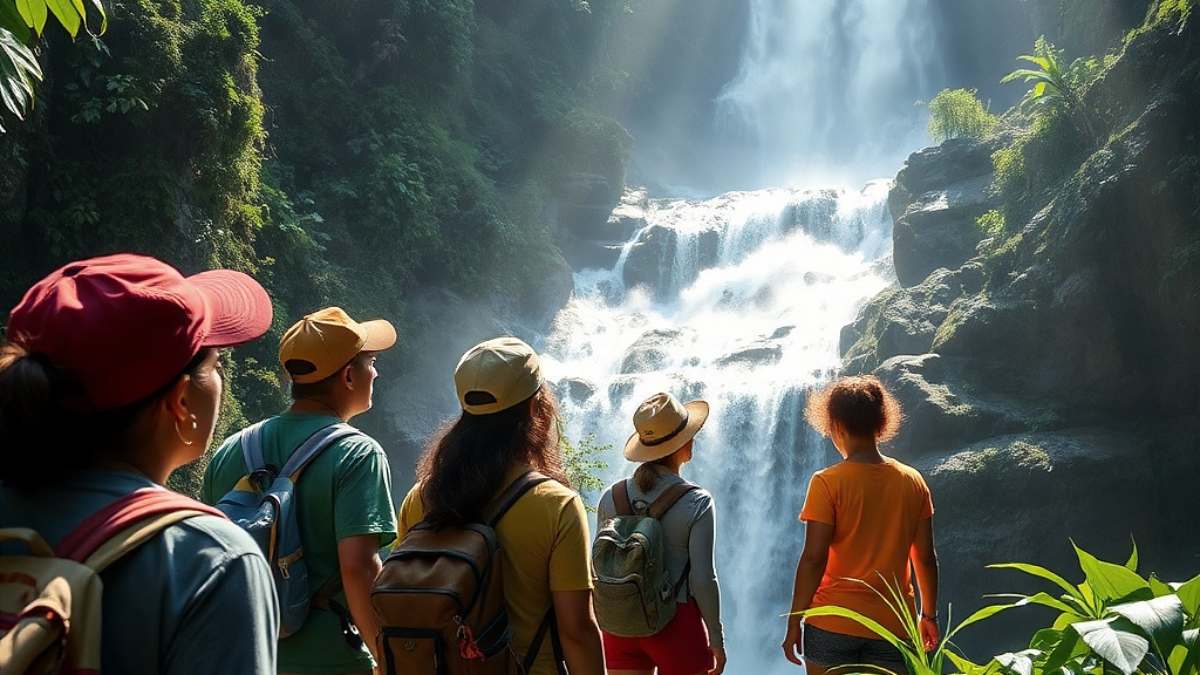
Image generated with Ai
The quick rise of post-conflict eco-adventure tourism has led to the evolution of former conflict areas in Southeast Asia into strong economic centers. In converting conflict-ridden territories into sustainable travel routes, Southeast Asian cities have begun tapping into the enormous economic opportunities created by peace. It is important to note that the change is crucial since it shifts from instability to ecological preservation, community empowerment, and national security. This is achieved through the proper branding of destinations coupled with security reforms in the region. Former conflict areas are today utilizing their natural endowments to lure international tourists, thereby showing the value of sustainable travel towards securing regional peace.
For decades, territories burdened by armed strife, political volatility, and civil unrest remained systematically isolated from mainstream commercial travel networks. Today, a structural transformation is underway across global travel markets. International travelers, increasingly seeking authentic, uncrowded, and nature-immersed itineraries, are venturing into frontiers that were once deemed off-limits. This structural migration toward off-the-beaten-path locations has given rise to post-conflict eco-adventure tourism, a socio-economic catalyst that leverages pristine natural assets to rebuild rural economies, generate employment, and secure long-term geopolitical stability.
The core mechanism underpinning this shift is the concept of a peace dividend economy. When armed conflicts cease and formal security frameworks stabilize fragile territories, the peace dividend manifests not merely as the reduction of defense expenditures, but as the active unlocking of natural capital. Municipalities, provincial councils, and regional state entities are recognizing that intact tropical rainforests, untouched marine ecosystems, alpine corridors, and culturally rich indigenous domains—ironically preserved from mass industrial exploitation due to decades of geographical isolation—represent prime assets for high-value travel markets.
Transitioning from combat zones to conflict-to-conservation corridors requires an aligned strategy of structural security management, institutional policy formulation, and community engagement. Rather than attempting rapid resort urbanisation, municipal authorities are establishing community-led nature corridors that directly integrate former combatants, indigenous groups, and vulnerable rural populations into the tourism value chain. This strategy replaces systemic fragility with localized economic incentives, ensuring that the preservation of biodiversity and the safeguarding of public safety directly yield financial returns for local host communities.
Advertisement
Advertisement
Overcoming decades of negative safety perceptions demands systematic security transformation paired with evidence-based destination rebranding. Public institutions cannot rely on surface-level marketing campaigns; re-establishing market trust requires structural reforms in governance, law enforcement coordination, and crisis mitigation frameworks.
The process begins with territorial stabilization and formal peace accords, followed by public investments in soft and hard infrastructure. Local Government Units (LGUs) work alongside national ministries to construct disaster-resilient access routes, install green utility networks, and expand digital telecommunications across remote frontiers. Simultaneously, LGUs partner with law enforcement and defense agencies to create specialized tourism security councils, ensuring that visitor safety is integrated into local public safety architectures.
The global economic footprint of nature-based travel in post-conflict territories demonstrates the commercial viability of security-driven destination strategies. Data indicates that ecotourism markets are experiencing accelerated expansion as post-pandemic travel preferences prioritize outdoor, uncrowded, and socially responsible itineraries.
In the Philippines, the market value of ecotourism reached USD 993.2 million in 2025. Industry projections forecast this figure to grow at a compound annual growth rate (CAGR) of 10.98% from 2026 through 2034, ultimately reaching a market valuation of USD 2,606.5 million by 2034. This trajectory reflects an expanding global appetite for responsible wildlife interactions, forest canopy treks, and immersion in indigenous cultural landscapes.Economic Indicator / Metric Historical / Base Value Projected Target Value Growth / Contribution Impact Philippines Ecotourism Market Valuation USD 993.2 Million (2025) USD 2,606.5 Million (2034) 10.98% CAGR (2026–2034) Philippines Travel & Tourism Economic Contribution ₱4.34 Trillion (2023) ₱5.40 Trillion (2024) 21.3% Share of National GDP (2024) Philippines Travel & Tourism Total Employment 8.90 Million Jobs (2023) Exceeding 9.50 Million Jobs (2024) 20.0% of Total National Workforce Philippines Inbound Visitor Spending ₱630.0 Billion (2023) ₱760.5 Billion (2024) 26.7% Surge Above 2019 Peak Receipts Southeast Asia Regional Travel Economic Output ₱21.0 Trillion (2024 Forecast) ₱36.0 Trillion (2034 Projection) Supporting 56.5 Million Regional Jobs
The broader travel and tourism sector in the Philippines continues to serve as an engine of macroeconomic growth. Research published by the World Travel & Tourism Council (WTTC) in collaboration with Oxford Economics highlighted that the national travel and tourism sector contributed ₱5.4 trillion to the Philippine economy in 2024, accounting for 21.3% of total Gross Domestic Product (GDP). This marked an almost 25% year-on-year increase and surpassed pre-pandemic economic benchmarks by 7.1%. Furthermore, employment generated by travel and tourism surpassed 9.5 million positions, representing 20% of the country’s national workforce.
By 2024, inbound international visitor receipts reached ₱760.5 billion, representing a 26.7% surge over 2019 levels. Total Gross Value Added (GVA) generated by tourism activities reached ₱3.5 trillion in 2024, accounting for 13.2% of national GDP and supporting 4.9 million direct jobs. On a regional scale across Southeast Asia, the travel and tourism industry reached an economic output of ₱21 trillion in 2024, employing 42.4 million workers, with long-term forecasts predicting a contribution of ₱36 trillion and 56.5 million jobs by 2034. These figures demonstrate the commercial backdrop against which local municipalities can leverage sustainable ecotourism development to rebuild peripheral regions.
The systematic deployment of nature-based travel across post-conflict zones in the Philippines is guided by comprehensive national policy frameworks. Under the administration of President Ferdinand R. Marcos, Jr., national government departments have aligned their long-term strategies with Ambisyon Natin 2040 and the Philippine Development Plan (PDP) 2023–2028. Central to these efforts are two complementary institutional blueprints: the National Tourism Development Plan 2023-2028 (NTDP) formulated by the Department of Tourism (DOT) and the National Ecotourism Strategy and Action Plan (NESAP) 2024–2028 executed jointly with the Department of Environment and Natural Resources (DENR).
The National Tourism Development Plan 2023-2028 outlines a strategic vision to transform the Philippines into a premier tourism powerhouse in Asia through sustainable, resilient, and culturally inclusive growth. The plan explicitly addresses geographical disparities in tourist arrivals, where historic concentration in regions like the National Capital Region and Central Visayas left peripheral destinations undercapitalised.Policy Objective / Pillar Strategic Focus Area Institutional Implementation Mechanism Multidimensional Product Portfolio Eco-adventure, indigenous cultural immersion, and biodiversity tours LGU accreditation, DOT quality standards, and NESAP monitoring Regional Access & Connectivity Upgrading secondary regional airports and marine ports in remote zones Joint DOT-Department of Transportation infrastructure funding Digital Modernisation & Safety Broadband expansion, central assistance call centres, and real-time monitoring Inter-agency data networks and digital booking integration Community Capital & Identity Cultural heritage protection, living traditions, and local workforce upskilling LGU-led capacity building, technical training, and MSME integration
To address these imbalances, the NTDP establishes cross-provincial tourism circuits designed to connect emerging eco-adventure clusters directly to major gateway infrastructure. The strategy focuses on establishing seamless travel corridors, upgrading regional airports to relieve main urban gateways, and deploying digital visitor monitoring systems.
Complementing the NTDP, the National Ecotourism Strategy and Action Plan (NESAP) 2024–2028 establishes environmental management parameters across protected areas. NESAP 2024–2028 adopts monitoring and evaluation frameworks established by the United Nations World Tourism Organization (UN Tourism) International Network of Sustainable Tourism Observatories (INSTO).
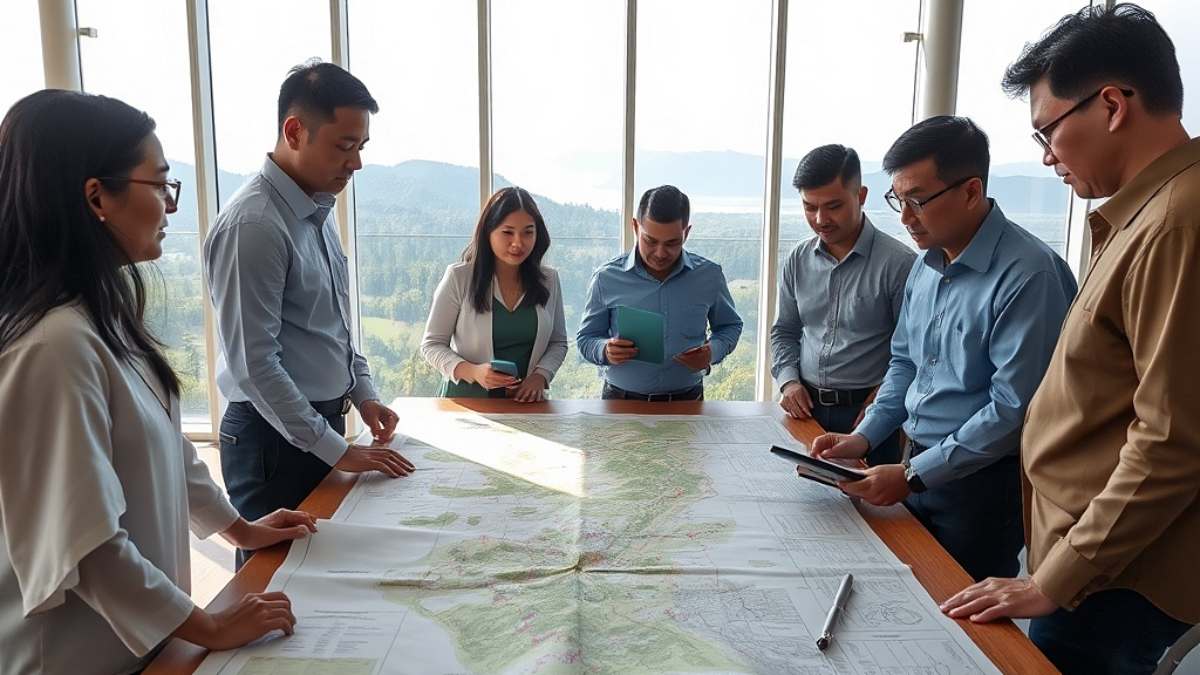
Image generated with Ai
By operationalising seven core strategies, NESAP ensures that eco-adventure site development respects environmental carrying capacity, climate adaptation imperatives, and local community well-being. The framework mandates that eco-adventure projects in post-conflict zones incorporate climate-resilient infrastructure, green utility installations, and participatory governance mechanisms. This institutional alignment prevents over-commercialisation while establishing rigorous conservation standards across newly opened eco-adventure frontiers.
The Southern Philippines, particularly Mindanao and the Bangsamoro Autonomous Region in Muslim Mindanao (BARMM), serves as an example of security transformation and post-conflict economic restructuring. For decades, lingering security concerns limited international investment and visitor volume across Mindanao’s resource-rich provinces. However, following structural peace negotiations, the ratifying of the Bangsamoro Organic Law, and the establishment of the autonomous regional government, the region is actively leveraging its natural capital to rebuild its economy.
The primary engine driving this regional evolution is the Ministry of Trade, Investments and Tourism (MTIT) of the BARMM government. Led by BTA Chief Minister Ahod B. Ebrahim, the MTIT has implemented comprehensive policies designed to position the autonomous region as a secure, competitive, and culturally rich eco-adventure destination.
To overcome legacy perception hurdles, MTIT actively participates in national and international trade expositions, such as the 37th Philippine Travel Mart. Through these platforms, the ministry presents curated eco-adventure itineraries, highlighting pristine island networks, forest ecosystems, and indigenous artisan communities across Basilan, Lanao del Sur, Maguindanao, Sulu, and Tawi-Tawi. Furthermore, MTIT has deployed the Filipino-Bangsamoro Brand of Service (FBS) training programme across local government units, standardising hospitality, safety protocols, and service delivery for local tourism operators.
To support data-based decision-making, MTIT conducts regional capacity-building workshops for local tourism officers on Results-Based Monitoring and Evaluation (RBME) and Geographic Information Systems (GIS) mapping. These spatial mapping initiatives enable local authorities to identify high-potential ecotourism zones, establish carrying capacity limits, and build climate-resilient infrastructure without compromising fragile ecosystems.
A core tenet of BARMM’s eco-adventure strategy is the preservation of living cultural heritage as a defense against socio-economic marginalisation. The Bangsamoro Commission for the Preservation of Cultural Heritage (BCPCH), working alongside the MTIT and provincial tourism offices, has established institutional support for community-based tourism initiatives.
In Lanao del Sur, programmes centred on Schools of Living Traditions (SLTs) preserve indigenous arts, including Langkit weaving and Baor woodcarving among Meranaw artisan communities. By registering master craftspeople in the Registry of Bangsamoro Artists and Artisans and providing direct financial assistance, regional institutions ensure that younger generations inherit these cultural skills. Integrating these living traditions into curated travel itineraries creates sustainable, non-agricultural income sources for local families, directly supporting peacebuilding efforts.
Concurrently, international development bodies are addressing the root causes of economic vulnerability in the region. Organisations like the International Labour Organization (ILO), through the Japanese-funded ARISE project, and the Food and Agriculture Organization (FAO) are establishing community business centres and climate-resilient micro-enterprises. By offering alternative income options to vulnerable agricultural households, these multi-agency interventions eliminate economic pressures that historically fueled local conflict.
The conversion of fragile ecosystems into stable economic zones is supported by foreign direct assistance and international development financing. On 15 January 2024, the Delegation of the European Union to the Philippines and the BARMM government formally launched the ₱1.23 billion (€20 million) Bangsamoro Agri-Enterprise Programme (BAEP).Development Programme Funding Agency / Source Allocation (PHP / EUR) Targeted Impact & Focus Area Bangsamoro Agri-Enterprise Programme (BAEP) European Union (EU) ₱1.23 Billion (€20 Million) Agri-fishery value chains, Halal sector, and private investment across Basilan, Sulu, and Tawi-Tawi Support to Bangsamoro Transition (SUBATRA) European Union (EU) ₱1.50 Billion Institutional capacity building, legislative strengthening, and democratic governance Peace and Development Programme BARMM (PD-BARMM) European Union (EU) ₱1.50 Billion Local peacebuilding mechanisms, community normalisation, and security reintegration Mindanao Peace and Development Programme (MINPAD-Rise) European Union (EU) ₱2.10 Billion Infrastructure expansion, rural connectivity, and economic diversification across Mindanao
BAEP focuses on empowering small and medium producers within agri-fishery and ecotourism value chains across the island provinces of Basilan, Sulu, and Tawi-Tawi (BaSulTa). The programme operates alongside larger EU-funded peace initiatives, including SUBATRA (₱1.5 billion), PD-BARMM (₱1.5 billion), and MINPAD-Rise (₱2.1 billion).
The strategic importance of the collaborative venture was highlighted by European Union Ambassador to the Philippines Luc Véron during the launch. It was stated that the Bangsamoro Agri-Enterprise Programme (BAEP) would complement the EU’s existing peace and development programmes by supporting the BARMM government in delivering peace dividends to communities across the region, particularly in isolated areas that have often felt left behind.
Similarly, the importance of institutional collaboration was emphasized by BARMM Chief Minister Ahod B. Ebrahim. It was noted that the sustainability of the peace process and its dividends would require shared responsibility. Through collective efforts, obstacles were expected to be overcome, opportunities capitalized upon, and local potential unlocked, with the initiative envisioned as a model for sustainable development that could inspire other regions facing similar circumstances.
These coordinated investments illustrate how international aid, combined with local public administration, builds the physical infrastructure, commercial capacity, and regulatory environment required for eco-adventure tourism to flourish in post-conflict zones. Specialized tour offerings, such as the Wonders of Basilan Tour and Zamboanga’s Onse Islas Pink Sand Escape, demonstrate how former security risks are being successfully repositioned as prime eco-adventure attractions.
The post-conflict eco-adventure model in Southeast Asia aligns with international precedents in other post-conflict jurisdictions. Analyzing comparative policy implementations in Colombia and Sri Lanka reveals universal operational strategies for managing the “fear-to-demand” transition.
Following the 2016 historic peace agreement between the Colombian State and the Revolutionary Armed Forces of Colombia (FARC-EP), the Colombian government, through the Ministry of Commerce, Industry, and Tourism (MinCIT), instituted the Turismo para la Paz (Tourism for Peace) strategic framework.Comparative Indicator Pre-Peace Accord Baseline (2006) Post-Peace Accord Level (2018) Growth Rate / Transformation Impact Foreign Visitors to Colombia 1,053,360 Visitors 3,104,602 Visitors +194.7% Increase (>300% total foreign expansion) National Natural Parks (NNP) Total Footfall 597,238 Visitors 1,831,192 Visitors +206.6% Surge in Nature Park Visitation Visitors to Top 11 High-Conflict Protected Parks 274,125 Visitors 617,994 Visitors +125.4% Direct Growth in Post-Conflict Zones
The Turismo para la Paz strategy targeted regions historically impacted by armed conflict, such as Urabá-Darién, Cauca, and Caquetá. Through regulatory policies—including the Documento Base de Turismo, Paz y Convivencia (2015), Resolution 3159 (2015), and Resolution 3860 (2015) governing adventure tourism safety—MinCIT established formal structures for re-integrating demobilised combatants into rural ecotourism cooperatives.
Official data illustrates an increase in visitor numbers following the peace process. Foreign international arrivals to Colombia expanded from 1,053,360 in 2006 to 3,104,602 in 2018. More critically, visitation across Colombia’s 28 National Natural Parks (NNPs) surged from 597,238 in 2006 to 1,831,192 in 2018. Across 11 protected national parks directly located in former combat zones, visitor numbers rose from 274,125 to 617,994 over the same period. Statistical correlation analysis conducted across 1995–2018 datasets confirms a strong inverse relationship (-0.5474 correlation) between armed conflict events and foreign visitor arrivals, proving that security stabilisation directly drives tourist demand.
Similarly, Sri Lanka’s post-war recovery demonstrates the role of nature-based travel in territorial re-integration. Following the end of the civil conflict in 2009, the Sri Lanka Tourism Development Authority (SLTDA) prioritised the Northern and Eastern Provinces—areas that account for approximately 14% of the island’s landmass—for eco-adventure and cultural tourism development.
By making targeted investments in transport, rail networks, and digital infrastructure, the SLTDA connected previously isolated destinations such as Jaffna, Trincomalee, and Pasikudah to national tourism circuits. Although Sri Lanka faced subsequent economic volatility and pandemic disruptions—seeing nationwide arrivals drop to 194,500 in 2021 before recovering past 1.5 million arrivals—the SLTDA’s post-conflict strategy successfully integrated local MSMEs into the national tourism economy. By transitioning former military zones into marine conservation parks and wildlife sanctuaries, Sri Lanka established an eco-adventure corridor that continues to attract international travelers.
The transition of a post-conflict territory from a perceived “danger zone” to a sought-after travel destination follows a predictable trajectory known as the fear-to-demand transition curve. Reversing decades of negative media portrayals and government travel advisories requires LGUs and tourism boards to coordinate public diplomacy, digital marketing, and targeted consumer outreach.
Travel advisories issued by foreign diplomatic missions present a persistent hurdle for post-conflict destinations. Even when ground-level security conditions improve significantly, foreign travel warnings often lag behind official peace agreements.
To navigate this obstacle, local government units and regional agencies employ a three-tier mitigation strategy:
First, LGUs partner with national tourism boards to establish direct communication with foreign embassies, presenting verified crime statistics, risk assessments, and updated safety profiles. Second, authorities establish localised tourist assistance networks and dedicated safety call centres, as outlined in Objective 2.4 of the Philippines’ NTDP 2023-2028. Third, regional destinations focus initially on domestic travelers and intrepid adventure enthusiasts—market segments that are generally less constrained by international travel warnings.
Data from the Philippines shows that domestic tourism serves as a crucial economic bridge during the initial post-conflict stabilisation phase. Domestic tourism expenditure reached ₱3.2 trillion in 2024, accounting for approximately three-quarters of total national tourism spending. This strong domestic base provides essential revenue for local operators while establishing proof of safety for international travel markets.
In the modern digital landscape, destination rebranding is driven largely by user-generated content and visual social media platforms. Platforms such as TikTok, Instagram, and YouTube allow travelers to share authentic, real-time visual evidence of post-conflict eco-adventure destinations.
Social media creators highlighting hidden waterfalls, untouched forest reserves, and culturally immersive community stays provide direct validation that overrides legacy news narratives. Local operators leverage these platforms to showcase authentic community interactions, transparent safety conditions, and low-impact eco-tours. This ground-up visual proof accelerates movement along the fear-to-demand curve, converting initial consumer curiosity into active travel bookings.

Image generated with Ai
While post-conflict eco-adventure tourism offers significant socio-economic benefits, rapid development presents operational challenges that require proactive institutional management. Uncontrolled visitor growth can strain fragile ecosystems, disrupt local cultures, and exacerbate local inequality if governance frameworks are inadequate.
Remote, post-conflict destinations frequently face significant infrastructure deficits. On the hard infrastructure side, poor road networks, unreliable power grids, inadequate wastewater treatment facilities, and limited medical services can compromise both visitor safety and environmental integrity. Soft infrastructure gaps—such as limited digital connectivity, lack of standardised hospitality training, and restricted access to micro-finance for local entrepreneurs—further hinder community participation.
Addressing these challenges requires coordinated investments across public agencies. Under the Philippines’ NTDP 2023-2028 and NESAP 2024-2028, public investment priorities focus on building climate-resilient roads, upgrading regional airports, expanding municipal waste management, and delivering technical vocational training to rural residents.
Protecting pristine ecosystems from over-tourism requires rigid adherence to carrying capacity thresholds. Municipalities must avoid replacing conflict-driven damage with environmental degradation caused by unmanaged tourist volume.
By adopting UN Tourism INSTO frameworks, as mandated under NESAP 2024-2028, local authorities systematically track key sustainability metrics, including freshwater consumption, energy usage, solid waste production, carbon emissions, and ecosystem health. Spatial technologies, such as GIS mapping deployed by BARMM’s MTIT, enable authorities to set strict daily visitor caps for sensitive natural sites, enforce non-motorised zones, and restrict access during critical wildlife breeding seasons.
The long-term trajectory of post-conflict eco-adventure tourism indicates sustained expansion over the coming decade. As global demand for authentic, eco-conscious, and community-driven travel continues to grow, former conflict zones that successfully execute institutional rebranding will capture an increasing share of international travel spending.
For local government units seeking to convert fragile post-conflict zones into sustainable eco-adventure hubs, international best practices point to four strategic priorities:
First, establish inclusive governance structures that actively involve former combatants, indigenous leaders, women, and youth in destination planning and enterprise management. Second, prioritise institutional capacity building by training local workforce members in service standards, eco-guiding, and safety protocols. Third, maintain strict alignment between national environmental directives and local spatial development plans, ensuring that infrastructure expansion respects ecological boundaries. Finally, leverage authentic digital storytelling and strategic industry trade expos to rebrand the region, showcasing real-time security transformations to global travel markets.
By executing these strategic imperatives, municipal leaders can ensure that the transition from conflict to conservation delivers long-term economic prosperity, protects bio-diverse landscapes, and maintains lasting peace across Asia-Pacific’s eco-adventure frontiers.
The strategic evolution of post-conflict eco-adventure tourism proves that security transformation and destination rebranding can successfully convert previously volatile regions into international models of conservation and sustainable economic growth. Through multi-stakeholder governance, institutional policy execution, and targeted infrastructure investment, municipal and regional authorities across Southeast Asia, Colombia, and Sri Lanka have unlocked the long-term economic benefits of the peace dividend economy. As environmental preservation directly aligns with community empowerment, these former conflict corridors establish a highly resilient blueprint for global destinations. Sustainable nature-based travel remains an indispensable catalyst for lasting peace, economic prosperity, and environmental stewardship across post-conflict landscapes worldwide.
The systemic expansion of post-conflict eco-adventure tourism demonstrates that security transformation and sustainable economic growth are deeply interconnected. By converting former conflict zones into protected nature corridors, regional municipalities across Southeast Asia, Colombia, and Sri Lanka have successfully unlocked the peace dividend economy. Through robust institutional policy, community empowerment, and strategic destination rebranding, these regions have dismantled lingering safety perceptions while preserving fragile biodiversity. As local government units continue to prioritize green infrastructure and cultural preservation, sustainable travel will remain a vital engine for long-term economic resilience, ensuring that former volatile frontiers permanently transition into thriving, highly valued eco-adventure destinations.
The Philippines has shown that through tourism, one can turn conflict areas into opportunities for adventure, discovery, and sustainable development. Through this integration of eco-adventure and community involvement, the emerging tourism corridors are taking on new international appeal. This not only makes the country’s tourism scene more diverse but also helps to create employment, increase resilience, and make the Philippines a leader in adventure tourism.
Advertisement
Tags: BARMM tourism, community tourism, destination rebranding, eco-adventure travel, peace dividend economy
Advertisement
Advertisement












Thursday, September 3, 2026

Thursday, September 3, 2026

Thursday, September 3, 2026

Thursday, September 3, 2026

Wednesday, September 2, 2026

Wednesday, September 2, 2026

Thursday, September 3, 2026

Thursday, September 3, 2026



