
Cabo Verde Reinforces Cruise Tourism as Porto Novo Expansion Complements Mindelo’s New Gateway

Published
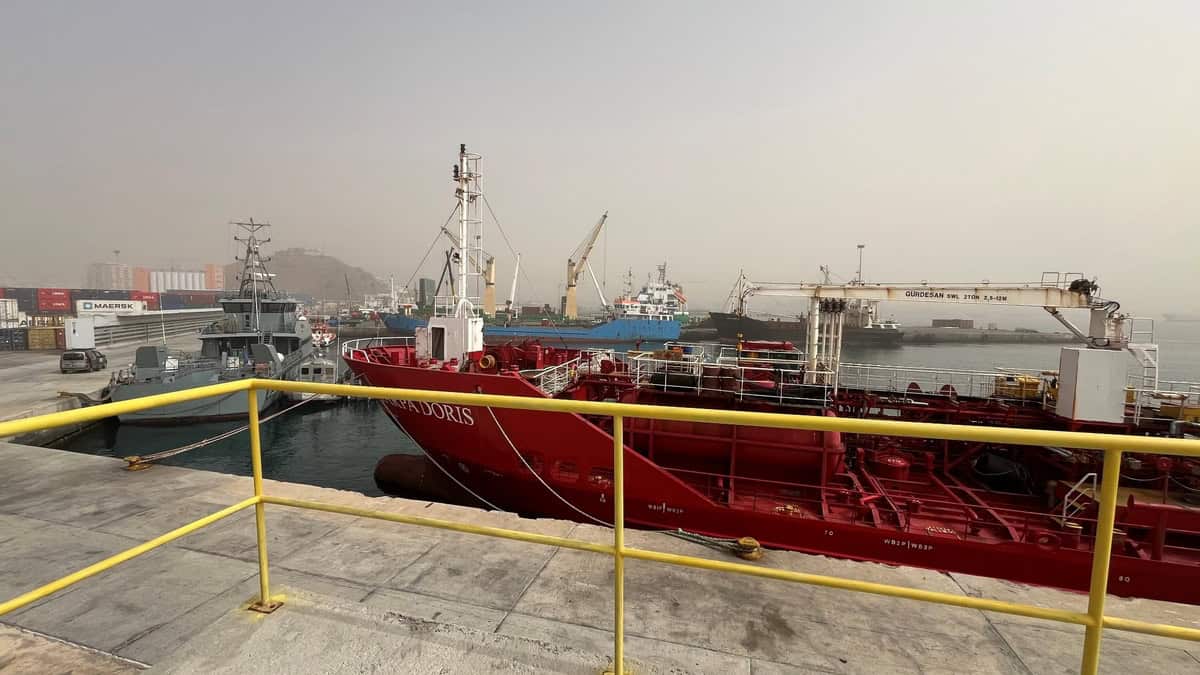
Cabo Verde is moving towards a more powerful two-island cruise proposition linking Mindelo in São Vicente with Porto Novo in Santo Antão. Mindelo’s new cruise terminal handled 73 calls, 51,021 passengers, 26,511 crew members and 344 excursions during its first operating season, while a separate €32 million Porto Novo expansion is moving through international procurement with cruise tourism explicitly among its strategic objectives. The combination could give cruise planners a stronger gateway to Santo Antão’s nature economy while widening Cabo Verde’s Atlantic cruise proposition.
Cabo Verde Cruise Tourism Is Becoming a Two-Island Infrastructure Story
The significance of the Porto Novo project becomes much clearer when it is examined beside what has already happened across the channel in Mindelo.
Advertisement
Advertisement
According to ENAPOR, Mindelo Cruise Terminal recorded 73 cruise calls and handled 51,021 passengers during the 2025–26 season. It also served 26,511 crew members and supported 344 excursions during that first year of operation.
Across the water, Porto Novo is entering a separate infrastructure expansion phase. According to the Government of Cabo Verde, the Santo Antão port intervention carries an investment of €32 million and is intended to increase installed capacity, strengthen competitiveness, lower operating costs and position Santo Antão more firmly within cruise tourism and the maritime economy.
Advertisement
Advertisement
Taken together, these projects suggest something commercially more important than two unrelated port upgrades: a northern Cabo Verde cruise system in which an established Mindelo gateway can increasingly be complemented by stronger access to Santo Antão.
| Verified cruise indicator | Mindelo and São Vicente | Porto Novo and Santo Antão | Travel-trade significance |
|---|---|---|---|
| Current status | Dedicated cruise terminal operating | Expansion and modernisation in international procurement | One functioning cruise gateway and one developing capacity node |
| Cruise evidence | 73 calls and 51,021 passengers in 2025–26 | Government explicitly targets stronger cruise-tourism positioning | Gives planners both proven demand and future expansion potential |
| Passenger infrastructure | Around 400 metres of cruise quay plus passenger Welcome Center | Existing 2,000-square-metre maritime passenger terminal | Shows that both sides already possess passenger-handling infrastructure |
| Existing Porto Novo footprint | Not applicable | Three quays of 45, 115 and 135 metres | Explains why additional capacity and modernisation matter |
| Investment | Cruise-terminal works contract €26.48 million | Expansion investment €32 million | Significant infrastructure capital is being deployed across both islands |
Porto Novo Expansion Could Change How Cruise Visitors Reach Santo Antão
Porto Novo is already Santo Antão’s principal maritime interface with neighbouring São Vicente. ENAPOR describes the port as providing the continuous connection between land and maritime transport, principally with São Vicente. Its existing infrastructure includes a 2,000-square-metre passenger building, three quays and two roll-on roll-off ramps.
Advertisement
Advertisement
The new project therefore does not create maritime tourism from nothing. Instead, it seeks to increase the scale and capability of an existing gateway.
ENAPOR formally launched the international procurement process in 2026 for the design, engineering and construction of Porto Novo’s modernisation and extension. The institutional project description says the intervention is intended to increase operational capacity, improve traffic flow and strengthen safety.
This distinction matters. Porto Novo should not yet be presented as a completed new cruise facility. As of 11 September, the most recent dedicated Porto Novo works entry visible in ENAPOR’s official tender index remains the first-stage international tender published on 27 April 2026. I found no subsequent ENAPOR notice in that index confirming completion or commissioning of the expansion.
Mindelo Has Already Proven That Cruise Demand Exists
Mindelo provides the demand-side evidence behind this wider strategy.
The new terminal’s first commercial passenger operation took place on 30 September 2025, and it was a turnaround call, meaning passengers and crew could embark and disembark through São Vicente rather than using Mindelo solely as a transit stop.
That capability is strategically important for Cabo Verde cruise tourism. Turnaround infrastructure creates scope for pre-cruise and post-cruise stays, airport transfers, hotel demand, ground handling and locally packaged excursions.
Advertisement
Advertisement
The first full season then delivered the 73-call and 51,021-passenger result. ENAPOR also reported 344 excursions, demonstrating that cruise activity already generates organised movement beyond the quayside.
For travel companies, the next question is therefore not whether Mindelo can receive cruise business. It is whether the developing infrastructure on Santo Antão can allow more of that cruise economy to reach the neighbouring island directly or through more sophisticated two-island programmes.
The Overlooked Opportunity Is Cruise Distribution Rather Than Another Port
This is where the new travel-trade angle becomes particularly significant.
ENAPOR had already placed Santo Antão inside its Cruise Destination Development Programme before the Mindelo terminal completed its first commercial season. In February 2025, cruise-port development work in Mindelo included a planned technical visit to Santo Antão specifically because the island formed part of that destination-development programme.
Government material in March 2026 subsequently placed Porto Novo, Porto Grande and the Mindelo Cruise Terminal within an integrated maritime investment concept.
The commercial implication is substantial. Mindelo can remain the higher-capacity cruise gateway and turnaround point, while an expanded Porto Novo could strengthen direct Santo Antão access and improve the range of itinerary and excursion options available to cruise operators.
Advertisement
Advertisement
That does not mean a cruise line has announced new services because of the expansion. None of the official sources reviewed establishes that. But it does show that Cabo Verde is developing the physical gateway and destination product at the same time, which is more consequential than simply increasing berth space.
If that strategy succeeds, passenger spending could be distributed more widely between São Vicente and Santo Antão, while cruise itineraries gain access to two sharply different products within the same northern island cluster: Mindelo’s urban and cultural offer and Santo Antão’s mountain and nature tourism.
Sustainable Cruise Infrastructure Adds Another Competitive Layer
The port strategy also carries a measurable environmental component.
According to the European Investment Bank, a €34 million EU grant complements €114 million of EIB financing, creating an approximately €148 million concessional package for Cabo Verde’s sustainable port programme. The programme includes Porto Novo expansion, solar installations across several ports and onshore power supply at the Mindelo cruise terminal.
The European Commission separately identifies a photovoltaic roof at Mindelo Cruise Terminal and wider solar and energy-efficiency investment within the national port programme.
Santo Antão itself also has a 1.2 MW solar park in Porto Novo already producing electricity. Government information said battery deployment was planned from September 2026 and expected to raise renewable generation to around 40 per cent of the island’s consumption.
Advertisement
Advertisement
There is an important reporting limit here. No official source reviewed as of 11 September confirms that the Santo Antão battery system has actually been commissioned. Nor should Mindelo’s confirmed onshore-power project be incorrectly attributed to Porto Novo.
| Position as of 11 September 2026 | Confirmed | Not yet established by reviewed official sources |
|---|---|---|
| Mindelo cruise operations | 73 calls and 51,021 passengers in first season | Future passenger totals for 2026–27 |
| Porto Novo expansion | €32m investment and international procurement | Completed works or operational new cruise capacity |
| Cruise destination development | Santo Antão included in ENAPOR programme | A newly announced cruise-line route resulting from expansion |
| Green port infrastructure | Mindelo OPS and wider solar investment | Porto Novo cruise shore power |
| Santo Antão energy | 1.2 MW solar park operating | September battery commissioning completed |
September Port Security Work Strengthens the Operational Case
A fresh development in September 2026 adds another layer that cruise planners should watch.
ENAPOR conducted International Ship and Port Facility Security Code training in Mindelo from 31 August to 4 September, covering port-facility security planning, security assessments, threat identification and mitigation measures.
On 4 September, the first SCOPE Africa Port Steering Committee in Mindelo also reviewed port protection, operational safety, governance and environmental resilience. A 2026–27 implementation roadmap was validated as part of that programme.
This does not amount to a new cruise route announcement. Its importance is operational. As Cabo Verde attempts to grow international cruise activity across more port infrastructure, security procedures, trained staff and consistent port governance become part of the destination’s ability to handle larger and more complex flows reliably.
Santo Antão Gives Porto Novo a Shore Product Worth Building Around
Cruise infrastructure is valuable only if passengers have compelling reasons to leave the ship.
Advertisement
Advertisement
Santo Antão already has that product base. The World Bank’s $75 million Resilient Tourism and Blue Economy Development Project covers Santo Antão and São Vicente and includes trekking trails, coastal infrastructure and other tourism assets designed to diversify visitor activity between Cabo Verde’s islands. World Bank Cabo Verde resilient tourism programme
Cabo Verde’s project-management unit has separately documented rehabilitation of tourism trails across Porto Novo, Paúl and Ribeira Grande, including four trail routes in the Porto Novo municipality.
This creates a logical product chain: port capacity brings visitors to the island; transport distributes them; trails and nature attractions provide the shore experience; local operators, guides and tourism businesses capture a greater share of spending.
That is why Porto Novo matters to cruise tourism beyond marine engineering.
What Cruise Lines, Travel Agents and Tour Operators Should Do Now
- Treat Porto Novo as pipeline infrastructure, not a completed new cruise facility. Its expansion is verified, but completion and commissioning are not.
- Watch ENAPOR procurement updates closely. Contractor confirmation, final engineering parameters and construction milestones will determine when additional capacity becomes commercially usable.
- Keep Mindelo as the proven operating anchor. Its first-season passenger, excursion and turnaround data are already verified.
- Develop Santo Antão products with transfer contingencies. Until expanded Porto Novo capacity and specific cruise calls are confirmed, operators should retain robust cross-island logistics planning.
- Avoid overstating sustainability claims. Onshore power is officially identified for Mindelo; comparable Porto Novo cruise shore-power infrastructure has not been confirmed.
- Monitor the Santo Antão battery milestone separately. Planned September deployment strengthens the island sustainability story only once commissioning is officially verified.
- Watch 2026–27 cruise schedules for the real commercial test. New or larger Porto Novo calls would provide the clearest evidence that infrastructure spending is translating into itinerary change.
Cabo Verde Could Ultimately Sell Two Islands as One Stronger Cruise Destination
The larger strategic shift is therefore not simply that Cabo Verde is spending €32 million on Porto Novo or that Mindelo has gained a modern terminal.
It is the gradual construction of a connected northern cruise ecosystem.
Advertisement
Advertisement
Mindelo now has a functioning specialist terminal, a documented first-season market, turnaround capability and sustainability investment. Porto Novo has a government-backed expansion aimed partly at cruise tourism. Santo Antão is simultaneously building its nature-tourism product, while the national port network is strengthening security and environmental infrastructure.
If the Porto Novo project converts those plans into operational capacity, cruise companies could gain greater flexibility in how they package São Vicente and Santo Antão. The result could be longer and more varied shore programmes, wider local spending and a stronger reason for Atlantic itineraries to treat northern Cabo Verde as more than a single port call.
For travel-industry readers, that two-island distribution opportunity is the development to watch next — not merely the construction project itself.
Advertisement
