
Thailand Travel Mistakes Ruin Vacations When Tourists Rush Frantically Through Bangkok And Phuket Without Resting, Here’s The Update

Published
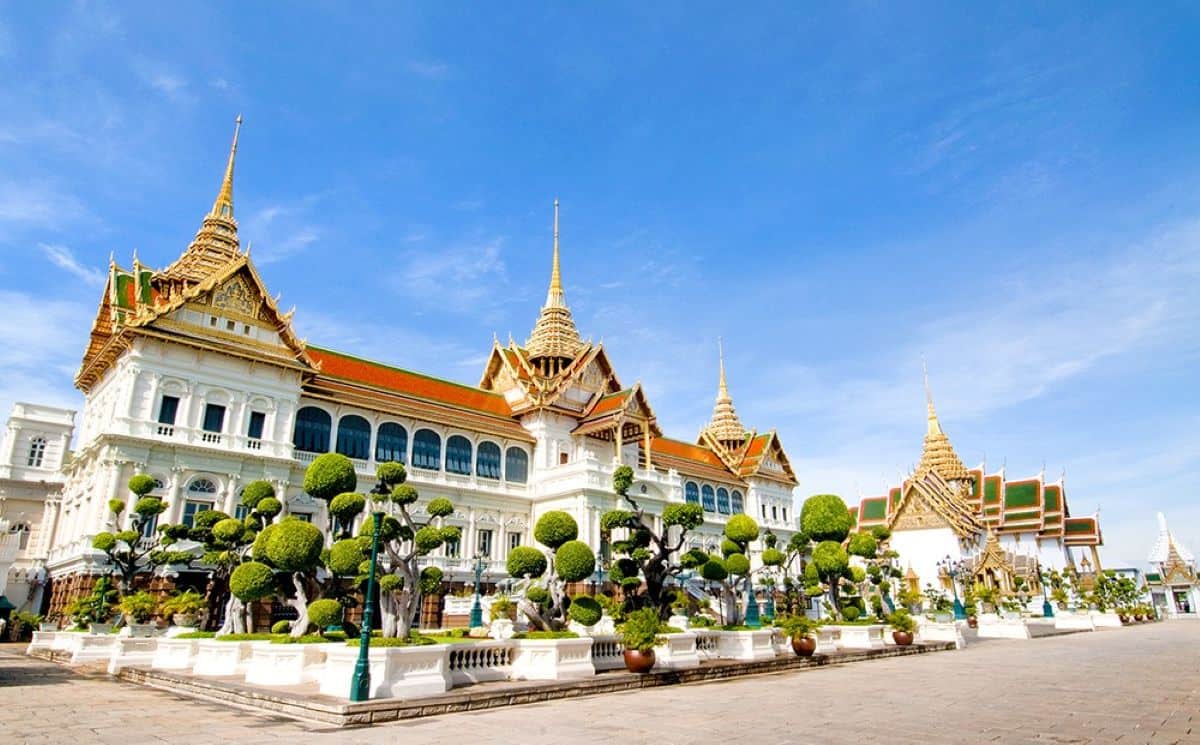
Image Credit tourismthailand.org
Thailand captivates the senses with a myriad of colors and smells. Unfortunately, many tourists do little more than whistle by the thousands of sites the country has to offer. Travelers miss out on the opportunity to relax and enjoy Thailand by structuring their itineraries in an extreme and exhausting manner. Instead of creating opportunities to have fun and enjoy Thailand, many travelers make extreme itineraries to try to fit as many sites into their “been there done that” list. This is especially true with sunsets. Many travelers make extremely lengthy itineraries to try to catch as many Thai sunsets as they can. Thai travelers warn that, if you make extremely long itineraries to catch as many sites as possible, you will quickly become bored of traveling and will come to loathe the many places you have visited. Instead of crafting long, extreme itineraries to catch as many sites as you can, you should plan to take your time at as few sites as possible so that you can experience and enjoy what you are doing.
Selecting Experiences Based on Personal Travel Desires
When tourists re-evaluate their travel preferences, they realize that building an itinerary around personal interests creates a far superior journey. Industry researchers explain that travelers seeking pristine coastal landscapes and peaceful environments achieve maximum satisfaction by dedicating their entire stay to Phuket, Krabi, or the Phi Phi islands. Conversely, culture enthusiasts and culinary travelers gain far more value by spending several days systematically exploring the historical temples, lively markets, and diverse neighborhoods of Bangkok.
Advertisement
Advertisement
At the same time, travelers interested in rich northern heritage or dynamic entertainment options benefit immensely by narrowing their focus to Chiang Mai or Pattaya. Travel planners note that when couples, families, or groups of friends reduce their total destination count, they unlock genuine opportunities to relax, engage authentically with residents, and form lasting memories. This broader shift toward deliberate, slow-paced exploration actively promotes long-term sustainability across the international tourism landscape, benefiting local economies and global travelers alike.
Embracing Slower Exploration for Unforgettable Adventures
Advertisement
Advertisement
In conclusion, industry specialists stress that the true success of an international trip should never be measured by the sheer number of destinations checked off a frantic list. The real essence of travel resides in deep cultural engagement, authentic local encounters, and meaningful rest, rather than accumulating high location counts. Spending dedicated, uninterrupted time within a single region fosters rich personal memories that far outlast the fleeting impressions of a hyper-rushed multi-city itinerary.
As global travel trends shift steadily toward mindful and conscious exploration, service providers around the world are re-engineering their travel packages to encourage longer, immersive stays. By choosing depth over quantity, international travelers directly reduce environmental strain while providing vital economic support to local artisans, family-run vendors, and regional service staff. Moving through destinations with care and intention guarantees that every vacation becomes a deeply fulfilling adventure worth treasuring for a lifetime.
Advertisement
Advertisement
Economic Allocation in Transit Travel versus Extended Regional Exploration
Evaluating total tourist expenditures reveals a distinct disparity between fast-paced multi-city tours and extended single-region stays. The average daily expenditure for international visitors in Thailand hovers around ฿5,690 ($160 USD). On hyper-condensed itineraries covering multiple provinces, approximately 35% to 45% of a traveler’s financial budget is consumed exclusively by intermediate transit costs, including short-haul flights, high-speed ferries, and long-distance road transfers. Consequently, less than 55% of the traveler’s total budget remains available for local lodging, authentic dining, and cultural activities.
In contrast, tourists adopting extended stay strategies in single destinations like Phuket or Chiang Mai direct upwards of 75% of their total holiday budget directly toward local businesses. Spending more on regional dining, artisan markets, and guided tours enriches the travel experience while distributing capital more effectively into local host communities.
Time-Cost Analysis and Vacation Hours Lost to Internal Movements
Advertisement
Advertisement
Analyzing vacation time allocation demonstrates the substantial temporal penalty associated with rapid location hopping. A 7-day itinerary attempting to cover Bangkok, Chiang Mai, Phuket, and Krabi subjects travelers to a cumulative loss of 28 to 34 hours dedicated solely to transit logistics. This lost time includes packing bags, commuting to terminals, standing in security lines, navigating flight delays, boarding ferries, and completing hotel check-ins.
This logistical friction consumes nearly 30% to 40% of a traveler’s total waking vacation hours. Instead of enjoying sight-seeing, culinary experiences, or rest, tourists spend a major fraction of their trip inside transit corridors, driving up physical stress and diminishing total satisfaction.
Regional Travel Geography and Recommended Regional Itinerary Loops
Categorizing regional geography into distinct destination clusters helps tourists minimize unnecessary transfers while maximizing cultural immersion. Geographic clustering allows travelers to pick one defined area that matches their specific interest profile without attempting to conquer the entire nation in one visit.
For instance, the Northern Region Cluster centers on Chiang Mai and extends to Chiang Rai across an approximate distance of 180 km, forming an ideal 5 to 7-day cultural and eco-tourism loop. Meanwhile, the Andaman Coast Marine Cluster comprises Phuket, Krabi, and the Phi Phi islands, linked by ferry distances ranging from 30 to 45 km for a perfect coastal retreat. Similarly, the Gulf Coast Beach Cluster groups Pattaya, Koh Samui, and Koh Phangan into a concentrated coastal experience, anchored by Bangkok as the primary central entry point handling over 32 million airport arrivals annually.
Environmental Strain and Carbon Emissions of Regional Transportation
Advertisement
Advertisement
Continuous domestic transfers impose a measurable ecological burden on delicate marine and island ecosystems. A single short-haul domestic flight, such as the popular route from Bangkok to Phuket, generates approximately 90 to 120 kg of CO₂ per passenger.
Similarly, high-frequency marine motorboats and ferries navigating fragile waters between Phuket, Krabi, and Phi Phi generate significant acoustic noise, underwater disturbance, and fuel residue within marine sanctuaries. Limiting transit loops directly mitigates carbon emissions and reduces physical pressure on sensitive natural environments.
Average Length of Stay Patterns Across Global Visitor Demographics
Analyzing global arrival statistics highlights a clear correlation between length of stay, visitor satisfaction, and economic contribution. The national Average Length of Stay for international tourists in Thailand stands at 9+ days per trip.
Significant variations exist across regional demographics. European tourists exhibit the highest tendency toward slow travel, maintaining average stays between 14 and 19 days (with Swedish visitors averaging 19 days). In contrast, short-haul tourists from neighboring Asian markets average 4 to 6 days, often falling into the trap of over-scheduling brief vacations.
Seasonal Hotel Occupancy Trends and Multi-Night Rate Structures
Advertisement
Advertisement
Seasonal demand cycles in primary tourist hubs significantly influence lodging pricing and availability. High-season occupancy rates in Bangkok peak between 79% and 84% from December through February, with Average Daily Rates averaging around ฿4,241 ($120 USD) per night.
In Phuket, peak December occupancy reaches 86% to 90%, driving room rates up by 10% to 15% year-over-year. Travelers opting for extended stays in a single resort or city secure substantial multi-night discount structures, avoiding peak single-night surcharge penalties while lowering total accommodation costs.
Domestic Transit Networks and Low-Carbon Infrastructure Alternatives
The regional transportation network handles an immense volume of internal tourist traffic daily. Domestic networks operate over 500 daily flights connecting capital hubs like Bangkok to key destination points like Chiang Mai and Phuket.
For environmentally conscious travelers committed to slower exploration, long-distance railway lines present an appealing alternative. The overnight train journey from Bangkok to Chiang Mai covers roughly 750 km over 12 to 13 hours, offering a scenic, low-carbon transportation model that combines travel with overnight accommodation.
Local Economic Contributions and Hospitality Sector Employment Dynamics
Advertisement
Advertisement
Tourism represents a cornerstone of national economic stability, contributing roughly 12% to 14% of national gross domestic product while supporting over 4.19 million direct jobs. When indirect supply chains are accounted for, the sector supports over 20% of total national employment.
Tourists who remain in a single geographic zone for 4 or more consecutive days spend 30% more on local street food vendors, independent artisans, and regional guides compared to rapid multi-city tour groups. Extended single-location stays ensure that travel expenditures filter directly into community-level micro-economies.
Extended Stay Trends and the Growth of Remote Working
The surge in extended-stay travel has redefined regional tourism models, supported by modern long-term visa frameworks like the Destination Thailand Visa. This visa pathway requires applicants to show proof of liquid savings of at least ฿500,000 (~$14,000 USD) and grants stays of up to 180 days per entry, valid over 5 years.
With tens of thousands of remote workers, freelancers, and cultural students taking advantage of these extended stay options, major hubs such as Chiang Mai and Phuket have evolved into global remote-work bases, accelerating the transition toward single-location living and immersive slow travel.
Specialized Wellness Tourism and Extended Stationary Itineraries
Advertisement
Advertisement
Specialized travel segments naturally require longer, stationary itineraries that prioritize health and recovery over sightseeing. Thailand features 61 JCI-accredited medical facilities, attracting more than 580,000 international medical and wellness tourists annually.
Medical, wellness, and holistic health travelers stay an average of 12 to 21 days in a single location. These visitors spend 30% to 50% more per trip than typical sightseeing tourists, reporting significantly higher satisfaction scores due to the calm, restorative nature of their stationary travel plans.
The Final Verdict
No one needs help finding the Attraction in Thailand. Interesting memories can include recommendations for your must-see attractions and activities, as well as, the local artists and sports teams. Of course, you have to witness a Thai Sunset at least once. People can forget essential pieces of a trip, causing them to lose information. People need to remember interesting and essential pieces of other people’s experiences.
Advertisement
