

Thailand Unlocks New Tourism Opportunities for Transit Passengers With Airport-to-City Travel Experiences

Updated
Published
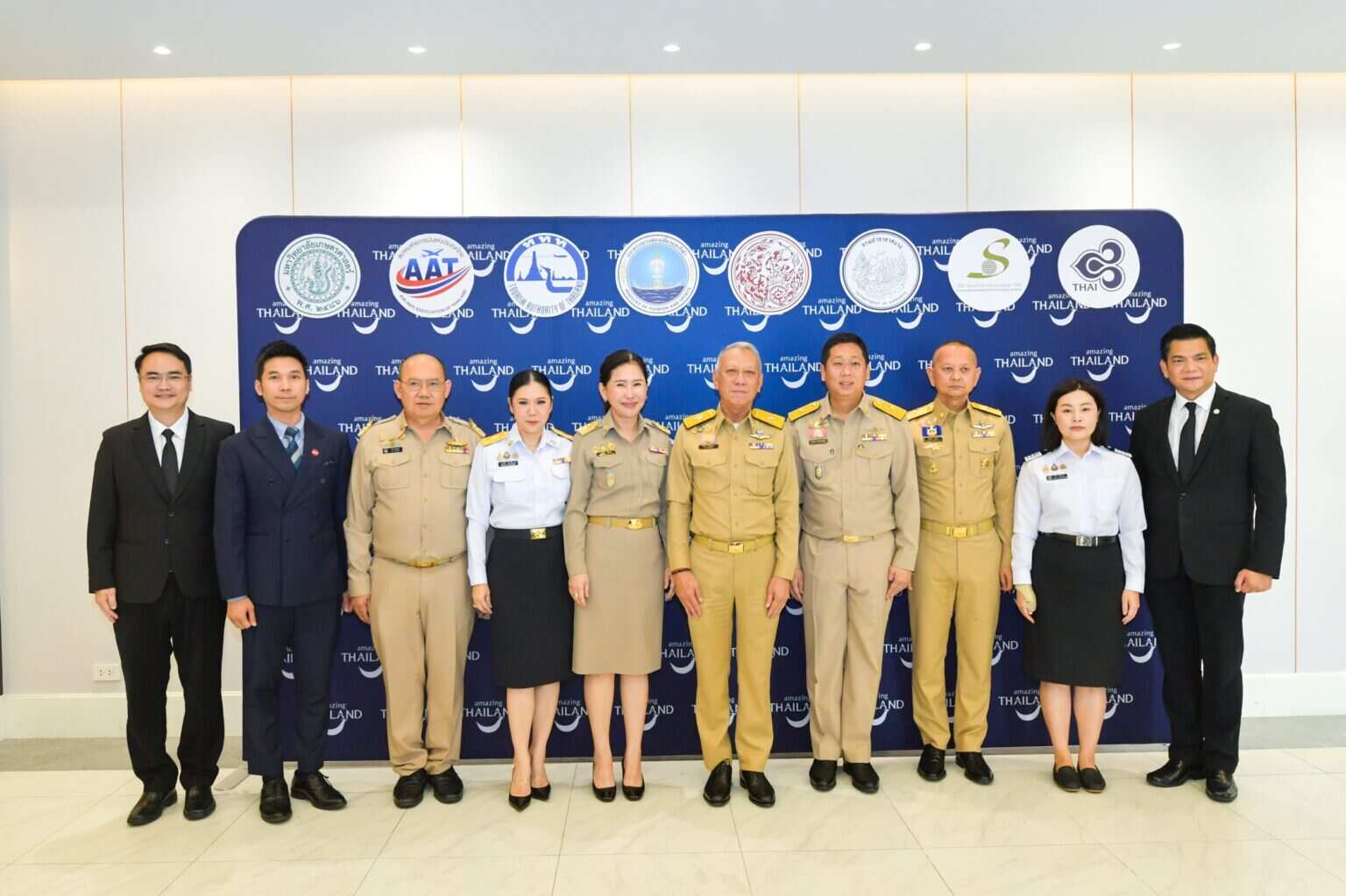
It seems that Thailand plans to take advantage of long transfers at airports by creating the “Amazing Thailand Transfer Passenger Privilege” program that will persuade qualifying transfer and transit passengers to visit places other than the airport in order to wait for further flights.
The Tourism Authority of Thailand (TAT) is developing the programme under a new Letter of Intent cooperation framework involving the Department of Airports and four aviation, academic and tourism partners. By bringing different parts of Thailand’s travel ecosystem together, the initiative is intended to create organised transit experiences that match the amount of time passengers have available between flights.
The cooperation framework was formally signed on 5 October 2026 at Thailand’s Ministry of Transport, marking an important step towards developing the concept into a practical passenger programme.
Six participating organisations are combining expertise in tourism development, airport operations, aviation, engineering, hospitality and passenger services. Alongside TAT and the Department of Airports, the cooperation includes Kasetsart University’s Faculty of Engineering, the Airlines Association of Thailand, Thai Airways International Public Company Limited and Suvarnabhumi Airport Hotel Company Limited.
Advertisement
Advertisement
Together, the organisations will work on passenger privileges, services and transit experiences that can be adapted to different connection periods.
Thailand Looks Beyond the Airport for Transit Tourism Growth
The central idea behind the Amazing Thailand Transfer Passenger Privilege is straightforward: a long flight connection does not necessarily have to mean spending the entire waiting period inside an airport terminal.
Advertisement
Advertisement
For eligible passengers with sufficient time between flights, the programme could open opportunities to experience nearby Thai destinations before returning to the airport for their onward journey.
TAT plans to coordinate with participating organisations to connect airports with nearby cities, attractions, local communities and tourism businesses. Experiences will be structured according to the amount of time available during a passenger’s connection.
This time-based approach will be crucial because transfer passengers operate under very different circumstances from conventional tourists. A traveller spending several days in Thailand has considerable flexibility, while a transit passenger may have only a limited number of hours available.
The proposed programme therefore seeks to build tourism experiences around the passenger’s actual connection window rather than expecting travellers to adapt to conventional sightseeing itineraries.
Transit Time Will Shape Each Tourism Experience
Tourism routes and experience menus are expected to be developed around different transit periods.
Passengers with relatively short but workable connections could potentially be directed towards experiences close to participating airports. Those with longer connections may have access to broader itineraries involving attractions, shopping areas, restaurants, cultural experiences or nearby communities.
Advertisement
Advertisement
The concept places significant importance on practical journey planning.
Any experience designed for connecting passengers must account not only for sightseeing time but also for immigration procedures where applicable, airport processing, road travel, security requirements and the time required to return for the onward flight.
Passenger convenience and operational reliability will consequently form an important part of the programme’s development.
The participating organisations are expected to consider safety, ground transportation and timely airport return when developing the routes and services.
This structure could allow passengers to understand clearly what they can realistically experience without placing their connecting journey at unnecessary risk.
Passenger Convenience Becomes a Core Priority
Transit tourism differs significantly from traditional destination tourism because time is the most important constraint.
Advertisement
Advertisement
A conventional international visitor may change plans during a holiday. A transfer passenger has a fixed departure deadline.
The Amazing Thailand Transfer Passenger Privilege is therefore being designed around the realities of aviation schedules.
Ground transport will need to operate efficiently. Tourism activities will need to fit clearly defined time windows. Attractions and participating businesses will need to accommodate passengers who may be visiting for only a few hours.
Most importantly, travellers must have enough time to return to the airport and complete the procedures required for their next flight.
By incorporating these considerations during the development stage, Thailand is attempting to build a programme that connects aviation operations with destination experiences instead of treating them as separate parts of the visitor journey.
Local Businesses Could Gain From Transit Passenger Spending
The programme is also designed to create economic benefits beyond airports.
Advertisement
Advertisement
Transit passengers already passing through Thailand represent an existing flow of international travellers. Encouraging some eligible passengers to leave the airport during longer connections could convert part of that flow into additional visitor expenditure.
Restaurants, shops, attractions, communities, transport providers and local tourism businesses located within practical travelling distance of participating airports could potentially benefit.
Even relatively short excursions can generate spending on meals, transport, shopping, admission fees and tourism activities.
This gives the initiative a broader economic purpose.
Rather than concentrating passenger spending entirely within airport terminals, Thailand wants to explore ways of circulating some of that expenditure through surrounding destinations and communities.
The approach could be particularly useful where airports are located close enough to tourism attractions or urban centres to make short-duration visits practical.
Advertisement
Advertisement
Communities Could Become Part of the Airport Journey
Connecting airports with surrounding communities could also give passengers a different introduction to Thailand.
Instead of experiencing the country primarily through an international terminal, eligible travellers could encounter local food, shopping, culture, neighbourhoods and attractions during their connection.
The programme’s emphasis on nearby communities suggests that Thailand is looking beyond conventional airport stopover products.
Community-based tourism operators and smaller businesses could potentially become part of the transit tourism supply chain where suitable experiences can be delivered safely within strict time limits.
This could broaden the geographical distribution of tourism spending while creating additional commercial opportunities around participating airports.
The success of this approach, however, will depend heavily on logistics. Routes will need to be realistic rather than overly ambitious, particularly in areas where road congestion or longer transfer distances could affect journey times.
Advertisement
Advertisement
Six Organisations Combine Tourism and Aviation Expertise
The cooperation model brings together organisations with different responsibilities and technical capabilities.
TAT contributes destination marketing and tourism development expertise, while the Department of Airports provides knowledge of airport operations and passenger movements.
The involvement of the aviation sector adds practical understanding of airline schedules, transfer requirements and passenger needs.
Academic participation provides another dimension, particularly where engineering, transport planning, passenger-flow analysis or operational design may be required.
Hospitality participation could also support services for passengers whose connection periods require rest, accommodation or additional facilities.
Combining these areas is particularly important because transit tourism sits between two industries.
Advertisement
Advertisement
It is simultaneously an aviation challenge and a tourism opportunity.
A programme may offer an attractive tourism experience, but it cannot succeed if passengers are concerned about missing their onward flights. Equally, an operationally efficient service will have limited tourism value if the experiences themselves are not attractive enough to encourage passengers to leave the airport.
The cooperation framework is intended to address both sides of that equation.
Initial Phase Will Test Practical Passenger Privileges
The initial development phase will concentrate on creating practical passenger privileges and Transit Experiences for eligible travellers.
Rather than immediately implementing a large nationwide programme, the participating organisations will use the early stage to develop and assess suitable services.
Project results will then help guide further development.
Advertisement
Advertisement
This provides an opportunity to understand passenger demand, operational requirements, transportation challenges and the types of experiences that work effectively within different connection windows.
The findings could subsequently support potential expansion.
Such a phased approach is particularly relevant for transit tourism because airport conditions vary considerably across Thailand.
An experience that works around one airport may not necessarily be appropriate elsewhere. Distances, traffic patterns, available attractions, passenger profiles and airline schedules can all affect what can realistically be offered.
Developing flexible models could therefore allow future transit experiences to be adapted to individual airport environments.
Thailand Strengthens Its Aviation and Tourism Hub Ambition
The initiative supports Thailand’s wider direction towards becoming an Aviation and Tourism Hub.
Advertisement
Advertisement
Thailand already occupies an important geographical position within Southeast Asian aviation, connecting travellers moving between regional and long-haul markets.
The new programme seeks to extract greater tourism value from passenger movements that already pass through the country.
Under the concept, a traveller does not necessarily need to choose Thailand as the main destination of a journey to contribute to its tourism economy.
A passenger travelling through Thailand to another country could potentially become a short-duration visitor during a suitable connection.
That creates an additional layer of value from aviation connectivity.
Airports would continue serving their primary transportation function while simultaneously acting as gateways to nearby tourism economies.
Advertisement
Advertisement
Transit Passengers Could Become Short-Stay Visitors
The distinction between a transit passenger and a tourist could become less rigid under the proposed system.
Traditionally, transfer passengers may arrive at an airport, remain within the terminal or airport area and depart several hours later without meaningfully experiencing the destination.
The Amazing Thailand Transfer Passenger Privilege seeks to create another possibility.
Where connection times and eligibility conditions permit, passengers could turn those hours into a compact Thailand experience.
A meal outside the airport, a cultural attraction, a local shopping trip or a carefully planned community visit could give passengers an introduction to the country that would otherwise never happen.
For Thailand’s tourism industry, that creates another opportunity beyond traditional overnight stays.
Advertisement
Advertisement
It could also introduce first-time visitors to destinations they may later choose to revisit for longer holidays.
High-Value Tourism Moves Into the Transit Market
The project also aligns with Thailand’s positioning as a High-Value and Meaningful Destination.
In this context, value does not depend solely on attracting more conventional holidaymakers. It can also come from improving the economic and tourism contribution of travellers already moving through Thailand’s aviation network.
Creating structured transit experiences could increase the value generated by each suitable passenger journey without requiring an entirely separate international trip.
Local restaurants could receive additional customers. Attractions could gain new visitors. Tourism operators could create specialised short-duration products. Communities could access new international markets.
At the same time, passengers could receive a more memorable experience than simply waiting inside a terminal.
Advertisement
Advertisement
The concept therefore attempts to turn unused connection time into tourism time.
A New Link Between Thailand’s Airports and Destinations
The Amazing Thailand Transfer Passenger Privilege remains under development, and the initial cooperation will focus on establishing workable privileges, services and experiences before any wider expansion.
Its broader direction, however, represents a significant shift in how transit passengers can be viewed within Thailand’s tourism economy.
Rather than treating them only as travellers passing through an airport, the programme seeks to recognise eligible transfer passengers as potential short-duration visitors.
By linking airports with nearby attractions, cities, communities and businesses, Thailand aims to create a more integrated relationship between aviation and tourism.
The initiative could ultimately give passengers more reasons to experience the country even when Thailand is not their final destination, while opening another channel for tourism expenditure to reach businesses and communities surrounding participating airports.
If successfully developed and expanded, the programme could turn the hours between two flights into something commercially valuable for Thailand and personally memorable for travellers — strengthening the country’s ambition to function not simply as a place where international passengers connect, but as a destination worth experiencing even during the journey itself.
Advertisement
