

Italy And The Shocking Travel Reality Behind Why Millions Blindly Cram Into The Same Four Percent, Find Out Now

Published
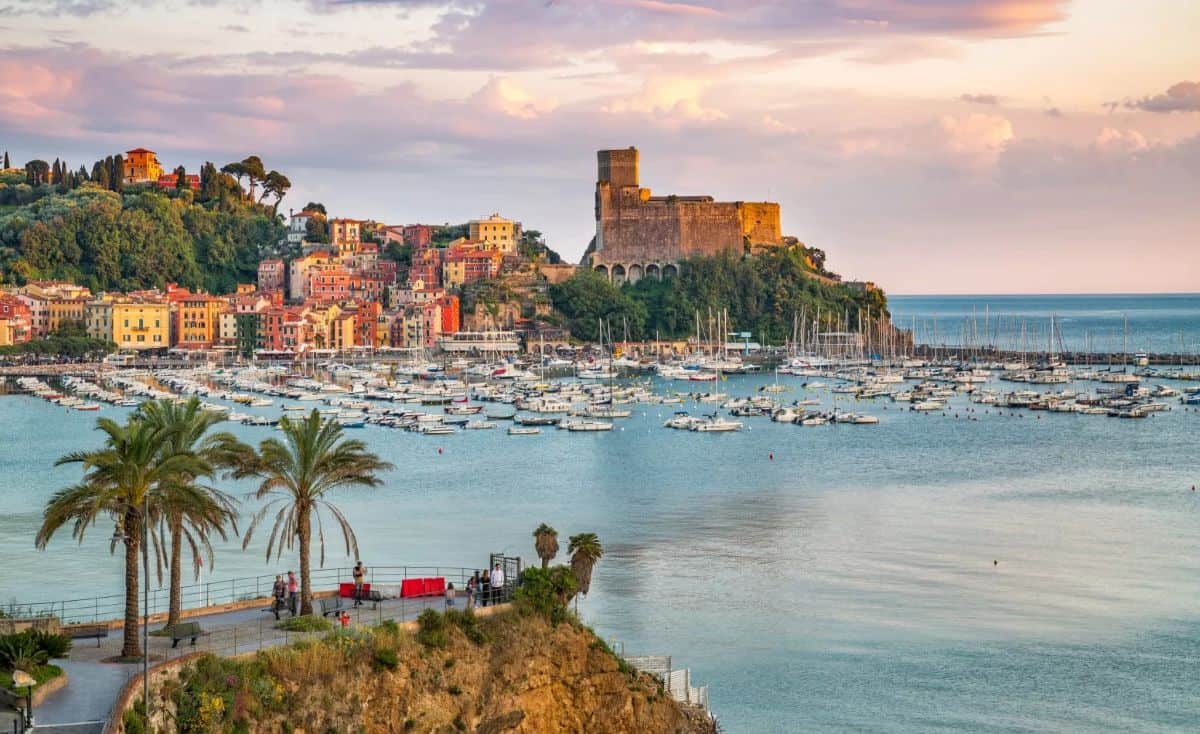
There is a heartbreak when walking down a sunlit street in Rome or drifting through the canals of Venice. Then do you realize that you are sharing that magic with thousands of hurried strangers. We are all given the same worn‑out script for our first trip to Italy. That script is filled with names we have dreamed of since childhood. Here is the startling truth: three‑quarters of us cram into just four percent of the country. We rush past wonders, with cameras raised. Meanwhile ninety‑six percent of Italy sits quietly waiting, untouched and breathtakingly alive.
Why Do Three-Quarters of Global Travellers Blindly Cram Themselves Into Just Four Percent of Italian Territory?
Advertisement
Advertisement
The overwhelming concentration of tourism in Italy does not happen by accident; it is the engineered result of decades of global marketing, cinematic romanticisation, and risk-averse travel planning. First-time visitors experience deep-seated psychological pressure to validate their journeys by photographing internationally recognised monuments in Rome, Florence, and Venice, fearing that missing these landmarks equates to failing their vacation. Travel agencies, social media algorithms, and legacy guidebooks continually reinforce this loop by spotlighting the exact same urban epicentres, creating a self-fulfilling prophecy of overcrowding. Consequently, millions of holidaymakers arrive simultaneously, shuffling shoulder-to-shoulder through narrow medieval streets while entirely missing the profound serenity and rich culinary traditions thriving just a few hours away in regions like Abruzzo, Molise, or Calabria.
Beyond psychological reassurance, this heavy geographic clustering is exacerbated by high-speed rail networks and international flight routes that connect major hubs seamlessly without encouraging regional branching. Travellers frequently opt for the path of least resistance, booking centralised hotels and pre-packaged tours that eliminate logistical guesswork but strip away authentic discovery. When visitors refuse to venture beyond the heavily publicised 4% of the country, they inadvertently fuel a monoculture of tourism that transforms living heritage cities into hollowed-out open-air museums. This formulaic approach ultimately deprives both the traveller of genuine connection and the broader nation of balanced economic growth, locking the tourism industry into an unsustainable cycle of hyper-concentration.
Advertisement
Advertisement
What Are the Severe Socioeconomic and Environmental Impacts of Overtourism on Iconic Destinations?
The relentless influx of millions of annual visitors into fragile historical centres like Venice, Florence, and Rome triggers profound socioeconomic and environmental consequences that threaten the long-term viability of these historic sanctuaries. Ecologically, mass tourism generates staggering volumes of solid waste, strains local water treatment facilities, and accelerates the degradation of delicate ancient masonry through continuous foot traffic and atmospheric pollution. Furthermore, the exponential surge in short-term vacation rentals prices local residents out of the housing market, effectively hollowing out residential communities and replacing generational neighbourhoods with souvenir shops, fast-food chains, and luxury boutiques tailored exclusively to transient outsiders.
Advertisement
Advertisement
Economically, while tourism injects substantial capital into national GDP, the financial benefits remain dangerously skewed toward a fraction of commercial enterprises operating within the core 4% tourist zones. Local working-class families face skyrocketing living costs without seeing proportional wage increases, while municipal budgets struggle under the immense weight of maintaining infrastructure for populations that swell far beyond carrying capacity. In Venice, for instance, depopulation has reached crisis levels as native residents flee the daily chaos of surging cruise ship crowds and hyper-commercialisation. Recognising these systemic pressures highlights why diversifying travel patterns is no longer just a matter of personal preference, but an urgent imperative for sustainable global citizenship.
How Can Venturing Beyond the Beaten Path Transform Your Perspective and Empower Local Economies?
Advertisement
Advertisement
Stepping away from the hyper-trodden paths of major Italian metropolises and exploring the vast, overlooked 96% of the country unlocks a profoundly transformative style of travel defined by genuine human connection and cultural depth. When visitors direct their curiosity toward lesser-known towns in Puglia, Umbria, Basilicata, or Sardinia, they encounter an unhurried rhythm of daily life where ancient traditions, indigenous winemaking, and regional dialects remain wonderfully intact. This intentional shift redistributes vital economic resources away from saturated corporate hubs, directly supporting family-run trattorias, independent artisans, agricultural cooperatives, and rural guesthouses that form the beating heart of local communities.
Furthermore, travelling off the standard tourist grid fosters a sense of psychological restoration and intellectual enrichment that rapid-fire sightseeing simply cannot replicate. Without the constant sensory overload of battling dense crowds at famous monuments, travellers find the mental space to engage in meaningful conversations with residents, appreciate architectural details at a natural pace, and savour authentic regional gastronomy prepared with centuries-old recipes. Embracing this alternative approach proves that the true magic of Italy lies not in checking off a universally prescribed list of famous sights, but in allowing oneself to get delightfully lost in the profound beauty of the unexpected.
The Urban Density Paradox: Quantifying the Stark Spatial Disparity of Tourist Footprints in Venice and Molise
The spatial distribution of global travellers across the Italian peninsula reveals a profound micro-geographic imbalance that heavily penalises historical urban centres while leaving rural provinces largely untouched. In renowned lagoon destinations like Venice, visitor metrics indicate that upwards of 6.5 million annual overnight tourists—with total provincial arrivals scaling past 10 million—are compressed into a fragile historic urban space measuring a mere 7.6 square kilometres. This extreme concentration generates a staggering localized density ratio that completely overwhelms public infrastructure and alters neighborhood dynamics. Conversely, quiet rural territories such as Isernia in the southern region of Molise record fewer than 2,000 international visitors annually, highlighting a systemic tourist funnel that suffocates famous micro-geographies while the broader countryside remains peaceful and pristine.
Advertisement
Advertisement
This intense physical overcrowding poses profound challenges for municipal upkeep, preservation efforts, and everyday residential comfort within heavily trodden districts. When millions of transient visitors converge simultaneously on compact urban layouts, public squares and narrow thoroughfares experience severe pedestrian gridlock that strains local municipal services. Meanwhile, hidden away from these bustling metropolitan crowds, vast stretches of the Italian landscape offer untouched heritage, quiet local interactions, and sustainable cultural exploration that receive virtually zero international exposure. Resolving this acute density paradox requires a fundamental rethinking of how global tourism marketing directs travel flows across Italy’s diverse provincial landscape.
Economic Disconnect: Analysing National GDP Growth Versus Stagnant Wages in Florence and Rome
The explosive macro-economic expansion of Italy’s multi-billion-dollar tourism industry masks a deep-rooted micro-economic crisis for local working-class residents living inside core travel hubs. National economic reports indicate that Italy’s tourism sector valuation surges past major milestones, backed by over 87 million total visitor arrivals nationwide. However, rigorous labour analyses reveal that approximately 70% of frontline tourism and hospitality sector workers remain locked into seasonal, precarious contracts with limited upward mobility. In major cultural capitals like Florence and Rome, cumulative consumer prices, cost-of-living expenses, and housing rentals have inflated by over 60% over the past decade, while local wages have remained completely stagnant, creating an unsustainable economic divide.
This growing financial disparity underscores a structural flaw in how tourism revenue is distributed across local populations within primary destination zones. While large commercial enterprises, hotel chains, and luxury boutiques reap massive profits from the influx of international spending, ordinary families bear the brunt of hyper-inflationary pressures on basic daily goods. Consequently, long-term residents find themselves economically squeezed out of the very urban neighbourhoods their ancestors built and maintained for generations. Addressing this severe economic disconnect is vital for establishing a fairer tourism model that rewards local labour equitably and safeguards community welfare.
Infrastructure Strain: Measuring Municipal Waste Surges and Structural Wear in Rome and Cultural Sanctuaries
The relentless daily influx of mass tourism places an invisible yet catastrophic ecological and structural burden on centuries-old public works and civic utilities across Italy. Municipal environmental reports demonstrate that historic city centres experience a dramatic 300% surge in solid waste generation during peak summer months compared to off-season baselines. In historic capitals like Rome, municipal utility infrastructure originally designed to support baseline residential communities regularly buckles under daily transient tourist influxes exceeding 100,000 visitors in core heritage zones around the Trevi Fountain and the Colosseum. This relentless human pressure accelerates chemical and physical structural wear on millennia-old stone masonry, ancient water pipes, and historic paving stones.
Advertisement
Advertisement
Managing these intense infrastructural demands consumes a disproportionate share of municipal budgets, diverting vital public funds away from outer residential districts and essential social services. Local public works departments face continuous challenges in maintaining sanitation standards, repairing damaged monuments, and managing clean water distribution amidst swelling seasonal crowds. Without active intervention to regulate visitor caps and disperse travel demand toward secondary regions, historical heritage sites face irreversible environmental degradation. Protecting these irreplaceable cultural treasures requires modernizing urban management strategies to align visitor numbers with physical carrying capacities.
The Housing Crisis: How Short-Term Holiday Lets Drive Resident Depopulation in Venice and Historic Districts
The unchecked proliferation of short-term vacation rentals has triggered an unprecedented housing crisis, hollowing out the demographic heart of historic Italian cultural capitals. In the historical center of Venice, permanent resident population figures have plummeted below 50,000 inhabitants—marking a historic low driven almost entirely by the commercial conversion of residential properties into tourist accommodations. Real estate data mapping districts such as San Marco or Florence’s Centro Storico reveals that for every single apartment remaining on a standard long-term residential lease, up to four properties are operated exclusively as transient tourist lodgings. This aggressive commercial shift effectively erases generational neighbourhoods, displacing families and transforming living cities into hollowed-out open-air theme parks.
The social fallout of this residential displacement extends far beyond empty streets, eroding the fabric of local civic life, community schools, and neighborhood commerce. As landlords prioritize lucrative short-term international holidaymakers over local tenants, young professionals and working-class families are forced to relocate to distant mainland suburbs or surrounding rural towns. This demographic exodus strips historic centres of their authentic cultural identity, leaving behind transient populations with little long-term stake in civic preservation. Rebalancing the urban housing market through sensible regulatory frameworks is an urgent priority to ensure that historic Italian cities remain living, breathing communities rather than exclusive holiday resorts.
Rail Corridors and Transport Logistics: How High-Speed Transit Networks Maintain the 4% Concentration Loop
The structural design of modern transport logistics plays a decisive role in reinforcing the heavy geographic concentration of tourism within Italy’s famous 4% corridor. National railway analytics demonstrate that over 65% of international first-time travellers book high-speed Frecciarossa or Italo train tickets strictly along the primary Milan-Bologna-Florence-Rome-Naples axis. This high-speed transportation backbone enables seamless, rapid movement between major urban hubs, encouraging tourists to skip regional exploration in favour of pre-packaged metropolitan circuits. Conversely, regional branch lines connecting rich cultural and historical areas in Basilicata, Abruzzo, or Calabria operate at a fraction of their passenger capacity, proving that transit convenience actively dictates travel distribution patterns.
Advertisement
Advertisement
This heavy reliance on trunk-line mobility starves secondary provinces of the transit connectivity required to attract independent international visitors and stimulate localized economic growth. Travel agencies and tour operators compound this issue by packaging standardized itineraries that utilize major rail hubs, reinforcing risk-averse travel behaviour among first-time visitors. To break this entrenched concentration loop, transport authorities must invest in integrated regional ticketing, improved branch-line scheduling, and promotional campaigns highlighting scenic alternative routes. Encouraging travellers to step off the primary high-speed rail corridor unlocks a more balanced, sustainable approach to national discovery.
Environmental Fragility: Managing Unmanaged Seasonal Tourism Peaks in Alpine and Coastal Ecosystems
Beyond urban monuments, fragile natural ecosystems across Italy face severe ecological degradation driven by unmanaged seasonal tourism spikes in scenic rural and coastal zones. Natural landscape reserves, including the Dolomites in northern Italy and the picturesque cliffside towns along the Amalfi Coast, absorb millions of private vehicle trips annually during peak summer and winter holiday periods. Environmental monitoring networks indicate a staggering 40% spike in localized carbon emissions, severe soil compaction, and accelerated trail erosion in high-altitude protected alpine zones. These ecological pressures force regional authorities to implement strict vehicle access caps, digital reservation systems, and temporary entry fees to prevent permanent damage to delicate habitats.
The rush of unmanaged vehicular traffic and outdoor recreation creates significant challenges for local wildlife conservation, waste management, and wildfire prevention in rural districts. Without comprehensive ecological monitoring and visitor management protocols, the natural beauty that attracts travellers risks being loved to death by excessive human footfall. Promoting off-season travel, expanding eco-friendly public transit alternatives, and educating visitors on outdoor ethics are essential steps toward safeguarding Italy’s natural sanctuaries. True environmental stewardship requires balancing public access with rigorous conservation mandates to protect these landscapes for future generations.
Regional Diversification: Unlocking Italy’s 20 Administrative Regions and the Untold Potential of the 96%
While top-tier destinations in regions like Lazio and Veneto capture the vast majority of international overnight stays, Italy comprises twenty distinct administrative regions brimming with untouched cultural wealth. The nation’s remaining regions—such as Puglia, Umbria, Sardinia, and Marche—feature thousands of kilometres of pristine coastline, hundreds of certified Borghi Più Belli d’Italia (Italy’s most beautiful villages), and world-class culinary traditions that currently operate at a fraction of their sustainable tourism carrying capacity. These overlooked territories offer travellers authentic historical engagement, unhurried local hospitality, and deep immersion in regional heritage without the crushing congestion of major urban hotspots.
Advertisement
Advertisement
Shifting the focus of international marketing toward these diverse regional landscapes provides a viable solution to the overtourism crisis plaguing mainstream Italian cities. By distributing visitor arrivals more equitably across all twenty regions, the national tourism economy becomes more resilient, inclusive, and environmentally sustainable. Local agricultural cooperatives, independent wine-makers, and rural artisans in lesser-known provinces gain vital economic support that preserves traditional crafts and local architecture. Embracing the untold 96% of the country transforms travel from a frantic checklist into a rich, exploratory journey of discovery.
Shift in Modern Travel Psychology: The Rising Demand for Slow Travel and Conscious Cultural Integration
A profound psychological transformation is currently reshaping the global tourism landscape, driven by modern travellers seeking meaningful connection over rapid-fire sightseeing. Recent international tourism trend data indicates that over 40% of millennial and Gen-Z travellers express an active, deliberate desire to bypass top-tier mass destinations in favour of lesser-known secondary towns and off-grid locations. This evolving mindset is fuelling a projected 15% year-on-year increase in bookings for rural agriturismos, independent wine-tasting estates in Piedmont, and immersive cultural retreats that prioritize low-impact, sustainable engagement with local communities.
This psychological pivot reflects a growing awareness of the ecological and social costs associated with mass tourism, inspiring travellers to adopt slow-travel principles. By spending extended periods in single communities, visitors can build genuine relationships with residents, support local artisans directly, and reduce their overall carbon footprint. This conscious approach to exploration proves that modern travellers are increasingly ready to abandon formulaic itineraries in search of authentic, ethical, and deeply rewarding cultural experiences across the globe.
The Final Verdict
There is a magic waiting beyond the congested lanes of Rome, Florence and Venice. When we finally dare to step from the predictable tourist script we stop rushing through someone else’s highlight reel and begin tasting the soul of Italy. The famous four percent will always be breathtaking. The real heartbeat of Italy lives there in quiet alleys, sun-drenched vineyards and forgotten villages. Pack your curiosity leave the checklist behind and let yourself fall in love, with the ninety‑six percent.
Advertisement
Advertisement
Frequently Asked Questions
Q: Why do 75% of tourists visit only 4% of Italy? A: This imbalance occurs because first-time visitors consistently follow traditional media, guidebooks, and social media advice directing them exclusively to famous urban centres like Rome, Florence, and Venice.
Q: What are the main negative impacts of overtourism in Italy? A: Overtourism causes severe environmental degradation of ancient monuments, drives up housing costs, displaces local residents, and overburdens municipal infrastructure in major tourist hotspots.
Q: How does exploring the remaining 96% of Italy help local communities? A: Venturing into lesser-known regions distributes tourism revenue fairly, supports small family-owned businesses, preserves local heritage, and reduces the strain on overcrowded cities.
Q: Is it a mistake to visit famous Italian landmarks on a first trip? A: Not at all, as iconic sights in places like Florence and Rome are magnificent for valid reasons; however, treating them as an exclusive checklist limits a richer, more balanced exploration.
Advertisement
