
UK Overtakes France and Other Countries as Spain Records Historic Fifty-Eight Point One Million Tourist Arrivals in 2026

Published
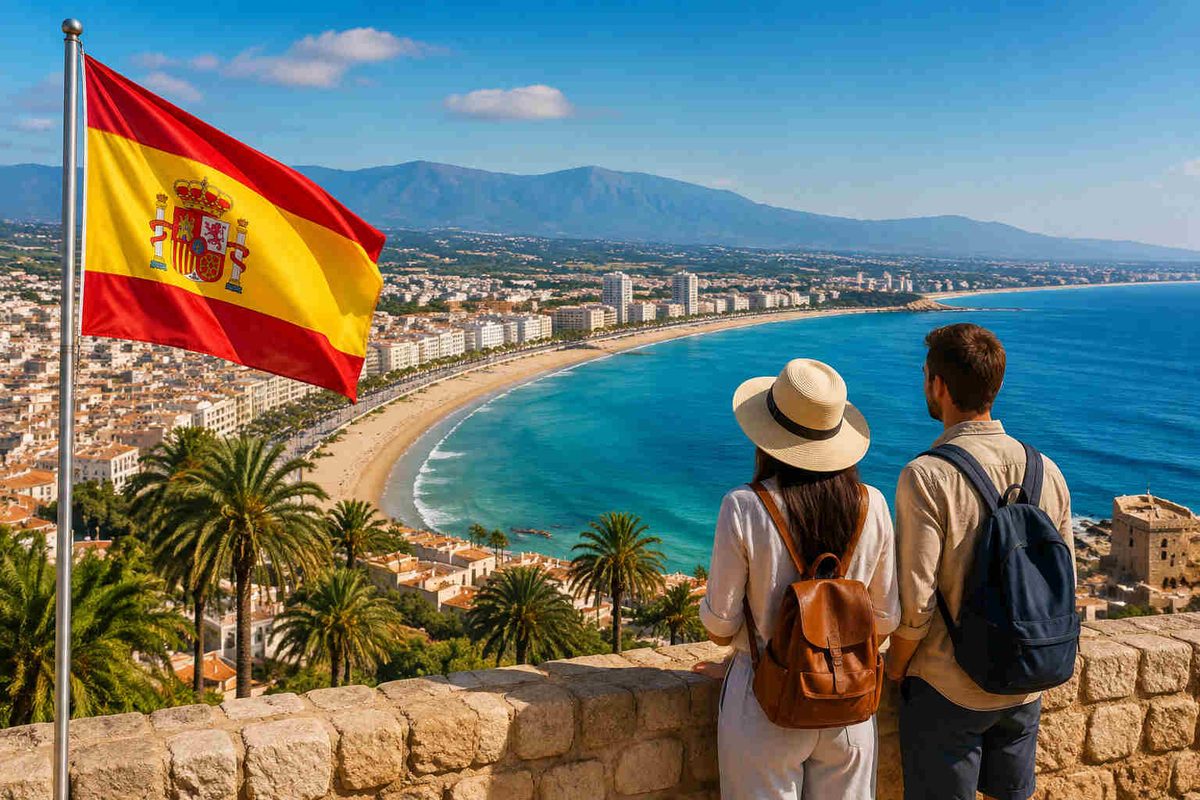
In 2026, Spain’s tourism sector marked new record highs of international travelers and foreign tourist spending after the first seven months. Spain has received 58.1 million foreign travelers between January and July 2026, a 4.6% increase from the same period of 2025, and thus, a record in inbound tourism.
The latest figures highlight Spain’s continued strength as one of the world’s leading travel destinations, supported by strong demand from major European markets, growing visitor expenditure and increased interest in destinations beyond traditional summer hotspots.
According to data from Spain’s National Statistics Institute (INE), collected through the Frontur and Egatur tourism monitoring systems, international tourist spending also achieved a historic peak. Foreign visitors spent €82.05 billion during the January–July period, marking a 7.8% annual increase and showing that travellers are contributing more significantly to the country’s tourism economy.
The growth demonstrates a shift towards higher-value tourism, with visitors spending more on accommodation, transport, experiences and holiday packages across Spain’s diverse regions.
Advertisement
Advertisement
July Strengthens Spain’s Record-Breaking Tourism Performance
Spain’s positive tourism momentum continued throughout July, traditionally one of the busiest months for international travel. The country welcomed 11.5 million overseas visitors during the month, recording a 4.6% rise compared with July 2025.
Tourist spending in July showed even stronger growth, reaching €18.22 billion, which represented a 10.9% increase year on year. The figures indicate that while visitor arrivals continue to rise, the economic value generated by each traveller is also expanding.
Advertisement
Advertisement
The increase in spending reflects stronger demand for premium accommodation, longer stays, improved travel experiences and higher-value tourism products. Spain’s ability to attract visitors across different seasons and regions has helped reduce dependence on traditional peak summer travel patterns.
Which International Markets Are Driving Spain’s Tourism Growth?
European travellers continued to dominate Spain’s inbound tourism landscape during the first seven months of 2026, with the United Kingdom maintaining its position as the country’s largest international source market.
British travellers accounted for 11.5 million arrivals between January and July, representing a 4.6% increase compared with the previous year. The strong performance confirms the continued importance of the UK market for Spain’s hotels, airlines, coastal destinations and cultural tourism sectors.
France ranked as the second-largest source market, contributing more than 7.2 million visitors, although growth remained modest at 1.2% year on year. Germany followed with approximately 6.9 million arrivals, recording a slight decline of 0.5%.
Among Spain’s major international markets, Italy delivered one of the strongest increases. Italian arrivals reached 3.5 million tourists, representing a 10.3% rise compared with the previous year.
Visitor numbers from other international markets also expanded significantly, increasing 16.9% to 717,000 travellers. These visitors generated particularly strong economic growth, with their spending increasing 24.5%, highlighting Spain’s growing appeal among emerging and long-haul markets.
Advertisement
Advertisement
British Visitors Continue to Lead Spain’s July Tourism Demand
The United Kingdom remained the leading contributor to Spain’s July tourism performance. During the month, Spain welcomed 2.2 million British visitors, reflecting a 5.6% increase compared with July 2025.
British travellers also generated substantial economic activity, contributing €3.04 billion in tourism expenditure, an annual increase of 4.8%.
The continued strength of the UK market has been supported by Spain’s extensive air connectivity, favourable climate, diverse holiday options and strong popularity among travellers seeking beach escapes, city breaks, cultural experiences and longer stays.
Spain’s tourism industry has increasingly focused on attracting visitors throughout the year, encouraging travellers to explore destinations beyond the busiest coastal areas and summer months.
Catalonia Leads Spain’s Regional Tourism Rankings
Among Spain’s autonomous communities, Catalonia emerged as the most visited region during January–July 2026, welcoming 11.94 million international tourists.
The region recorded a 2.9% increase compared with the same period in 2025, driven by the global appeal of Barcelona, Mediterranean coastal areas, cultural attractions and heritage destinations.
Advertisement
Advertisement
The Balearic Islands ranked second, receiving 9.16 million international visitors, representing growth of 1.8%. The islands continued to attract travellers with their beaches, island landscapes and established international tourism infrastructure.
The Canary Islands welcomed 9.02 million visitors, although arrivals declined slightly by 0.6%. Despite the small decrease, the archipelago remained one of Spain’s most important year-round destinations due to its climate and international connectivity.
Andalusia also recorded 9.02 million international arrivals, achieving a significant 8.2% increase. The region’s combination of historic cities, coastal destinations and cultural attractions contributed to its strong performance.
Madrid and Valencia Become Spain’s Fastest-Growing Tourism Destinations
While Spain’s traditional tourism leaders continued to attract millions of visitors, Madrid and the Valencian Community recorded some of the strongest growth rates among major destinations.
Madrid experienced a 9.6% increase in international tourist arrivals, strengthening its position as a leading destination for cultural tourism, business travel, events and urban experiences.
The Valencian Community also performed strongly, registering an 8.9% increase in visitor arrivals. The region benefited from growing international interest in destinations such as Valencia, Alicante and the Mediterranean coastline.
Advertisement
Advertisement
During July alone, the Valencian Community welcomed 1.63 million foreign visitors, marking a 9.5% year-on-year increase.
Madrid recorded 800,000 international tourists in July, representing an impressive 11% rise compared with the previous year.
The strong growth of these regions reflects a wider shift in Spain’s tourism landscape, where travellers are increasingly exploring cities, cultural destinations and regional experiences alongside traditional beach holidays.
What Type of Holidays Are International Visitors Choosing in Spain?
Travel behaviour data shows that most international tourists visiting Spain during the first seven months of 2026 preferred stays lasting between four and seven nights.
Independent travel remained highly popular, with around 8.5 million visitors travelling without package holiday arrangements. Meanwhile, approximately 3.1 million tourists chose package holidays that combined accommodation, transport and other travel services.
The figures suggest that Spain continues to appeal to both independent explorers and organised holidaymakers, offering flexibility across different travel preferences and budgets.
Advertisement
Advertisement
Accommodation and Transport Drive Tourist Spending Growth
Foreign tourist expenditure in Spain during 2026 was distributed across several key categories, with accommodation representing the largest share of visitor spending.
Accommodation accounted for 19.8% of total tourist expenditure, highlighting the importance of hotels, resorts, apartments and other lodging options within Spain’s visitor economy.
Package holidays represented 19.3% of spending, while international transport accounted for 19.2%.
The balanced distribution of expenditure demonstrates that Spain’s tourism economy benefits from multiple sectors, including hospitality, aviation, travel services and local experiences.
As visitor numbers continue to rise, Spain’s tourism industry is increasingly focused on attracting higher-spending travellers, extending the tourism season and promoting destinations across the country.
With record arrivals and historic spending levels already achieved in 2026, Spain continues to reinforce its position as one of the world’s most competitive and resilient tourism markets.
Advertisement
