
European Air Traffic Delays in 2026 Force Airlines to Rethink Travel Between the UK, France and Other Countries

Published
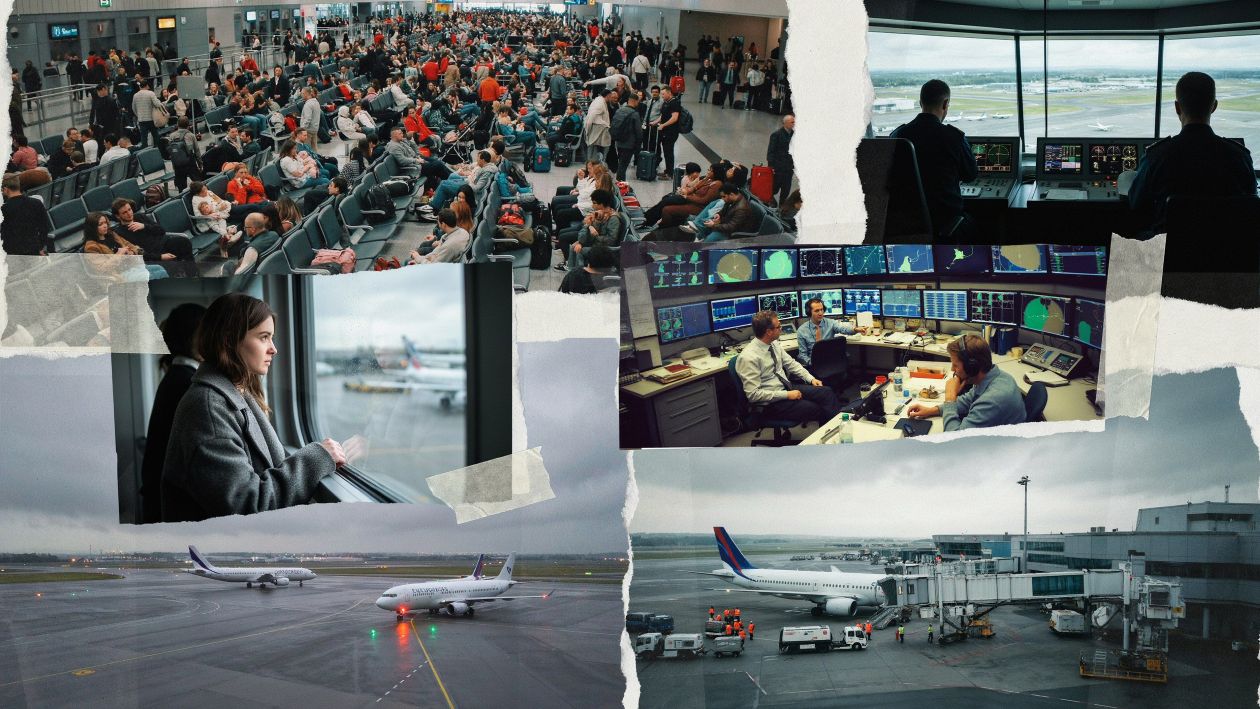
European air traffic delays in 2026 present severe operational challenges across the UK, France, Germany, Turkey, and the Netherlands. Record flight volumes are currently testing the absolute limits of continental airspace capacity this year. However, coordinated aviation strategies show surprising operational resilience against systemic infrastructure failures.
EUROCONTROL network performance metrics reveal complex realities for modern international travellers. August statistics demonstrate intense travel demand across primary European transit corridors. The aviation industry faces unprecedented hurdles in maintaining schedule integrity. This report analyses structural aviation changes affecting millions of global passengers.
We examine how ministries, statutory bodies, and airlines navigate this crisis. Travellers must understand the mechanisms driving modern commercial aviation disruptions. Enhanced consumer awareness is critical for navigating today’s complex travel landscape.
Evaluating the European Aviation Landscape
Definition: The EUROCONTROL network encompasses all coordinated European airspace sectors.
Advertisement
Advertisement
During summer 2026, daily flight operations reached historic network peaks. August averaged over 36,000 daily flights across the participating member states. This represents a notable 2.6% traffic increase compared to August 2025.
However, year-to-date en-route delays impressively fell to 1.54 minutes per flight. This marks a significant operational improvement for the entire European network. The United Kingdom Civil Aviation Authority monitors these developments very closely. Sovereign transport ministries collaborate to enhance cross-border airspace efficiency.
Advertisement
Advertisement
Better realistic scheduling by airlines improved the network’s available turnaround time. First rotation arrival punctuality decreased slightly, but departure punctuality significantly improved. Despite strong summer demand, network coordination contained total ATFM delays effectively. Operations remained stable despite severe geopolitical airspace restrictions in Eastern Europe.
Ranking the Busiest European Airports
Definition: Busiest airports are categorised by total daily arrival and departure movements.
Advertisement
Advertisement
During the peak summer travel period, five major aviation hubs dominated. Istanbul Airport secured the highest volume across the entire global network. This Turkish mega-hub processed approximately 1,671 daily flights in August.
Paris Charles de Gaulle ranked second, managing 1,424 daily aircraft movements. Amsterdam Schiphol followed closely behind, handling 1,418 scheduled daily flights. London Heathrow recorded 1,330 flights, inherently constrained by its two runways. Frankfurt Airport completed the top tier with 1,321 daily scheduled flights.
| Airport Name | Country | Average Daily Flights | Network Rank |
| Istanbul Airport (IST) | Turkey | 1,671 | 1 |
| Paris Charles de Gaulle (CDG) | France | 1,424 | 2 |
| Amsterdam Schiphol (AMS) | Netherlands | 1,418 | 3 |
| London Heathrow (LHR) | United Kingdom | 1,330 | 4 |
| Frankfurt Airport (FRA) | Germany | 1,321 | 5 |
These primary transit hubs represent the critical arteries of European commerce. Infrastructure at these specific locations faces immense daily operational pressure.
Analysing Commercial Airline Dominance
Definition: Network dominance reflects total daily scheduled and operated commercial flights.
Advertisement
Advertisement
The aviation market remains distinctly divided between low-cost and legacy carriers. Low-cost operators drive the most significant network flight growth today. The Ryanair Group maintains its undisputed position as network volume leader.
Ryanair averaged over 3,100 daily flights throughout the entire year. During late summer, Ryanair operations peaked at over 3,700 daily flights. EasyJet consistently secured the second-largest low-cost operator position by daily volume.
Conversely, traditional legacy networks dominate passenger revenue and total fleet size. The Lufthansa Group leads the traditional European network carrier segment. International Airlines Group offers the highest total seating capacity currently available. Air France-KLM consistently ranks highly for daily passenger traffic operations.
Turkish Airlines acts as a primary international traffic driver from Istanbul. Wizz Air and Pegasus demonstrated the fastest network growth rates. In late summer, Wizz Air frequently posted extraordinary year-on-year growth. Pegasus also maintained highly impressive double-digit operational growth figures.
Understanding ATC Capacity Constraints
Definition: ATC capacity is the maximum safe flight volume per airspace sector.
Airspace is divided into strictly controlled, three-dimensional geometric routing sectors. Each sector possesses a strict, mathematically defined commercial flight capacity limit. This limit dictates how many aircraft one controller can safely manage.
Advertisement
Advertisement
Maximum sector capacity directly correlates with available trained air traffic controllers. Fully staffed centres open multiple smaller sectors to maximise total capacity. Short-staffed centres must immediately merge airspace into fewer, much larger blocks. Consequently, total throughput capacity plummets dramatically within those consolidated large blocks.
EUROCONTROL continuously compares expected flight demand against available safe sector capacity. Bottlenecks inevitably emerge when scheduled demand exceeds safe operational control limits. The French Direction Générale de l’Aviation Civile regularly manages such constraints. Severe weather also temporarily destroys nominal sector capacity without any warning.
Implementing ATFM Delay Regulations
Definition: ATFM regulations delay departures to prevent mid-air sector overcrowding.
Safety protocols strictly prohibit flying into completely overwhelmed control sectors. Excessive airborne holding patterns waste fuel and create incredibly dangerous chaos. Authorities use Air Traffic Flow Management to prevent dangerous airborne congestion.
EUROCONTROL issues strict regulations when sector demand outstrips available control capacity. Affected flights receive a Calculated Take-Off Time, or ATC ground slot. Aircraft must wait safely on the tarmac until their designated slot.
This precise timing ensures seamless integration into previously congested continental airspace. Passengers perceive this as unexplained waiting times at the departure gate. However, these ground delays fundamentally prevent catastrophic mid-air traffic collisions. National aviation authorities fully endorse these vital network safety management protocols.
Advertisement
Advertisement
Active Flight Rerouting Strategies
Definition: Rerouting involves altering flight paths to bypass restricted airspace sectors.
Airlines refuse to accept ground delays without exploring available routing alternatives. Flight dispatchers actively negotiate new routes using sophisticated digital planning software. They meticulously navigate the Route Availability Document to find viable paths.
This document contains updated route restrictions and mandatory flight altitude caps. Dispatchers frequently utilise non-permanent Conditional Routes to bypass highly congested zones. These specific routes only open under very strict air traffic conditions.
Alternatively, dispatchers may accept altitude capping to avoid delayed upper sectors. Flying at lower altitudes burns considerably more fuel but avoids delays. This completely eliminates ground holding times for eager holidaymakers and businesspeople. Airlines absorb these higher operational costs to preserve delicate daily schedules.
EUROCONTROL Network Operations Portal
Definition: The NOP is a centralised dashboard displaying European airspace availability.
EUROCONTROL actively scans continental airspace to generate systemic Re-Routing Opportunities. The portal continuously checks route databases to find alternatives for flights. Dispatchers monitor dashboards highlighting flights suitable for immediate automated route modification.
Advertisement
Advertisement
A simple visual indicator reveals when a viable rerouting opportunity exists. The Group Rerouting Tool reveals opportunities across an airline’s entire fleet. This systemic transparency allows airlines to mitigate massive regional operational disruptions.
Advanced data integration ensures all stakeholders share identical real-time airspace pictures. The European Union Aviation Safety Agency oversees the security of these systems. Digital coordination remains the primary defence against overwhelming network gridlock. These portals represent a massive technological leap for continental transport infrastructure.
Evaluating the Delta Cost
Definition: Delta Cost measures financial differences between delayed and rerouted flights.
Alternate routes are typically physically longer than originally planned flight trajectories. Dispatchers must carefully analyse detailed comparative reports provided directly by EUROCONTROL. They meticulously weigh extra fuel costs against strict financial ground delays.
Extensive ground delays cause missed passenger connections and expensive crew overtime. Prolonged delays also severely disrupt sequential aircraft utilisation schedules for airlines. Missed arrival slots incur severe financial penalties from major airport authorities.
If alternative routes save substantial time, dispatchers usually accept the cost. Airlines ruthlessly prioritise schedule integrity to protect their broader network operations. Fuel prices heavily influence these real-time operational airline dispatching decisions. This complex calculus occurs thousands of times daily across the continent.
Advertisement
Advertisement
Executing Flight Plan Modifications
Definition: A CHG message officially updates a scheduled European flight plan.
Dispatchers must officially update central systems after choosing new alternate routes. They select alternative routes directly through the secure Network Operations Portal. A formal Change message is submitted to the Initial Flight Plan system.
Dispatchers can submit these changes hours before estimated aircraft departure times. This proactive action instantly overrides previous plans and cancels ATFM delays. Consequently, aircraft depart absolutely on time despite surrounding regional airspace congestion.
This invisible background work actively saves millions of cumulative passenger hours. It demonstrates immense professional skill within commercial airline operations control centres. Passengers rarely realise how closely they avoided severe tarmac delays. Modern aviation relies entirely on this continuous, proactive digital route management.
Passenger Rights and Statutory Compensation
Definition: UK261 and EU261 regulations dictate statutory airline passenger compensation rights.
European air traffic delays severely test vital statutory consumer protection frameworks. Airlines must provide comprehensive duty of care during extensive passenger delays. This mandate includes complimentary meals, refreshments, and necessary overnight hotel accommodation.
Advertisement
Advertisement
However, ATC capacity constraints are legally classified as extraordinary uncontrollable circumstances. Therefore, passengers cannot claim financial compensation for ATFM-mandated ground delays. Civil Aviation Authorities strictly enforce duty of care provisions regardless of fault.
Travellers must clearly understand the legal distinction between airline and ATC faults. Airlines are strictly liable for technical failures, but not airspace congestion. Comprehensive independent travel insurance remains essential for modern European aviation journeys. Travellers should always document expenses incurred during severe operational disruptions.
Immigration and Sovereign Border Complications
Definition: Schengen rules strictly govern maximum permitted visitor stays for non-residents.
Severe flight delays create unexpected legal liabilities for international transit travellers. Non-EU citizens face strict Schengen visa validity timeframes upon their departure. Unexpected overnight delays occasionally push travellers past their legal visa expiry.
Border forces generally exercise leniency during documented catastrophic aviation network delays. However, impending digital border systems will complicate automated entry tracking mechanisms. Passengers must proactively communicate with embassy officials during prolonged international strandings.
Aviation delays thus occasionally evolve from mere inconveniences into serious legal headaches. Interior ministries warn travellers to maintain buffer days on their visas. Airlines hold zero liability for passenger visa overstays caused by weather. Travellers bear ultimate responsibility for maintaining their own legal immigration status.
Advertisement
Advertisement
Infrastructure and Accommodation Strain
Definition: Transit bottlenecks occur when delayed passengers overwhelm local airport infrastructure.
Mass flight cancellations inevitably overwhelm local airport hospitality and transport infrastructure. Surrounding hotels frequently reach absolute maximum occupancy during severe network disruptions. Stranded passengers often struggle to find immediate emergency overnight hotel accommodation.
Airlines maintain contracted hotel blocks, but these fill incredibly rapidly. Consequently, airport terminal seating becomes makeshift sleeping quarters for exhausted families. Local transport networks also struggle to absorb sudden unpredicted passenger surges.
This phenomenon highlights severe fragility within secondary aviation support infrastructure systems. Airport operators continually try to improve emergency passenger welfare response plans. However, absolute physical capacity limits remain a persistent, unsolvable geographic challenge. Travellers should always pack essential emergency supplies in their cabin baggage.
Regional Tourism Economic Impacts
Definition: Tourism corridors rely on predictable aviation schedules for economic stability.
Unreliable aviation networks inflict severe economic damage on regional tourism sectors. Southern European destinations rely heavily on consistent summer flight passenger arrivals. Prolonged delays shorten lucrative holiday durations for incoming international luxury tourists.
Advertisement
Advertisement
This directly reduces local hospitality expenditure in highly vulnerable coastal economies. Furthermore, systemic travel unreliability discourages future advance holiday booking commitments. Regional tourism boards continuously lobby transport ministries for urgent airspace improvements.
Stable air connectivity remains absolutely vital for continental economic recovery initiatives. The World Travel and Tourism Council monitors these economic impacts closely. Government treasuries rely on aviation taxes generated by seamless network operations. Therefore, solving airspace constraints remains a paramount sovereign economic security priority.
Concluding European Travel Assessment
Definition: Network resilience depends upon continued international air traffic management cooperation.
Travellers must anticipate complex logistical environments when flying across borders today. Airlines possess highly sophisticated digital tools to circumvent systemic airspace bottlenecks. Yet, absolute passenger volumes guarantee sporadic disruptions will inevitably occur everywhere.
Understanding your legal passenger rights is vital for navigating modern travel. European air traffic delays 2026 demand unprecedented adaptability from every traveller. The entire aviation industry must continue innovating to protect consumer mobility.
Official authorities remain highly committed to enhancing continental aviation infrastructure capacity. However, infrastructure upgrades require massive capital investment and lengthy implementation timeframes. Until then, operational resilience relies entirely on dynamic routing and scheduling. Passengers are strongly advised to plan journeys with appropriate time buffers.
Advertisement
