
Riyadh Aligns With Jeddah And More Places As Saudi Tourism Surges Over 4% In Just Six Months Through New Vision 2030 Initiatives

Published
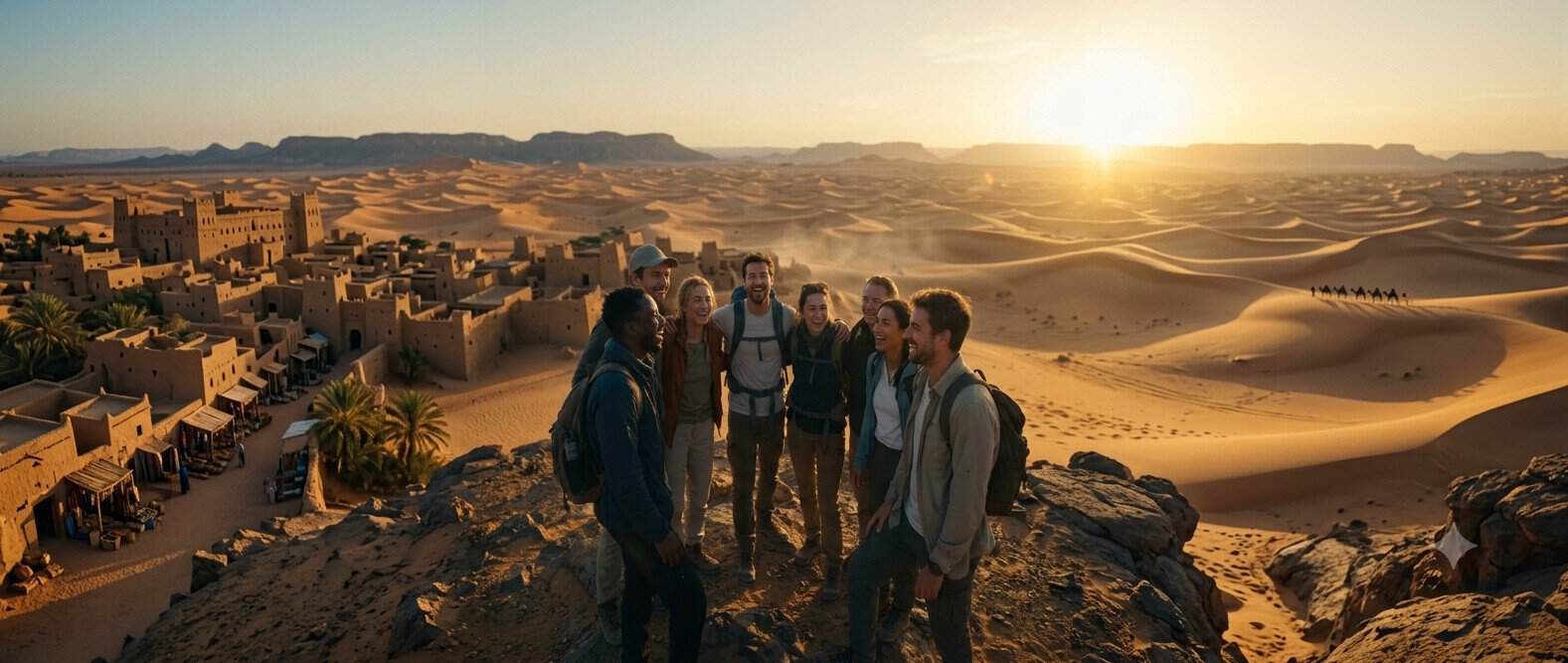
Image generated with Ai
The Saudi Arabian tourism industry is the Middle East’s fastest growing industry and is changing the region’s economy. Saudi Arabia has released data showing air and land passengers to the country almost tripled in 2022 compared to 2021. The country has strategic plans to expand travel to other destinations such as Riyadh and Jeddah, in addition to plans outlined in Saudi Arabia’s Vision 2030. The plans to shift the country’s economy to include other industries, in addition to petroleum, has attracted investment to the country. Because of the tourism and other plans, the country is aiming to provide one of the largest and most diverse markets in the world.
The Dawn of a New Economic Era: Tracing the Tourism Surge
The global travel and hospitality industry has observed few transformations as rapid and structurally sound as the ongoing evolution within the Kingdom of Saudi Arabia. Historically, the nation’s international visitor profile was almost exclusively defined by religious pilgrimage to the holy cities of Makkah and Madinah, alongside a stringent corporate travel sector tied to the petroleum industry. However, the introduction of the National Transformation Programme and the broader Vision 2030 initiatives fundamentally rewrote this narrative. By actively opening its borders to leisure travellers, investors, and international expatriates, the Kingdom initiated a macroeconomic pivot that is now yielding unprecedented dividends. As of late 2026, official metrics confirm that Saudi tourism surges consistently, easily outpacing global recovery and growth averages.
The strategy extends far beyond mere marketing; it is a holistic infrastructural and regulatory overhaul. The Saudi government has effectively liberalised visa access, significantly expanded air connectivity, and invested heavily in domestic hospitality pipelines. This aggressive approach is not merely about attracting visitors but ensuring that the domestic economy retains the financial benefits. By cultivating a multifaceted ecosystem that appeals to high-net-worth individuals, adventure seekers, cultural enthusiasts, and corporate delegates, Saudi Arabia has insulated its economic future against the volatile fluctuations of global oil markets. The synergy between government ministries, private sector stakeholders, and sovereign wealth funds has created an environment where large-scale tourism projects move from conceptual blueprints to operational realities at an astonishing pace.
Breaking Down the Latest Official Statistics
To fully grasp the magnitude of this transformation, one must examine the rigorous data provided by official state apparatuses. According to the latest comprehensive reports from the Saudi Ministry of Tourism and the General Authority for Statistics (GASTAT), the sector’s performance has consistently exceeded initial projections. Throughout the first half of 2026, building upon the monumental baseline established in 2025, the industry witnessed an expansion surge of over 4% in crucial performance metrics, including hotel occupancies, international arrivals, and overall sector revenues [1].
Advertisement
Advertisement
In the preceding year, the Kingdom successfully welcomed approximately 122 million total visitors. This staggering figure comprised an estimated 91.6 million domestic trips and over 30 million international arrivals, representing a robust year-on-year growth trajectory. The financial implications of this footfall are equally impressive. Tourism spending reached an estimated SAR 300 billion (approximately USD 81 billion), showcasing a steady increase from prior periods. Furthermore, the total contribution of the tourism sector to the national Gross Domestic Product (GDP) climbed past the 7% threshold, reaching approximately SAR 318 billion. These figures are not mere estimates; they are meticulously tracked metrics that validate the efficacy of the state’s aggressive diversification policy. The data conclusively demonstrates that the Kingdom is capturing a larger share of the global travel market, driven by enhanced accessibility and a rapidly maturing domestic product offering.
Advertisement
Advertisement
The Strategic Shift From Petroleum to People
For decades, the Saudi Arabian economy was virtually synonymous with crude oil exports. While the energy sector remains a foundational pillar of national wealth, the state’s leadership recognised the long-term vulnerabilities inherent in a monolithic economy. Consequently, the transition towards a service and knowledge-based economy became a paramount national security and economic imperative. Tourism was identified early on as a primary vehicle for this transition due to its massive multiplier effect. Every Riyal spent by an international visitor cascades through the economy, stimulating secondary sectors such as retail, transportation, food and beverage, and construction.
This pivot requires immense capital expenditure, which has been readily supplied by the Public Investment Fund (PIF) and various foreign direct investments. The Saudi hotel market alone has expanded its operational inventory to nearly 200,000 keys, with a staggering pipeline of approximately 320,000 additional keys planned through the end of the decade. This represents an estimated capital expenditure of USD 45 billion targeted exclusively at the hospitality accommodation sector. By investing heavily in human capital and physical infrastructure, the government is ensuring that the nation is fully equipped to handle the projected influx of visitors without compromising on service quality or environmental sustainability.
Riyadh Aligns With Jeddah: A Tale of Two Megacities Driving National Growth
The overarching success of the Kingdom’s tourism strategy is largely anchored by the parallel, yet distinct, development of its two primary urban centres. Rather than competing destructively, Riyadh and Jeddah have been strategically positioned to complement one another, creating a dual-engine dynamic that propels the entire national economy forward. Riyadh and Jeddah represent two completely different facets of the Saudi experience, allowing the Kingdom to market itself to highly diversified demographic segments simultaneously.
Advertisement
Advertisement
The strategic alignment between these two metropolises is evident in national transport planning, coordinated marketing campaigns, and complementary event scheduling. While Riyadh dominates the corporate, governmental, and mega-event spheres, Jeddah serves as the commercial, maritime, and heritage gateway. Together, they form a cohesive urban network that effectively distributes tourist footfall and economic benefits across the central and western regions of the country. This coordinated approach ensures that infrastructural bottlenecks are minimised, and the visitor experience remains fluid and high-quality, regardless of the entry point.
Riyadh: The Crown Jewel of Corporate and Entertainment Tourism
As the political and financial capital, Riyadh has undergone a metamorphosis that is arguably unparalleled in modern urban history. The city has aggressively positioned itself as the premium business and event market of the Middle East. It benefits immensely from its capital-city functions, housing essential government ministries, sovereign wealth headquarters, and a rapidly growing concentration of multinational corporate offices. Beyond its corporate appeal, Riyadh has engineered a massive leisure and entertainment sector, most notably through the wildly successful Riyadh Season.
Advertisement
Advertisement
Riyadh Season, an annual state-sponsored entertainment and sports festival, routinely attracts millions of visitors from across the globe, generating massive demand for accommodation, dining, and retail. This influx creates high-compression periods where hotel average daily rates (ADR) surge significantly. According to recent Ministry of Tourism reports, Riyadh’s hotel sector recorded impressive occupancy rates of over 56%, paired with an exceptionally high ADR exceeding SAR 800, highlighting its status as a premium destination. The city is also home to monumental megaprojects such as Diriyah Gate, a SAR 237 billion development centred around the UNESCO World Heritage site of At-Turaif, which aims to become the foremost cultural and historical destination in the region. Additionally, the development of King Salman Park and the Qiddiya entertainment city ensures that Riyadh’s tourism portfolio remains endlessly diverse.
Jeddah: The Coastal Gateway and Heritage Capital
If Riyadh is the beating heart of corporate and entertainment Saudi Arabia, Jeddah is its soulful, historic, and maritime counterpart. Situated on the coast of the Red Sea, Jeddah has historically served as the primary gateway for millions of pilgrims travelling to Makkah. Today, while it retains that crucial religious logistical role, it has simultaneously reinvented itself as a premier destination for family travel, heritage tourism, and high-end coastal leisure. The city’s unique geography grants it unparalleled access to the Red Sea’s vibrant marine ecosystems, making it a hotspot for domestic and regional holidaymakers.
Jeddah’s hospitality metrics remain incredibly robust, often boasting occupancy rates exceeding 62%, supported by a healthy ADR of over SAR 550. The city’s tourism appeal is anchored by Historic Jeddah (Al-Balad), another UNESCO World Heritage site that has seen extensive, culturally sensitive restoration. Furthermore, modern initiatives like the Jeddah Central project—a SAR 75 billion urban redevelopment scheme—are adding world-class marinas, opera houses, and luxury residential zones to the cityscape. Jeddah also leverages its coastal geography to host high-profile international events, including the Formula 1 Saudi Arabian Grand Prix and the Red Sea International Film Festival, which consistently draw global media attention and elite international visitors.
Vision 2030 Initiatives: The Catalyst Behind the Over 4% Surge in Six Months
The impressive growth metrics recorded in recent quarters are not incidental; they are the direct consequence of meticulously executed Vision 2030 initiatives. When Crown Prince Mohammed bin Salman initially unveiled the framework in 2016, the tourism targets were viewed by some international observers as overly ambitious. The original goal was to attract 100 million annual visitors by 2030. However, the Kingdom shattered this target six years ahead of schedule, crossing the 100-million mark in 2023. Consequently, the government confidently revised its objective upwards, now targeting a monumental 150 million annual visitors (comprising 70 million international and 80 million domestic tourists) by the end of the decade.
This revised target necessitated a dramatic acceleration in policy implementation and infrastructural roll-out. The government has streamlined bureaucratic processes, empowered the Saudi Tourism Authority to execute aggressive global marketing campaigns, and leveraged the financial muscle of the Tourism Development Fund to back private-sector projects. The resulting over 4% surge observed in a mere six-month window reflects the compounding effect of these initiatives. As new hotel stock comes online, new flight routes are established, and global perceptions shift, the barrier to entry for international tourists continues to plummet, resulting in sustained, exponential growth.
Advertisement
Advertisement
Revamping the Hospitality Sector
At the core of this surging demand is a massive, coordinated expansion of the national hospitality sector. Accommodating 150 million visitors requires an unprecedented volume of high-quality lodging options. The Ministry of Tourism functions as the central authority for licensing and sector reporting, ensuring that all new developments meet rigorous international standards. As of early 2026, the Kingdom officially surpassed 545,000 licensed room keys across various accommodation types, including luxury hotels, serviced apartments, and rural inns.
This expansion is highly strategic. The government is not merely building generic hotel blocks; it is partnering with the world’s most prestigious hospitality brands to create bespoke, luxury experiences that command premium rates. Concurrently, there is a strong push to develop mid-scale and budget-friendly accommodations to support the burgeoning domestic tourism market and budget-conscious international backpackers. Furthermore, the liberalisation of private accommodation regulations has led to a massive increase in licensed rural inns and guest houses, ensuring that the economic benefits of tourism reach peripheral communities outside the major metropolitan hubs.
Expanding Aviation and Infrastructure
Tourism and aviation are intrinsically linked; one cannot thrive without the other. Recognising this, Saudi Arabia has embarked on a radical transformation of its aviation sector. The Kingdom’s National Aviation Strategy aims to multiply passenger traffic and vastly increase the number of direct international routes. A centrepiece of this strategy is the imminent launch and expansion of Riyadh Air, a brand-new, digitally native national carrier designed to connect the Saudi capital to over 100 global destinations by 2030.
Simultaneously, the legacy carrier, Saudia, is undergoing a massive fleet expansion and operational restructuring, focusing its hub operations primarily in Jeddah to support religious and coastal tourism. On the ground, airport infrastructure is being entirely reimagined. The masterplan for King Salman International Airport in Riyadh projects it to become one of the world’s largest aviation hubs, designed to handle up to 120 million passengers annually by 2030. Similarly, ongoing expansions at King Abdulaziz International Airport in Jeddah ensure seamless processing for both leisure tourists and millions of religious pilgrims.
Beyond Riyadh and Jeddah: The Broader Tourism Ecosystem
While the economic heavy lifting is undeniably concentrated in the Riyadh and Jeddah corridors, the true strength of the Saudi tourism product lies in its immense geographic and cultural diversity. The government is actively developing multiple distinct tourism ecosystems across the country, ensuring that the Kingdom offers a compelling proposition for every conceivable type of traveller. From the snow-dusted mountains of the north to the pristine coral reefs of the west, the regional diversification strategy is crucial for mitigating seasonality and encouraging repeat visitation.
Advertisement
Advertisement
Makkah and Madinah: Revolutionising Religious Tourism
Religious visitation remains the bedrock of inbound travel to Saudi Arabia. The General Authority for Statistics routinely reports millions of pilgrims entering the country for Hajj and Umrah. Under Vision 2030, the Pilgrim Experience Program was launched to radically improve the quality of services provided to the guests of God. The state has invested billions into expanding the capacity of the Two Holy Mosques, upgrading the Haramain High-Speed Railway, and improving pedestrian and transport logistics within Makkah and Madinah.
Crucially, the government has fundamentally altered the visa structures surrounding religious travel. Previously, Umrah visas restricted pilgrims exclusively to the holy cities and Jeddah. Today, pilgrims enjoy unprecedented freedom of movement, allowing them to travel anywhere within the Kingdom during their stay. This legislative change has effectively converted millions of religious visitors into potential leisure tourists, encouraging them to extend their stays, visit historical sites in AlUla, or explore the retail offerings in Riyadh, thereby significantly increasing their overall economic contribution.
The Red Sea and NEOM: Pioneering Sustainable Luxury
On the western coastline, the Kingdom is pioneering what is arguably the world’s most ambitious eco-tourism initiative. Red Sea Global is developing vast stretches of pristine archipelago into hyper-luxury, sustainable resorts. Projects like Amaala and the broader Red Sea destination are strictly governed by regenerative tourism principles. They are powered entirely by renewable energy, adhere to zero-waste-to-landfill policies, and strictly limit annual visitor numbers to ensure the protection and enhancement of local marine and terrestrial biodiversity.
Further north lies NEOM, the futuristic mega-region that represents the zenith of Saudi ambition. Within NEOM, tourism destinations such as Sindalah—a luxury island yachting destination—and Trojena—a mountain resort slated to host the 2029 Asian Winter Games—are pushing the boundaries of architectural and experiential possibility. These projects do not merely compete with existing global destinations; they seek to create entirely new paradigms of luxury travel, drawing ultra-high-net-worth individuals and global influencers to the Kingdom.
Economic and Social Implications of the Tourism Boom
The statistical surges in visitor numbers are impressive, but they are ultimately a means to an end. The true objective of the Saudi tourism strategy is deep, structural socio-economic reform. The industry is serving as a massive engine for job creation, skills development, and wealth distribution, profoundly impacting the daily lives of Saudi citizens.
Advertisement
Advertisement
Job Creation and the Saudisation Strategy
The hospitality and tourism sector is inherently labour-intensive, providing a vast array of employment opportunities across all skill levels. By late 2025 and into early 2026, the sector was responsible for directly and indirectly supporting over 1.07 million jobs, representing a phenomenal year-on-year growth rate exceeding 13%. To ensure that this employment boom directly benefits the local populace, the government has implemented strict Saudisation mandates. The objective is to achieve a workforce where over 50% of hospitality roles are filled by Saudi nationals by 2030.
To support this ambitious target, the state has launched numerous training academies and scholarship programmes, such as the ‘Tourism Trailblazers’ initiative, designed to upskill tens of thousands of young Saudis. This has also precipitated a significant cultural shift. A generation ago, service industry roles were rarely sought after by Saudi nationals; today, young men and women are eagerly pursuing careers in culinary arts, hotel management, and tour guiding, proudly showcasing their heritage to international guests. Notably, the tourism sector has been a primary catalyst for female empowerment in the workforce, aligning perfectly with broader Vision 2030 social reforms.
Boosting the Gross Domestic Product
From a macroeconomic perspective, the tourism sector’s trajectory is firmly aligned with state targets. The sector’s total contribution to the national GDP grew from a mere 3.5% in 2019 to an estimated 7.1% by the end of 2025. The ultimate Vision 2030 objective is to push this contribution into double digits, targeting a sustained 10% of GDP by the end of the decade.
This financial influx is highly diversified. It stems from accommodation revenues, aviation fees, retail spending, dining, and massive foreign direct investments into real estate and infrastructure. By creating a robust, multi-billion-dollar industry that operates entirely independently of global oil price fluctuations, Saudi Arabia is securing its economic sovereignty and ensuring long-term fiscal stability for future generations.
Policy Reforms and International Alignments
The hardware of tourism—hotels, airports, and resorts—is useless without the software of progressive policy and international cooperation. The Saudi government has demonstrated remarkable agility in reforming outdated legislative frameworks to facilitate this tourism boom, heavily engaging with international regulatory bodies to ensure global best practices are not only met but exceeded.
Advertisement
Advertisement
The E-Visa Revolution
Perhaps the single most impactful policy change was the rollout of the electronic tourist visa (eVisa). What was once a notoriously closed country can now be accessed by citizens of nearly 70 nations via a seamless, minutes-long online application process. Furthermore, the Kingdom has expanded visa-on-arrival privileges to holders of valid US, UK, and Schengen visas.
The Kingdom is also heavily involved in regional integration efforts, acting as a primary driver behind the GCC unified tourist visa. Similar to the European Schengen model, this unified visa allows tourists to travel seamlessly across multiple Gulf states, including the UAE, Bahrain, and Oman, positioning the entire Arabian Peninsula as a cohesive, highly accessible global travel destination.
Collaborations with the UN Tourism and International Bodies
Saudi Arabia has aggressively pursued leadership roles within the global tourism community. It works intimately with UN Tourism (formerly the UNWTO) and the World Travel & Tourism Council (WTTC), frequently hosting major international summits and policy forums. In recent years, Riyadh has effectively become a secondary global headquarters for international tourism dialogues, establishing a dedicated UN Tourism regional office. By leading conversations on global tourism resilience, sustainable investment, and post-pandemic recovery strategies, Saudi Arabia has cemented its reputation not merely as a destination, but as a dominant global policymaker.
The Future Outlook: Can Saudi Arabia Reach 150 Million Visitors?
As the industry reviews the surging data from the first half of 2026, the question is no longer whether Saudi Arabia will become a major tourism player, but rather how high its ceiling truly is. The revised target of 150 million annual visitors is undeniably steep, requiring sustained, compounding growth year over year. However, given the current trajectory, the financial backing of the PIF, and the slate of upcoming global events, industry analysts remain overwhelmingly optimistic.
Preparing for Riyadh Expo 2030
One of the most significant catalysts on the horizon is the Riyadh Expo 2030. Having decisively won the bid to host the World Expo, the Saudi capital is preparing for an event of unprecedented scale. Scheduled to run from October 2030 to March 2031, the Expo is projected to attract an astonishing 42 million visits during its six-month duration. This event alone serves as a massive gravitational pull, guaranteeing an immense spike in international arrivals that will likely push the Kingdom well past its 150 million visitor target in that calendar year. The infrastructural preparations for the Expo—including massive expansions to the Riyadh Metro, new hotel districts, and bespoke pavilions—will leave a permanent, high-quality legacy for the city’s tourism ecosystem.
Advertisement
Advertisement
Furthermore, the Kingdom’s successful bid to host the 2034 FIFA World Cup provides a crucial secondary horizon. This ensures that the momentum generated by Vision 2030 and the Expo will not dissipate but will instead transition immediately into preparations for the world’s largest sporting event, driving a whole new decade of infrastructural investment and global marketing.
Long-Term Sustainability and Market Resilience
The ultimate success of the Saudi tourism experiment will be judged not just by arrival numbers, but by the sector’s resilience and sustainability. The Kingdom is keenly aware of the risks of overtourism and is actively implementing data-driven management systems to disperse tourist footfall across its vast geography. By continuously aligning the corporate power of Riyadh with the cultural and coastal appeal of Jeddah, while simultaneously nurturing the religious hubs of Makkah and the luxury eco-resorts of the Red Sea, the government is building an impeccably balanced portfolio.
As Saudi tourism surges consistently quarter over quarter, the narrative of the Kingdom is irrevocably changing. Through meticulous planning, boundless ambition, and unparalleled investment, Saudi Arabia is successfully engineering a post-oil economic reality, proving to the world that its Vision 2030 is not merely an aspiration, but a rapidly materialising reality.
Advertisement
