
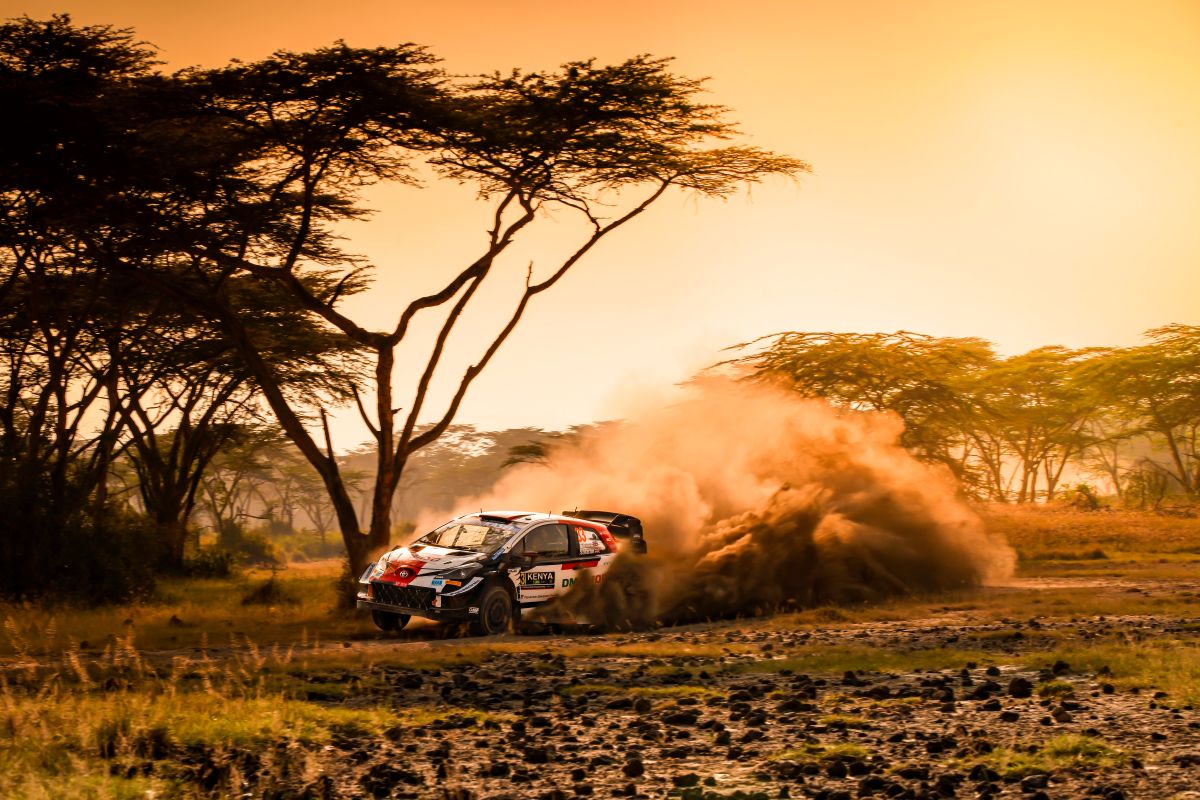
Kenya’s place on the 2027 World Rally Championship calendar is facing uncertainty after the government ended public funding for the Safari Rally. Private-sector financing is now being sought, but organisers face a narrowing window to secure the event. The development matters far beyond motorsport, because the Naivasha-based rally has become a powerful sports tourism catalyst for Kenya. The country’s tourism authorities recorded 2.4 million international visitors and KSh458.2 billion in tourism earnings in FY2024/25. Meanwhile, an official tourism study found the 2021 Safari Rally generated KSh6.736 billion in direct visitor expenditure. The immediate question is therefore bigger than a racing calendar. It concerns whether Kenya can turn a globally recognised sporting property into a sustainable private-sector tourism asset.
The uncertainty centres on the transition from government-backed financing to a predominantly private model. President William Ruto announced the change during the 2026 Safari Rally in Naivasha. He said public resources would instead support sports in schools and other areas.
Advertisement
The government has nevertheless signalled continued institutional support for the event. Ruto also said Kenya looked forward to welcoming the rally again in 2027.
However, the financial responsibility is changing significantly. According to the latest reporting, private funding is being pursued while the WRC calendar decision approaches.
Advertisement
Advertisement
FIA road sport director Emilia Abel has also stressed the organisation’s support for Kenya. She described the rally as a historic and classic WRC event. Yet she indicated that the Kenyan side must now provide the necessary delivery framework.
WRC Promoter COO Julien Vial similarly highlighted funding certainty as a condition for finalising the calendar. The issue has therefore become a commercial question as much as a sporting one.Key Development Current Position Tourism Relevance Government funding Ending for event promotion Greater pressure on commercial revenues Private funding Being sought Creates opportunities for sponsors and tourism partners 2027 WRC status Not yet secure Could affect future international visitor demand Host destination Naivasha and surrounding areas Direct exposure for hotels, restaurants and attractions WRC profile Globally established event Powerful destination-marketing platform Government role Expected to remain supportive institutionally Infrastructure and tourism coordination remain important
The stakes are consequently substantial. Kenya is not simply protecting a race. It is protecting a recurring international event capable of moving people, money and attention into a destination.
Naivasha gives the rally an unusual tourism advantage. The town sits within the Great Rift Valley and provides access to landscapes already associated with leisure and wildlife travel.
Advertisement
Advertisement
The 2026 rally programme concentrated the competition around Naivasha and its environs. The Service Park remained at the Wildlife Research Training Institute.
That concentration has strengthened the destination’s potential as a sports-and-safari proposition.
A visitor can travel for the rally and extend the trip into a wider Kenyan itinerary. Hell’s Gate, Lake Naivasha and nearby wildlife experiences can complement the motorsport programme.
This creates a potentially valuable pattern for tourism businesses. A rally visitor does not have to remain a rally-only visitor.
Hotels can sell longer stays. Tour operators can package competition viewing with wildlife excursions. Airlines can market access to Kenya around major sporting dates.
The commercial opportunity becomes even more important when international fans travel in groups. Motorsport audiences typically require accommodation, transport, food, communications and event services within a concentrated period.
That creates a short but potentially lucrative demand cycle.
Kenya’s wider tourism recovery provides useful context for the funding debate. Government tourism data shows international visitor arrivals reached 2.4 million in FY2024/25. Tourism earnings reached KSh458.2 billion during the same period.
The trajectory has been encouraging.Tourism Indicator FY2022/23 FY2023/24 FY2024/25 International visitors 1.687 million 2.275 million 2.4 million Tourism earnings KSh297.3bn KSh420.6bn KSh458.2bn Direction Recovery Strong growth Continued expansion
The Safari Rally fits into this recovery by offering a different reason to visit Kenya.
That distinction matters. Traditional safari tourism depends heavily on wildlife, landscapes and beach experiences. Sports tourism can broaden the destination’s demand base.
The government’s own tourism research makes the argument especially clearly. Its analysis of the 2021 WRC event found KSh6.736 billion in direct visitor expenditure. It also estimated KSh3.757 billion in employment income and KSh9.610 billion in total value addition.
Those figures explain why the rally carries significance for travel businesses.
They also explain why a purely sporting assessment would underestimate its economic value.
Kenya has long possessed a powerful sporting identity. Athletics remains its strongest international sporting association, but the tourism authorities have increasingly recognised other disciplines.
Government strategy documents now explicitly identify sports tourism as a development opportunity. Proposed measures include a national sports tourism calendar, event-hosting protocols, infrastructure investment and travel packages for participants.
The Safari Rally fits that policy direction almost perfectly.
It combines international competition with a recognisable Kenyan landscape. It also brings international teams, manufacturers, journalists and supporters into the country.
That creates several layers of tourism value.
First, visitors spend money during the event itself. Secondly, global broadcasting provides destination exposure. Thirdly, international participants can generate repeat visitation. Finally, local businesses gain experience servicing a sophisticated international audience.
The promotional value can be substantial.
In 2024, the President’s office said the WRC Safari Rally had been watched by more than 85 million people across 170 countries, with more than 50 international television channels broadcasting it.
For a tourism destination, that audience is effectively a global marketing channel attached to a sporting event.
The withdrawal of public promotion funding does not necessarily mean the end of the rally’s tourism ambitions. Instead, it could force a sharper commercial model.
The private sector already has evidence of the rally’s value.
KCB committed KSh227 million towards the 2026 event. The package included direct event funding, support for sponsored drivers, activations and marketing. The bank said its cumulative support since the rally returned to Kenya had reached KSh980 million.
That precedent is important.
A sustainable commercial model could combine financial sponsorship with aviation, hospitality, automotive, telecommunications, financial services and destination-marketing partnerships.
Kenya Airways, for example, served as the exclusive airline partner for the 2026 edition. It transported rally vehicles, officials, teams and specialist equipment.
The model demonstrates how the rally can generate value across an entire travel ecosystem.Tourism Stakeholder Potential Rally Opportunity Airlines International arrivals, team logistics and fan travel Hotels Concentrated room demand and premium packages Tour operators Rally-plus-safari itineraries Restaurants Increased visitor spending Car-rental firms Independent fan mobility Destination marketers International exposure Banks Sponsorship and consumer activations Local businesses Retail, food and event services Attractions Extended stays before and after competition
The challenge is coordination.
A sponsor may finance the event, but tourism businesses need a commercial framework that converts spectators into destination customers.
For travellers, the immediate concern is not whether a contract exists. It is whether the rally remains on the calendar and whether future editions retain their international scale.
If Kenya secures its 2027 place, fans could continue planning trips around the event. If uncertainty persists, international travellers may delay bookings until the calendar becomes official.
That can affect hotels and tour operators well before the rally itself.
The 2026 event was scheduled for 12–15 March in Naivasha. It formed the third round of the 14-event WRC season.
The WRC’s official 2026 calendar confirms Kenya’s March position between Sweden and Croatia.
For future visitors, booking strategy therefore matters. Travellers should wait for official calendar confirmation before committing to non-refundable rally-specific arrangements.
They should also consider staying beyond the competition period. Naivasha works particularly well as a base for combining motorsport with nature and leisure.
A four-day sporting trip can consequently become a week-long Kenyan holiday.
The bigger policy question concerns what Kenya wants the Safari Rally to achieve.
A major sporting event should not operate as an isolated annual spectacle. Its value increases when tourism agencies, local authorities, airlines and hospitality businesses coordinate around it.
Kenya’s draft tourism strategy proposes precisely this type of integration. It calls for a national sports tourism calendar and better infrastructure around sporting destinations. It also recommends travel packages for event participants.
The Safari Rally could become a flagship test case.
The opportunity extends beyond Naivasha. Visitors attracted by the rally could be encouraged to add Nairobi, the Maasai Mara, the Kenyan coast or other destinations.
This would distribute tourism spending geographically and increase average visitor value.
The strategy is particularly relevant because Kenya’s tourism sector has already demonstrated strong growth. The country therefore has an established visitor economy capable of supporting a more diversified sports product.
The missing ingredient is consistency.
International travellers plan around certainty. Sponsors also invest around certainty. WRC organisers therefore need confidence that financing, organisation and delivery will remain secure.
The timing makes the current situation particularly sensitive.
The 2026 WRC season contains 14 rounds. Kenya’s event occupies an important early-season position.
Its removal would therefore create more than a local sporting gap. It would remove one of Africa’s most distinctive events from the championship.
The rally also has historical significance. Kenya returned to the WRC in 2021 after a 19-year absence. Government reporting says that comeback produced a significant economic boost for Naivasha and surrounding businesses.
That history has created a valuable international brand.
The commercial task now is to convert that brand into a self-sustaining proposition.
If sponsors can see measurable returns, private funding becomes easier to justify. If tourism businesses can demonstrate higher occupancy and visitor spending, partnerships become more attractive.
Equally, if destination marketers can quantify international exposure, the rally can become part of a broader tourism investment case.
The transition is therefore risky, but it is not necessarily negative.
It could ultimately produce a more commercially disciplined event.
For prospective visitors, the next major development is confirmation of the 2027 WRC calendar. Until Kenya’s position is formally secured, rally-specific travel plans remain subject to change.
Travellers should monitor official WRC announcements before purchasing restrictive fares or accommodation.
They should also distinguish between the rally calendar announcement and individual ticket or accommodation releases. Those stages can occur at different times.Traveller Priority Recommended Approach 2027 rally dates Wait for official WRC confirmation Flights Prefer flexible fares initially Hotels Check cancellation conditions Safari extensions Build refundable options Local transport Book closer to confirmed dates Event access Follow official rally channels Trip length Consider combining rally and safari travel
The most attractive proposition could ultimately be a combined itinerary rather than a motorsport-only holiday.
That would allow Kenya to monetise the rally while showcasing its wider tourism portfolio.
The financial commitment for the Safari Rally Kenya creates a unique financial barrier for destination-led sports tourism. Although the return on investment and marketing from international sporting events is almost always positive, the financing must also be consistent to fund a sporting event.
Kenya has demonstrated the potential for the Safari Rally to have positive tourism spending. Also, Kenya has a growing, international tourist economy, along with the intent for growth in sports tourism.
The next step is execution.
Kenya has the opportunity to develop a stronger funding model for the Safari Rally without public funding. If long-term funding remains uncertain, Kenya is at risk of losing an international funding opportunity.
Potential visitors should know that Naivasha is a sporting and safari tourist destination, but they should hold off making travel plans to 2027 until the calendar is official. The outcome of this will high impact beyond Kenya’s motor sports.
Advertisement
Advertisement
Advertisement












Saturday, September 5, 2026

Saturday, September 5, 2026
Saturday, September 5, 2026

Saturday, September 5, 2026
Saturday, September 5, 2026
Saturday, September 5, 2026
Saturday, September 5, 2026

Saturday, September 5, 2026



