

Panama Tourism Strengthens Regional Role as Panama City Combines Global Appeal with Major Air Connectivity

Published
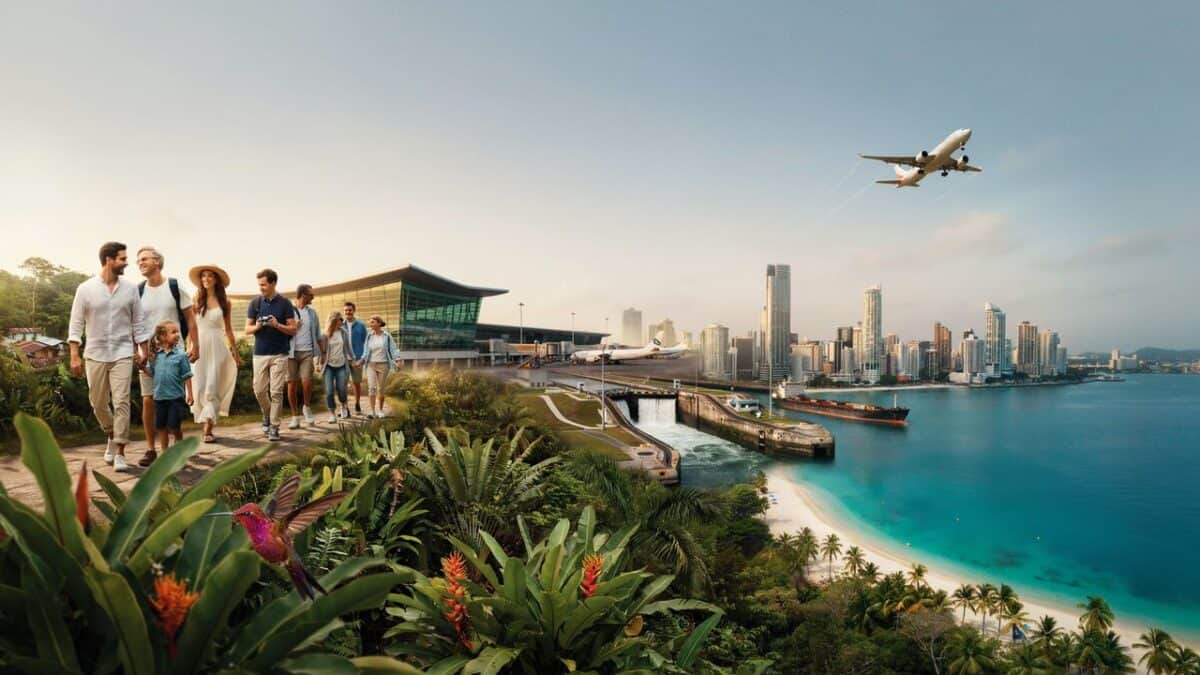
Panama tourism is strengthening its regional role as Panama City combines international city appeal with one of Latin America’s most extensive aviation networks. While global quality-of-life rankings place the Panamanian capital in a stronger position regionally than globally, its importance to travellers is reinforced by Tocumen International Airport, which handled almost 21 million passengers in 2025 and connected Panama directly with 97 destinations across 37 countries. Together with the Panama Canal, Casco Antiguo, modern hotels and strong regional flight access, these advantages give Panama City an important position for business travel, stopovers, meetings and multi-destination holidays across the Americas.
The distinction is important.
Panama City’s tourism strength does not depend on winning a single global city ranking. Its value comes from the combination of connectivity, infrastructure, culture, commerce and geographical location.
Panama City Performs Strongly in Latin American Quality-of-Life Comparisons
Panama City appears in several international assessments of urban living conditions.
Advertisement
Advertisement
Mercer’s 2024 Quality of Living City Ranking placed Panama City 114th globally.
Within Latin America, however, its position was considerably stronger.
Advertisement
Advertisement
Panama City ranked fourth in the region, behind Montevideo, Buenos Aires and Santiago.
| Mercer 2024 Latin American position | City |
|---|---|
| 1 | Montevideo |
| 2 | Buenos Aires |
| 3 | Santiago |
| 4 | Panama City |
Mercer’s assessment examines factors affecting the everyday living environment for international employees and their families.
Advertisement
Advertisement
These include housing, transportation, recreation, socio-cultural conditions and other aspects of urban life.
It is therefore not a tourism ranking.
However, some of the infrastructure and services that contribute to quality of life can also affect the visitor experience.
Global Liveability Results Need Context
Another widely followed city assessment is the Economist Intelligence Unit’s Global Liveability Index.
Advertisement
Advertisement
In its 2025 assessment, Panama City was placed 89th among 173 cities.
That means it would be inaccurate to describe Panama City as one of the world’s highest-ranked cities for liveability.
Its position is more notable when viewed in a Latin American context.
For tourism reporting, this distinction matters because different rankings measure different things.
A quality-of-life index is not the same as a tourism popularity ranking.
Likewise, a liveability assessment does not measure airport connectivity or visitor arrivals.
Advertisement
Advertisement
Panama City’s strongest travel credentials should therefore be evaluated separately.
Tocumen Gives Panama a Powerful Regional Advantage
The clearest evidence of Panama City’s importance as a travel hub comes from Tocumen International Airport.
Official airport statistics show that Tocumen handled 20,981,855 passengers during 2025.
That represented growth of 8% compared with the previous year.
The scale of connecting traffic is particularly significant.
Approximately 15.3 million passengers used Tocumen as connecting travellers during 2025.
Advertisement
Advertisement
That means a large majority of passenger movements through the airport involved people travelling onwards to another destination.
| Tocumen 2025 indicator | Figure |
|---|---|
| Total passengers | 20.98 million |
| Connecting passengers | 15.3 million |
| Direct destinations | 97 |
| Countries connected | 37 |
| Passenger growth | 8% |
These figures demonstrate why Panama is often described as an aviation bridge between different parts of the Americas.
Panama Connects North and South America
Panama’s geographical position has always been one of its greatest economic advantages.
The same location that made the Panama Canal globally important also gives the country a natural role in aviation.
Flights through Tocumen connect destinations across:
- Central America
- South America
- North America
- The Caribbean
- Europe
For travellers, this creates opportunities to use Panama City as either a connection point or a destination in its own right.
Advertisement
Advertisement
That distinction is important for tourism authorities.
A passenger changing aircraft at Tocumen contributes to aviation traffic, but a traveller who enters Panama, stays in a hotel, visits attractions and eats in local restaurants creates a much broader tourism impact.
Converting more connecting passengers into stopover visitors therefore represents an important opportunity.
Copa Airlines Is Central to the Hub Model
Panama’s aviation role is closely linked with Copa Airlines.
The Panama-based carrier operates an extensive network through its Hub of the Americas at Tocumen International Airport.
Its route structure allows passengers from different cities to connect through Panama without requiring long backtracking journeys.
Advertisement
Advertisement
That model is particularly useful for travel within Latin America and the Caribbean.
A traveller may use Panama to connect between two countries that do not have sufficient demand to support a direct flight.
This network effect strengthens Tocumen as more destinations are added.
For travel businesses, it also creates opportunities to combine Panama with another destination rather than selling it only as a standalone holiday.
Stopover Tourism Turns Connectivity Into Visitor Spending
Panama has recognised the opportunity presented by millions of connecting passengers.
The country’s tourism strategy has included efforts to encourage travellers to turn an aviation connection into a short visit.
Advertisement
Advertisement
A stopover can introduce travellers to Panama City without requiring them to organise an entirely separate international trip.
During a short stay, visitors can experience:
- Casco Antiguo
- The Panama Canal
- Panama City’s waterfront
- Museums
- Restaurants
- Shopping
- Urban nightlife
- Nearby rainforest experiences
This variety is valuable because many major attractions can be reached without travelling across the entire country.
Panama can therefore offer a meaningful experience even to visitors with limited time.
Panama Canal Remains a Global Tourism Landmark
The Panama Canal is one of the country’s strongest international attractions.
Its importance extends far beyond tourism.
Advertisement
Advertisement
The waterway is a major piece of global trade infrastructure linking the Atlantic and Pacific oceans.
For visitors, the canal provides an opportunity to see large vessels passing through one of the world’s most famous engineering systems.
The Miraflores area near Panama City is particularly accessible for tourists.
This gives Panama City an attraction that is internationally recognised and closely connected with the country’s identity.
Casco Antiguo Adds Heritage to the Modern Skyline
Panama City’s tourism proposition is not limited to modern skyscrapers and business travel.
Its historic district provides a contrasting experience.
Advertisement
Advertisement
The Archaeological Site of Panamá Viejo and the Historic District of Panama are recognised by UNESCO as a World Heritage property.
The historic district, commonly known as Casco Antiguo or Casco Viejo, contains plazas, churches, historic buildings, restaurants and cultural spaces.
This allows visitors to combine heritage tourism with the modern city.
For short-stay travellers, having different types of attractions close together makes itinerary planning easier.
Business Travel Strengthens the City’s Tourism Base
Panama City is also an important commercial centre.
Banking, logistics, shipping, trade and multinational businesses contribute to international travel demand.
Advertisement
Advertisement
This creates a visitor base that is not entirely dependent on traditional holiday seasons.
Business travellers can also become leisure consumers when they extend trips or use free time to explore the destination.
Hotels and tourism businesses can therefore serve multiple segments:
- Corporate travellers
- Conference delegates
- Stopover passengers
- Leisure tourists
- Cruise visitors
- Shopping travellers
- Multi-country tourists
This diversity can make a city tourism economy more resilient than one dependent on a single visitor segment.
Panama Offers More Than Its Capital
Panama City’s connectivity also creates an entry point to the rest of the country.
Visitors can continue towards beaches, islands, mountain areas and nature destinations.
Advertisement
Advertisement
Panama’s official tourism promotion highlights experiences ranging from the Caribbean and Pacific coasts to Indigenous culture, biodiversity and adventure tourism.
That creates opportunities for travellers to use the capital as the first stage of a longer journey.
Tour operators can therefore build itineraries combining urban experiences with nature and coastal tourism.
What Travel Businesses Should Watch
Panama’s future tourism position will depend partly on whether the country can convert aviation scale into longer stays and greater visitor spending.
Travel businesses should monitor:
- Tocumen passenger growth
- New international routes
- Copa Airlines network expansion
- Stopover programme development
- Hotel capacity
- International visitor arrivals
- Business events
- Cruise tourism
- Tourism investment outside Panama City
Connectivity alone does not guarantee tourism growth.
Advertisement
Advertisement
The key question is how effectively a destination converts arriving and connecting travellers into visitors who spend time and money inside the country.
Conclusion: Panama Tourism Strengthens Regional Role as Panama City Combines Global Appeal with Major Air Connectivity
Panama tourism is strengthening its regional role as Panama City combines global appeal with major air connectivity, but its international position is best understood through verified evidence rather than broad claims about city rankings.
Mercer’s Quality of Living City Ranking placed Panama City fourth within Latin America in its 2024 assessment, although it ranked 114th globally. The EIU’s 2025 Global Liveability Index placed it 89th among 173 cities.
Those rankings provide useful urban context, but Panama City’s strongest travel advantage is Tocumen International Airport.
Nearly 21 million passengers passed through Tocumen in 2025, including 15.3 million connecting passengers. The airport offered direct connectivity to 97 destinations across 37 countries.
That network gives Panama something few destinations of its size possess: the ability to attract travellers who are already passing through on journeys across the Americas.
Advertisement
Advertisement
The tourism opportunity is to turn more of those connections into stays.
With the Panama Canal, Casco Antiguo, business infrastructure and easy access to wider nature and coastal destinations, Panama City has enough tourism depth to become more than an airport interchange.
For tour operators and travel agents, that combination of connectivity and destination appeal makes Panama particularly useful for stopovers, city breaks, business travel and multi-country Latin American itineraries.
Advertisement
