
Sierra Leone Spotlights Food Tourism as Senegal and West African Nations Explore Benefits for Local Producers

Published
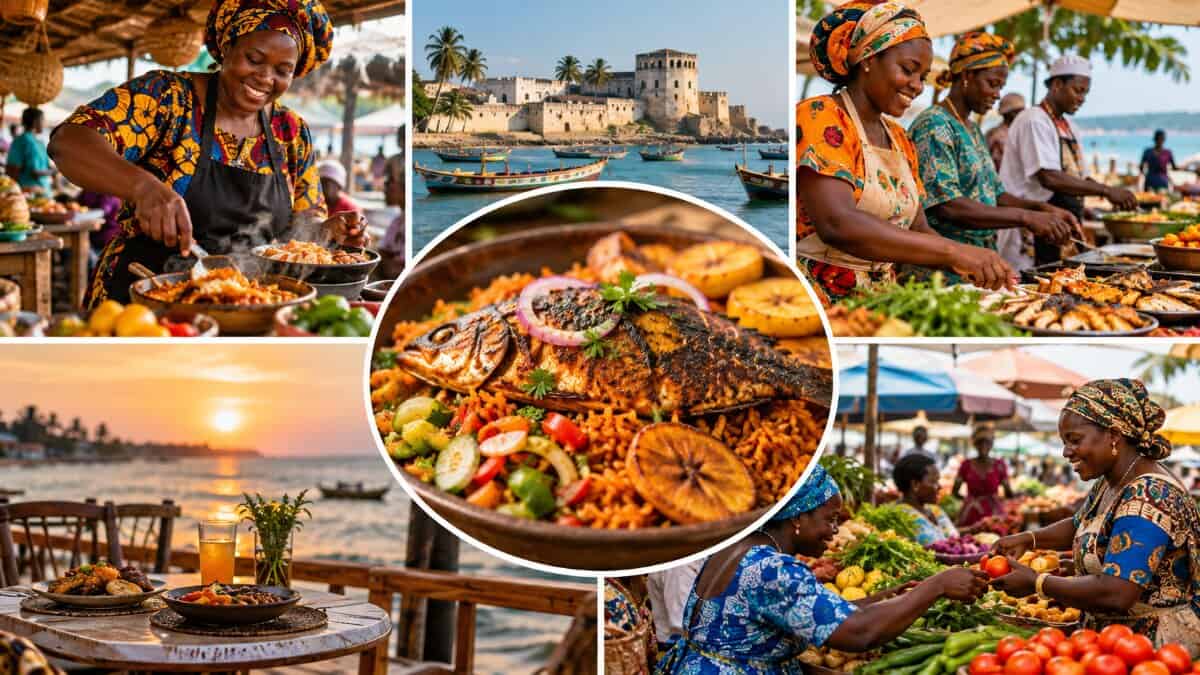
Five West African destinations are using culinary heritage to make tourism more distinctive, but published evidence of how much visitor spending reaches food producers remains limited. Sierra Leone’s October regional showcase, Senegal’s UNESCO-supported research, The Gambia’s food festival, Ghana’s cuisine promotion and visitor surveys, and Côte d’Ivoire’s new gastronomy proposals show different approaches to the same opportunity. They do not constitute a newly announced five-country partnership. The emerging industry test is whether authentic visitor experiences generate repeat business for local cooks, farmers, fishers and traders.
West African Culinary Tourism Links Five Separate National Strategies
The commonality is economic as much as cultural. Food-led travel connects visitors to markets, farms and kitchens. Yet showcasing a national dish is not proof that its producers receive a fair share of holiday spending. Official statements describe programmes and ambitions; comparable country-by-country supplier-income figures remain unavailable in the sources reviewed.
Advertisement
Advertisement
| Country | Verified 2026 development | Practical tourism opportunity | Unanswered commercial question |
|---|---|---|---|
| Sierra Leone | Regional gastronomy showcase in Kenema on 23 October; continental tourism forum scheduled for December | Package markets and regional cooking with established visitor attractions | Which local suppliers obtain lasting hotel or tour contracts? |
| Senegal | UNESCO-backed research on culinary practices and the Ceebu Jën value chain | Build community-led heritage experiences linked to Saint-Louis | How are fishers, growers and heritage practitioners paid? |
| The Gambia | West Africa Food Festival scheduled for 15–21 October, alongside culinary skills sessions and regional showcases | Convert festival exposure into bookable food experiences | How many vendors gain repeat visitors and contracts? |
| Ghana | Tourism Authority’s Taste 69 @ 69 showcased 69 indigenous dishes | Add professionally interpreted cuisine to domestic and diaspora itineraries | How much recorded food expenditure reaches local producers? |
| Côte d’Ivoire | Government outlined culinary documentation, restaurant and origin-protection proposals on 19 October | Turn regional dishes into recognisable tourism products | Which proposals are delivered, and who owns the commercial benefits? |
These are independent activities, not evidence that all five governments have adopted a shared programme or confirmed participation in Sierra Leone’s December forum.
Sierra Leone Connects Regional Food Culture With Tourism Infrastructure
According to Sierra Leone’s Ministry of Tourism and Cultural Affairs, a 23 October showcase in Kenema involved Kenema, Kono and Kailahun. Market stalls, local staples, spice blends and farm-to-table presentations placed the emphasis on the country’s eastern communities rather than only its capital. This gives tour designers a potential way to bring spending nearer production areas.
Advertisement
Advertisement
Tourism investment provides context. A September 2026 World Bank report states that the Sierra Leone Economic Diversification Project helped generate more than 35,000 direct and indirect jobs and leveraged over US$92 million in private investment through project activities. Those figures cover tourism-related development broadly. They are not evidence of new income generated by gastronomy alone.
The latest UN Tourism programme places the regional gastronomy forum in Lungi on 2–4 December, with discussions of intellectual property, women’s enterprise and agritourism. The programme does not guarantee new bookings or contracts.
Advertisement
Advertisement
Senegal Uses Heritage Research to Examine the Entire Food Chain
Senegal offers one of the clearest documented attempts to map culinary heritage beyond the finished plate. According to UNESCO’s 3 August 2026 report, field research took place in Saint-Louis from 21–25 February on Ceebu Jën, the fish-and-rice tradition added to UNESCO’s intangible cultural heritage list in 2021.
Researchers examined ingredients, community knowledge and value-chain participants. A March workshop brought together around 30 participants from Senegal’s 14 administrative regions. UNESCO reports 22 recommendations: seven on policy and legislation, seven on institutional coordination and eight on cross-sector approaches.
Advertisement
Advertisement
For tourism businesses, that work offers a framework for involving fishing communities, vegetable growers and traditional cooks in experiences that explain both the dish and its social setting. UNESCO listing does not certify restaurants or establish producers’ earnings.
The Gambia Turns Culinary Competition Into Destination Visibility
The Gambia’s Ministry of Tourism, Arts and Culture scheduled the West Africa Food Festival for 15–21 October 2026, with cooking competitions, indigenous ingredients and skills sessions. Its pre-event programme anticipated more than 30 participating countries, seven masterclasses, over 350 international guests and about 1,000 participants. These were organiser expectations rather than audited attendance figures.
The festival built on Gambian success in the previous year’s jollof rice competition in Ghana. Competition raises visibility. Lasting tourism value, however, requires market visits, cooking lessons and locally supplied menus that remain available afterwards.
The festival’s institute-based masterclasses also linked promotion with skills. Published festival material does not establish how much expenditure reached farmers, vendors or independent caterers.
Advertisement
Advertisement
Ghana Provides a Stronger Spending Baseline but Not Producer Earnings
According to the Ghana Tourism Authority, its March 2026 Taste 69 @ 69 initiative presented 69 indigenous dishes using largely Ghanaian ingredients. It linked culinary heritage, domestic tourism and local enterprise.
Ghana also offers an unusually useful official measurement baseline. The Ghana Statistical Service’s International Travellers’ Survey estimated GHS15.42 billion in total inbound visitor expenditure across the fourth quarter of 2022 to the third quarter of 2023. Its overnight-visitor analysis identified accommodation as 38.9 per cent of expenditure and food and beverages as 24.1 per cent. These are historical tourism-spending shares, not figures for 2026.
Crucially, paying a restaurant does not establish the farmer’s share of that meal. Expenditure data must be matched with hotel and restaurant purchasing records, supplier invoices and local employment measures to assess actual retention. Ghana’s National Commission on Culture identifies culinary opportunities in Accra, Cape Coast and Elmina, but no unified route is confirmed.
Côte d’Ivoire Moves Towards Documented Dishes and Product Identity
According to the Government of Côte d’Ivoire’s official announcement, published on 19 October, its national cuisine festival closed in Kong on 17 October. The announcement set out three development directions: an anthropological almanac of Ivorian cuisine, a prototype Ivorian gastronomic maquis and work towards an appellation of controlled origin.
These are announced proposals, not completed certification programmes. For operators, documenting dishes helps guides explain provenance. A carefully developed restaurant concept could give visitors an accessible introduction to regional food. Origin protection, if eventually approved and enforced, might help identifiable producers distinguish authentic products.
The government also reported a 10.5 million CFA franc prize allocation for the festival’s traditional and modern cooking competitions. These are awards, not visitor revenue or supplier payments.
Advertisement
Advertisement
Official Figures Reveal Both Potential and a Measurement Gap
Regional context matters, but statistics must retain their original geographical and time boundaries. According to UN Tourism’s September 2026 World Tourism Barometer, Africa’s international arrivals grew four per cent in the first half of 2026, while worldwide arrivals rose only 0.4 per cent. Africa-wide growth does not demonstrate that food-led travel increased in any of these five countries.
| Official indicator | What it establishes | What it cannot establish |
|---|---|---|
| Africa arrivals, first half of 2026: up 4% year on year | Wider regional tourism demand | The number of culinary visitors in West Africa |
| Ghana inbound visitor spending, Q4 2022–Q3 2023: GHS15.42 billion | Historic expenditure across tourism categories | The present value retained by local food suppliers |
| Ghana overnight food-and-beverage spending share: 24.1% | Food is a material component of visitor budgets | A 24.1% payment to farmers or food producers |
| Côte d’Ivoire 2026 culinary competition allocation: CFA 10.5 million | An announced competition prize envelope | Visitor purchases or recurring business income |
The figures cannot be combined into a regional gastronomy market total.
Original Industry Analysis Places Local Procurement at the Centre
The most commercially useful question for a destination management company is not how many visitors photograph a traditional meal. It is how many local transactions that meal creates, and whether those transactions continue after departure. A cooking excursion might pay a guide and host directly, while the ingredients come from a distant distributor. Conversely, a modest neighbourhood restaurant might source regularly from nearby growers and fishers without marketing itself as a tourism attraction.
A practical measurement model should record the guest’s total food-experience payment, the operator’s commission, the host’s fee, the ingredient bill and the proportion of purchases from locally based producers. Hotels could report the share of food procurement sourced domestically, alongside payment terms and supplier diversity. Surveys could then distinguish tourist satisfaction from verified financial outcomes.
This would also help prevent cultural value from being extracted without consent. Communities should help determine which traditions may be sold, who can tell their stories and how the revenues are divided. For small operators, traceability and simple records may create a more credible selling point than a broad sustainability claim. These are proposed industry benchmarks, not measures already adopted by the five governments.
Hotels, MICE Buyers and Tour Operators Face Practical Delivery Tests
Food tourism cannot grow through marketing alone. Reliable food safety, clean water, accessible kitchens, refrigeration where needed, supplier consistency and transport all influence whether a culinary experience can enter an international itinerary. Visitor-friendly descriptions should explain ingredients and allergens without turning living traditions into staged performances.
Advertisement
Advertisement
Sierra Leone’s forthcoming Lungi meeting adds a meetings, incentives, conferences and exhibitions dimension, but no new airline route, visa concession or five-country tour product is established by its programme. Operators must independently verify connections, travel times, border requirements and accommodation before assembling multi-country packages.
Operators can pilot one local experience, assess repeat bookings and supplier participation, then expand.
What Travellers Should Know About Authentic Food Experiences
For visitors, authentic gastronomy tourism may include public food markets, community-led cookery, regional dining, ingredient demonstrations and festivals. Not every promoted experience is bookable. Travellers should confirm operating days, accessibility, ingredients, hygiene arrangements and cancellation conditions. Responsible trips should seek informed local participation and transparent prices rather than assume traditional automatically means community-benefiting.
Operational Priorities for Travel Agents and Tour Operators
- Verify product status: Separate confirmed excursions from festival promotion and government proposals.
- Audit supplier payments: Track local ingredient purchases, host fees and commissions, not just total sales.
- Check guest safety: Review hygiene, water, food storage, allergens and emergency arrangements.
- Protect cultural ownership: Secure consent for demonstrations, photography and storytelling.
- Build resilient itineraries: Confirm transport, seasonal ingredient supply, border rules and contingency meals.
- Measure continuity: Record repeat bookings, referrals and supplier contracts after events finish.
West African Gastronomy Tourism Faces a Longer-Term Commercial Test
Sierra Leone, Senegal, The Gambia, Ghana and Côte d’Ivoire have each supplied a credible institutional basis for culinary tourism development. They use different combinations of heritage research, festivals and product development. The next competitive advantage may belong to experiences that can prove quality, cultural integrity and local economic benefit together. Until comparable supplier-level data is published, claims of a five-country tourism windfall remain premature.
FAQs
Are the five countries members of a new gastronomy tourism agreement?
No new five-country agreement has been established by the official sources reviewed. The countries are compared because they have independently documented culinary tourism or heritage initiatives.
When is Sierra Leone’s next international gastronomy tourism forum?
UN Tourism lists the third Regional Forum on Gastronomy Tourism for Africa for 2–4 December 2026 in Lungi, Sierra Leone. It is a professional tourism-development forum, not a general-purpose tourist package.
Advertisement
Advertisement
Which country has official figures for food spending by visitors?
Ghana’s Statistical Service publishes historical inbound spending categories, including food and beverages. The data do not show the proportion eventually received by individual producers.
Can travellers already book a five-country culinary tourism route?
The checked official sources do not announce a single integrated itinerary involving all five countries. Tour operators would need to organise each country’s experiences and transport separately.
Why does local sourcing matter to food tourism?
It can connect visitor spending with farmers, fishers, processors and cooks while helping preserve food traditions. Actual economic benefits depend on verified procurement, fair contracts and repeat demand.
Advertisement
